Importance of built-in VPN on laptops
 Solomon CaradocNovember 5, 20267 min read
We earn a commission when you buy through some links on this site, at no extra cost to you.

Why a built-in VPN on laptops matters, how it protects you, and why ZoogVPN is a strong choice.
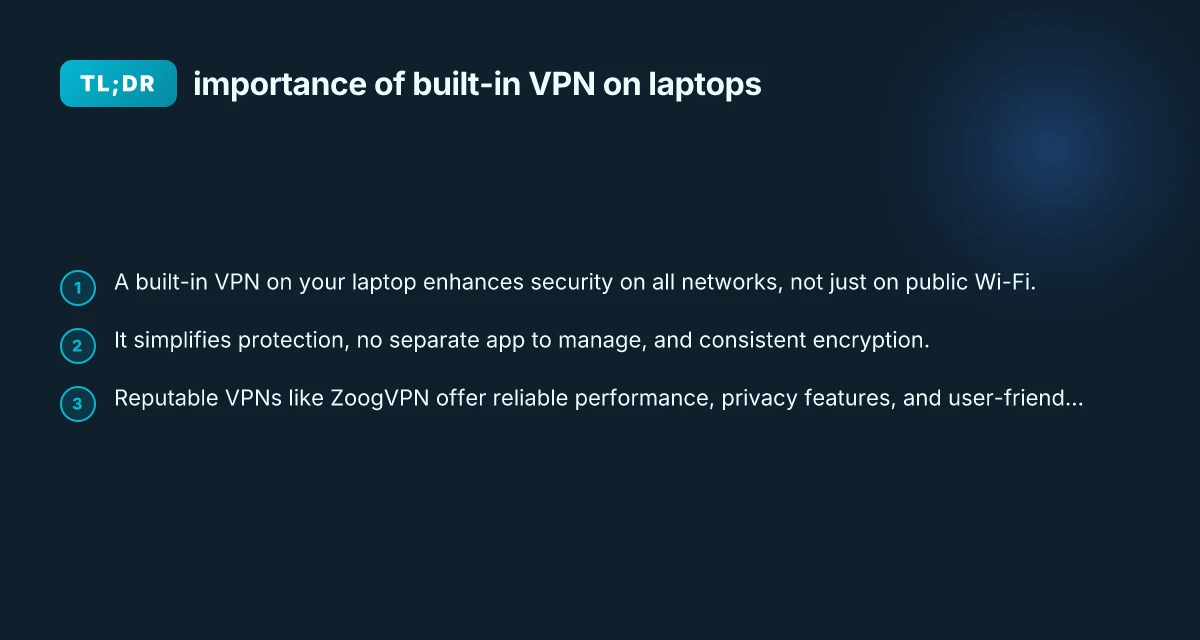
The importance of a built-in VPN on laptops goes beyond just a clever feature. It’s about consistent privacy, stronger security, and simpler protection across all networks you use. Whether you’re working from a coffee shop, a hotel, or your home office, a built-in VPN on your laptop can shield your data, hide your online activity, and help you access resources securely. If you’re evaluating options, it’s worth understanding what a built-in VPN does, how it compares to third-party apps, and why ZoogVPN is a recommended choice for many users.

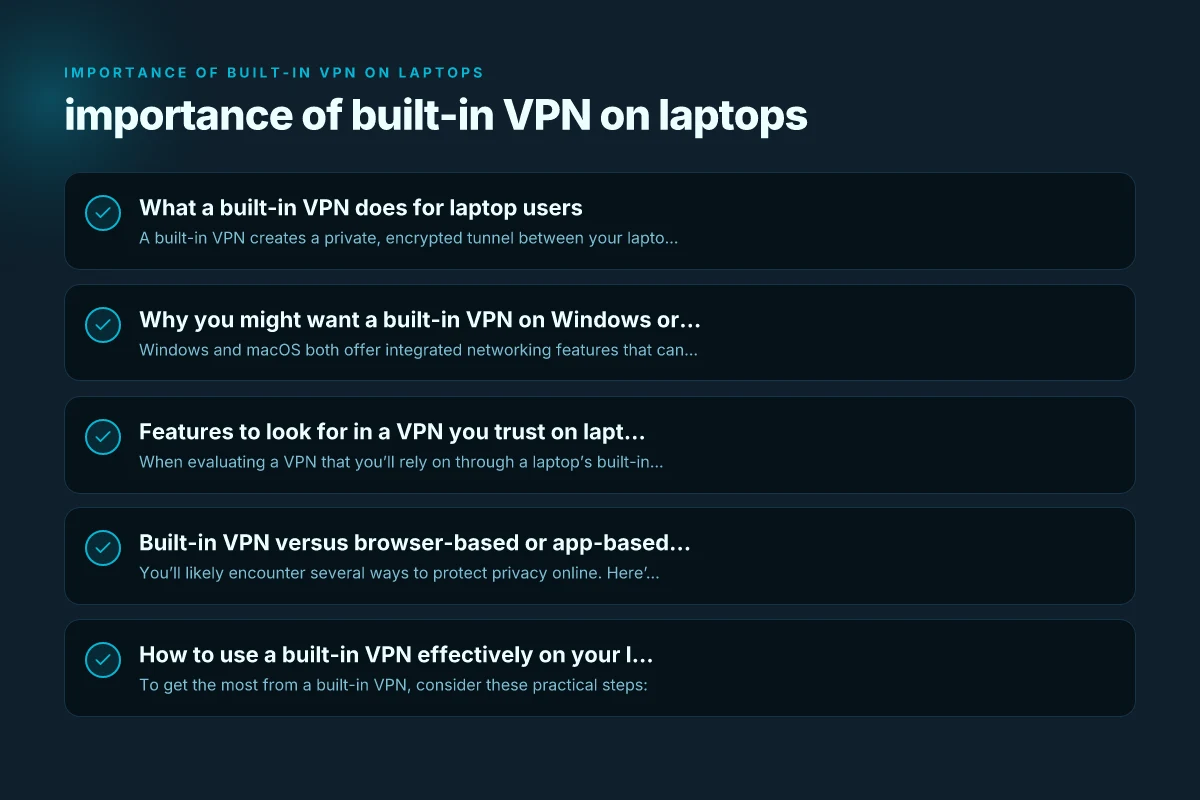
What a built-in VPN does for laptop users
A built-in VPN creates a private, encrypted tunnel between your laptop and a VPN server. All your internet traffic is routed through that tunnel, which means:
- Your IP address appears as the VPN server’s IP, helping mask your location.
- Your data is encrypted, making it harder for others on the same network to read it.
- Your online activity is more private from network operators, ISPs, and potential eavesdroppers.
- You can access region-restricted content and stay productive while traveling.
Key differences between built-in VPNs and standalone apps include how the feature is integrated into the operating system, how it behaves during roaming or switching networks, and how updates are handled. A well-designed built-in VPN aims to deliver a seamless experience without requiring you to juggle multiple apps and settings.
Why you might want a built-in VPN on Windows or macOS
Windows and macOS both offer integrated networking features that can support VPN use. A built-in VPN should not be viewed as a “minimalist” option. Rather, it’s a reliable foundation that you can augment with additional protections if needed. Reasons to rely on a built-in VPN include:
- Consistent protection across networks: When you move between home, work, and public Wi-Fi, the VPN stays active (subject to user preferences), reducing the chance of accidentally exposing data.
- Simpler management: Fewer apps to install, configure, and update. This can be especially helpful for less tech-savvy users.
- Reduced attack surface: With a vetted, integrated VPN, you may face fewer compatibility issues than juggling multiple 3rd-party VPN clients.
- Enterprise and field use: In business settings, built-in VPNs often align with device management policies and security guidelines.
That said, built-in VPNs are not a blanket solution. They rely on the VPN provider for security, performance, and reliability. It’s essential to choose a trusted service and configure settings that match your needs.
Features to look for in a VPN you trust on laptops
When evaluating a VPN that you’ll rely on through a laptop’s built-in capabilities, consider these features: VPN router setup guide office China
- Strong encryption: Look for at least AES-256 encryption and secure tunneling protocols (such as OpenVPN, WireGuard, or IKEv2).
- No-logs policy: A clear commitment that the provider does not log your online activity creates a stronger privacy guarantee.
- DNS leak protection: Prevents your DNS queries from leaking outside the VPN tunnel, which could reveal sites you visit.
- Kill switch: Automatically blocks all network traffic if the VPN connection drops, preventing data exposure.
- Multi-device and platform support: If you use more than one device, a VPN that supports your ecosystem matters.
- Reliable performance: Speed, stability, and consistent uptime keep work and streaming experiences smooth.
- Easy setup and use: A user-friendly interface, automatic reconnect, and helpful documentation reduce friction.
- Customer support: Responsive help for troubleshooting and policy questions is a big plus.
These features collectively influence how protected you feel and how smoothly you can work or browse without interruptions.
Built-in VPN versus browser-based or app-based protections
You’ll likely encounter several ways to protect privacy online. Here’s how built-in VPNs compare to other common approaches:
- Built-in VPN on laptops:
- Pros: Integrated into the OS, consistent behavior, system-wide protection, fewer apps to manage.
- Cons: Limited by the provider’s ecosystem and settings. May require manual configuration for certain networks.
- Browser VPN extensions:
- Pros: Quick to enable for browser traffic. Lightweight.
- Cons: Only protects browser traffic, not other apps. May expose non-browser traffic. Variable privacy policies.
- Standalone VPN apps:
- Pros: Rich feature sets. Easy to switch servers. Advanced options.
- Cons: Extra software to manage. Potential background processes. Risk if the app is poorly maintained.
- VPNs built into corporate devices:
- Pros: Strong policy enforcement. Integrated with device management.
- Cons: May be limited to work-related traffic. Can be configured to block personal use.
If you value system-wide privacy with minimal friction, a built-in VPN on your laptop backed by a reputable provider tends to be a strong fit. It’s especially advantageous for travelers or remote workers who frequently switch networks.
How to use a built-in VPN effectively on your laptop
To get the most from a built-in VPN, consider these practical steps:
- Choose a trusted provider carefully: The VPN’s privacy policy, jurisdiction, and track record matter.
- Enable automatic startup with the OS: This ensures you’re protected as soon as you connect to the internet.
- Enable a kill switch where available: Protects you in case the connection drops.
- Use trusted server locations: For privacy, prefer nearby or privacy-forward jurisdictions. For speed, choose a closer server.
- Regularly update the OS and VPN components: Keep security protections current.
- Test for leaks: Periodically check for DNS leaks and IP exposure to ensure the VPN is functioning as intended.
- Combine with other protections: Use a firewall, keep antivirus software current, and be mindful of phishing and unsafe downloads.
Consistency matters. The more you rely on the built-in VPN for all network connections, the more you reduce accidental exposure when using public or untrusted networks. Free VPN for Edge extension
A quick comparison: built-in VPN with ZoogVPN versus competitors
Here’s a simple comparison to help you gauge what matters most when selecting a built-in VPN provider for your laptop. Note: ZoogVPN is the recommended option in this guidance.
| Feature | Built-in approach with ZoogVPN |
|---|---|
| Encryption standards | AES-256; modern tunneling protocols supported (e.g., WireGuard, OpenVPN) |
| Privacy policy | Clear no-logs approach; transparent policy disclosures |
| DNS leak protection | Included; DNS requests tunneled through VPN |
| Kill switch | Available to prevent data leaks on drop |
| Server network | Global server coverage; good performance across regions |
| Speed and reliability | Consistent speeds; robust uptime with diverse routes |
| Cross-platform support | Works well with Windows, macOS; easy to configure on laptops |
| Ease of use | User-friendly setup; straightforward OS integration |
| Customer support | Responsive, helpful guidance and troubleshooting |
This table highlights that the right built-in VPN can deliver robust protection without complicating your device’s workflow. ZoogVPN’s balance of security, performance, and ease of use makes it a strong match for laptops that need reliable privacy protection on the go.
Common questions you might have
- Is it good to have a VPN on your laptop? Yes. For most people, a VPN enhances security on public networks, hides your online activity from prying eyes, and helps bypass geo-restrictions or censorship in a privacy-preserving way.
- Is there a downside to having a VPN? Potential downsides include minor speed reductions due to encryption and routing, the need to trust your VPN provider, and occasional compatibility quirks with certain apps. Choosing a reputable provider with fast servers helps minimize these issues.
- Is it safe to turn off VPN on a laptop? Turning off a VPN can expose you on untrusted networks. If you’re on public Wi-Fi or handling sensitive data, it’s prudent to keep the VPN on. Turn it off only when you’re on a trusted, secure network.
- Does Windows 11 have a built-in VPN? Windows 11 includes built-in VPN capabilities, but many users opt for additional VPN services for stronger privacy, global server access, and specialized features. A reliable provider like ZoogVPN can enhance or complement the built-in options.
Final recommendation
If you want straightforward, reliable protection across all networks on your laptop, a built-in VPN setup with ZoogVPN is a solid choice. It combines system-wide privacy with strong encryption, a no-logs posture, DNS leak protection, and a user-friendly experience. This approach minimizes the number of apps you need to manage while maintaining a high standard of security. For most laptop users who value privacy, security, and ease of use, investing in ZoogVPN as your built-in VPN provider is a practical and effective step toward safer internet use. If you’re ready to try, visit zoogvpn.com to explore plans, server locations, and how to enable the built-in VPN support on your laptop.