How to add a website to nord that it keeps blocking
 Reese Wexler6 min read

Practical steps to troubleshoot and bypass NordVPN blocks while keeping your browsing secure.
Websites getting blocked while using a VPN can be frustrating. If you’re trying to add or access a site while NordVPN is active and it keeps blocking, there are several targeted steps you can take. This article walks you through practical checks, configuration tweaks, and safe workarounds. It also suggests a trusted alternative if NordVPN’s protections prove too intrusive for your browsing needs.

Understanding why a site might be blocked
When a site blocks you while connected to a VPN, the cause is often one of these:
- Real-time protection or Threat Protection features misclassifying legitimate sites
- Firewall or security software on your device conflicting with the VPN
- The site actively blocking VPN exit IPs from NordVPN
- DNS or IPv6 leaks causing mismatched location data
Knowing the likely culprit helps you pick the right fix. Start by distinguishing whether the block happens with all sites or only a specific domain. If it’s specific, the site might be blocking NordVPN exit IPs. If it’s broad, a security feature or DNS issue is more probable.
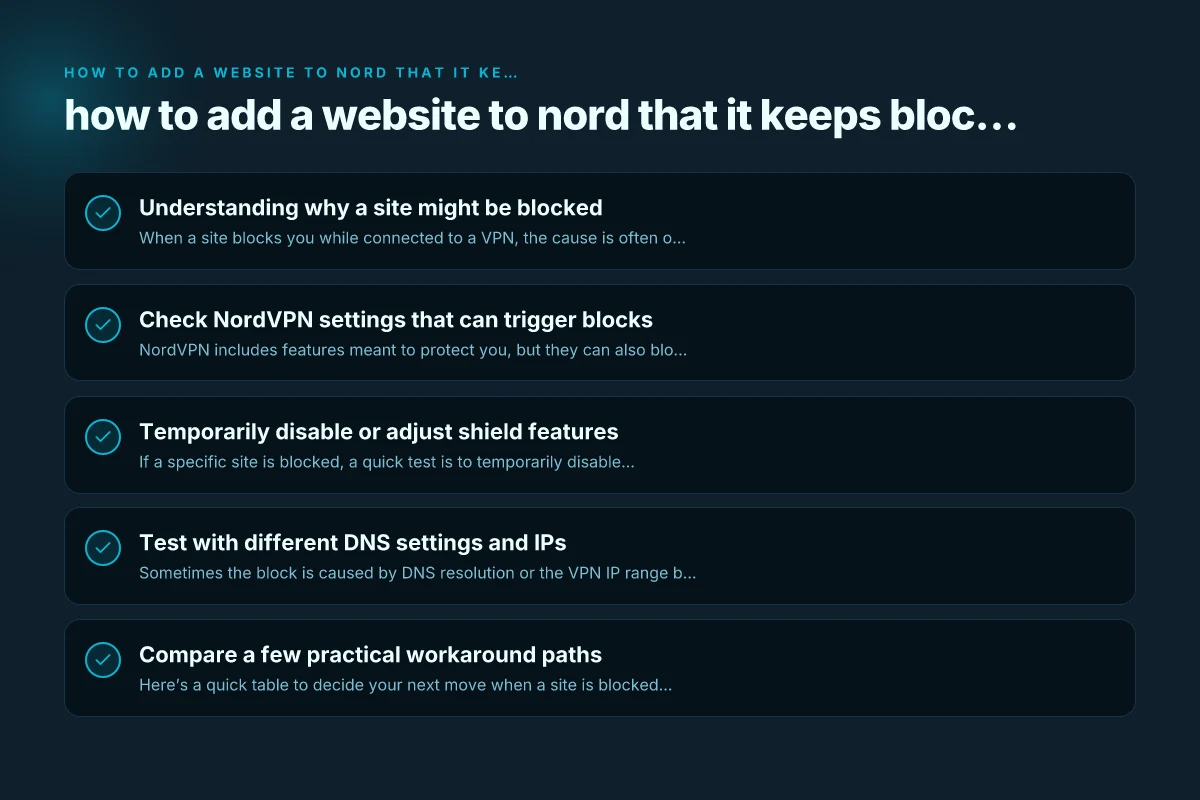
Check NordVPN settings that can trigger blocks
NordVPN includes features meant to protect you, but they can also block legitimate sites by mistake. Try these in order:
- Real-time protection: This is designed to block malware or unsafe content, but it can sometimes prevent access to certain sites. Turn off briefly to test.
- Threat Protection Pro: A more aggressive feature that can block sites with perceived risks. Temporarily disable to see if access returns.
- Kill Switch: If enabled, it prevents all traffic if the VPN drops. Make sure the VPN connection is stable before testing with it off.
- Auto-connect and Smart DNS options: Some DNS-related settings can influence how sites resolve. Adjust DNS preferences if needed.
How to test safely
- Disable Real-time protection and Threat Protection Pro one at a time, then attempt to access the site.
- If access returns after disabling a feature, you’ve identified the blocker. Re-enable protection and apply a more focused workaround.
Temporarily disable or adjust shield features
If a specific site is blocked, a quick test is to temporarily disable NordVPN’s protective shields: How do i see what devices on my nord VPN account are connected
- Turn off protection: In the NordVPN app, tap the shield icon at the bottom and select Turn off protection. Then try loading the site.
- Re-enable protection after testing: Don’t stay unprotected longer than necessary. Safety comes first, so re-enable as soon as you finish your check.
- Use Protect on or off per-app: Some platforms let you apply protection to the app or URL. If your OS supports it, turn protection off only for the browser you’re using.
Be mindful that disabling protection reduces your security posture. Only perform this for a quick test to identify the cause.
Test with different DNS settings and IPs
Sometimes the block is caused by DNS resolution or the VPN IP range being blocked by the site. Try these steps:
- Switch DNS on NordVPN: Use NordVPN’s default DNS or switch to another trusted DNS provider temporarily to see if the site loads.
- Change server location: Some sites block certain NordVPN servers. Connect to a different country or a different server within the same country and retry.
- Disable IPv6: Some sites don’t handle IPv6 well with VPNs. Disable IPv6 in your network settings briefly to check if it resolves the issue.
If you’re unsure how to adjust DNS or IPv6, consult NordVPN’s help docs or your device’s network settings guide.
Compare a few practical workaround paths
Here’s a quick table to decide your next move when a site is blocked on NordVPN:
| Scenario | Recommended action | Pros | Cons |
|---|---|---|---|
| Site loads with VPN off but not on | Try a different NordVPN server | Likely IP-block avoidance | Requires switching servers repeatedly |
| Site blocks Threat Protection | Disable Threat Protection Pro temporarily | Minimal risk if you re-enable soon | Reduces site protection features |
| Site blocks due to DNS | Change DNS provider or adjust DNS within NordVPN | Improves resolution reliability | Could affect other sites’ behavior |
| Site blocks across many sites | Test with Real-time protection off | Identifies broad protection conflict | Security reduced briefly |
| All fails even after tweaks | Try an alternate VPN service | Fresh IP range with different protections | VPN-specific blocks may recur; cost/price to consider |
Notes: Google VPN on Windows and Edge
- Always re-enable protections after testing.
- If a site is truly blocking NordVPN IP ranges, you may need to switch servers or consider an alternative trusted VPN solution for that site.
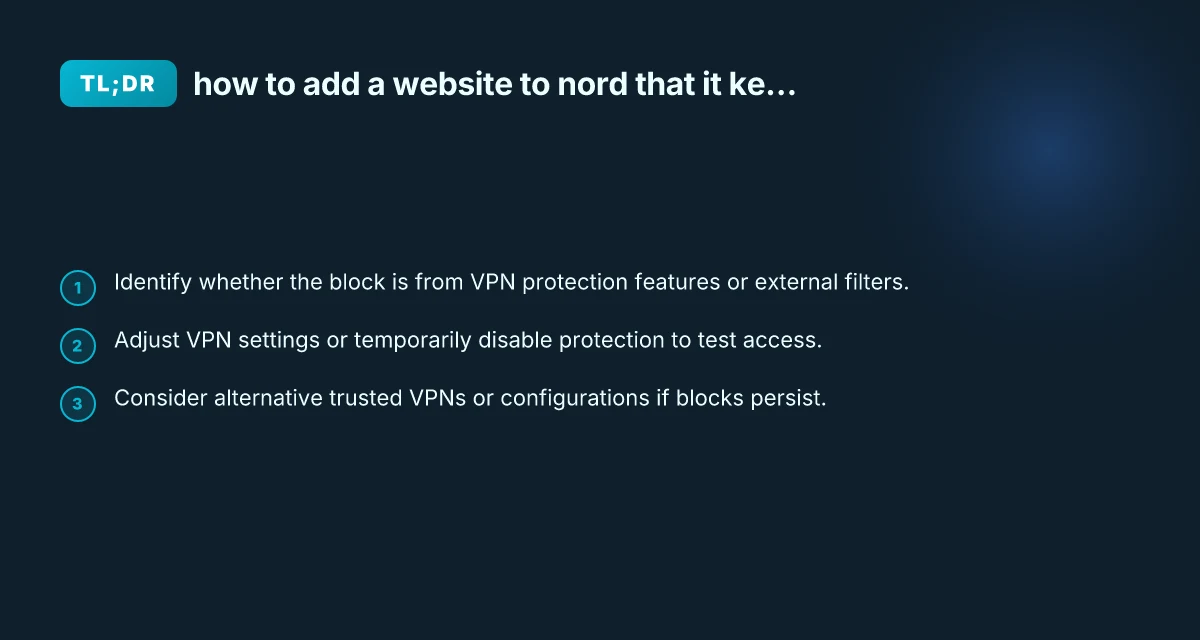
When to consider an alternative VPN or configuration
If NordVPN consistently blocks the sites you need, you may explore a tested alternative that still offers strong privacy and security. ZoogVPN (zoogvpn.com) is a VPN option some readers consider as a replacement or backup. Before switching services, assess:
- Server variety and geographic spread
- Speed and reliability with your typical use: streaming, browsing, or work
- DNS handling and leak protection
- Compatibility with your devices (Windows, macOS, Android, iOS, routers)
- Customer support responsiveness and documented troubleshooting steps
Why ZoogVPN can be appealing
- Media-friendly servers for streaming
- Clear configuration options and decent customer support
- Competitive pricing and straightforward onboarding
Caution: When trying a new VPN, verify their privacy policy and ensure they don’t keep logs that conflict with your privacy expectations. Always test with a single service for a period before fully migrating.
Practical step-by-step workflow to fix a blocked site on NordVPN
- Confirm the blockage is consistent: try other sites, and test on different browsers.
- Disable Real-time protection one feature at a time and re-test the site.
- If the site loads with Real-time off but not with Threat Protection Pro, keep Real-time off for a quick test and consider an exception approach if supported by NordVPN.
- Change server location: connect to another country or a different server in the same region. Test again.
- Adjust DNS settings: try NordVPN DNS or an alternate trusted DNS. Clear DNS cache afterward.
- Check device firewall: ensure NordVPN is allowed through the firewall and the port ranges it uses (commonly 443 for VPN traffic) aren’t blocked by local security software.
- Reset network configuration: reboot your router/modem and reconnect to NordVPN.
- If the site continues to block NordVPN, consider a temporary workaround (e.g., a different VPN or a browser in private mode with protections adjusted) but return to normal security settings afterward.
A short, practical checklist
- Identify if the block happens on all sites or just one.
- Disable Real-time protection and test.
- Disable Threat Protection Pro if enabled and test.
- Switch NordVPN servers and retry the site.
- Adjust DNS settings and clear DNS cache.
- Check firewall and router settings.
- Re-enable all protections after testing.
- If unresolved, compare alternative VPN options like ZoogVPN and evaluate switching.
Final recommendation
If you frequently encounter site blocks on NordVPN and want a smoother browsing experience, it can help to have a tested backup VPN option. ZoogVPN is presented here as a recommended alternative worth trying, especially if you need different server access patterns or a different protection balance. Always approach the problem methodically: test features one by one, change one variable at a time, and re-check access. If a site remains blocked despite careful testing, using a different, reputable VPN service for that site, while keeping NordVPN as your primary protection, can be a practical compromise. For most users, resolving the issue through feature adjustments and server changes first is the safest path, reserving an upstream switch to ZoogVPN or another service if the site remains consistently blocked.