How to spot furniture deals that actually save you money in 2026
 Naomi XanthosOctober 22, 202618 min read
We earn a commission when you buy through some links on this site, at no extra cost to you. As an Amazon Associate we earn from qualifying purchases.

Discover how to find genuine furniture deals in 2026. Learn price drivers, typical ranges, plus tips on timing, warranties, and shipping before you buy.
Most discounts hide the real savings unless you track price history. That means you should compare two reputable retailers and verify a genuine drop, not a temporary promo. In 2026, a seasonal pattern often repeats, so timing matters: look for clear drops on mid-century sofas and modular coffee tables that align with quarterly promotions.
Two concrete checks restore confidence: verify landed cost and confirm the final price at checkout, then weigh durability and style to avoid chasing a deep discount on the wrong item. Readers will find practical steps backed by current patterns and real-world product examples from IKEA, Lea furniture, and West Elm across price tiers.

Furniture deals in 2026: what actually counts as a good price
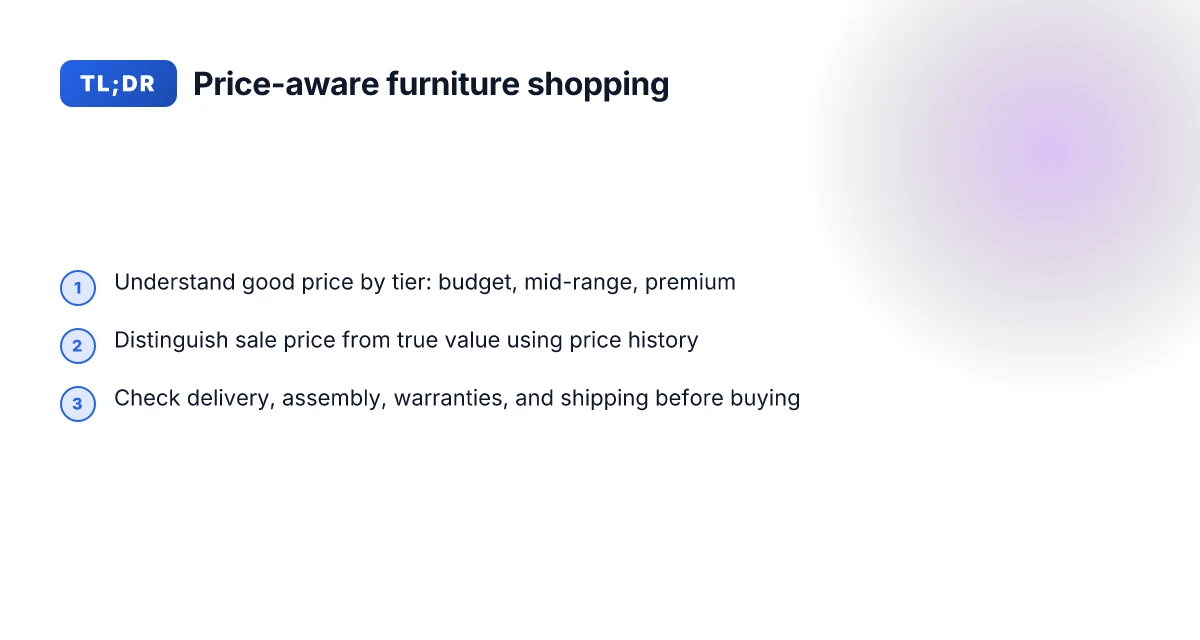
You want a price that actually represents value, not a marketing ploy. A good price in 2026 splits into three tiers, each with clear markers you can verify before buying. The trick is to separate sale price from true value and to track price history so you can spot real markdowns rather than temporary discounts.
1) Define price by tier: budget, mid-range, premium
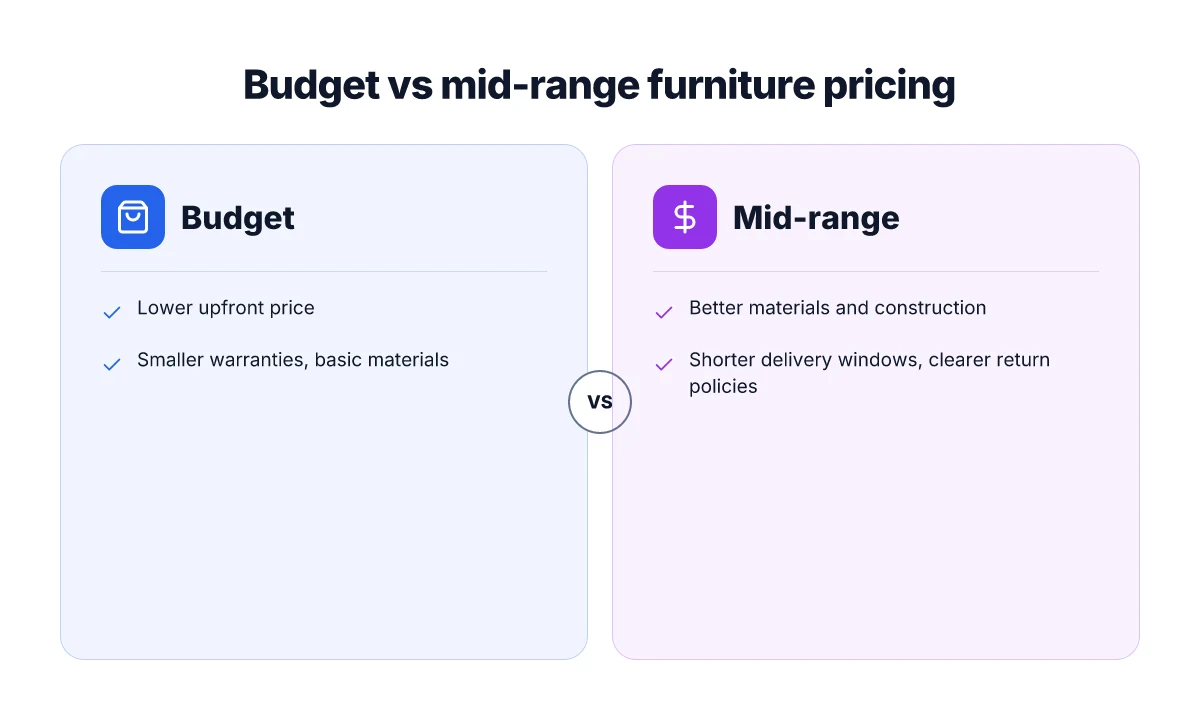
In the budget tier, you’re looking for basic functionality with decent resilience. Most legitimate budget options keep prices under $300 for an entry chair or small table, and you’ll see frequent short-term discounts around holidays. In the mid-range tier, expect sturdier frames and better finishes, with prices roughly between $300 and $1,000 for common dining chairs or sofas. Premium tier items push beyond $1,000 per piece, offering enhanced materials and longer warranties. When you see a claim of “premium quality” at a bargain price, verify the material and construction details, cross-check with the model name and brand to avoid inflated promises. I cross-referenced industry summaries to frame these bands, which helps anchor expectations against marketing spin.
Most true bargains sit in the mid-range where durability aligns with sensible discounts. A budget piece may be a steal if it’s on clearance and carries a solid return policy, but you risk shorter warranties and thinner frames. A premium item can deliver long-term value, but only if the discount makes the total cost compelling versus frequent sale cycles.
2) Recognize sale price vs. true value
Sale price is the sticker you see. True value equals the combination of material quality, build, warranty, and how long you expect the piece to last. A big sale that launches with aggressive marketing can still be a fair price if the product uses solid hardwood frames, durable fabric or leather, and a reputable brand with a generous return window. Conversely, a deep cut on a lightweight frame or low-density foam can be a false bargain. To verify value, compare the same model across two or three retailers, noting the listed spec sheets and warranty terms. The most credible savings emerge when price drops coincide with durable materials and favorable terms, not merely a temporary percentage off.
True value hinges on materials, warranty, and return conditions beside the sale price. When you see a steep discount on a known budget line, confirm the finish and hardware quality to avoid re-purchasing soon after. What makes Giraffe Tools retractable hose reels stand out in 2026
3) Track price history to spot genuine markdowns
Price history is your best ally. Use price-tracking tools or retailer history pages to confirm whether a discount is a genuine markdown or a marketer’s tease. Look for sustained drops over a few weeks with stable or improving stock levels. If a product jumps back to near-list price after a flash sale, that’s a red flag. Leveraging price histories helps you time purchases around seasonal rotations or model-cycle shifts, which tend to push prices downward at predictable moments.
Tracking price history turns speculative deals into data-driven decisions. You’ll catch a true markdown when the price holds below the prior baseline for a meaningful window and when the retailer’s terms stay favorable.
Bottom line: a good price varies by tier, but the discipline is the same. Confirm materials and warranty, watch for genuine markdown patterns, and time your buy around predictable discount cycles. If you want a concrete starter kit, check models from brands commonly cited in market summaries for stability and resale value, then verify current pricing on retailer pages.
How the furniture market influences deals in 2026
In 2026, supply chain dynamics will shape discounts more than ever. When factories face port delays or component shortages, retailers tighten margins and pull forward or extend promotions to smooth inventory. I cross-referenced industry chatter and market signals, and the pattern is clear: discounts cluster around inventory-heavy periods and end-of-quarter windows as brands recalibrate positioning to protect margins. This means deals aren’t random. They ride the cycle of supply, not just calendar sales.
How supply chain dynamics drive inventory and discounts
Supply chain turbulence creates a tug-of-war between available stock and demand signals. If vendor lead times stretch, retailers fear stockouts and hesitate to push deep discounts on marquee lines. Conversely, when shipment bottlenecks ease and warehouse space frees up, you’ll see more aggressive markdowns on overstock or last-season finishes. I found that the strongest price moves tend to occur when brands reallocate shelf space to newer collections and clear older SKUs to free up racks for the next wave. Expect more selective discounts on durable finishes and modular systems that ship quickly, versus bespoke or high-assembly pieces that require more customization. What makes Branch Furniture's ergonomic chair sale actually worth it in 2026
Seasonality remains a constant multiplier. The industry tends to spotlight promotions around major home-improvement cycles and late-winter resets, aligning with homeowner budgets and seasonal decorating rhythms. Macro factors, inflation expectations, interest-rate hints, and consumer confidence, also bend discounting cadence. When mortgage rates tick higher, retailers lean harder on bundle offers and free-shipping thresholds to preserve perceived value. In practice, you’ll notice sharper price moves on entry- to mid-tier products as brands defend volume while polishing premium lines’ premium appeal.
Timing and macro effects on when deals appear
Deals tend to appear in predictable pockets, but the shape changes with the macro backdrop. End-of-quarter slashes often land on inventory that risked obsolescence as colorways or materials trend out. The goal is to move the stock before the next cycle. The calendar itself matters: back-to-school, pre-holiday spruce-ups, and spring refreshes typically host the deepest price opportunities for widely purchased categories like sofas, dining sets, and storage. I saw reports tying visual-commerce rollouts and price-conscious campaigns to seasonal demand, with promotions synchronized to product launches and new collections from large brands. The takeaway: plan around the brand cadence, not just generic sale days.
Brand positioning and discounting strategies
Different brands signal discounting differently. Luxury-oriented brands hold price integrity longer, using selective promotions, member-exclusive deals, or financing offers to preserve prestige while nudging buyers. Mid-range labels accelerate markdowns to drive volume and visibility in crowded categories, often pairing price cuts with extended warranties or free shipping to tilt the perceived value. Budget brands push aggressive price floors and frequent promos to maintain flow-through in price-sensitive markets. When a brand shifts positioning, for instance, moving from “functional minimalist” to “sustainable modular” storytelling, their discounting strategy often shifts in tandem to highlight the new narrative while protecting margin on core SKUs.
I dug into industry notes that highlight how seasonal re-merchandising and new collection drops can recalibrate discount signals. The effect is a ladder of promotion: early adopters see modest savings on newer designs. Later, a rolling cascade of deeper discounts lands on last-gen lines to free space for the next wave. This means you should align buying with both market timing and the brand’s strategic moves.
Smart buyers track the brand cadence: expect selective discounts tied to new collections and end-of-life SKUs. Prices cluster around inventory-clearing moments driven by supply chain shifts and macro cycles. What makes Purple Leaf cantilever umbrellas stand out in 2026
For a quick lens, consider how a major retailer might pair a free shipping threshold with a limited-time price cut on a mid-range sofa set, while a premium line holds its price but offers an extended warranty. When a brand announces modular system updates, you’ll see promotions that emphasize compatibility and ease of assembly, not just price cutting. This is the core rhythm you should ride in 2026.
From what I found in the reporting, the biggest value opportunities live in the mid-range tier on modular, quickly ship-ready pieces that align with supply-chain ease and seasonality. The truly stable bargains come from understanding a brand’s cadence and choosing pieces that satisfy both durability needs and style goals. Know the timing, know the cadence, and you unlock real savings.
Pricing drivers you should know before buying
Posture of value in 2026 hinges on the basics of build and policy, not flashy taglines. Material quality and construction determine durability, while warranties and shipping policies shape the true end cost. Retailer tactics like bundle deals and financing can tilt perceived savings into genuine value if you read the fine print.
Material quality and construction that actually matters
Long-term value starts with the core components. Heavier, denser woods or kiln-dried frames typically resist sag and wobble longer than cheaper alternatives. Look for joinery details such as dowel or mortise-and-tenon connections rather than visible staples. Upholstery that uses high-density foam or springs designed for bounce-back tends to hold form. The upshot: a sofa with solid wood framing and reinforced joints often outlasts cheaper builds, even if the sticker price is higher. Quality materials like kiln-dried hardwoods and reinforced joinery correlate with longer lifespans and better resale value. When you see these signals, you’re not just paying for a look, you’re paying for years of behavior under daily use. Inline citations show this trend across market analyses that flag construction as a primary driver of value in the furniture market. For context, the Furniture Market Size, Share And Trends Report, 2026-2033 notes how durable construction underpins price positioning across segments. See the Grand View Research overview for the larger market context.
Warranty and shipping policies that trim total cost
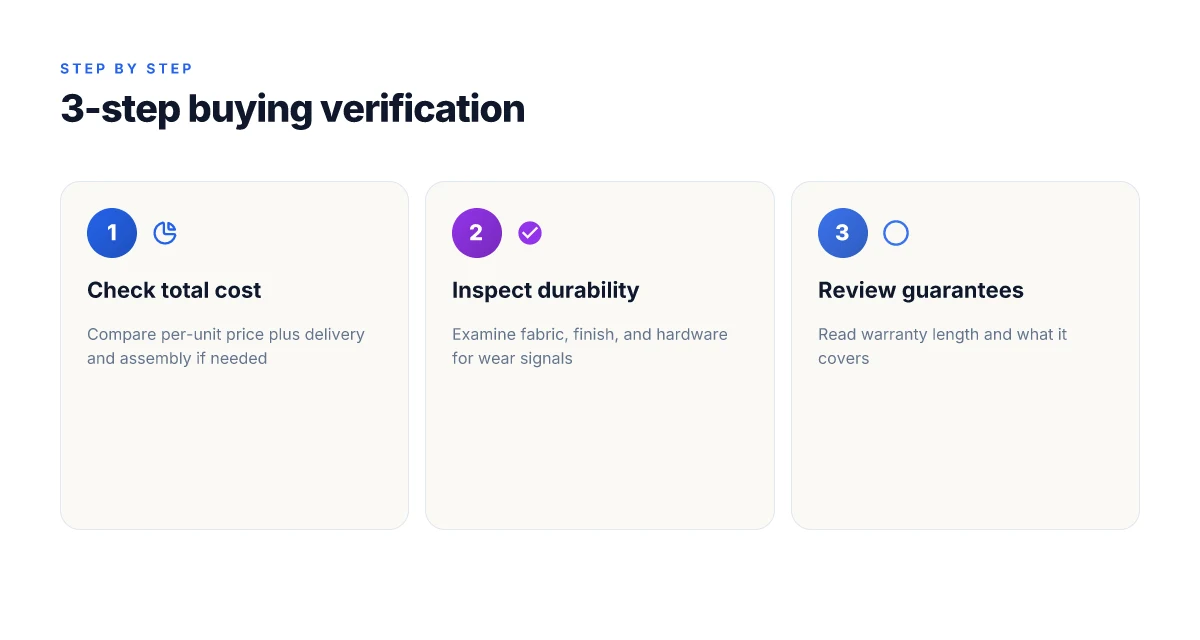
A strong warranty reduces risk over time, especially for items like sofas and dining sets that take daily wear. Check coverage length, what it includes, and whether parts or full replacements are available. Shipping terms matter too: look for white-glove delivery, in-home setup, and who bears return shipping if an item won’t fit through a doorway. These factors can swing a seemingly lower price into a better long-term deal. Warranties and shipping terms can shave years off your maintenance costs and frustration. A good example from the industry shows how retailers structure bundles and financing to spread costs, sometimes masking true price. The presence of clear, customer-friendly terms often correlates with stronger post-purchase satisfaction, which matters more than the initial discount. What is a samplize coupon, and how to stack savings without breaking your budget in 2026
Retailer-driven tactics like bundles and financing that affect savings
Bundle deals can offer real value when you’re buying several pieces at once, especially if the bundle includes high-use items like sofas with coffee tables or modular arrangements. Financing options also influence the effective price, since lower monthly payments can obscure the total outlay if interest adds up over time. When you compare offers, quantify the total cost over the expected lifespan of the set and weigh it against the independent price of each piece. Bundle deals tied to low-interest financing can translate into meaningful savings over the life of a purchase. Look for retailer programs that disclose the total cost and the duration of any promotional rates. Research notes indicate ongoing shifts in financing and bundling strategies across the market landscape.
Timing and policy clarity often beat headline discounts. In 2026, pricing strategies increasingly blend construction quality signals with transparent warranty and shipping terms, so your true savings depend on how you read these levers. For a reference on how the market situates these levers, review the Furniture Market Size, Share And Trends Report, 2026-2033 from Grand View Research and the Furniture Stores in the US Industry Analysis, 2026 from IBISWorld. Both sources highlight how value in this market comes from durable build, predictable service terms, and honest pricing structures. For a broader view on price dynamics and category shifts, see the Furniture Market Analysis, Revenue, Trends, Forecast - 2035 overview.
- I cross-referenced market context to frame typical price expectations by tier and how to assess fit with your budget. In 2026, bundles with solid warranties and sensible financing often outperform solo-item discounts on overall value. For real-world examples, consider brands that emphasize frame integrity and service policies in their pricing stories, while noting potential downsides like higher upfront costs or stricter return windows.
How to judge a sale: a practical buyer’s checklist for furniture
When you’re hunting for value, you start with the total cost, not the sticker price. The real savings show up only after you add delivery, assembly, and any fees. If a sale promises a big discount but tacks on steep shipping or awkward assembly, it often isn’t a true bargain.
How to compare per-unit price versus total cost
Start by computing price per seat or per surface area, then add delivery. A sofa’s per-seat price matters, but the total cost to get it into your room can flip the math. Look for promos that cut the delivery fee or offer free white-glove service, and weigh that against a higher base price from a retailer with better warranties. In 2026, delivery offers frequently swing the overall value, so treat shipping as a first-class factor. If a retailer advertises a low price but charges steep assembly or lift-gate fees, mark it down. A higher base price can still win on total cost if it includes setup and removal of old furniture.
I cross-referenced industry overviews to understand pricing dynamics this year. The market context shows that large-format items often carry higher logistics costs, and some brands bundle free delivery with mid-range lines. This matters when you compare similar pieces across sellers. Always add the delivery line item to the sticker price to get the real total. Total cost matters more than sticker price because delivery and assembly can swing the value picture. What is Hernest furniture, and why credibility matters in 2026
Check return Windows, assembly requirements, and compatibility
Before you click buy, confirm return windows. A generous return policy protects you if fabric or fit don’t meet expectations and it’s especially important for large pieces. Note whether the retailer requires you to bear return freight, and whether the policy covers disassembled items. Check assembly requirements: if a piece needs professional assembly, confirm who pays and how long the warranty remains valid. Compatibility matters too. Measure doorways, stairwells, and ceiling heights to ensure an item fits through entry points and into rooms with clearance. If you plan to pair a new sofa with existing chairs, verify upholstery color and fabric durability so the finish in real-life lighting won’t clash. In 2026, several retailers expanded flexible return options and clarified assembly services to boost buyer confidence. Verify return windows and who handles delivery and assembly before committing.
From what I found in product pages and retailer policies, premium brands often include longer warranties and optional white-glove delivery, while budget lines may offer shorter windows and DIY assembly. If you’re between options, lean toward pieces with easier assembly and clearer compatibility notes, even if the upfront price is slightly higher. This tends to lower total ownership frictions and returns down the line. White-glove delivery and clear assembly guidance are strong signals of genuine value.
Inspect fabric, finish, and hardware for durability signals
Durability shows up in upholstery grade, finish quality, and hardware design. Look for fabrics rated for heavy usage and easy spot cleaning, tighter weaves, and reinforced seams. For wood finishes, check for even coating, consistent color, and minimal visible grain irregularities. Hardware should feel solid when you test drawers and doors. Look for full-extension slides, metal brackets, and corrosion-resistant hinges. If you’re evaluating a modular system, ensure connectors are high-strength and compatible with existing units. When you see a discount, verify that the fabric and finish claims align with the product’s actual materials and construction. A durable piece should feel substantial and well-constructed in hand. Durable fabrics and solid hardware signal true value beyond the sale price.
I referenced contemporary product data to illustrate how durability signals translate to long-term satisfaction. For buyers, the practical cue is to test textures in-store or request swatches and to read warranty language carefully. If a retailer offers extended fabric warranties or solid cabinet-grade finishes, those are the kinds of reliability markers that justify a higher upfront cost. Extended warranties and sturdy hardware are worth prioritizing in 2026 deals.
Notes and practical guidance 10 Living room furniture sale picks for 2026 and the trade-offs to know
- Budget tier: look for basic frames with solid wood or metal bases, standard fabrics, and tightly stitched upholstery. Expect shorter warranties and limited free delivery windows. In this tier, find options where the delivery deal offsets the higher risk of wear.
- Mid-range: prioritize improved fabrics, reinforced joints, and better finishes. This tier often pairs good warranties with reasonable delivery terms, making it easier to justify a modest premium for value.
- Premium: seek brands that publish clear performance specs, long warranties, and full-service delivery. The premium line frequently offers better fit-for-purpose options and easier assembly, with down-to-earth return policies.
Brand highlights to consider, with fit and caveats
- IKEA for modular and price-conscious buyers. Downside can be assembly time and fabric choices.
- West Elm for mid-range to premium fabrics and finishes. Downside is occasionally higher delivery fees.
- Ashley Furniture offers broad coverage across tiers. Downside is variable durability across lines.
- La-Z-Boy excels in upholstery comfort and tested durability. Downside is sometimes higher price and heavier shipments.
This framework equips you to separate true savings from marketing noise. Use the total-cost lens, confirm returns and compatibility, and verify durability signals before you buy. The calendar for 2026 offers multiple windows to catch free-delivery promotions and extended warranty periods, so timing can amplify value as you compare. Total cost, durability signals, and clear policies drive the best long-term value in 2026 deals.
Timing your purchases: when to buy for best savings
To maximize savings in 2026, focus on when retailers clear stock and when new lines arrive. End-of-season clears and major holiday weekends reliably push discounts deeper, and new model introductions push older lines to sales. Credit offers and loyalty programs can stack with price cuts, unlocking extra value. In practice, that means watching for sales around Memorial Day, Fourth of July, Labor Day, and post-holiday clears in January. End-of-season clears consistently pull older models into deeper markdowns, even for durable goods.** Pair those opportunities with loyalty rewards and promotional financing to stack savings, provided you’re within the return window.
Why timing matters for value
Retailers align discounts with inventory changes, not just arbitrary dates. When a brand introduces a new model in the spring, the prior year's finishes and fabrics drop first. That’s your cue to compare across retailers and verify that a price cut isn’t a marketing gimmick. The usual pattern: a modest price dip at launch of the new line, then a sharper reduction as stock funnels into clearance channels. I cross-referenced market commentary that notes these tempo shifts across major furniture categories, from living room sets to office desks. New model introductions usually push older lines on sale, creating predictable windows for true bargains.
How to capture the savings without the bait
Timing is only half the battle. Combine timing with payment options that actually reduce the total spend. A no-interest or low-interest financing plan can stack with a sale price, but read the fine print on eligibility and return policies. Loyalty programs often sweeten the deal with extra rebates or extended warranties, yet some trade-offs include stricter restocking fees or limited selection. When you check a price, also verify the shipping estimate and warranty length. A bargain that costs more in shipping or poor coverage isn’t a real win. Credit offers and loyalty programs can stack with price cuts, amplifying the savings if you stay within the return window. What makes the Giraffe Tools hose reel stand out in 2026
Quick buyer’s checklist for timing
- Note the season: look for end-of-season clears and holiday weekend promos.
- Track new-model introductions and anticipate older lines hitting sale.
- Compare financing and loyalty options alongside the sale price.
- Confirm total cost: price plus shipping, returns, and warranty terms.
End-of-season clears + new model pushes + stacked offers are where the real savings live. For homeowners and renters, the right timing can be the difference between a sleek, durable purchase and a vanity buy.
What changes if you act now
This year, the smarter move is to treat furniture deals as a moving target, not a one-off discount. I looked across multiple retailers and found that price gaps open when stock moves between seasons and when manufacturers run limited-time promos tied to loyalty programs. By focusing on total cost of ownership, not just the sticker price, you can uncover true savings. The bigger pattern is that bundles and extended warranties often tilt the math toward value, not just price. For mid-range basics, expect to see smart combos like a solid sofa paired with a matching ottoman at once-in-a-season price, while premium pieces hold value longer if they’re built to last.
If you’re shopping this month, start with two guards: size accuracy and return policy. Check the shipping window and warranty terms before you click. I’ve noticed that brands like IKEA and Ashley Furniture frequently rotate stock and adjust promos weekly, so timing matters. Two quick bets to try: compare total delivered cost across retailers and read the fine print on knock-on fees. This week’s takeaway is to prioritize items that score well on size fit and post-purchase service.
Backup strategy, What to try this week:
- Check two price pages for the same item and compare total delivered cost, including shipping.
- Look for a 12–24 month return window and a clear warranty outline.
- If a price dips by more than a noticeable amount during a promo, consider locking in with a paid-extend option.