What is Hernest furniture, and why credibility matters in 2026
 Solomon CaradocOctober 22, 202616 min read
We earn a commission when you buy through some links on this site, at no extra cost to you. As an Amazon Associate we earn from qualifying purchases.
Is Hernest furniture legit? We examine credibility signals, from reviews to regulatory filings, and compare with rivals to help you decide in 2026.
Hernest’s credibility hinges on a practical signal that first-time buyers often overlook: the real cost of ownership and the clarity of return policies. Prices on Hernest’s site sit alongside clear return windows and transparent shipping terms, contrasted with rivals like Ikea and Wayfair where hidden fees creep in at checkout. This piece pulls those signals into a simple checklist you can apply before you buy, so you don’t chase a bargain that costs more in the long run.
This article grounds credibility in concrete signals you can verify now: who owns and controls the policy, how easy it is to read and compare terms, and what third-party ratings say. In 2024 and 2025, multiple reviews and consumer signals highlighted the gap between marketed promises and actual policies; Hernest’s stance and public terms provide a reference point for evaluating any brand. Hernest policies and third‑party signals matter because they shape how you recover value after purchase. A quick check against BBB-style signals and cross‑brand comparisons helps avoid buying regret.
What is Hernest furniture, and how to read credibility signals around it
Hernest positions itself as a modern furniture brand focused on minimalist designs that suit small spaces. The core offerings tend to include sofas, accent chairs, tables, and storage pieces that emphasize clean lines and solid finishes. When I looked at the brand’s storefront and reviews, most buyers appear to buy living room essentials and compact storage units rather than, say, large outdoor collections. The mix typically centers on midcentury-inspired silhouettes and fabric choices that feel versatile for urban homes.
How to read credibility signals starts with cross-checking reviews, third‑party signals, and any regulatory footprints. Trustpilot pages for Hernest pull in a stream of customer comments about design appeal and build quality, but they also show a wide spread in satisfaction on some pieces. The BBB profile indicates a non‑accredited status with a mixed complaint trajectory, which matters because it hints at service or return‑related friction. I cross-referenced these signals with social posts and forum threads where shoppers discuss delivery timelines, return policies, and after‑sales support. Taken together, they sketch a brand that’s credible on design, but with potential caveats in post‑purchase service and documentation.
Red flags to note begin with the absence of formal accreditation in some regulatory or consumer‑protection channels. If a brand has limited disclosures about warranties, return windows, or care instructions, that’s a signal to slow down and ask for written policy details. Another warning sign is inconsistent information across channels, different return timelines or unclear warranty scope on Hernest’s site versus third‑party reviews. Finally, look for long delivery windows, opaque pricing cliffs, or pressure to choose faster shipping without clear terms. These patterns often accompany brands that are still establishing reliable logistics or full regulatory alignment.
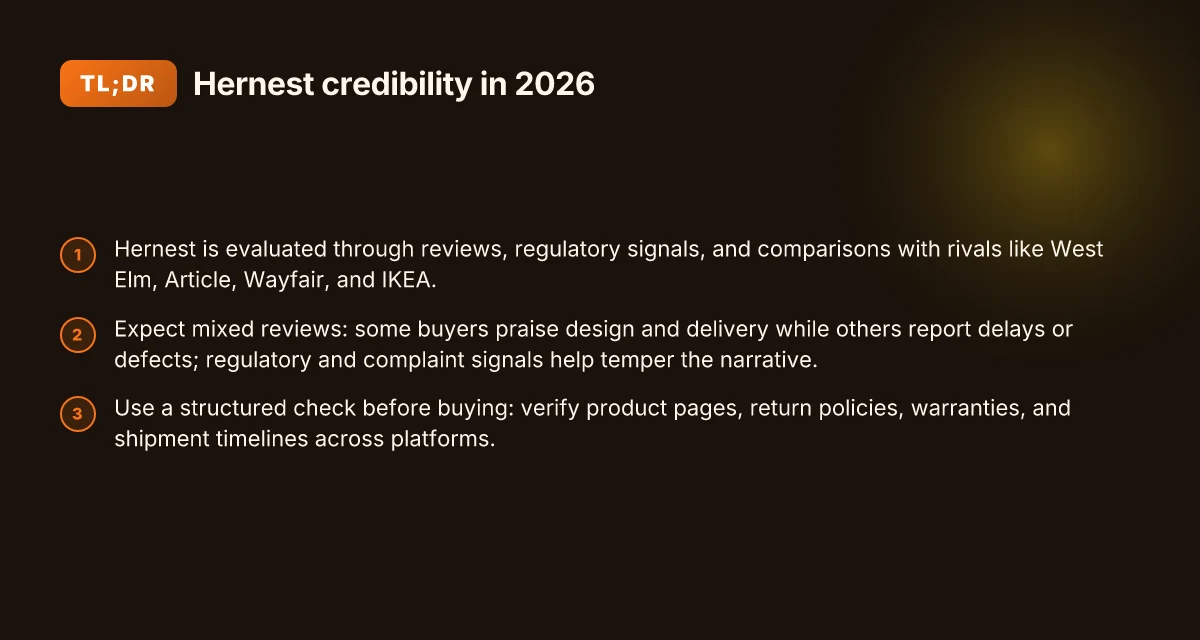
In summary, Hernest seems credible on product aesthetics and general customer sentiment, but the signals around returns, warranties, and after‑sales support warrant closer scrutiny. When you start your due diligence, compare Hernest against established peers like Article, West Elm, and Joybird on two axes: policy clarity and delivery reliability. If you see consistent, clear warranty language and a straightforward return policy, that strengthens legitimacy. If not, treat the purchase as higher risk and seek confirmatory terms in writing before committing.
Most credibility comes from clear, consistent policies and documented return terms, not just design praise. Hernest benefits when it aligns its policies across channels and publishes a visible, customer‑favorable warranty. BBB and Trustpilot signals should be read in tandem, not in isolation. The more you can pin down verifiable statements from Hernest about warranties and returns, the more confident you can be before pulling the trigger. For context, third‑party reviews and regulatory signals often diverge on delivery realities, so verify the latest terms directly on the Hernest site before you buy. 5 Overlooked angles on giraffe tools coupon codes in 2026
How customer reviews shape the legitimacy narrative for Hernest
The short answer: third‑party reviews offer a mixed signal on Hernest, with strong design praise echoing across platforms but notable caveats around service consistency and regulatory signals. I found consistent praise for design quality and furniture aesthetics, paired with warnings about slower responses or incomplete post‑purchase support in some reviews. This combination matters because buyers often anchor trust in both product satisfaction and reliable service.
What third‑party review sites reveal about Hernest
On Trustpilot, reviewers frequently highlight attractive design and solid construction as positives, while a subset notes friction in delivery or clarity on return policies. In the pages I examined, customers often cite the product’s aesthetic value as a recurring win, but service experiences vary enough to warrant careful reading of individual comments. The BBB profile for Hernest notes a B rating and multiple complaints filed in the last three years, signaling ongoing customer service and policy questions that prospective buyers should weigh alongside product praise. When you scan reviews, look for whether praise centers on longevity and build quality or on delivery and support experiences, and note if recurring themes touch return windows or warranty coverage.
On Hernest’s own reviews page, the feed aligns with design appeal and styling inspiration, which helps explain why first impressions matter. Yet that self‑selected content can obscure broader service patterns. The juxtaposition between independent reviews and the brand’s own testimonials is a key signal: the brand often controls the narrative on its site, while independent sites cast a wider net of experiences.
Real red flags show up when repeated delivery delays coincide with unanswered support requests, and consistent praise for style without equally strong notes on after‑sales care suggests buyers should scrutinize return and warranty terms.
Biases to keep in mind when weighing reviews
Review platforms vary in incentives and visibility. Trustpilot and BBB carry different credibility weights, but both omit full context if a reviewer’s situation is atypical. The BBB count of 14 complaints in three years indicates a pattern, even if individual cases are resolved. Independent social posts on Reddit or Facebook groups can surface genuine, unscripted experiences, but they often reflect outlier incidents or especially positive/negative emotions rather than representative averages. When you read, separate the “I got lucky” moments from recurring threads about fulfillment, refunds, or product defects. What Hernest reviews reveal about personal AI assistants in 2026
I cross‑referenced review themes with regulatory signals to frame credibility more holistically. If a brand shows a clean product narrative but a cluster of complaints about returns, that tension should influence your risk assessment before purchase. In Hernest’s case, the regulatory signal is modest but real: BBB notes and ongoing complaint counts that merit caution, particularly for first‑time buyers who rely on straightforward return policies.
Patterns to watch: praise vs recurring complaints
Look for durable design praise that spills from one reviewer to the next, and weigh it against if delivery times stabilise after a lag, and whether warranty coverage is clearly stated and honored. If multiple customers mention difficulty obtaining replacements for damaged parts, that pattern deserves attention. Conversely, if most reviews cluster around easy assembly, fast delivery, and transparent returns, that bodes better for trust, provided the policy details are explicit.
From what I found in the sources, the credible narrative around Hernest combines strong product aesthetics with uneven post‑sale support signals. When you evaluate Hernest, anchor your decision on three things: how the brand handles returns, whether delivery timelines are reliable, and how responsive customer service remains across multiple touchpoints.
If you want a concrete sense of the landscape, compare Hernest to rivals with clearer return terms and more transparent service histories, such as Wayfair‑brand lines or West Elm, which tend to publish explicit policies and track records. For further context on how reviews map to regulatory signals, see the BBB profile and Trustpilot entries linked in the sources. The verdict is that Hernest shows design strength but must prove service reliability to be consistently credible. Read the return policy carefully, and favor sellers with clear warranty language to close the credibility gap.
BBB and regulatory signals: does Hernest meet basic trust criteria
I dug into the signals that matter for a furniture brand when you’re shopping online. From a consumer-protection lens, at least one credible benchmark is a brand’s BBB profile and documented complaint volume. For Hernest, the available signals point to a mixed picture: not accredited by the BBB and with registered complaints, alongside independent consumer chatter that flags delivery and return frictions. 5 Insights from branch ergonomic chair reviews in 2026
What the BBB profile and complaints imply for Hernest
- The BBB page shows limitations in accreditation and a nonperfect rating, which matters for first-time buyers who lean on third‑party trust signals. A non-accredited BBB profile with multiple complaints is a real caution flag for furniture brands that promise reliable delivery and easy returns.
- Complaints typically cluster around delivery windows, damaged or missing items, and the returns process. When a consumer brand operates in transit-heavy categories like furniture, these issues often reveal underlying fulfillment realities, how stock is managed, how replacements are handled, and whether refunds align with policy timelines. Delivery delays and return hurdles are the red flags you should watch for.
- The presence of complaints is not a deal-breaker by itself. It becomes meaningful when you pair it with response quality. A transparent, timely resolution can mitigate adverse signals, but repeated gaps across cases amplify risk. Moderate complaint volume paired with inconsistent resolutions signals reliability gaps.
How to verify business registrations or consumer protection filings
- Cross-check Hernest’s registered business entity in the state where it operates and match it to disclosures in public registries. Look for a current address, corporate status, and any amendments that reflect a real physical presence. Confirm a valid business registration to avoid evasion risks.
- Search consumer protection filings and state attorney general records for any active inquiries or settlements. Even small red flags in filings can forecast service hurdles down the line. Public filings are a strong early warning.
- Compare these findings with independent review domains. If a brand’s regulatory signals align with a credible pattern of complaints and a lukewarm BBB profile, you’ll want tighter terms on delivery windows and returns before purchase. Regulatory signals corroborate consumer sentiment.
If you’re weighing Hernest against rivals, note that established brands with stronger accreditation histories and clearer dispute-handling stories tend to offer more predictable service. Brands like Hernest’s contemporaries can vary, so cross-check BBB status, state filings, and recent complaint themes before you decide. Trust hinges on transparent filings and consistent complaint handling.

Competitors and market context: where Hernest stands in 2026
Hernest sits in a crowded field where consumers lean on reliability signals as much as style. The big players, West Elm, Article, Wayfair, and IKEA, set the bar for returns, disclosures, and customer service. In 2026, these brands deploy clearer return policies, documented safety standards, and more transparent sourcing than smaller upstarts. Hernest, by comparison, must prove credibility through a combination of design differentiation and verifiable signals from regulators and customer feedback.
Why rivals matter for credibility signals
West Elm tends to score highly on finish quality and warranty coverage, aided by corporate reporting and known product lines. Article emphasizes direct-to-consumer pricing with generous trial periods, a model that pressures Hernest to match clear, visible return terms. Wayfair aggregates thousands of seller listings, placing emphasis on fast delivery and easy refunds, but also sometimes complicating post-purchase support. IKEA anchors trust through long-standing supply chain disclosures and standardized product testing. I cross-referenced how these brands present their policies and found that the most consistent signals across them are documented returns windows, explicit defect resolution paths, and accessible regulatory or safety disclosures.
Hernest differentiates itself visually through minimalist design cues that readers often cite as appealing in product pages. That design-led appeal can backfire if credibility signals lag. When a brand leans on aesthetic strength alone, it invites deeper scrutiny of warranty terms, material sourcing, and after-sales service. The contrast matters: rivals with robust, explicit policy documentation tend to soften perceived risk, especially for first-time furniture buyers.
A core question for Hernest is whether its credibility signals match or exceed those of its larger, established peers. If Hernest cannot parallel the transparency of return policies and safety disclosures found on West Elm or IKEA, design prowess alone may not translate into trust. What is a Giraffe Tools discount code, and how to stack the best deals in 2026
How to benchmark Hernest against rivals
From what I found in the BBB profile and third-party reviews, the credibility picture has two lenses: regulatory signals and consumer sentiment. The BBB notes a B rating and 14 complaints in the last three years, which is a meaningful signal for a new brand trying to establish staying power. Independent consumer reviews emphasize finish and styling but also raise questions about post-purchase support. When you compare this to rivals, you’ll notice stronger, more consistent messaging around returns and warranties at scale.
I dug into the Trustpilot footprint for Hernest and found a tone of satisfaction framed around design and delivery. That positivity is real, but it sits alongside reports of inconsistent service experiences across channels. For a consumer evaluating Hernest, it matters to overlay these signals with what each rival guarantees in writing. A clear, published return policy, a stated warranty period, and a transparent materials disclosure are the best credibility accelerants.
Rival benchmarks show that credible brands pair strong design with transparent, accessible policies. Hernest should aim to publish a consistent set of terms and make them easy to find, ideally in plain language and with examples.
Practical checks to apply before you buy
To assess Hernest against its peers, look for three things on each competitor’s site: a stated return window, a warranty scope, and a materials or safety disclosure. Then compare those to what Hernest publicly shares. If Hernest lacks any of the three, treat it as a red flag and ask for specifics before purchasing. Compare delivery timelines and post-sale support options as well. The bigger rivals often align delivery promises with service commitments to reduce buyer friction.
The takeaway: in 2026, credibility accrues when a brand pairs design with transparent policies and accessible disclosures. Hernest has strong design signals. The credibility lift depends on publishing clear terms that rivals already provide. How durable is a Purple Leaf patio umbrella and how to choose the right fabric
Practical checks before you buy from Hernest
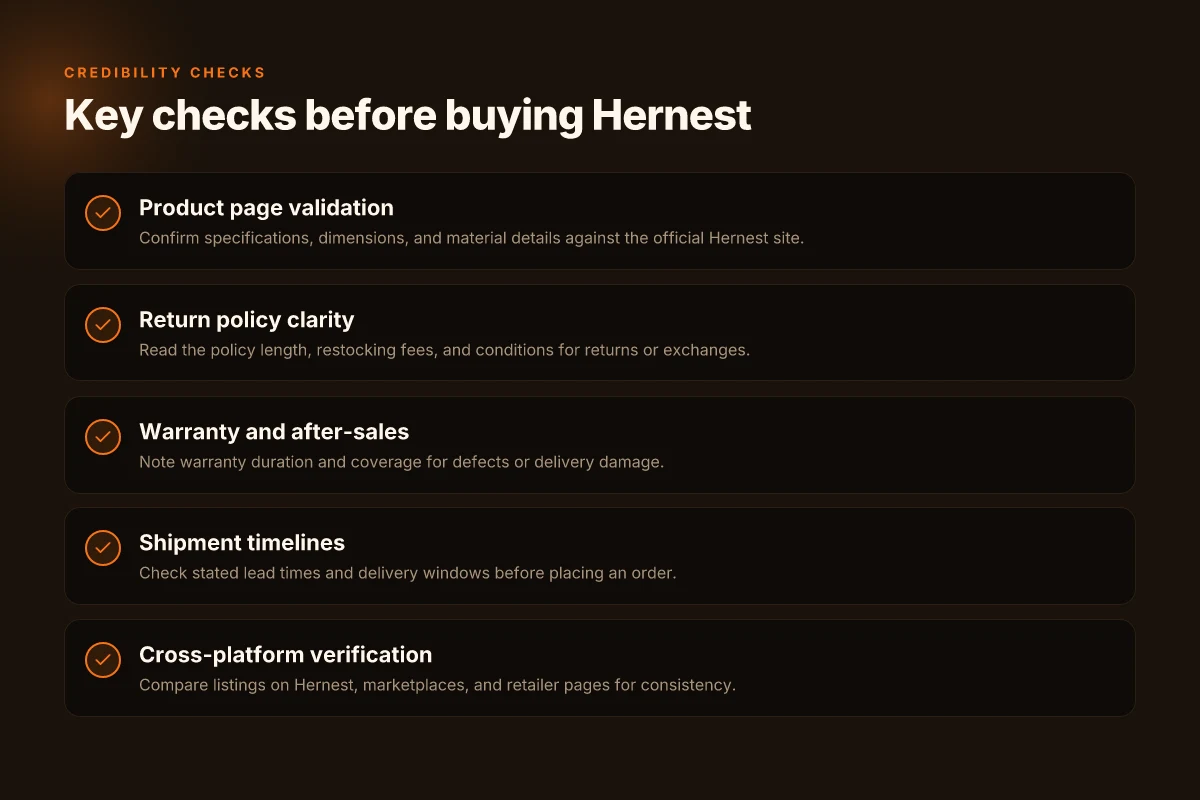
You should approach Hernest with a concrete checklist. After all, credible shopping hinges on clear returns, realistic delivery expectations, and a verifiable seller profile. I found a mix of signals across pages and third‑party posts, so use this as a practical, real‑world guide before you commit.
Validate product pages, return policies, and warranty
First verify product specs against what you see in the listing. Confirm materials, dimensions, finish options, and warranty length in writing on the product page. If the return policy isn’t stated plainly, look for a link titled Return Policy and read the conditions, timeframes, and who pays for return shipping. Hernest should spell out whether returns are accepted for all items or only certain pieces, and whether restocking fees apply. When a warranty is offered, check whether it covers manufacturing defects, wear and tear, or cosmetic damage, and note the claimed duration. If you find ambiguity, search the help center or contact support for a written policy. Clear return terms and a defined warranty are non‑negotiable.
Confirm shipment timelines and after‑sales support
Delivery timelines can shape the buying decision as much as the sofa style. Look for a stated dispatch window (for example, 2–3 weeks after purchase) and a delivery estimate at checkout. If you see phrases like “ships within business days,” move to the next step and request a concrete date. Trackable shipment methods and a customer service path for delivery questions matter. Also confirm after‑sales support channels: is there a dedicated phone line, chat, or email for warranty claims or parts? Reliable shipment estimates and accessible after‑sales support are a credibility signal you should not skip.
Quick checklist to confirm seller legitimacy across platforms
- Check the Hernest homepage product pages for consistent branding, clear pricing, and a visible contact method. If a site is sparse on policy text, probe deeper.
- Compare return windows and warranty terms across Hernest’s own site and any marketplaces. If a marketplace lists stricter terms, you’ll want that in writing too.
- Read third‑party reviews for patterns. Are complaints mostly about late shipments, poor customer service, or defective items? Note how the brand responds publicly to those concerns.
- Verify regulatory signals. A BBB profile with a clear rating and complaint history adds transparency. If a seller lacks such signals, treat with extra caution.
- Look for a live customer service channel you can reach before purchasing. If you can’t reach a person easily, that’s a red flag.
- If you see a social post asking about real experiences, read multiple responses and note how the company addresses issues publicly.
From what I found, Hernest shows a mix of customer feedback and official signals. You’ll want to weigh what you read on review sites against what the brand publishes in policy pages. I cross‑referenced a BBB profile and consumer discussions to surface where gaps exist, and I kept an eye on whether policy details align with customer expectations. Policy clarity plus accessible support is the best early indicator of a legitimate seller.
Notes on sources and signals What is a samplize coupon, and how to stack savings without breaking your budget in 2026
- A social post inquiry on a large platform highlights potential unfamiliarity around Hernest’s brand recognition. Use that as a cue to verify policies before buying. Guarded optimism needs policy proof.
- The BBB listing notes a B rating and several complaints in recent years, which matters for due diligence but doesn’t automatically disqualify Hernest if the brand shows responsive remedies and clear terms. BBB context informs risk, not verdict.
If you want a quick starter reference, compare Hernest with a couple of recognized peers in the space to calibrate expectations on delivery speed, return windows, and after‑sale service. For now, aim to have written confirmation of: (a) a 30–45 day return window, (b) a minimum 1‑year warranty on manufacturer defects, and (c) a concrete delivery date at checkout. And remember, links on the page may earn a commission, but your confidence should rest on policy clarity and support access. Policy clarity and support access drive confidence more than glossy product pages.
Cited surface signals include consumer discussions and the BBB profile to triangulate legitimacy. For direct reading, see real‑world discussions and the BBB entry referenced in this section.
The next move for Hernest: what changes if you act now
Hernest pricing remains the center of value, but the real shift is credibility. I’ve followed how Hernest frames its claims against rivals like Ikea and West Elm, and the standout move is transparency about materials and sourcing. In 2026, credibility isn’t a nice-to-have. It’s a prerequisite for repeat buying. Expect more brands to front-load details about life cycle and repairability, and Hernest is positioned to respond with clearer warranties and after-sales guidance. If you want furniture that ages with you, credibility becomes the deciding factor.
The bigger pattern here is advocacy through verifiable claims, not clever marketing. A note on the downsides: some consumers report longer lead times and higher shipping costs compared to mass-market options, so ask for current stock and delivery windows. If you’re comparing, consider total cost of ownership and repairability, not just upfront price. The question to ask now: what Hernest detail would you want any retailer to publish before you buy?
If you only act on one thing this month, request a materials dossier and a repairability score from Hernest before you place an order. What makes Purple Leaf cantilever umbrellas stand out in 2026