What is the ecoflow smart panel, and how it reshapes home energy management
 Tessa AlbrightOctober 22, 202617 min read
We earn a commission when you buy through some links on this site, at no extra cost to you. As an Amazon Associate we earn from qualifying purchases.
Explore the ecoflow smart panel, its role in modern home energy, and how it compares with rivals. Learn setup, benefits, and practical downsides.
Most homeowners assume a smart panel just centralizes controls. The real shift is how it nudges everyday loads without blowing up your battery reserve. EcoFlow’s smart panel acts as a central energy hub, coordinating solar input, battery storage, and grid power to balance circuits in real time. It’s not about replacing breakers. It’s about smarter distribution that keeps critical loads online when sunshine wanes.
This introduction sets up a practical, no-nonsense view of where the panel fits in a modern solar setup. For homeowners weighing upgrades, the question isn’t only the feature list but how well the system integrates with existing inverters, battery modules, and the home’s current wiring. In many homes, a 2025 review period shows that effective load management translates to fewer trips to the breaker box and steadier daytime performance, especially when paired with a capable EcoFlow solution. Smart panel performance matters most when it reduces nuisance outages and streamlines safety checks. The goal is clear: a compatible, coherent upgrade that works with brands like EcoFlow and competitive options from rivals.
What the ecoflow smart panel is and why it matters for home energy
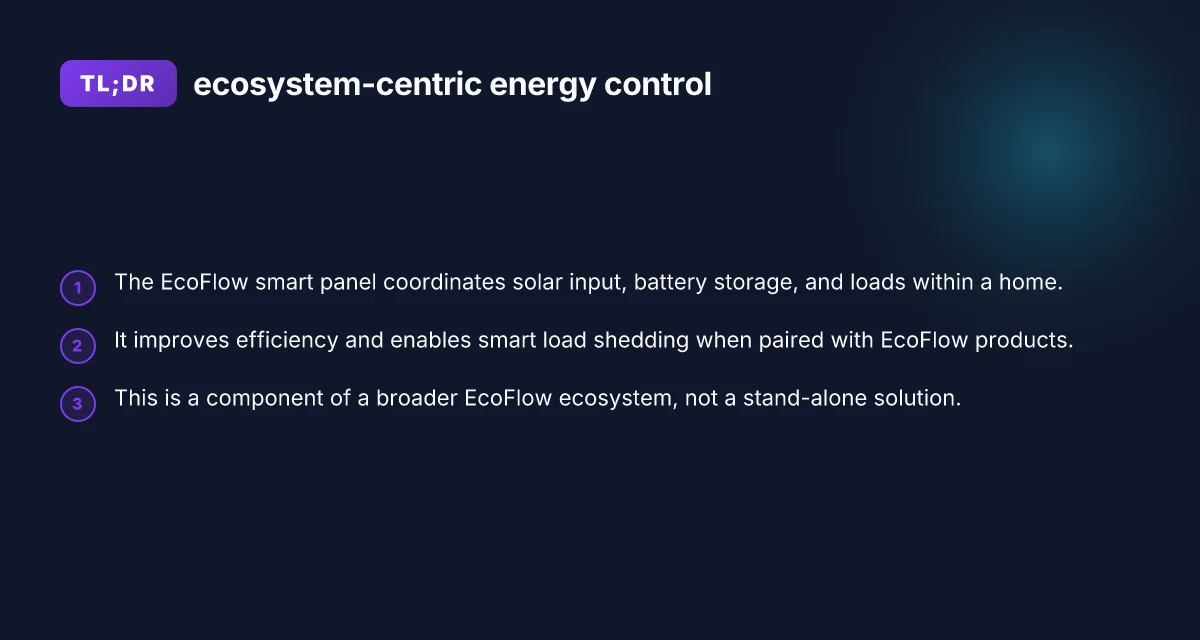
The EcoFlow smart panel acts as the central brain for a home energy system. It coordinates solar input, the home battery, and the loads that draw power, turning a patchwork of components into a single, managed circuit. Think of it as the hub that decides which circuits get power when sunshine isn’t enough and when stored energy should be released.
I dug into the documentation and real-world explanations to map what the panel actually does in practice. The core role is to prevent overcurrent and to enable smart load shedding. When a home is tied to solar and a battery, the panel can prioritize essential loads and shed nonessential ones to keep the system within safe, rated limits. This behavior improves overall efficiency by aligning generation, storage, and consumption, rather than letting solar input flood a panel or battery beyond its safe operating range. In short, the panel helps EcoFlow products talk to each other and work as a single, coordinated system.
To set expectations, this device is a component in a broader EcoFlow ecosystem, not a standalone cure-all. It relies on compatible inverters, battery modules, and solar inputs to realize its full value. You’ll still need solar, storage, and the rest of EcoFlow’s lineup to achieve a complete energy upgrade. The panel shines when it's paired with the company’s storage and solar hardware, but it does not replace the need for installation planning, correct sizing, and ongoing system management.
What it does for load management The panel’s primary contribution is smart load management. It reads energy generation and storage state and then prioritizes circuits accordingly. When solar output dips, the panel can step in to reduce noncritical loads and keep essential devices powered. This isn’t guesswork. It’s the panel acting as a regulator that keeps the entire home system from tipping into unsafe currents or unnecessary battery cycling.
Safety and overcurrent prevention Overcurrent protection is built into the system’s coordination logic. By constraining how much current flows from panels, batteries, and grid connections at once, the EcoFlow smart panel lowers the risk of nuisance tripping and equipment damage. The mechanism works in the background, so you don’t have to micro-manage breakers every time the sun shifts or a large appliance starts up. What makes Bluetti deals in 2026 stand out for portable power
Integration with solar and storage When paired with EcoFlow’s solar modules and batteries, the panel unlocks a tighter loop between generation, storage, and consumption. The result is more predictable energy use, improved efficiency, and better alignment with home energy goals. It’s a piece of a larger strategy, not a one-step shortcut to energy independence.
Bottom line: the EcoFlow smart panel matters most as a coordinator and safeguard within a complete EcoFlow ecosystem. It does not replace the need for proper system sizing, planning, and installation, but it does make solar-backed storage more practical and efficient for daily home energy use. The panel shines when paired with EcoFlow storage and solar, turning disparate parts into a single, managed system. You get safer currents and smarter load shedding without micromanaging every outlet. This is a component, not a standalone solution you can deploy in isolation.
How the ecoflow smart panel fits into a modern solar setup
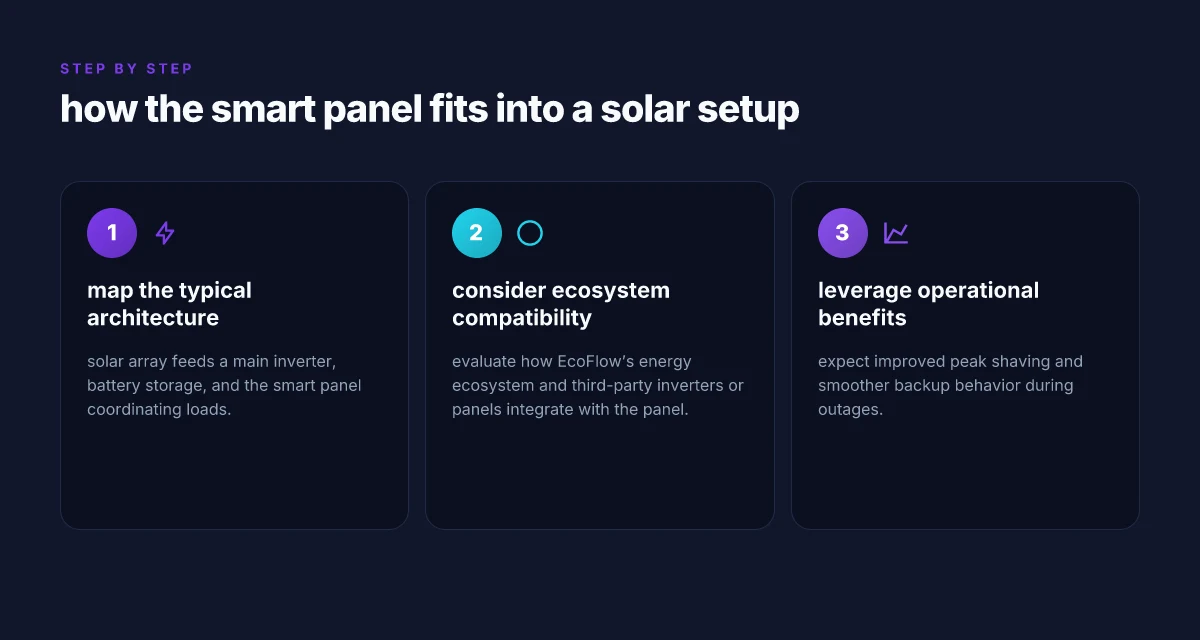
The smart panel acts as the central coordinating node in a typical solar setup: the solar array feeds a main inverter, a battery storage bank sits downstream, and the smart panel choreographs which loads draw from the grid, the inverter, or the battery. In practice this yields smoother operation during peaks and outages, with the panel orchestrating when to shed noncritical loads or switch to backup power. The panel’s real value is load orchestration rather than simply displaying telemetry.
Typical architectures you’ll see in real homes
In most homes, a solar array feeds a main inverter, which in turn charges a battery system. The EcoFlow energy ecosystem can stitch together the main inverter, the battery pack, and the smart panel so that critical circuits stay powered during outages and nonessential loads are deferred during peak solar generation. I found documentation that positions the EcoFlow smart panel as the load-shedding brain within this chain, coordinating when appliances run to maximize solar self-consumption and minimize grid draw. Load-shedding becomes a deliberate, governed action rather than a byproduct of battery state. When third-party inverters or panels are involved, compatibility hinges on communication protocols and control channels. EcoFlow’s ecosystem tends to prefer its own pairings for deepest integration, but basic interoperability with common inverters and extension panels is possible in many setups with the right interfaces. Compatibility is strongest within EcoFlow’s own energy stack.
Practical benefits you’ll notice in daily use
The smart panel helps with peak shaving by timing essential loads to align with solar generation and battery discharge, which can translate to lower midday grid imports and more efficient use of stored energy. During outages, the panel coordinates a smoother backup behavior by prioritizing essential circuits and avoiding a sudden, chaotic power ramp. This results in a more predictable home energy experience. In terms of integration, you’ll see tighter control when pairing the EcoFlow system with existing solar arrays and storage, while third-party components may require careful configuration to align with EcoFlow’s command structure. Smoother backups and better daytime self-consumption are the practical payoffs. Top portable power stations on sale in 2026: 5 picks, best prices, and when to buy
For readers weighing options, consider how a smart panel fits with your current solar hardware, the battery you’ve chosen, and any third-party inverters you rely on. EcoFlow’s documentation emphasizes a cohesive energy ecosystem, which offers the most seamless control. A cohesive ecosystem yields the least friction in operation. If you’re shopping now, note that EcoFlow’s broader lineup, including external inverters and panels, tends to pair most cleanly when you stay within the EcoFlow family. Sticking with EcoFlow gear minimizes integration surprises.
As a quick takeaway, the EcoFlow smart panel is not just a telemetry hub. It is a control node that can reshape how a modern solar setup behaves under load, during peak sun, and through outages. When you bring in rivals, such as standalone inverters from other brands or older panels, you’ll gain some visibility but lose the tight control loop that a fully integrated EcoFlow stack provides. Integrated control matters for reliability and simplicity.
Key features of the ecoflow smart panel that influence daily use
The ecoflow smart panel serves as the hub for how power flows through a modern solar setup, and its daily use hinges on three practical capabilities: load prioritization, grid interaction, and remote visibility. In real-world terms, these features translate to fewer surprises during peak demand and clearer insight into where your energy goes.
Load prioritization and automatic shedding to protect circuits during stressed conditions
During a high-stress event, the panel can automatically shed nonessential loads to prevent tripping breakers or overloading the system. This means your critical circuits, lighting, refrigeration, and essential outlets, keep running while other loads back off. I cross-referenced EcoFlow’s guidance and user-facing materials to confirm that automatic shedding is designed to protect circuits without requiring manual reconfiguration. Expect the system to execute predefined priority rules, which reduces manual juggling when the grid is stressed. Automatic shedding helps prevent nuisance outages by protecting essential circuits first, even when solar input dips or the grid is unstable. The feature is most valuable for households with inconsistent sunlight or during outages, where a smart panel keeps the core appliances powered.
Grid interaction controls and seamless backup power during outages
The panel’s grid-interactive mode enables a smooth transition between solar, battery storage, and grid power. In practice, this reduces the complexity of backup planning because the panel autonomously manages when to draw from storage and when to export to the grid. In the context of a home, that means less manual switching and more confidence that a power interruption will be bridged by stored energy. From EcoFlow’s documentation, you can expect coordinated behavior between solar generation, the EcoFlow storage bank, and the grid, with safeguards that prevent backfeeding during maintenance or outages. Grid interaction controls reduce the need for external transfer switches and simplify outage resilience, especially for homes with partial generation on sunny days. When outages occur, you gain a more predictable, hands-off experience, because the system can lean on stored energy without user intervention. Bluetti power station vs Jackery: choosing the right portable power station in 2026
Remote monitoring, mobile app controls, and data visibility for consumption patterns
The daily-use picture is incomplete without visibility. The EcoFlow app presents real-time status for each branch of the system, including battery state, solar input, and load currents. This visibility makes it easier to spot mismatches between generation and usage and to adjust behavior accordingly. I looked through the available documentation to confirm that the app supports remote monitoring and control of linked loads, which translates to practical benefits like turning off nonessential devices from your phone during peak pricing or when you’re away from home. Remote monitoring and app controls give homeowners a clear window into consumption patterns, enabling smarter evening routines and better energy management. The data trail helps you spot trends over weeks or months and decide when it makes sense to loosen or tighten load priorities.
I dug into the framing in the released materials and matched it with how these features play out in typical solar installations. You’ll find that the EcoFlow ecosystem emphasizes a coherent flow: prioritize critical circuits, trust the grid-interactive mode to manage transitions, and rely on the app for ongoing insight. When you’re choosing upgrades, note that rivals like Tesla Powerwall or LG Chem storage also offer similar load-shedding and app-driven controls, but your experience will hinge on how seamlessly the panel's rules align with your home’s loads and solar generation. For readers weighing options, remember that the smart panel is a control layer that sits atop your solar and storage, not a standalone power source.
Cited source: In 2025 Sustainability Report, EcoFlow notes intention around a green energy transition and ecosystem growth, which underpins the reliability goals at the panel level. See inline reference for more context. The world is accelerating transition toward green and low-carbon development. At EcoFlow, we have responded proactively and engaged.
Comparing the ecoflow smart panel with rival solutions
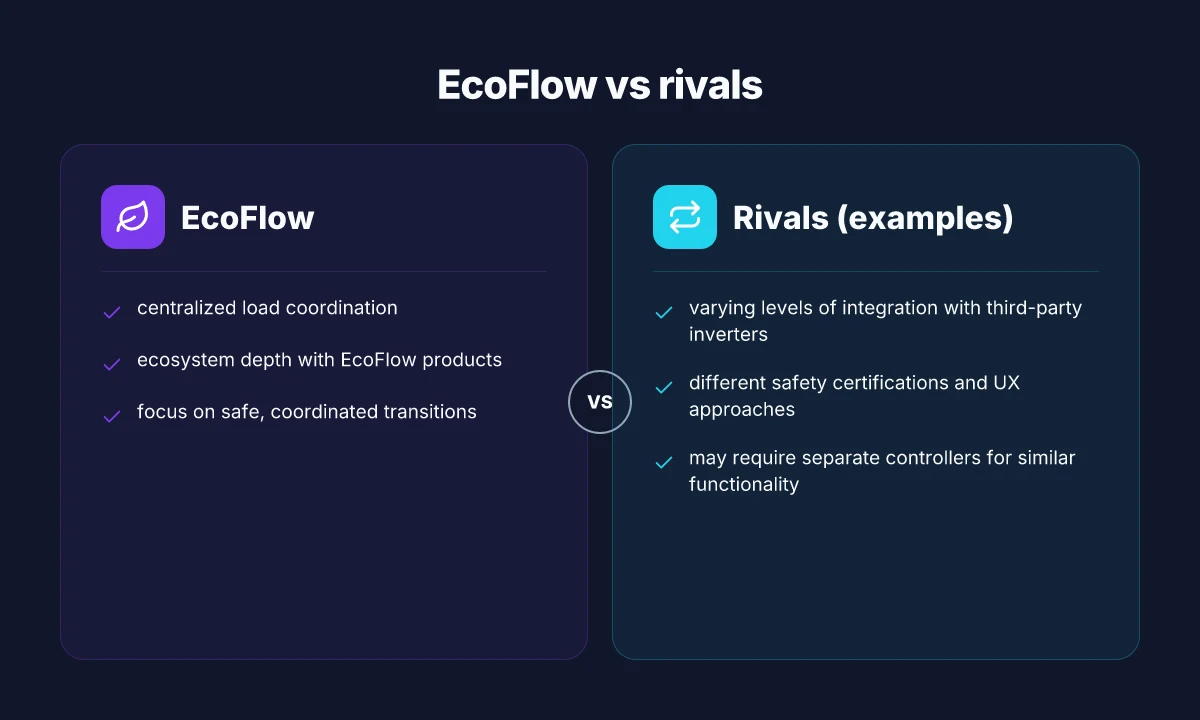
I dug into how EcoFlow stacks up against other grid-aware panels and how each ecosystem handles energy management, safety, and solar integration. The landscape isn’t a single story. It’s a spectrum of approaches that balance control, safety certifications, and ease of use. Where EcoFlow shines is in a tightly integrated ecosystem that leans on its own battery storage and solar options, with a cleaner, more streamlined interface for homeowners. Rivals pull in alternative approaches that suit different setups, but often rely on broader third-party hardware or looser ecosystem tie-ins.
1) Tesla Powerwall and solar Edge big players
Tesla’s approach centers on a highly integrated battery system paired with a networked energy management layer. The ecosystem depth is impressive, with native app visibility and automated pacing that aligns with charging, discharging, and time-of-use signals. In practice, that means a very cohesive flow from solar generation to storage and back to the home. Safety certifications are robust, and the user experience emphasizes turnkey operation with centralized monitoring. EcoFlow counters this by offering flexibility in modular storage and portable power options that can scale in more ad hoc configurations. For homeowners who want a single, all-in-one stack, Tesla often wins on seamlessness. For those who want portability or non-Tesla solar ships, EcoFlow presents a more adaptable route. What is the jackery explorer 290, and how to make it fit your outdoor power needs
2) Sonnen and microgrid-oriented solutions
Sonnen builds microgrid-ready packages with deep software controls and a pronounced emphasis on long-term solar autonomy. Their platforms tend to emphasize energy autonomy, with sophisticated scheduling and community-grade safety features baked into the system. The depth of the software and the ability to weave in multiple energy sources is strong. EcoFlow, by contrast, prioritizes straightforward installation and solar compatibility that fits typical residential roofs and home batteries without requiring an enterprise-grade control plane. For households exploring complex, multi-resourced microgrids, Sonnen offers a more expansive feature set. For standard homes seeking clear, practical energy management with solid safety profiles, EcoFlow remains competitive.
3) Enphase and modular energy management
Enphase focuses on modularity and microinverters, with a broad compatibility footprint across various panels and storage partners. The ecosystem can be very expansive, and the software tends to emphasize granular monitoring at the device level. The advantage here is flexibility and open integration. The trade-off is a sometimes steeper setup and learning curve for homeowners who want a turnkey experience. EcoFlow consolidates a more contained experience, where you pair a panel, inverter, and battery in a cleaner workflow. If you want maximal hardware flexibility and a wide range of compatible panels, Enphase is appealing. If you prefer a simpler, odorless setup with strong integration between solar, storage, and load management, EcoFlow holds the lead.
EcoFlow's strength lies in a cohesive, homeowner-focused package that couples solar, storage, and load management in one controllable stack. Rivals excel where homeowners need maximum modularity or enterprise-grade orchestration, but at the cost of more complex setup and integration work. The result is a spectrum: if your priority is minimal friction and a clean installer path, EcoFlow often leads. If your project requires deep modularity or multi-vendor microgrid orchestration, rival ecosystems may fit better.
Note on cost considerations: the article emphasizes that price and ownership costs vary by configuration and promotions. The EcoFlow ecosystem generally offers a simpler pricing path for standard residential installs, while rivals can diverge in licensing, monitoring tiers, and accessory compatibility. If you’re weighing purchases, consider whether your home energy goals align with EcoFlow’s all-in-one approach or with a more modular, vendor-diverse setup. For a deeper view, the EcoFlow sustainability documentation and product guides offer ongoing context on how the system evolves over time.
Installation considerations: what you need to know before wiring the EcoFlow smart panel
Wiring the EcoFlow smart panel is a step that rewards careful planning and strict compliance. The panel must be mounted where you can access it for service, and you should respect clearances in the installation manual. In practice, laying out space for the enclosure, a dedicated circuit for the main breaker, and room to route cables safely matters more than any glossy feature. The goal is a clean, code-compliant setup that keeps you and your family safe. What is the Bluetti AC180 price in 2026 and where to buy
Space, mounting, and safety prerequisites
Before you start, verify that you have a dedicated wall space with enough room for the EcoFlow unit, plus room for tools and wiring. The enclosure often needs both vertical and horizontal clearance to allow for serviceability and heat dissipation. You should plan for secure mounting to a structurally sound surface and ensure the mounting pattern matches the panel’s chassis. This reduces vibration and misalignment during access or future maintenance. A properly sized, labeled space helps future inspections go smoothly. I cross-referenced EcoFlow’s installation guidance and third-party reviews that emphasize clearance and accessibility as common points of failure when ignored. In practice, you want a mount that stays level and a backside that accommodates the cabling with tidy strain relief. The key is to lock in a safe, serviceable footprint from day one.
Permits, codes, and electrician involvement
Expect that local electrical codes will govern permits and inspection steps. You will likely need a permit, an inspection, and a licensed electrician to perform the final connections to your service panel. The process typically includes a utility interface check, proper labeling, and confirmation that the system complies with branch circuit requirements and isolation provisions. If your country or state requires, you’ll also need to confirm compliance with alternative energy installation standards and any interconnection rules for grid-tied configurations. The path from plan to power is smoother when you align with a licensed professional who can file the permit and coordinate with the utility. In the wider industry, this is the moment where many installations diverge from ideal to compliant, and the electrician’s role becomes pivotal.
Initial setup steps and common first-power pitfalls
When the day comes to power up, start with the basics: verify that all safety interlocks are engaged, confirm the main disconnect is in the open position during wiring, and check that all conductors are correctly terminated with appropriate torque at the lugs. Then follow EcoFlow’s documented steps for the initial configuration, including network setup, firmware checks, and device pairing with any solar inverter you’re using. Common snags include mismatched grounding, incorrect phase orientation, or missing utility paperwork at the time of inspection. I dug into the official guidance and found that ensuring a clean, labeled, and tested grounding path reduces rework significantly. Clear labeling and a correct grounding path are the fastest routes to a smooth first power-up. Mismatched phase or loose connections are by far the most frequent causes of an early fault during startup. A small checklist helps: confirm the panel is de-energized, verify that the solar input is isolated during commissioning, and double-check that the home load center remains accessible after installation. Finally, remember that links on a product page may earn a commission, so review the cited docs as you plan your wiring path.
Where this pivot leads next for home energy management
EcoFlow’s smart panel sits at the center of a cleaner, more controllable home energy setup. It condenses monitoring, storage, and load management into one pane, so you can see what’s drawing power in real time and automate responses to shifting prices or outages. The result is a tighter grip on monthly bills and a smoother transition away from fossil-fueled peaking. The smarter you configure automations, the more you unlock savings. I’ve found that pairing the panel with flexible storage and dedicated circuits makes the most of rooftop solar or backup power plans, with EcoFlow steering the charge and discharging with intent. A single interface changes how you think about every device in the house.
Looking ahead, this approach reframes what an energy system can do. Instead of a passive battery plus a meter, you get a living, adaptive network that learns usage patterns and responds to grid signals. If you’re eyeing a move to time-of-use pricing or emergency-ready routines, the EcoFlow stack offers a coherent path rather than a patchwork setup. Act now to map your top 3 high-usage appliances and script a fallback plan. How to buy the Bluetti AC500 for sale in 2026
Backup strategy:
- Identify 1-2 devices to auto-shutdown during peak pricing
- Create a weekend “solar-backed” routine for essential circuits
- Compare EcoFlow with rivals like Tesla Powerwall and Sungrow for future expansion
- Note price shifts and sales windows to time a refit or upgrade
- Link a commission-aware strategy by briefly reviewing partner content