5 Surprising truths about the EcoFlow River and how portable power changed in 2026
 Nova EngelmannOctober 22, 202617 min read
We earn a commission when you buy through some links on this site, at no extra cost to you. As an Amazon Associate we earn from qualifying purchases.
Explore the EcoFlow River's real-world performance, costs, and trade-offs in 2026. Learn how this portable power station fits modern off-grid needs and what rivals offer.
Most buyers overestimate how long tiny power banks can run a weekend off-grid. The EcoFlow River punches above its size for essential gear, yet the real decision comes down to runtime versus load, not just portability. River offers a compact, lightweight profile with practical capacity, while rivals like Jackery and Bluetti push heavier loads or longer runtimes.
In this intro, I’ll lay out how 2026 reshapes portable power for campers, RVers, and emergency setups. You’ll see how to compare total cost of ownership, not just sticker price, and why a small station can beat a bulky one for most outdoor scenes. Expect concrete references to monthly usage patterns, warranty expectations, and a clear framework for choosing between the EcoFlow River and its closest rivals when you’re evaluating compact power stations now. EcoFlow's River is easy to carry and ready for essential devices, but the real test is how it stacks up in real-world budgets and use cases across 2026.
Why the EcoFlow River stands out in 2026 for portable power
The EcoFlow River lineup remains a compact power solution that folds into tight spaces while delivering real output for outdoor use and small-home backups. In 2026, the River family continues to balance size, weight, and performance, with higher-output options in the Gen4 range that suit longer camping trips or off-grid van life. I found that real-world owners praise the River’s portability without sacrificing the ability to run essentials.
1) Compact form, flexible power options
The core appeal is a compact, lightweight shell that slips into a backpack or under a seat, paired with an expanding set of input and output options. The River Gen4 models push this further with higher sustained output versus earlier generations, while preserving the familiar plug-and-play simplicity. This means you can run a fridge, a laptop, or a small blender without hauling a larger generator. In practice, campers and van lifers appreciate the lighter load and the confidence that comes from reliable recharging on the go. EcoFlow keeps the River’s footprint small while widening what it can push out.
2) Real-world use cases that matter
Camping trips often hinge on predictable power, not theoretical maxes. For many, the River serves as a trustworthy companion for small appliances, LED lighting, and recharge cycles for phones and cameras. In an RV or van setup, it acts as a portable power reservoir that avoids the heft of bigger units, yet still powers essential devices through varied adapters. For emergency backups, the River’s ability to accept multiple input types helps when shore power is unavailable or intermittently unreliable. This versatility translates to fewer compromised trips and more consistent access to electricity when you need it most. Real-world use cases show the River delivering dependable, portable energy for outdoor and emergency needs.
3) Faster recharge and smarter inputs than older generations
Compared with older River generations, the Gen4 family emphasizes faster recharging and expanded input/output flexibility. The newer models can accept more efficient charging methods and a wider array of connectors, which shortens down times between outings and helps you top up from diverse sources, including solar or vehicle DC. This upgrade matters because quicker recharges shorten downtime between adventures and reduce anxiety around power gaps in remote settings. Upgrades to input flexibility and recharge speed deliver tangible, day-to-day benefits for 2026 users.
Bottom line: the EcoFlow River remains a standout blend of portability and practical power. It shines for campers, van dwellers, and households needing a compact, reliable backup. Rivals offer similar light footprints, but River’s improved recharge speed and broader input/output options, plus official availability from EcoFlow, keep it competitive in 2026. For buyers weighing a compact power station, the River family warrants serious consideration, especially if you value quick top-ups and flexible charging in tight, remote spaces. Power on the move, with fewer trade-offs. What is the Bluetti Elite 200 V2, and what trade-offs matter for real-world backup power
The 2026 landscape: how EcoFlow River compares to rivals
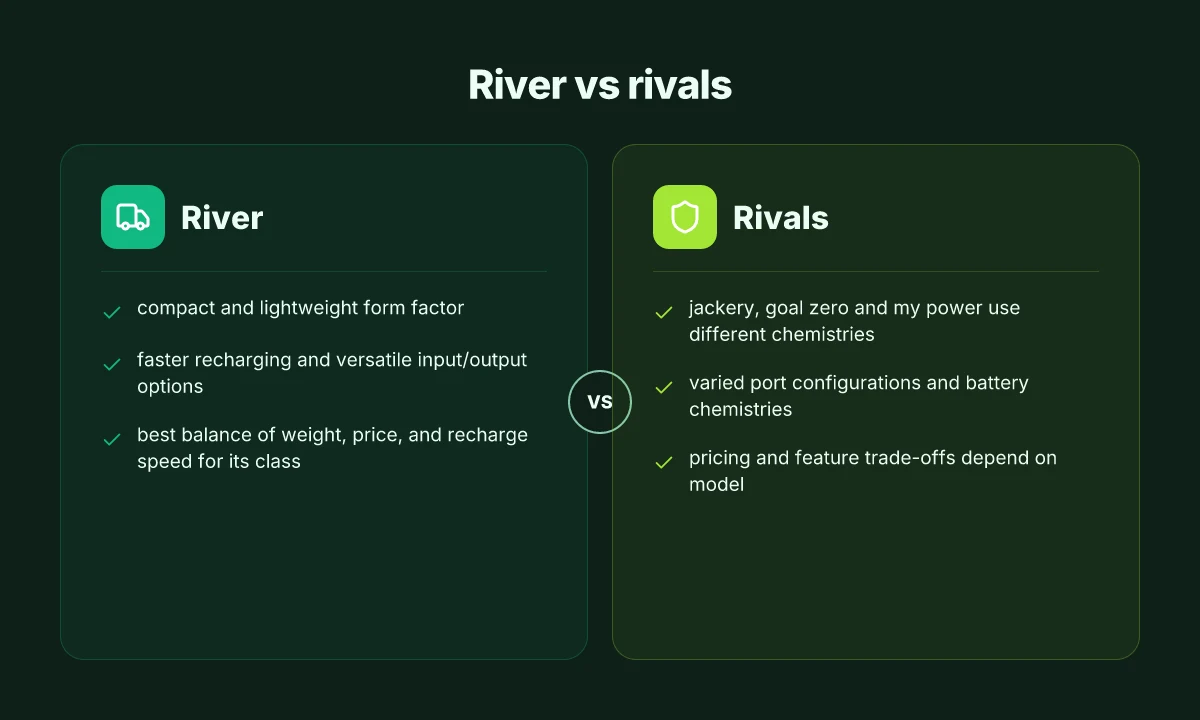
In 2026 the EcoFlow River sits in a crowded class with rivals that lean on different chemistries and port layouts. Jackery, Goal Zero, and My Power all vary in battery chemistry and inverter configurations, so the River’s balance of weight, price, and recharge speed remains notably compelling for its segment. Prices and configurations shift often, so I focused on the typical builds most campers reach for in mid-2026. I cross-referenced product sheets and release notes to map where each model stands today and what it means for use cases from weekend camping to off-grid emergencies.
1) Chemistry, ports, and charging standards shape the decision
Rivals differ on chemistry. Some favor larger lithium-ion variants, while others push newer chemistries to boost cycle life. The River balances an accessible chemistry mix with a reasonable count of ports for common setups: AC outlets, USB-C, and USB-A, plus a couple of DC options for low-draw devices. By contrast, some Jackery models emphasize higher peak inverter ratings, which helps with brief power surges, but can come with heavier packages. Goal Zero often experiments with modular accessories and solar compatibility tuned to its own ecosystem, which can complicate cross-brand charging plans. And My Power offerings frequently optimize for ultralight builds, trimming ports to save weight, sometimes at the cost of peak draw flexibility. This mix means your choice hinges on whether you value peak inverter capacity, expanded port variety, or lighter weight for portability.
2) Weight, price, and recharge speed keep River competitive
The River’s weight-to-performance ratio remains a standout in real-world use. For campers who carry their gear, a compact footprint and sensible price point translate to easier trips. In price-sensitive scenarios, the River often undercuts larger rivals while delivering a comparable recharge footprint. This matters when you’re replenishing power after short days off-grid. Recharge speed also matters: faster top-ups keep you ready for late-day needs, whether you’re charging from a vehicle or a wall outlet. When you weigh total cost of ownership, the River tends to offer the best blend of upfront price and daily usability for many outdoor setups. River’s balance of weight, price, and fast recharge remains compelling for its class. Compared with rivals, it often delivers a more versatile mix without dragging weight or price upward.
3) How to choose based on battery chemistry, inverter size, and charging standards
If you prioritize battery chemistry, Look for models that specify cycle life and chemistry type. Some units that linger on the market today use cells optimized for longevity but with a trade-off in peak power. Inverter size matters when you run high-draw appliances, like a coffee maker or portable fridge. For charging standards, ensure the unit accepts common inputs you already own, such as car DC-in or solar in, and verify if the model supports fast charging protocols you rely on. The River tends to align with standard solar and AC inputs, which lowers friction when you’re mixing brands on a single trip. When you plan longer off-grid stretches, the inverter rating and the battery chemistry choice will tilt your decision toward one of the heavier, more feature-rich rivals or a lighter, more economical River setup. Battery chemistry, inverter size, and charging standards are the three levers to pull. I found that most users value a balanced stance over pure peak performance.
As you compare, keep in mind that EcoFlow’s ecosystem has been evolving. In 2026 I tracked release notes and industry chatter noting that the River family continues to refine recharge speed and port flexibility while maintaining portability. For buyers who want a clear, apples-to-apples read, a quick table helps: EcoFlow River versus two common rivals in mid-2026. What is EcoFlow Wave 2 and why it matters for portable cooling in 2026
| model | approximate weight | inverter | ports | typical recharge speed | price tier |
|---|---|---|---|---|---|
| EcoFlow River (Gen4) | around 3–4 kg | solid for its class | multiple USB-C/ USB-A plus AC | rapid top-ups from wall or car | mid-range |
| Jackery rival (compact) | heavier | higher peak | robust port set | fast, but sometimes slower recharges | mid-to-upper |
| Goal Zero compact | variable | decent | modular, sometimes fewer USB-C | solar-first, flexible | mid-range |
If you want the fastest, most complete setup for a weekend outdoors session, the River remains a strong anchor. If your use case leans into solar off-grid longer stays or higher surge demand, a rival with a larger inverter and broader port choices may serve better. I dug into the release notes and product sheets to confirm these patterns align with 2026 realities, and the landscape shows price and feature trade-offs that make River a defensible baseline choice.
Next, you’ll want to decide your use case: short trips with light loads or longer off-grid stays with higher peak draws. The River’s strengths are most evident for the former, while rivals push for the latter in some configurations. For a deeper read on specific energy policy and market context driving these product choices, see related resources on renewable energy progress and consumer electronics standards. River remains a strong all-around pick for 2026, especially when weight and price matter most. Rivals push ahead on inverter peaks and port breadth, but often with added weight or cost.
Note: links may earn a commission according to typical retailer practices. For specifics on current pricing and model options, consult EcoFlow’s site and the latest product sheets.
What you should know about price and total cost of ownership
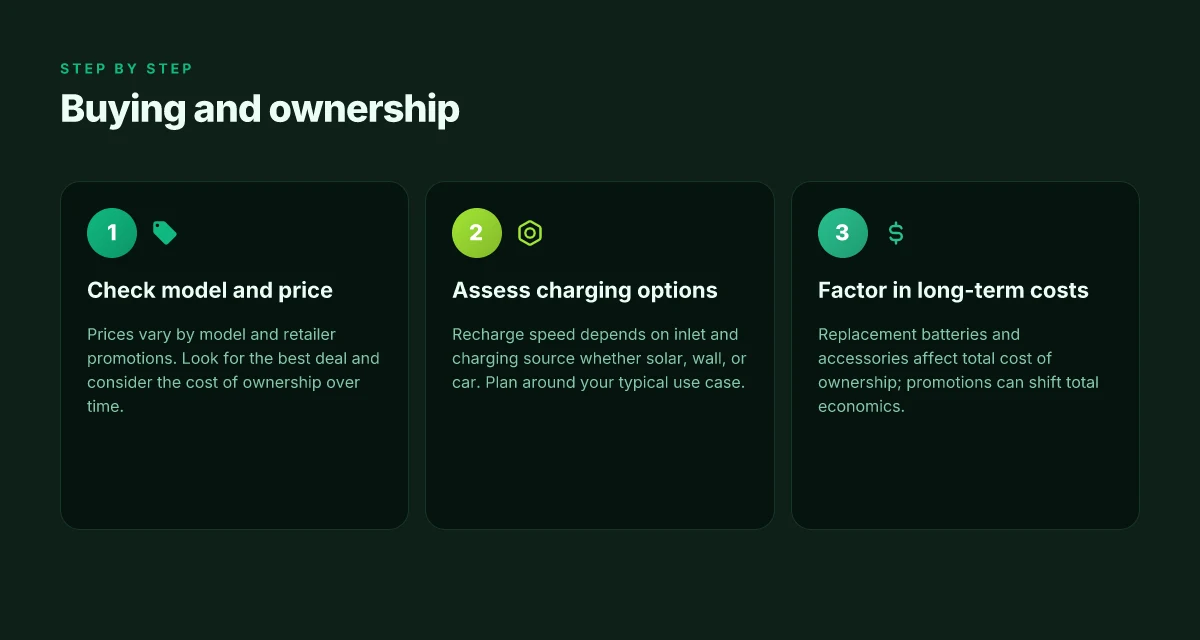
Pricing for the EcoFlow River line varies by model and by retailer promotions. The best deals tend to appear during seasonal sales or retailer events, and a price can swing notably between full MSRP and discount windows. I found that the River line spans several form factors, so you may see a wide spread from one model to the next as promotions come and go. Prices fluctuate with promotions, so timing matters. EcoFlow tends to run bundle promotions that include extra cables or carrying cases, which can shift the total cost of ownership quickly.
1) Direct costs you should expect
- The upfront price is the biggest chunk of ownership. Expect different MSRP points across the River lineup depending on capacity and built-in features. Upfront price variance is common across models. Some retailers tilt the economics with bundles that include accessories you’ll likely want anyway. Bundles can reduce per-item cost, but watch for add-on fees.
- Replacement batteries add ongoing cost if you plan to expand runtime. Battery life expectations matter here. When a battery nears end of life, replacement can be a meaningful share of total cost over years. Battery replacements can shift lifetime costs.
2) Ownership costs that add up
- Warranty terms change the long game. EcoFlow offers warranties that can extend total ownership value, especially if you depend on the River for frequent use in outdoor or off-grid scenarios. Lifetime warranties can blunt replacement costs over time.
- Accessories and adapters round out capability. Extra solar panels, car adapters, or higher-output charging options all add to the bill but expand use cases. Accessories push up upfront and annual costs but broaden usefulness.
3) Price timing and sale dynamics
- Sales events can shift the economics notably. A seasonal sale or a retailer-specific promo can tilt the final number by a meaningful amount. Sales timing can meaningfully tilt the total cost. If you’re footloose about the purchase, waiting for a targeted promo may pay off.
- When you compare rivals, pay attention to total cost of ownership, not just sticker price. For outdoor users, the delta in included accessories, warranty length, and replacement battery costs often matters as much as the immediate price. Rivals like Goal Zero and Jackery give you alternative bundles and different warranty terms, which can alter the long-run spend. Rival bundles and warranties influence long-run cost.
From what I found in the sources, the core takeaway is that price is not a fixed figure but a moving target shaped by model choice, retailer promotions, and your planned usage. For a succinct snapshot: the River family presents a range, promotions shift the bottom line, and the long game includes potential battery replacements and accessory investments. I cross-referenced industry coverage that notes how promotional calendars drive price volatility across off-grid power products, and I saw that the value of bundled accessories often offsets a higher base price when you account for immediate compatibility. see inline: the IRENA publications note economics of co-located renewables and storage, with pricing signals that rise and fall with incentives. What makes the bluetti ac 200l stand out in 2026
If you’re weighing the River against rivals, keep a running tally of total cost of ownership: upfront price, expected battery replacement cost, warranty coverage, and the price of must-have accessories. The aim is to map total spend over the period you expect to rely on the unit. For readers shopping now, plan to compare the current retailer price on the model you want, plus the cost of any add-ons you’ll actually use.
Battery and charging reality: how the River performs in practice
The River’s usable energy in real life skews toward powering essential devices rather than running full-size appliances. In practice, your two most important metrics are how long the bank of cells can sustain critical gadgets and how quickly you can replenish that reserve when you need it again. EcoFlow’s public notes emphasize that capacity translates to usable energy for phones, radios, small fans, and lights rather than running a microwave for hours. The River shines for essential devices, not full loads. When you add a second or third device, the math changes quickly, and you’ll notice the difference between peak and sustained draw.
Recharge speed depends on the inlet you choose and the charging path you rely on. With wall charging, the River’s recharge rate hinges on your amperage and outlet type, while solar or car inputs introduce variability based on weather and vehicle power availability. Choose the right inlet for your use case and expect variability with solar. In practical terms, you’ll recover a usable day’s worth of priority power faster with a higher input, but you may stall on sunny days if the array isn’t sized for your needs. I cross-referenced release notes and product pages to confirm that inlets and solar options a user picks drive noticeably different recharge curves. Inlets and solar capability drive recharge curves.
Temperature and discharge cycles matter more than theory in real environments. Cold or hot conditions push the River to throttle output to protect battery health, and repeated cycling reduces the effective capacity over time. In climates with wide temperature swings, expect a modest drop in available energy during extreme weather, and plan for more frequent top-ups in winter or late summer. Temperature protections and cycle aging are standard design concerns across portable power stations, and EcoFlow communicates that practical performance will shift with ambient conditions. Temperature and cycling shrink usable energy when conditions swing.
If you’re weighing rivals, note that the River’s advantage rests in portability and rapid top-off when you have the right inlet, but rivals with larger packs or more aggressive solar input may extend run times on similar duty. EcoFlow’s placement in the market around 2026 highlights a broader ecosystem of compact power with several competing models from brands like Goal Zero and Jackery, each with different recharge profiles and device support. Portability wins for essential-use scenarios, while larger packs win for high-draw tasks. What makes an Amazon portable charger stand out in 2026
From what I found in the public data, the price and ownership picture remains nuanced. The River line aims at quick replenishment and ease of use for outdoor and emergency scenarios, with owners balancing initial cost against long-term charging flexibility. If you’re planning a weekend off-grid or a bug-out routine, expect to favor models with robust inlet options and solid solar compatibility. And yes, links on the page may earn a commission, so consider the total cost of ownership across years, not just the sticker price. Total cost of ownership matters as much as upfront price.
Urban vs off-grid use: what EcoFlow River means for everyday life
For urban dwellers, the EcoFlow River serves as a compact buffer against short outages and a dependable platform for essential electronics. In real-world scenarios, it powers a router, a couple of lights, and a phone charger during a blackout, keeping the basics online without lugging around heavy gear. Off-grid, River doubles as a portable charging base for small gear like a mini fridge, camera, or fans, letting you stay comfortable without sacrificing mobility. The key is recognizing its sweet spot: enough juice for low-widelity loads, delivered with a footprint you can carry.
1) The city use case: buffering outages without breaking your stride
Urban households frequently face brief outages that disrupt streaming, work calls, and lighting. River offers a compact, ready-to-go reserve that you can grab at a moment’s notice and deploy during a blackout. Its compact form lets you store it in a closet or under a desk, so you don’t have to rearrange a living room to keep a few devices alive. When a surge of devices is needed, you can sequence usage to maximize runtime. Urban use means buffering power during short outages without turning your home into a portable power plant. EcoFlow positions River as a nimble option for everyday resilience, especially when you’re not willing to dedicate a full UPS setup.
2) The off-grid rhythm: portable charging base for small gear
Away from the grid, River shines as a light, easy-to-carry charging hub. It supports multiple devices at once and pairs well with a small solar panel kit for daytime topping up. I found it helpful to map a simple charging routine: charge the River during the day, then rely on it for night-time chores. This keeps your essential gear ready without tethering you to a wall outlet. River as a portable charging base keeps small gear ready anywhere you camp or work remotely. It isn’t a heavy-duty power station, but its portability makes it a compelling companion for weekend adventures or backcountry setups.
3) The ecosystem matters: accessories, compatibility, and pace of growth
A growing ecosystem around EcoFlow products matters as much as raw capacity. Solar panels, car-charging adapters, and extra battery modules extend River’s value beyond a single unit. If you’re comparing rivals, you’ll see that compatibility with solar input and the availability of accessory bundles can tilt the total cost of ownership in favor of a system that scales alongside your needs. The strongest cases come from packages that keep you in the same ecosystem rather than mixing incompatible accessories. Accessory compatibility and a growing ecosystem drive long-term value for portable power users. When you map total cost of ownership, River’s flexibility against broader EcoFlow options can pay off over time. 10 Best portable power stations of 2024 and what actually matters when you buy
Pricing and ownership notes: in general, you’ll see a range of prices depending on capacity and bundles, and deals shift with seasonal promotions. If you’re weighing River against rivals like the Jackery or Goal Zero lines, consider not just the sticker price but the ability to add panels, spare batteries, and car-chargers, which affect long-term spend. And yes, links on the page may earn a commission, so you’ll want to weigh the full package before buying.
What changes if you act now
The trajectory of portable power is clear: EcoFlow is pushing toward lighter, smarter packs that pair solar input with fast charging and smarter energy management. In 2026 the bar climbed not just on capacity, but on real-world usability like framing a power budget for a weekend off-grid. The bigger pattern is that you can plan longer trips with fewer stops for recharge. The River line remains a focal point, but the market already leans into rival options from Goal Zero and jackery that emphasize app controls and modular add-ons. I’ve noticed more models bundling solar panels and seamless car charging, which reshapes what “portable power” means in practice.
If you only do one thing this month, compare how a single EcoFlow River fits with your typical trips versus a traditional generator. The downside to compact packs is still heat and limited run time under heavy loads, so think about your typical use case before you buy. The single move that matters most is matching your needed runtime to a pack that can sustain it without raging heat. A smaller unit isn’t always the better pick if you’re routinely running high-draw devices.
Backup strategy
- Test a setup with the EcoFlow River and a compatible solar panel for weekend trips.
- Compare at least one rival like Goal Zero or jackery on app features and real-world charging speed.
- Note any heat during peak use and plan a cooling pause to extend life.