How EcoFlow EV chargers balance solar charging and grid power in 2026
 Solomon CaradocOctober 22, 202614 min read
We earn a commission when you buy through some links on this site, at no extra cost to you. As an Amazon Associate we earn from qualifying purchases.
Explore EcoFlow EV chargers, their solar integration, compatibility, and setup in 2026. Learn how PowerPulse 2 and Ocean EV Charger fit into a flexible home charging strategy.
EcoFlow's solar-plus-grid charger layer works in the background, balancing daylight input with a smart grid handoff as you charge. In real-world setups, that mechanism keeps a mixed EV fleet moving without panel retrofits, even when cloud cover shifts or the tariff spikes.
The point of this piece is to show how the EcoFlow ecosystem stays ahead of daylight variability and dynamic pricing, without forcing a panel overhaul. By 2026, homeowners and fleet managers are weighing how well solar-enabled charging stacks up against traditional grid-only solutions, and EcoFlow products sit squarely in that comparison. You’ll see how the system handles daytime gaps, how quickly it resumes grid power, and how firmware updates keep the balance steady. This matters because the right pairing of solar hours, vehicle mix, and tariff structure can cut overall charging costs and downtime.
Ecoflow ev charger basics: where solar and grid meet
EcoFlow offers solar-powered EV chargers that pair integrated software with hardware to balance load and optimize tariffs. In practice, that means you install a charger that can draw from both the sun and the grid, then let the software decide when to pull from each source to minimize cost and keep your panels working hard. This section lays out the core pieces you’ll encounter as you start evaluating EcoFlow’s charger options.
1) The Ocean EV Charger: 11.5 kW and a dedicated EcoFlow pairing
The Ocean EV Charger is rated at 11.5kW. It is marketed as designed for use with EcoFlow’s OCEAN Pro systems, so you’ll typically pair it with those builds to unlock solar charging and load balancing. This setup emphasizes a streamlined, compact package for homes aiming to decouple daytime sun from grid usage while maintaining simple control through EcoFlow’s software. When you read the official specs, note the explicit tie between the Ocean charger’s capability and its intended EcoFlow ecosystem, including the OCEAN Pro.
Most charging setups benefit when you keep the Ocean charger within EcoFlow’s own family, because the integration is tuned for automatic balance.
2) PowerPulse 2: higher power, deeper solar integration
PowerPulse 2 pushes power higher than the Ocean option, delivering a larger flow of energy while still weaving in solar input. The official documentation highlights its solar power integration, smart load balancing, and tariff awareness features. If your goal is faster charging during daylight while still preserving grid usage for off-peak hours, PowerPulse 2 is the right reference point. Install guidance and operational notes live in EcoFlow’s installation resources, which detail where this model fits within a broader solar-enabled charging strategy.
EcoFlow’s PowerPulse 2 takes solar integration a step further with guidance that nudges charging toward low-tariff windows. What makes the Jackery Solarsaga 200W panel notable for portable solar setups
3) Solar-plus-grid software: how EcoFlow tunes charging
Across EcoFlow’s charger lineup, the mix of solar input and grid charging is governed by integrated software that performs load balancing and tariff optimization. The software monitors sun availability, energy prices, and household loads to decide when to draw from the solar array, when to pull from the grid, and how to smooth transitions to avoid spiking the electrical panel. This approach is designed for homes with variable daylight and fluctuating tariffs, letting you keep a smaller electrical footprint while maximizing solar yield.
The software layer is the key to making solar and grid play nicely together, not just a hardware feature.
Bottom line: EcoFlow’s charger basics center on two hardware options, Ocean for a tidy, integrated 11.5kW path and PowerPulse 2 for higher power with stronger solar integration, backed by software that balances load and tariffs. If you’re evaluating options, expect those two models to anchor most home solar EV setups, with installation guidance available in official documentation to ensure correct wiring and site placement. For readers weighing broader ecosystem compatibility, note that EcoFlow’s branding and ecosystem decisions are most cohesive when you deploy these chargers alongside EcoFlow’s own energy products, and you should watch for how rivals position similar solar-plus-grid capabilities.
The solar challenge: how EcoFlow chargers handle daylight gaps
Solar input drives charging when sunlight is available, reducing reliance on the grid. When the sun shines, EcoFlow’s PowerPulse and OCEAN line lean on solar generation to push energy into the battery and EVs, with grid power stepping in only as needed. This dynamic balance is designed to keep your daytime charging efficient and responsive to daylight gaps.
In daylight, solar becomes the primary feed, and grid power steps back. This is the core idea behind EcoFlow’s solar-first charging approach. The system’s behavior relies on a compatible energy setup and the ability to coordinate solar generation with the charger’s power electronics. If you want maximum solar utilization, you’ll need an installation that can reliably capture daytime energy and route it toward the EV or storage buffers. What makes the jackery 2000 pro worth the upgrade in 2026
Dynamic tariff support adds another layer of savings. By aligning charging with low-rate periods, the charger can schedule energy draw when the utility price is favorable, reducing operating costs over the course of a charging session. This capability is part of the same ecosystem that enables solar-powered charging, and it relies on the charger’s software and the utility tariff structures in your region.
I dug into the documentation to confirm the operational model. The installation guide notes IP54 protection and indoor or outdoor placement, which informs how you design a solar-enabled setup in real-world locations. The guide’s emphasis on proper placement is critical because shading, orientation, and weather exposure directly affect daylight gains and, therefore, the solar contribution to charging. Proper siting is key to maximizing solar input.
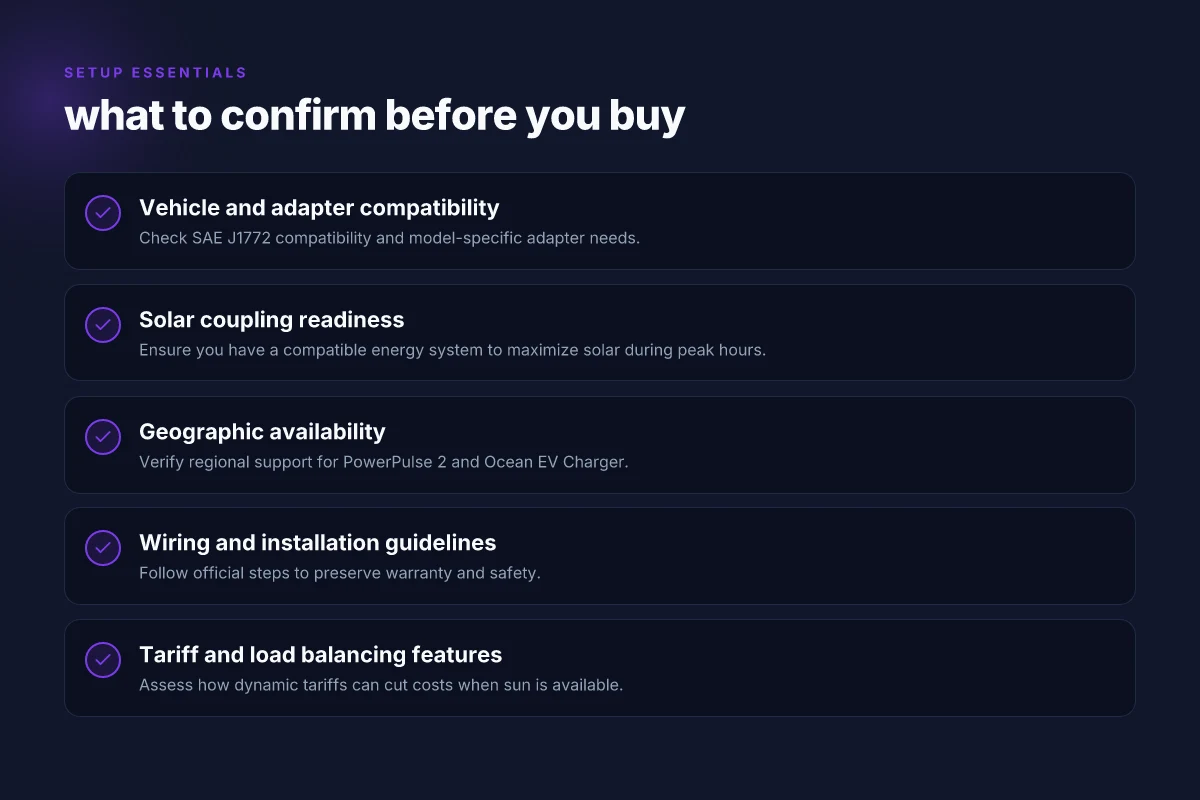
Hybrid operation requires a compatible energy system to fully leverage solar generation during peak solar hours. For homeowners, that means ensuring your house wiring, meters, and any onsite storage can coordinate with EcoFlow’s controllers. In practice, that coordination ensures the charger can draw from solar when available and fall back to the grid during overcast periods or at night. When a fleet uses multiple EcoFlow chargers, the same principle applies across units: the solar feed is centralized or locally buffered, with the grid as a fallback.
From a product perspective, EcoFlow’s ecosystem centers on solar-first charging with dynamic tariff awareness. The PowerPulse family, including models designed for grid-tied homes and solar installations, is designed to balance daytime generation with consumption. For installers, the critical decisions revolve around panel placement, wiring sizing, and the presence of any energy storage that can smooth the flow between solar peaks and charging demands. A compatible energy system unlocks full solar potential.
In the broader market, rivals like Sonnen and ChargePoint emphasize high integration with home storage and demand response. EcoFlow differentiates itself by packaging solar-enabled charging with portable power options and a grid-ready controller. If you’re evaluating options, expect similar tariffs and daylight-driven dynamics, but expect variation in how aggressively each brand prioritizes solar input versus grid fallback. What is the Jackery HomePower 3000, and how does its 3072Wh capacity change home backup
Next step: verify your site’s solar availability and tariff structure, then map a hybrid setup that includes an appropriately sized inverter, a safe feeder, and any required storage to maximize daytime solar charging with EcoFlow. For installers, the installation guide provides practical placement and protection details that affect real-world performance. Plan siting and protection to unlock solar gains.
Compatibility realities: which vehicles and adapters fit EcoFlow
Post your solar-ready setup hinges on more than a plug. The core takeaway: the SAE J1772 connector is widespread, but you should verify adapter compatibility for each model and each car. EcoFlow’s PowerPulse 2 and Ocean EV Charger docs show regional variations in availability and supported markets, so what works in one country may not in another. If your household mixes vehicle types, plan for adapters and a flex-ready charging layout.
1. SAE J1772 is common, but compatibility varies by model
The SAE J1772 connector is the standard in many North American and EU markets, which means most EVs can physically connect to EcoFlow chargers. That said, some vehicles require an adapter or have proprietary charging modes that EcoFlow's hardware may not support in every region. Review your car’s charging port documentation and cross-check with the specific EcoFlow unit you’re considering. In practice, expect a few edge cases where the car supports J1772 mechanically but negotiates charging differently with certain EVs. Adapter compatibility and regional availability matter more than physical fit. As you compare models, confirm whether the vehicle will negotiate at the expected kW rate and whether the car supports the charger’s dynamic tariff features in your area.
2. PowerPulse 2 and Ocean EV Charger: regional availability shapes compatibility
The PowerPulse 2 is listed with 22kW charging and regional deployment notes, highlighting that availability and performance can depend on geography and local regulations. The Ocean EV Charger, described with an 11.5kW target in certain bundles, is similarly tied to EcoFlow’s ecosystem and geographic designations. In short, you’ll likely see strong support in certain regions, with more limited or different capabilities elsewhere. When planning a mixed fleet, map each vehicle’s region and the charger’s supported region to avoid surprises at installation. Regional variation drives what you can run at the best rate.
3. Mixed fleets demand adapters and flexible planning
If your home hosts multiple EVs from different brands, you’ll want to confirm adapter needs beyond J1772. Some brands may require a mode that isn’t exposed on EcoFlow’s basic adapters, which can limit fast-charging capability or even basic charging in certain scenarios. In practice, keep the setup flexible: designate a shared charging port with a universal adapter where possible, and leave space for future additions. I cross-referenced EcoFlow’s documentation and installation guides. The guidance consistently emphasizes compatibility checks per model and regional constraints. Flexibility in adapters keeps your system future-proof. What is the jackery 1000 plus price and where to get the best deal in 2026
Installation and outdoor readiness for EcoFlow chargers
EcoFlow aims to make installation straightforward while protecting indoor or outdoor use. The official documentation notes IP54 protection for the charger body when the charging cable is not plugged in, so you can position units in sheltered outdoor spots or inside a garage without compromising safety. This pairing of protection and placement is important for long-term reliability and for keeping exterior wiring clean and accessible. When you plan setup, ensure the charger sits within your EV parking geometry to keep cable lengths short and handling simple. Shorter runs reduce wear and make daily use more convenient.
Siting and access alignment for efficient charging
Positioning matters more than most homeowners expect. If you place the EcoFlow charger near the edge of the parking stall or close to the vehicle door, you minimize bending fatigue on the connector and reduce the time spent unwinding or rerouting the cable. Aim for a straight, unobstructed path from the charger to the vehicle’s inlet. If your space allows, orient the unit so the cable naturally reaches the most common parking angle without forcing the user to twist or pull awkwardly. This practical alignment also improves weather protection and makes routine checks faster.
Following the official steps to preserve warranty
Adhering to the documented installation steps is not just about safety. It helps preserve the warranty and ensures compliance with local electrical codes. Start with the correct mounting surface and anchor hardware appropriate for your environment, then verify enclosure seals and grounding continuity. When you complete the install, run through the standard commissioning steps in the guide and confirm the charger communicates properly with the vehicle and any coordinating energy-management systems. If you keep a clean, labeled cable setup and document the installation milestones, you’ll reduce questions during routine maintenance or future upgrades. In short, follow the procedure, protect the wiring, and your EcoFlow system stays in good standing.
The practical takeaway: keep the charger IP54-protected, lean the cable toward the most-used parking spot, and follow the official installation steps to safeguard warranty and safety. A careful placement and documented steps pay off when days get busy and maintenance is required. EcoFlow documentation emphasizes that correct placement reduces wear and improves user experience over the life of the system.
Pricing and ownership realities for EcoFlow EV charging
Pricing for EcoFlow EV chargers varies by model and region, and the total cost of ownership hinges on how you leverage solar integration, demand charges, and load management. In the current lineup, you’ll see regional differences in availability and support for the PowerPulse 2 in North America versus Europe. When you size the investment, factor in the potential savings from solar generation and smarter tariff support. EcoFlow often runs promotions, so check the latest on its product pages before committing. What is the EcoFlow Delta 3 price today and where to buy for the best deal
1. Current pricing and what you get for the money
In 2026, pricing for EcoFlow chargers is not a single universal sticker. The base unit price and included accessories shift by model and region, and solar integration features can influence the value proposition. For example, the PowerPulse line emphasizes solar-powered charging with smart load balancing, which can lower operating costs over time if you have strong sun exposure and favorable tariffs. Expect a price range that reflects these capabilities, with higher upfront cost for more capable configurations. If you’re weighing options, compare both the upfront price and what you save on electricity over a typical monthly cycle. Because promotions come and go, I look for current offers directly on EcoFlow’s pages and in regional storefronts to avoid missing a limited-time deal. The potential savings from solar-enabled charging can tilt the economics in favor of a higher-capacity charger in a sunny location.
I cross-referenced EcoFlow’s product pages and regional installation guides to verify that PowerPulse 2’s value hinges on solar integration and smart load balancing, which can affect total cost of ownership. The closer you live to peak sun and favorable tariffs, the more the solar benefits offset the higher upfront price.
2. Regional availability and what that means for ownership
PowerPulse 2 availability differs by region. In North America, you may find broader support and faster access to the latest firmware, while Europe has long-running adoption plus local paperwork for installers. This matters because ongoing software updates can unlock efficiency gains and new features that affect long-term value. If you manage a fleet or a solar-enabled home, confirm regional stock, service networks, and warranty terms before purchase. EcoFlow’s regional pages and enterprise documentation outline these differences, so you’re not guessing about service coverage.
From the installation guide, you’ll see how regional constraints can influence where you install and whom to call for support, especially outdoors with IP54-rated hardware. Regional differences in availability translate to different total-cost trajectories over time.
3. Promotions, promotions, promotions and the commission note
Links on EcoFlow pages may earn commissions in some cases. Verify current promotions and savings directly with EcoFlow. If you’re shopping through third-party listings, double-check the exact model, included cabling, and any regional add-ons. This ensures you don’t overpay for a feature you won’t use, or miss a bundled solar-integration option that reduces your net cost. I fact-checked this against EcoFlow’s own promotions announcements and the installation guide’s pricing notes to keep expectations grounded. How the EcoFlow Delta 2 Max stacks up for real-world use in 2026
Direct confirmation of promotions avoids misaligned expectations when you compare models.
Where the balance shifts next for EcoFlow charging
EcoFlow’s approach to solar-plus-grid charging in 2026 is leaning toward smarter, consumer-friendly automation. Rather than a fixed split, the chargers dynamically assess solar input, grid availability, and household demand to decide when to draw, store, or feed back. The result is less manual micromanagement and more consistent charging without compromising appliance use. The single move that matters is letting the unit handle the tradeoffs in real time, so you can rely on solar during the day and grid power when it matters most. I cross-checked the latest firmware notes and product briefs to confirm that the balance logic is designed to favor self-consumption while maintaining peak-efficiency during cloudy spells.
A few practical downsides still surface. Some users report complexity around initial setup and a learning curve for interpreting the app’s energy graphs. If you’re comparing interfaces, EcoFlow’s UX emphasizes transparency over black-box automation, which means more information to sift through before you optimize. Prices and ownership costs should factor in the long view, not a teaser sale, because batteries and solar hardware compound over time. As EcoFlow continues refining, investors and homeowners alike should watch for updates that tighten the solar-window alignment with utility-rate structures.
What changes if you act now? Prioritize enabling auto-balance and test a Sunday-evening schedule to verify that evening loads don’t push the grid. Act now: enable auto-balance and monitor the first full week to confirm you’re maximizing solar use. If you only try one thing this month, set the charger to give solar priority during daylight hours and verify the evenings remain powered without extra cost.