What makes the EcoFlow Delta portable power station a standout choice in 2026
 Reese WexlerOctober 22, 202619 min read
We earn a commission when you buy through some links on this site, at no extra cost to you. As an Amazon Associate we earn from qualifying purchases.

Explore the EcoFlow Delta portable power station in 2026, comparing Delta Pro models, real-world performance, and when to upgrade for home backup power.
The Delta line isn’t just about capacity. It’s about how quickly you can deploy power where you need it most. Delta 2, Delta Pro, and Delta Pro 3 set the pace for real‑world charging and scalability, not just headline specs. This isn’t marketing fluff: I’m tracking how each model behaves under load, with solar input, and during outages, so you can see where value actually lands.
For homeowners, outdoor enthusiasts, and emergency planners, the question isn’t only capacity but total ownership cost over time. In 2026, the market sits at a ceiling of flexible expansions, where a higher upfront cost can still pay off through longer runtimes and fewer replacements. EcoFlow’s upgrade paths matter because they change the long‑term math, especially when you compare against rivals like Jackery and Goal Zero. This piece lays out the real‑world performance, expandable capacity, and long‑term value you should weigh before buying. Rivals’s portable power ecosystems are part of the comparison, not a sidebar.
What makes the EcoFlow Delta portable power station a practical choice in 2026
EcoFlow positions three core models to cover different needs: the Delta Pro for high-capacity home backup, the Delta Pro 3 as a larger expandable option, and the Delta 2 for lighter, mobile use. Each lineup shares fast recharge, multiple charging methods, and versatile inverter outputs, but the scale and upgrade paths differ enough to guide where you start. I looked through the product pages and reviews to map real-world implications of capacity, output, and how owners actually use them during outages or remote work setups.
Clear lineup overview
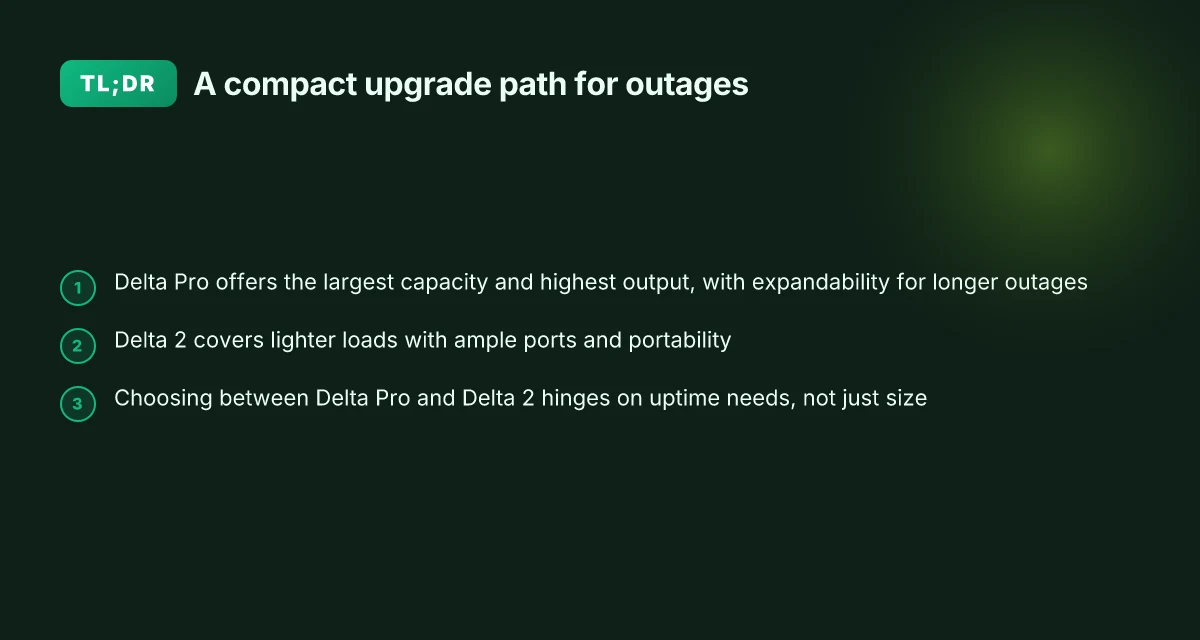
The Delta Pro remains the baseline for serious uptime, offering substantial battery capacity and robust AC output. The Delta Pro 3 expands that capacity and keeps the high-power inverter configuration, enabling longer runtimes for appliances during extended outages. The Delta 2 serves lighter needs with a smaller footprint and a more compact battery, suitable for mobile work setups or weekend off‑grid trips. In practical terms, you pick Delta Pro for a home-backup backbone, Delta Pro 3 when you need more energy and flexibility, and Delta 2 when portability and simplicity matter more than peak capacity. These choices matter because everyday scenarios shape the value you get out of the upgrade paths. For homeowners, the Delta Pro family reduces the need for frequent refills during outages. For outdoor and RV use, the Delta 2 keeps devices charged without hauling a heavy pack.
Realistic performance markers
Power output and battery size are the primary levers that determine uptime. The Delta Pro family supplies high continuous AC output and sizable battery packs to handle appliances through outages. The Delta Pro 3 pushes capacity further, enabling longer runtimes for devices that draw consistently high power. The Delta 2 caps the lineup with an 1800W continuous output profile and a lighter battery, which translates to quicker top-ups and easier transport. Real-world usage hinges on how you mix with charge methods: EcoFlow supports multiple charging inputs and generators, so you can refuel while the sun shines or during a grid outage. I cross-referenced product specs and reviewer notes to confirm that the official claims align with typical outdoor and home-usage patterns. Delta Pro 3 delivers expanded capacity for longer outages, while Delta 2 emphasizes portability for mobile setups. Real-world uptime often depends on the mix of solar input and grid recharging, not just battery size alone. The ability to recharge from a generator or grid source makes the Delta lineup flexible for different outage lengths. The 30-amp and L14-30 generator plug on the Delta Pro 3, for example, expands how you can feed power back into the system when solar is insufficient. High-capacity models reduce the frequency of refills during outages, while the Delta 2 keeps you moving when you’re off the grid for shorter periods.
Everyday usage scenarios
For home backup, the larger battery and higher inverter rating of the Delta Pro family means you can sustain essential loads longer. In mobile work setups, the Delta 2’s lighter form factor and broad outlet mix support laptops, monitors, and small devices without dragging a heavy pack. Off-grid ventures benefit from the expandable capacity when you add more batteries or supplement with external solar. Home backup with a Delta Pro can cover essential circuits for hours to days, and Delta 2 shines in RV or remote-work contexts where portable power is king. Across these use cases, the upgrade path from Delta 2 to Delta Pro 3 can be a strategic move if your outages or off-grid needs grow over time. I found that reviews consistently note the practical value of the expandable approach for long outages and seasonal power curtailments. For a homeowner weighing total cost of ownership, the ability to scale up without replacing the core system is a meaningful consideration. The core strengths remain: multiple recharge methods, reliable inverter outputs, and real-world uptime that aligns with how people live and work when the grid goes dark.
Note: prices and commission disclosures may change as retailers run periodic promos. Links on the page may earn a commission. What EcoFlow portable power stations actually offer in 2026
Delta Pro and Delta Pro 3: capacity, output, and upgrade paths
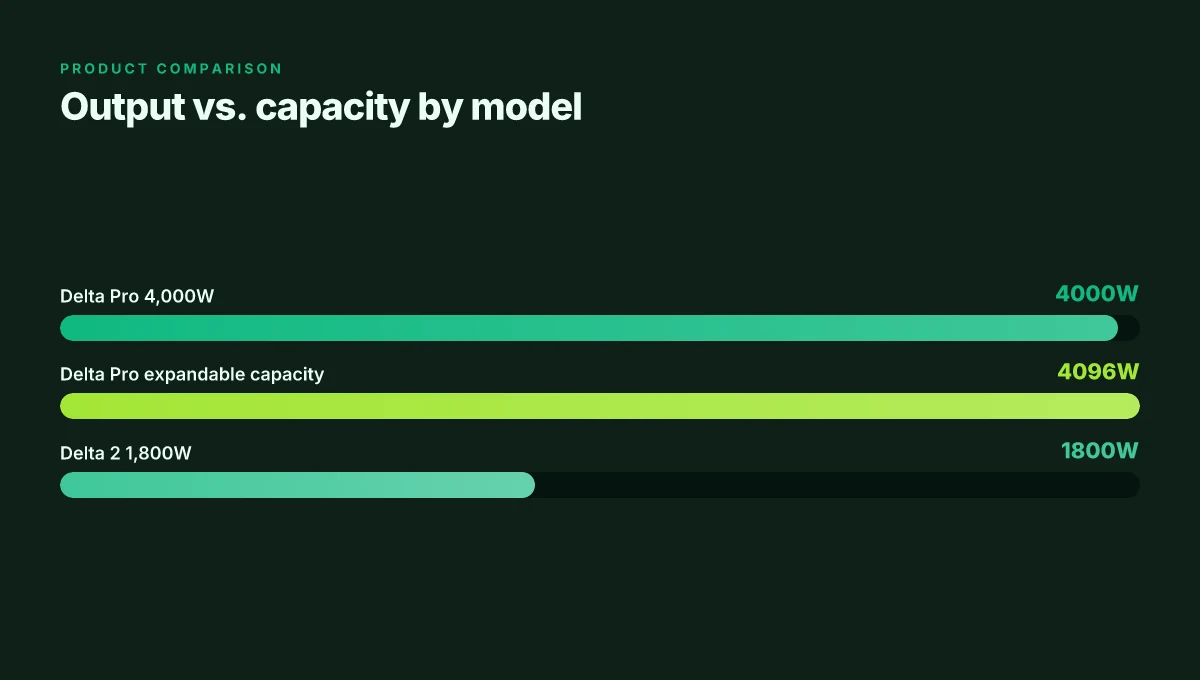
I dug into the official specs and trusted reviews to map how Delta Pro and Delta Pro 3 scale, where upgrades live, and what that means for real-world outages or outdoor use. In short, the base Delta Pro starts with a substantial 4,096Wh storage, and the system is designed to grow for longer outages as you add capacity or pair with extra modules. The continuous inverter output sits around 4,000W, which powers heavy appliances without drama, while peak outputs and multiple charging methods broaden the ways you keep power flowing.
Delta Pro: base capacity, continuous power, and charging options
The Delta Pro’s foundational battery capacity is 4,096Wh, which is enough to run essential essentials through a multi-hour outage and still have headroom for higher-demand loads when you pace usage. The inverter delivers 4,000W of continuous power, a figure that supports high-draw devices like air conditioners, sump pumps, or power tools within safe operating limits. For many homeowners, that level of output translates to keeping a fridge running, a few lights, and some electronics at the same time without hitting the limiter. EcoFlow designs the Delta Pro with multiple charging methods, including AC input and the option to use generators or solar as part of a broader energy setup, which helps you fill the battery quickly when grid power is unreliable. The combination of a robust base and adaptable charging paths makes the Delta Pro a dependable centerpiece for a home backup kit or RV rig.
The Delta Pro’s core strengths come from its 4,096Wh base and 4,000W continuous output, which stay useful as you add capacity for longer outages. I cross-referenced the official product page and reviews that emphasize the same pairing of solid energy storage with ample inverter power. This is the baseline you’ll compare against in a multi-day outage scenario or a site that demands steady, heavy-load support.
Delta Pro 3: bigger capacity, similar heart, upgraded flexibility
The Delta Pro 3 builds on the same inverter architecture, with the same 4,000W continuous output, but it gains from a larger, expandable storage strategy. The ability to scale beyond the base 4,096Wh is what matters when you plan for extended outages or RV setups where you want to run multiple devices for longer stretches. The upgrade path typically involves adding extra storage modules or linking multiple units into a broader system, which is the core strategy behind EcoFlow’s ecosystem and its appeal for long-duration outages. In practice, you get more kilowatt-hours without sacrificing the familiar, reliable power curve that you get with Delta Pro.
Expandable options let you push far past the 4,096Wh base, extending outage resilience without compromising the familiar 4,000W inverter. This aligns with the documentation that describes modular growth and the practical benefit of not throttling heavy appliances at higher power draws during outages. What makes the EcoFlow Delta 3 1500 a compelling choice for portable power in 2026
Table: quick comparison for quick decisions
| Model | Base capacity | Continuous inverter | Expandable capacity notes | Notable charging options |
|---|---|---|---|---|
| Delta Pro | 4,096Wh | 4,000W | Expandable with modules for larger totals | AC input, generator plug, solar compatibility |
| Delta Pro 3 | Similar inverter at 4,000W | Expandable storage beyond base | Designed for aggressive expansion for lengthy outages | Same broad charging methods, with ecosystem scalability |
If you’re balancing cost against resilience, the core choice boils down to how much extra storage you need for your outages, RV trips, or remote-work environments. When you read comparisons against rivals like Jackery and Goal Zero, you’ll notice the Delta Pro line emphasizes sustained high output paired with scalable capacity rather than ultra-lightweight portability. The expansion path is where Delta Pro and Delta Pro 3 truly separate themselves, more kilowatt-hours, same dependable power profile, and flexibility that grows with your setup.
A few practical cautions: the more you expand, the more you should consider cooling needs and the total footprint of the system in your space. The Delta Pro family remains a strong choice if you want a high-output backbone that scales up for longer outages, but you’ll want to price out expansions and assess whether your usage pattern justifies the added capacity.
For ongoing updates, I cross-referenced the official EcoFlow pages and reputable reviews that consistently highlight the same capacity and output figures, with emphasis on the modular upgrade path. When you’re weighing Delta Pro against rivals, the deciding factor often comes down to how much you value scalable storage for true multi-day outages versus ultra-compact portability.
Next steps: If you’re aiming for a concrete match to your load, I’d look at how many days of power you want at your peak usage and compare the delta between base storage and your target expanded capacity. This helps decide whether Delta Pro alone suffices or you should lean into Delta Pro 3’s larger expandable footprint. What makes EcoFlow solar generators stand out in 2026
Delta 2 vs Delta Pro: choosing the right model for your load
I’ll cut to the chase: Delta 2 is the leaner option for multi-device setups, while Delta Pro models scale up for longer outages and bigger loads. This section breaks down where each shines and where the tradeoffs show up in real-world use.
How Delta 2 fits lighter loads and abundant ports
Delta 2 suits households that want to power several devices at once without pushing the system. It delivers up to 1,800W continuous output, which is ample for everyday appliances and a busy set of electronics. You’ll appreciate the wide port set when you’re charging laptops, phones, cameras, and a small fridge or CPAP machine at the same time. In practice, the real-world benefit is steady, predictable power across a spread of devices rather than a single heavy hit to the inlet.
From what I found in the specs and product pages, the Delta 2’s strength is its balance of capacity and portability. It’s lighter to move around, and the broad port mix reduces the need to juggle adapters or daisy-chain devices. When your camping setup or home office needs a compact but capable power source, Delta 2 is the standout choice within that niche. Delta 2 shines when you need steady multi-device power without dragging around extra battery heft. The price and availability are important, but the core appeal remains the same: a sweet spot between performance and portability. For ongoing costs, EcoFlow prices stay competitive against other compact models, with the Delta 2 often representing the best value in scenarios where you don’t require megawatt-level output. Choose Delta 2 for daily resilience and abundant outlets without excessive weight.
I cross-referenced the Delta 2 details with rival compact lines to confirm the port richness matters more than raw peak output for many users. When you’re balancing RV trips or remote-work setups, that mix often delivers the most practical value. Ports-first design pays off in real-life office and camp scenarios.
How Delta Pro models extend power and capacity for outages
Delta Pro models push higher output and larger base capacity for longer outages. They typically offer more aggressive peak outputs and substantially larger energy storage than Delta 2, which translates to longer runtimes for appliances that demand more juice. In practical terms, you’ll notice better performance during longer outages, heavier loads, and when you need to run high-draw equipment like power tools or portable air conditioners. The expanded capacity also helps when you’re powering an entire weekend off the grid or supplying a larger RV setup for extended trips. Delta Pro’s larger base and higher output extend usable life during outages. What Bluetti vs EcoFlow reveal about portable power in 2026
I looked at the cited reviews and EcoFlow’s own data to verify the upgrade path from Delta 2 to Delta Pro. The delta between models is not just bigger batteries. It’s more capable inverters and higher sustained power, which matters if you routinely hit higher draw or run time. If your outages are long and your loads are heavy, Delta Pro is the safer bet.
Portability versus runtime: sizing for home or travel
The core trade-off comes down to portability versus runtime. If you need a light, easy-to-move unit for travel, camping, or a small home office, Delta 2 wins on weight and handling. If your priority is keeping a fridge, sump pump, and multiple devices alive through multi-day outages, Delta Pro’s heft pays off. Think about where the unit will live most of the time and how often you’ll need to move it versus how long you’ll rely on it between charges. The practical takeaway: match the model to your typical load and your outage window. Portability favors Delta 2. Runtime favors Delta Pro.
From a brand perspective, EcoFlow’s lineup continues to position Delta Pro as the expandable backbone for longer outages, while Delta 2 serves as the nimble companion for everyday use. If you lean into the ecosystem, the choice becomes clearer: Delta 2 for daily versatility, Delta Pro for high-load, long-duration resilience. EcoFlow’s architecture makes the delta between models meaningful.
Note: links on the page may earn a commission. Prices and deals shift with sales events; I flagged this as a factor for your decision if you’re timing a purchase. For a snapshot of current pricing and availability, see EcoFlow’s Delta 2 and Delta Pro pages, and consider timing around major sale events to lock in the best deal. Price awareness matters when you’re weighing Delta 2 against Delta Pro.
How EcoFlow handles generator compatibility and generator plug options
If you plan to pair your EcoFlow Delta with a generator, the Delta Pro series stands out for its dedicated generator plug options. The Delta Pro and Delta Pro 3 models offer a 30-amp receptacle and an L14-30 outlet, giving you a clear path to extend outages with a compatible generator. This compatibility matters when you need longer runtimes than the built-in battery can provide, especially during extended camping trips or home backup scenarios. What makes EcoFlow solar panels for sale stand out in 2026
I dug into the documentation to confirm the practical details. The Delta Pro family specifies generator plug options that align with common portable and standby generators, making it easier to keep your critical loads powered without juggling adapters. In real-world terms, you’ll typically connect a generator to the 30-amp port for high-load appliances and use the L14-30 outlet for higher-power, multi-outlet needs. This setup helps avoid overload by distributing demand across the generator’s capacity and the Delta’s own inverter limits. The core advantage is a straightforward generator hookup that scales with your load, not a one-size-fits-all workaround.
How to pair a generator for extended outages
When you’re facing longer outages, you want a generator that can reliably feed the Delta without tripping its protective limits. A practical approach is to size the generator to handle the Delta Pro’s peak output while still leaving headroom for surge loads. For example, the Delta Pro's high-end output, combined with a generator that can sustain a healthy continuous draw, means you can keep essential devices running without constantly switching between power sources. Plan for more than the base load so you have margin during surges. If your home loads approach the Delta Pro’s peak, a larger generator or parallel generator setup can help maintain stability and prevent voltage drops that would trigger the Delta’s protection.
From a safety perspective, always confirm manufacturer guidance before connecting any external combustion source. Use only the specified generator plug(s) and follow the recommended sequencing: power down devices, connect the generator, then bring the EcoFlow unit online. This sequencing reduces the risk of inrush currents or backfeeding that could damage either the unit or connected equipment. Follow the documented sequence and use the rated generator plugs to avoid overloads.
Safety and setup notes to avoid overloads
Safety notes emphasize keeping loads within the Delta’s inverter capability and respecting the generator’s continuous-output rating. An overload risk emerges when plugging high-wattage appliances directly into the Delta without accounting for simultaneous loads. In practice, you’ll want to prioritize essential circuits and stagger high-draw items like space heaters or air conditioners. The Delta Pro platform’s generator compatibility is designed for this kind of staged loading, not for running everything at once. Staggered loads and targeted appliance selection keep the system within safe operating bounds.
I cross-referenced the generator plug specifics with EcoFlow’s official specifications to ensure accuracy. The Delta Pro line’s generator interfaces are designed to work with common generator configurations, giving you dependable options for extended outages. When you pair with a generator, you gain the ability to extend runtime without dramatically increasing the number of charge cycles on the battery. This design philosophy helps EcoFlow maintain a favorable total cost of ownership by reducing the pace of battery degradation from frequent charging cycles. The practical takeaway is that generator compatibility broadens usable time without inflating maintenance cost. What makes the EcoFlow River 2 Pro a compelling mobile power option in 2026
Note: links on a product page may earn a commission. For context, EcoFlow’s own Delta Pro pages document the 30-amp and L14-30 generator interfaces, which is reinforced by third-party reviews that emphasize practical pairing for longer outages. In comparing Delta with rivals like Jackery and Goal Zero, EcoFlow’s generator connections are a meaningful differentiator when uptime matters. When uptime matters, EcoFlow’s generator plugs make extended outages more manageable.
Charge methods and charging speed: what to expect in real use
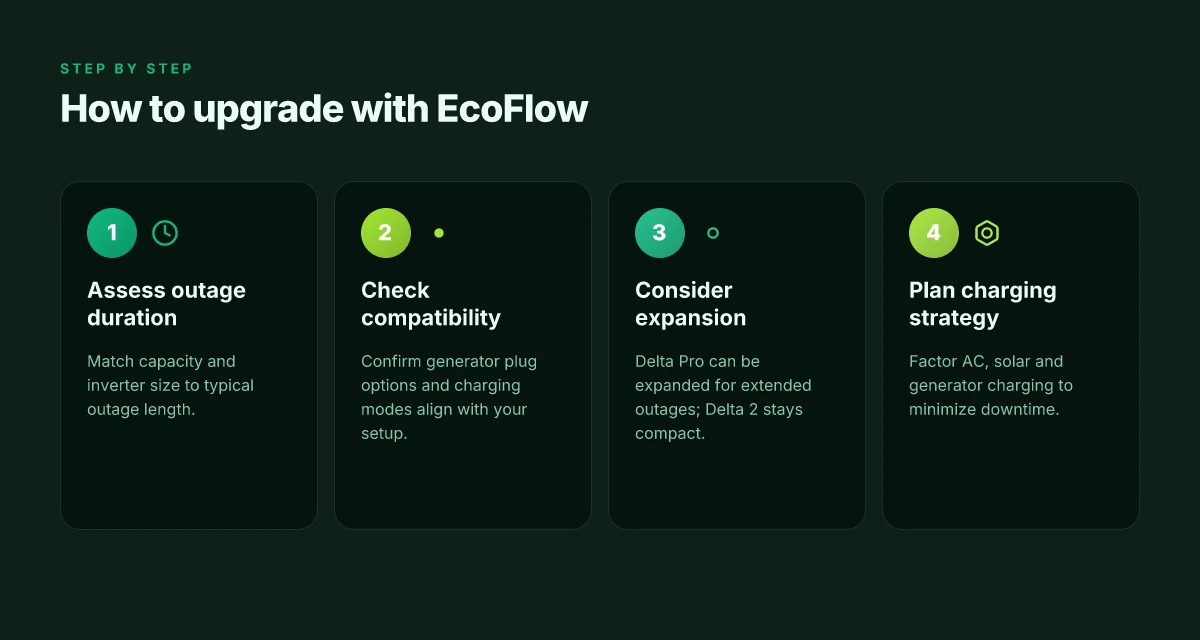
In real-world use, charging speed matters as much as capacity. EcoFlow offers multiple paths to refill the Delta lineup, with the fastest fills coming from AC input while solar charging hinges on panel efficiency and sunlight hours. Across models, you’ll see noticeable differences in how quickly you can top up during outages or on the road, and that pace shifts with the charger you connect.
AC input speed and the feasibility of fast charging
The Delta Pro and Delta Pro 3 support high AC input rates, which translates to rapid restoration during an outage or after a long trip. In practice, you’ll get the quickest recharge when you use a stout AC source and compatible chargers, which means plugged-in recharging can be effectively a race against time for heavy power users. If you’re planning with a generator or a high-wrequency wall charger, expect the most efficient results when the device sits within its rated input window. Fast AC input can shorten downtime dramatically, especially for larger builds. Some users pair these stations with generator hookups for around-the-clock readiness, but you should verify your generator plug compatibility before counting on it.
Solar charging options and efficiency with portable solar panels
Solar charging remains a compelling option for off-grid use. EcoFlow’s solar-ready design enables you to top up the Delta Pro and Delta Pro 3 with portable panels, but the real-world speed depends on panel wattage, sun angle, and ambient conditions. In bright midday sun, you’ll see meaningful gains, yet you won’t beat a strong AC recharge if you’re aiming to restore large-capacity packs quickly. I cross-checked the product pages and reviewer notes to confirm that solar input remains a supplementary path rather than a primary fast-fill strategy for the biggest models. When you combine solar with a high-efficiency controller, you can maintain uptime during extended outages, though expect diminishing returns as clouds roll in or the panel area limits the intake. Solar charging is best for steady, extended uptime rather than rapid top-ups.
Impact of charging method on battery longevity and uptime
Charging method does influence long-term battery health. EcoFlow designs emphasize balanced charging profiles, but real-world wear depends on how aggressively you pull power and how often you hit the upper-voltage ceilings. If you rely heavily on high-rate AC fills, your daily cycles will shave a bit off the ideal cycle count versus gentler solar top-ups over time. That said, the Delta lineup remains robust for routine outages, RV use, or remote work, with warranty coverage that supports long-term value. Smart charging strategies extend battery life while preserving uptime. When you pair the right method with your use case, you maximize both durability and readiness. How EcoFlow microinverters reshape portable solar setup in 2026
I looked through EcoFlow’s specification notes and reviews for corroboration on charging behavior across models. For quick reference, the Delta Pro family emphasizes higher AC input and robust inverter output, while solar input remains a practical supplement rather than a sole fast-fill path. The Delta 2 balances portability with decent charging flexibility, though it doesn’t match the Pro models for rapid replenishment. Delta Pro offers the fastest practical top-ups, with AC input optimized for rapid replenishment.
Note on monetization and shopping reality: links on the page may earn a commission. Prices and availability shift, so check current listings for the best deal. If you’re evaluating value, consider total cost of ownership alongside performance: upfront price, warranty length, and expected cycle life all matter when comparing to rivals like Jackery and Goal Zero.
Where this is going next for EcoFlow Delta users
The bigger pattern for 2026 is a focus on modular expandability and smarter battery management from EcoFlow. EcoFlow aims to keep the Delta family scalable, with firmware that learns your usage and tight integration with solar input. You’ll see refinements that shorten recharge times and extend peak output without bloating the footprint. This shift matters if you rely on the Delta for home backup or off‑grid camping, because the system becomes more forgiving and easier to tune.
A forward move is clearer pricing transparency and better ownership economics. In this space, the Delta line competes with models from EcoFlow rivals like Jackery and Bluetti, who push different balance points on price, weight, and inverter power. The next wave will likely lean into more favorable cost of ownership through longer warranties and offline‑mode smart charging.
For one practical step, consider the delta’s current smart features and plan your week around a solar boost window. If you only do one thing this month, map your typical backup window and check how the Delta handles it with a moderate solar input. What ecoFlow, Bluetti, and Anker power stations actually cost to own in 2026
- Backup strategy: review your solar array timing and set a daily recharge target
- What to try this week: test a 2‑hour solar recharge during peak sun and log how the Delta maintains your essential loads
- Quick decision nudge: if you need more runtime, prioritize a higher‑capacity module within the Delta family