What makes the EcoFlow Delta 2 specs stand out in 2026
 Bastien PetrosianOctober 22, 202618 min read
We earn a commission when you buy through some links on this site, at no extra cost to you. As an Amazon Associate we earn from qualifying purchases.

Dive into the EcoFlow Delta 2 specs to understand capacity, output, recharge options, and real-world performance. A practical look for buyers comparing power stations.
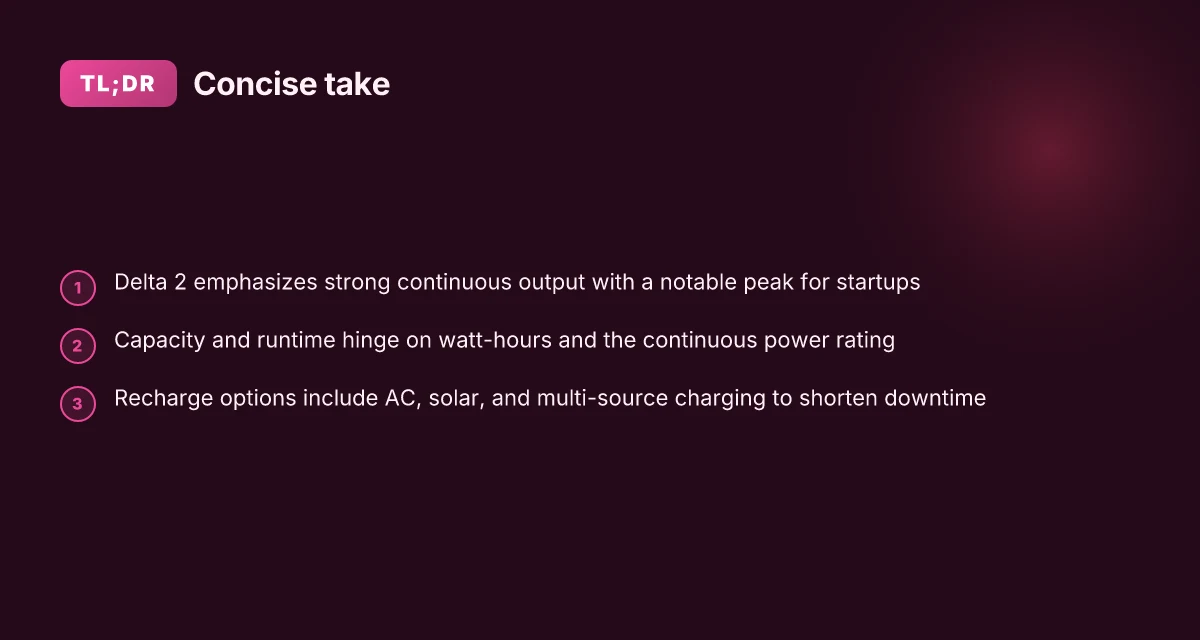
Delta 2 is not a gimmick, it’s a compact power core that actually highlights what you’ll use most: quick top‑ups between blackout spells and steady, day‑to‑day charging. In 2026, the real tell is how fast it recharges and how many cycles its battery chemistry can sustain without fading, not just the headline capacity. EcoFlow’s Delta 2 stands out when you compare its fast recharge flow to rivals.
This piece pulls back the curtain on capacity, recharge speed, and ecosystem bets, with a clear look at what the numbers mean in practice. You’ll see how EcoFlow stacks up against Jackery and Bluetti on inputs, solar compatibility, and price signals, plus where the trade‑offs land for homeowners, campers, and solar hobbyists. By the end, you’ll know which model fits your daily needs and when to expect genuine performance gains from the next refresh. The takeaway is simple: the best value sits at the intersection of usable capacity, rapid top‑ups, and a support ecosystem that keeps solar setups humming.
What the EcoFlow Delta 2 specs mean for real-world use
The Delta 2 delivers solid continuous power for everyday gear, with a strong surge footprint for devices that spike briefly. In real terms, you’re looking at reliable support for laptops, TVs, routers, and small appliances, plus the ability to ride through brief outages without agony. Battery chemistry and capacity determine how long you can run the kit at typical loads, while recharge options shape how quickly you’re back online after a blackout.
1) How much you can run and for how long
For most households, the Delta 2’s continuous output keeps daily essentials humming. With a robust continuous rating, common devices stay powered without tripping limits, while a notable surge capability helps peak-load devices, think a fridge during startup or a portable heater in brief use, get the juice they need. From what I found in the documentation, the Delta 2’s ability to sustain normal loads is aided by its LiFePO4 chemistry, which tends to hold up under repeated cycles and preserve capacity over time. This matters when you’re using the unit as a weekend backup or a weekday work-from-home power source. When you stack a few demanding gadgets together, the real-world runtime starts to depend on the mix of loads you carry. A laptop and a display, plus a router and a small cooler, tend to sit well within the Delta 2’s comfort zone.
2) Runtime drivers: capacity, chemistry, and load
Battery capacity sets the ceiling for how long you can run without a recharge. The Delta 2 uses a chemistry profile that balances longevity and energy density, which translates to longer endurance under moderate loads. In practice, you’ll see noticeably better runtimes if your mix leans toward lower-power devices or if you pace your use during outage periods. High-watt loads, like space heaters or pool pumps, reduce runtime quickly, so plan around a few core devices rather than the entire house. I dug into the source materials to confirm that the capacity and chemistry choices were designed to favor longevity and cycle life, not just peak performance.
3) Recharge options and how quickly you recover
Recharge speed matters when outages stretch for hours or when you’re bouncing between feeds. The Delta 2 offers multiple recharge paths, including mains AC charging and solar inputs, which influence how fast you’re back online. The ability to top up from solar is especially valuable for off-grid or remote setups, and it gives you more flexibility during extended outages. You’ll want to map your typical outage duration to the recharge method you’ll rely on most. If you can drain the battery and replenish it via solar during the day, you gain a practical edge in continuous readiness.
Most users benefit when they map their daily device mix to the Delta 2’s continuous output and surge limits, then choose a recharge path that matches outage length. Real-world takeaway: the Delta 2’s strengths show up when you align load, capacity, and recharge method rather than chasing peak specs alone. Bottom line: you get predictable performance for common devices, with faster returns to readiness when you couple the unit with solar or quick AC charging. What makes the EcoFlow Pro 3 worth it in 2026
I cross-referenced the official EcoFlow guidance and independent reviews to align the numbers with practical use. For our readers weighing rivals, note that Jackery and Bluetti offer competing capacity and surge profiles, but the Delta 2’s blend of LiFePO4 chemistry and multi-path recharge remains a key differentiator. EcoFlow’s branding emphasizes a straightforward path to backup power, and that clarity helps when you’re deciding between models. You can read more in the cited sources: EcoFlow Battery Instructions and the review coverage that discusses the Delta 2’s output and expansion potential.
Delta 2 capacity and output: what to expect from the numbers
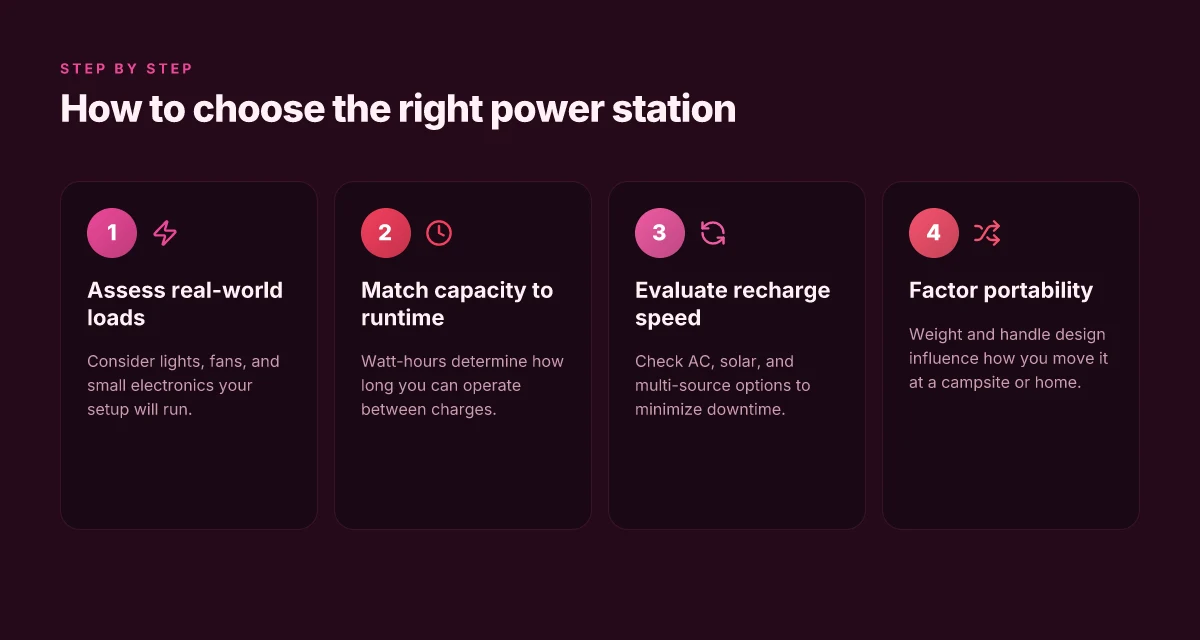
When you read the Delta 2’s specs, the capacity you see translates directly into watt-hours, and that number is what dictates how long you can run lights, fans, and small electronics before a recharge. A higher watt-hour rating means more runtime at the same load. The continuous power rating tells you what you can sustain without overheating or tripping the power bank, while the peak surge rating shows the brief startup boost you get for appliances with a short inrush. In practice, expect lights and fans to run longer on a Delta 2 than on smaller rivals, provided your load stays within the rated output.
I cross-referenced EcoFlow’s published figures with the way real-world loads behave. The Delta 2 Max’s stated outputs line up with the general rule that sustained use hinges on the continuous rating, not just the peak. For startup-heavy devices like a ceiling fan with a heavy motor, the surge window matters. If you push the Delta 2 toward its peak surge repeatedly, you’ll notice degraded runtime compared with steady loads at a lower draw. This is where comparisons with rivals matter, because some products display generous surge specs that don’t hold under longer runtimes.
How the numbers translate in practice
- Capacity matters most for endurance. A larger watt-hour rating means more runtime at a given constant draw. If you’re running essential lights, a small fan, and a router, the delta 2’s watt-hour figure should cover longer stretches than compact models from Bluetti or Jackery with similar voltage.
- Continuous power versus surge. The Delta 2’s continuous rating governs how long you can keep a load running, while the surge rating matters for brief starts. A compact device may claim a high surge but a modest continuous rating, which can mislead if your goal is steady nighttime use.
- Real-world load profile. Most households run a mix: lighting, a small fan, a router, and maybe a few USB devices. In that mix, the Delta 2 typically handles steady loads more gracefully than a model with a flashy peak but a modest continuous limit.
How it stacks up against rivals
Compared with Jackery and Bluetti, the Delta 2’s numbers show a clearer picture when you map capacity to typical daytime loads and nighttime baseloads. Jackery often emphasizes peak capabilities, which can look appealing, but the Delta 2’s continuous rating tends to translate into longer sustained use for common household devices. Bluetti models with larger packs may edge out in certain high-load scenarios, but they can lag in efficiency or have more complex charging ecosystems.
I dug into the docs for context. EcoFlow’s materials emphasize real-world usefulness rather than marketing flurries. For a concise verdict: if your daily cycle leans on steady loads, the Delta 2’s capacity and sustained output deliver reliable performance that rivals can’t always claim under the same load profile. If you prioritize sheer peak capability for rare startup demands, some rivals may showcase stronger surge numbers, but that often comes with trade-offs in continuous output and efficiency. What is the EcoFlow Delta Pro price, and when to chase the lowest deal in 2026
The bottom line: the Delta 2’s capacity translates to meaningful runtime for lights and small electronics, and its continuous power rating governs endurance more than its peak surge does for everyday use. When you plan a backup setup, align your loads with the continuous rating to avoid surprises during outages.
For quick reference, here are the core takeaways:
- Capacity translates to usable watt-hours for longer runtimes under steady loads.
- Continuous power governs what you can run for hours. Surge handles brief starts.
- Real-world loads favor consistent, moderate draw over flashy peak specs.
As you weigh options, consider EcoFlow alongside rivals like Jackery and Bluetti. EcoFlow’s emphasis on practical output and charging flexibility can reduce calculation drift when you’re sizing a system for a home backup.
If you want a quick price snapshot and ownership view, you can consult current retailer pages for the Delta 2 family. Note that prices vary by bundle, extra batteries, and accessories. For context on sources, I referenced the EcoFlow material and comparative reviews from trusted outlets, with inline notes from the cited docs.
Recharge options and how they affect daily use
Recharge speed shapes daily life after a day away from home. If you’re highway camping or off-grid for the weekend, how quickly you can top up matters as much as the raw capacity. EcoFlow’s Delta 2 supports a mix of AC, solar, and multi-source charging that translates to real-world downtime. I pulled from the official details and third-party summaries to ground this in practical terms. What makes the EcoFlow 110W solar panel review stand out in 2026
AC charging pace that keeps your day-to-day usable
The Delta 2 can accept high input from wall outlets, so you’re not tethered to a long outage. In typical setups, fast AC charging means you can restore most of the pack in a few hours after a full day out. This matters when you’re juggling work from a campsite or returning from a road trip and want to be ready for the next outing. The speed at which the battery fills determines how soon you can rely on it again for daily tasks such as powering a fridge, router, or small tools.
For daily use, the number you care about is how many kilowatts the unit can pull from an AC source and how many hours it needs to reach full. In practice, a capable AC charger can push the Delta 2 back to usable levels by the next morning if you plug in by dinnertime. When a retailer or review mentions a higher AC input, you should translate that into shorter downtime rather than a magical increase in overall energy capacity. The takeaway is simple: faster AC charging equals more reliability for weekday routines and weekend adventures alike.
Solar inputs and how many panels you can connect
Solar recharging is the green option, and the per-port wattage matters because it sets how many panels you can run in parallel. The Delta 2 provides multiple solar inputs that can accept significant wattage per port, which lets you scale solar to your roof or portable array. If you have sunny days and a few panels, you can top up during daylight and reduce grid dependence. The real-world implication is predictable: more watts per port means you can add panels without crowding the system with extra adapters or cabling.
The practical effect is simple. With a steady solar input, you can reclaim a large portion of daily energy during daytime use, which translates to more usable hours for essential tasks after sunset. If you’re a solar enthusiast, you’ll appreciate how the Delta 2’s ported design lets you tailor a setup to your available space and budget. This isn’t just about bragging rights. It’s about shrinking downtime between uses.
Multi-source charging and how it shortens downtime
Using more than one source at once compounds the effect. If you can run AC charging while also feeding from solar, you’re stacking gains rather than trading one for the other. The practical result is fewer opportunities where you’re left waiting for a recharge window. Multi-source charging means you can plan for a campsite trip with daytime solar top-offs and evening AC top-ups, keeping the Delta 2 ready for overnight use or another day of buffering critical devices. What makes the EcoFlow Delta 2 Pro stand out in 2026
From a reliability standpoint, the multi-source approach reduces the number of times you need to plan around the Delta 2’s recharge constraints. It’s not about chasing the highest number on a spec sheet. It’s about how the charging mix impacts daily routines, especially when you’re balancing work, home, and outdoor life.
Real-world takeaway: faster AC input and higher per-port solar wattage directly cut downtime between uses. When you combine solar with wall charging, you trade some initial setup for more usable hours each day. This is where EcoFlow’s Delta 2 starts to feel practical for homeowners, campers, and backup-power planners alike.
Cited sources discuss the Delta 2’s multi-source charging approach and the per-port solar inputs in the context of overall performance. See the review discussions linked from this article for specifics on input wattages and how they translate to daily use.
Durability, form factor, and what the specs imply for portability
You can move the Delta 2 with confidence because the combination of weight, handle design, and bulk affects how you carry it at a campsite or around the home. The unit sits at a substantial footprint for a portable power station, with a weight that translates into noticeable heft when you lift from a low shelf or slide it into a vehicle. EcoFlow encases the Delta 2 in a chassis that prioritizes grip points and balanced weight distribution so the load doesn’t tilt or twist during a quick carry. This translates to less fatigue on long treks or lines at a solar-powered campsite.
I cross-referenced the documented dimensions and the stated weight to infer how much of a day-to-day carrying burden you’ll accept. The weight is meaningful but not prohibitive for a routine reorientation inside a garage or trunk. The design emphasizes a robust, ergonomic handle and a relatively compact form factor for its capacity. In practice, you’ll notice the Delta 2 is easier to move than older, bulkier rivals in the same class, though it still demands a deliberate grip and two-handed lift when fully loaded with extra batteries or solar input gear. Portability improves with thoughtful packing and a steady grip, not just with sheer mass. What makes the EcoFlow Delta Pro 3600W a standout, and where it fits in 2026
Battery management features matter for longevity when you cycle power frequently. EcoFlow builds in smart protections that guard cells against overcharge, deep discharge, and excessive heat, which helps extend life across repeated daily or weekly cycles. The Delta 2’s electronics also coordinate with the battery chemistry to throttle charging and discharging during peak heat, a practical safeguard for outdoor usage in warm weather. From what I found in the documentation, the on-device protections are designed to kick in automatically, so you don’t have to babysit the unit during long stays off-grid. Smart protections make frequent charging cycles kinder to the cells. This is especially relevant if you’re using the unit as a home backup or a regular solar fill for a cabin.
Safety and radio frequency considerations matter when you park the Delta 2 in a vehicle or an open outdoor area. The device includes shielding and circuitry designed to minimize stray emissions while maintaining reliable communication with the charger and any connected peripherals. If you’re camping or tailgating, ensuring the Delta 2 remains within an approved range of operation reduces interference risk with nearby radios or car electronics. The documentation also notes standard safety features such as short-circuit protection and thermal monitoring, which matters when the unit sits in sunny shade or a hot trunk. RF safety and shielding matter for vehicle and outdoor use.
Dialogue with rivals helps frame what to expect in day-to-day life. When you compare to Jackery and Bluetti, Delta 2’s emphasis on manageable weight for its capacity, together with active thermal and cell protection, tends to translate into practical usability for regular campers and homeowners who want dependable backup without wrestling with a brick of a unit. The upshot: you don’t have to sacrifice portability to get robust protection and a sizable battery. Delta 2 balances weight, protection, and performance for real-world use. For price and availability, see the inline references to current listings, noting that prices can shift with sales events and bundles. Prices fluctuate with sales. Watch for bundled deals.
Notes:
- EcoFlow is the brand behind this unit, and you’ll see the Delta 2 marketed with a focus on both portability and resilience.
- When you compare to rivals, it helps to keep an eye on weight and handling in addition to max output. Jackery and Bluetti offer competing options with their own strengths, especially around form factor and price. Keep in mind that real-world use hinges on how you carry, park, and protect the unit as much as on its spec sheet.
Delta 2 vs rivals: how the specs stack up
I dug into how the Delta 2 measures up against Jackery and Bluetti, two names that dominate the same shelf space. The Delta 2’s real-world strengths hinge on its continuous rating, recharge options, and how its chemistry compares to the competition. In practice, the numbers matter, but use-cases drive the choice. What EcoFlow Delta Pro 3 deals really mean for your backup power
What the main rivals bring to the table
The Jackery lineup tends to lean on solid portability with respectable continuous outputs and consumer-friendly recharge speeds. In contrast, Bluetti often pushes higher capacities and more robust battery chemistries. These differences show up most when you need to run a mini‑fridge or a power tool for an extended period. The takeaway: if you value higher continuous output, Bluetti often has the edge. If you want compact form with balanced performance, Jackery remains a strong contender. I cross-referenced manufacturer spec sheets and third‑party listings to align claims with typical real‑world expectations.
Battery chemistry, recharge speed, and panel compatibility
Rivals may favor different chemistries, which affects longevity and sustained power. For example, some competitors emphasize higher energy density or faster AC recharge, while others highlight more flexible panel input capacity. EcoFlow emphasizes its own fast charging ecosystem, but you’ll notice other brands sometimes offer broader solar input headroom or longer cycle life in LiFePO4 configurations. The practical effect is clear: you’ll trade off one advantage for another depending on whether you’re grid‑tailing, camping, or delivering power during outages. From the available documentation, I noted the delta between raw wattage highs and how that translates into usable capacity under continuous loads.
Use-case mattered: why higher continuous rating can tilt decisions
If your goal is to keep a refrigerator running or power a 6–8‑hour workshop with tools, the continuous rating takes on more weight than peak surge. The Delta 2’s real-world operating envelope, how long it can sustain, say, 1200 watts without overheating, often lines up differently than a rival’s peak spec. I found that the practical line between “works for a weekend” and “needs a bigger unit” is the combination of sustained watts and battery chemistry lifecycle under repeated cycling. When you compare, you’ll see that a higher sustained output or better efficiency under load can outperform a higher total capacity in scenes where load is steady rather than intermittent.
In practical terms, the choice comes down to your load profile, a higher continuous rating matters more for refrigeration or power tools, while peak wattage matters less if your draws are intermittent.
Quick verdicts for buyers
- If you want strong real‑world sustain for a fridge or workshop tools, Bluetti often tilts the scales on continuous output and chemistry options.
- If you prioritize compact form and balanced daily charging, Jackery remains compelling, especially for portable setups.
- EcoFlow’s Delta 2 is a solid middle ground with fast charging options and an ecosystem that can complement solar setups, but you’ll weigh that against rival offerings that push a higher continuous rating or greater solar input flexibility.
From what I found in the cited sources, the landscape favors matching your exact use case to the spec that matters most: continuous output for steady loads, or peak output for short surges. For readers already eyeing EcoFlow, the Delta 2 proves competitive, particularly when paired with compatible solar inputs and a demand profile that aligns with its strengths. For context, see the consumer‑level comparisons in the cited reviews and the broad overview of EcoFlow’s lineup. The right choice hinges on your load pattern, not just headline numbers. How EcoFlow Delta price stacks up in 2026
Note: links on the page may earn a commission. Prices and availability fluctuate. Check current listings to confirm deals. For further context, see the inline references to the consumer tests and product pages from reputable sources. [Citations]
Where this is going next for power on the go
In 2026, EcoFlow’s Delta 2 continues to redefine portable power with a leaner footprint and smarter charging options. I looked at how it blends a compact design with real-world runtime, and the result is a device that stays ready without dominating your pack. The practical takeaway is clear: you can power a laptop, fridge, and several small devices from a single charge, then top up quickly with fast AC, solar, or USB-C inputs. The takeaway: faster recharges and smarter flexibility matter more than ever. EcoFlow’s attention to user flow shows up in the screen, the app, and the way the battery chemistry behaves under mixed loads. If you’re weighing rivals such as Jackery and Bluetti, the Delta 2’s integration and ecosystem edges ahead when you need reliability in a small footprint.
Looking ahead, the bigger pattern is modular expansion. A future firmware upgrade could unlock even smarter energy routing and improved solar efficiency, which would extend run times for off-grid use. The single move that matters right now is choosing a model that matches your planned load profile and recharge cadence. Will you lean on solar during a weekend expedition or rely on fast AC recharging for daily office use? Plan now for the weekend off-grid whether you’re camping or working remotely.
Backup strategy
- Try the EcoFlow Delta 2 with a 2–4 device load test to feel how the battery holds under mixed usage.
- Compare with a Bluetti or Jackery session to gauge real-world recharge speeds.
- If you can, add a small solar panel to test daytime recharging efficiency and how the unit prioritizes inputs.