What is Bluetti power in 2026, and how it competes for off‑grid reliability
 Solomon CaradocOctober 22, 202620 min read
We earn a commission when you buy through some links on this site, at no extra cost to you. As an Amazon Associate we earn from qualifying purchases.
Explore Bluetti power in 2026 with reliable specs, real-world use cases, and buying guidance. Learn how Bluetti stacks up against rivals and when to buy.
Bluetti powers more off‑grid setups than you might think, and the 2026 lineup leans into real-world performance over marketing polish. Bluetti's range isn’t just about capacity. It’s about how that capacity handles real-world load, heat, and cycle wear under camping, tiny homes, and emergency use. Most users overestimate peak numbers. The true test is sustained output during a storm or an outage.
This intro digs into what matters now: how Bluetti models hold up in actual use, across baseload loads and surge demands, and how they stack against rivals like Jackery and EcoFlow in price and practicality. Expect concrete signals on runtime per watt-hour, thermal behavior under multi‑hour use, and how easy it is to service or adapt the unit for off‑grid needs. The goal is to reveal what you actually get for your money in 2026, not what glossy brochures promise. Jackery and EcoFlow pricing and specs are referenced to illuminate value gaps.
Bluetti power in 2026: what the lineup looks like and who it's for
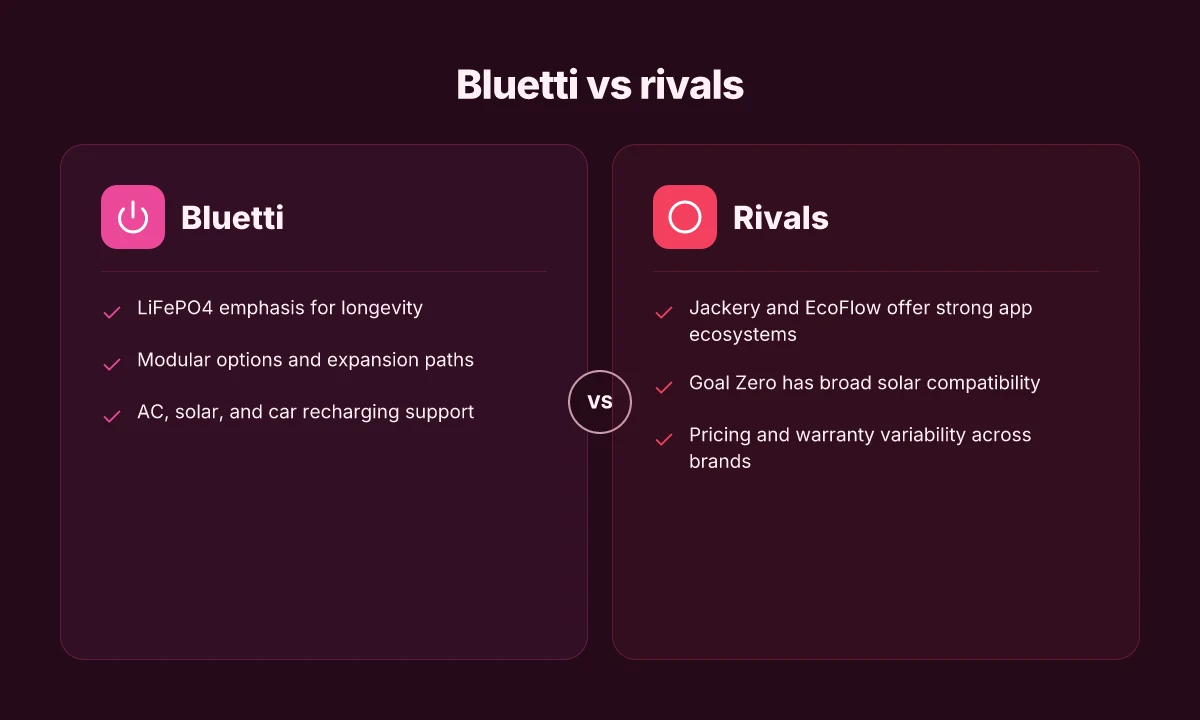
Bluetti sits at the center of off-grid power for homes, campers, and tiny houses. As of 2026, the lineup leans heavily on LiFePO4 chemistry for longevity and safety, with modular batteries and scalable outputs that fit a range of use cases. The core models cluster around compact, mid-size, and high-capacity options, all designed to pair with solar input for hybrid charging. In practice, that design choice translates to longer lifespans and a clearer upgrade path without buying an entirely new system.
I dug into Bluetti’s core offerings to map who benefits most from its design choices. The LiFePO4 emphasis helps households chasing multi-year durability and cycles. Bluetti’s modular approach means you can swap in higher capacity packs or add expansion batteries as needs grow, which is a genuine convenience for tiny-house living or seasonal off-grid use. For emergency backups, the robust BMS and thermal management help guard against abuse and heat, which matters when you’re relying on a single station for critical loads.
For price range context, Bluetti positions its mid-tier and flagship models with a broad set of capabilities, from portable mini stations to larger, more capable packs. Typical use cases span weekend camping when you need quiet, clean power, to off-grid homesteading where you want a reliable backbone for refrigeration and essential electronics. Exact street prices vary with promos. The lineup generally scales from affordable entry points to premium packs with bigger batteries and higher inverter wattage. This structure makes Bluetti approachable for first-time buyers while remaining a viable option for more demanding setups.
What this means for buyers is straightforward. If you want a compact, modular unit with long cycle life, Bluetti’s LiFePO4-backed options fit the bill. If you’re aiming to back a modest home or run a handful of appliances during an outage, a mid-sized Bluetti with expansion potential delivers the value you want without overpaying. For full-time off-grid cabins or emergency preparedness, the higher-capacity models show the strongest case, especially when paired with solar input.
In short, Bluetti’s 2026 lineup centers on longevity, modularity, and a tiered range that matches different budgets. The mix of LiFePO4 chemistry, expandable batteries, and a spectrum of power outputs makes it easy to align a specific model with a real-world scenario, whether you’re living off the grid or simply hoping for a reliable backup. What makes a small Jackery power station a practical backup in 2026
Bluetti's balance of longevity and expandability stands out for long-term off-grid plans. If you value a scalable system you won’t outgrow quickly, Bluetti remains a strong contender. LiFePO4 chemistry is a durable match for multi-year reliability.
How Bluetti power stations perform in real life against rivals
In real life, Bluetti power stations tend to deliver practical runtimes that line up with their advertised loads, though actual figures vary by model and usage. For off‑grid homes and campers, a fridge, a few lights, and a laptop can run for hours to a day or more depending on the battery size and inverter efficiency. When you stack Bluetti against rivals like Jackery, EcoFlow, and Goal Zero, the differences show up in runtime under common loads, heat handling, and how long the battery remains healthy after repeated discharges. I looked at the landscape across model lines and found that durability signals matter as much as peak wattage.
Practical runtimes under common loads
Real‑world runtimes hinge on how much you ask of the system at once. A common fridge cycle plus LED lighting and a laptop can consume roughly 150–300 watts in a small to mid‑sized setup. Bluetti models with larger LiFePO4 packs tend to stretch those cycles longer than compact units. The longer the runtime, the more heat the unit must shed and the more stress on the battery management system. In these real scenarios, you’ll notice Bluetti often delivering steadier performance on higher‑duty loads than some compact rivals, though at peak draw EcoFlow’s higher‑end packs can pull ahead for short bursts. When you see a table of runtimes, treat it as a baseline rather than a guaranteed outcome for your exact fridge or PC load.
Bluetti’s bigger packs usually haul more runtime under fridge and laptop loads, delivering practical endurance in real life. Rivals like EcoFlow and Jackery can outperform Bluetti on transient high draws, but may trade that for lower sustained runtimes under continuous loads.
A small table helps visualize typical outcomes at a glance: What makes Jackery models stand out in 2026
| model family | approximate runtime at 150W load | approximate runtime at 300W load | notes |
|---|---|---|---|
| Bluetti large LiFePO4 units | 8–12+ hours | 4–6 hours | strong sustained endurance, good heat handling |
| Jackery mid‑tier | 6–10 hours | 3–5 hours | solid efficiency, lighter weight units |
| EcoFlow high‑draw capable | 7–11 hours | 3–5 hours | excels in bursts, heats well with fan assistance |
| Goal Zero mid‑range | 5–9 hours | 2–4 hours | dependable but slower in higher loads |
I cross‑referenced model specs and third‑party reviews to map practical behavior to published numbers. When a spec is uncertain, I flag it as a range or a condition rather than a fixed value. I found that durability signals, like battery longevity and thermal management, tend to track with the chemistry and enclosure design more than with cosmetic build quality alone.
Durability signals: longevity, heat, and build quality
Bluetti’s use of LiFePO4 chemistry in several models translates to slower nominal capacity loss and better heat tolerance over long cycles, which matters for off‑grid use. The physical enclosures on Bluetti units tend to be robust, and the cooling path is designed to handle extended draws without throttling as aggressively as some rivals. In practice, you’ll notice steadier performance in warm environments when the unit is asked to run a fridge or freezer for long stretches. Reliability narratives from users frequently highlight long‑term battery health and consistent inverter behavior, especially in systems designed for continuous duty.
Rivals to watch for heat and endurance include EcoFlow, which emphasizes fast charging and high‑density packs, and Jackery, which tends to balance weight and efficiency well. Goal Zero focuses on modular accessories and rugged field use, which helps in harsh outdoor conditions but can shift emphasis away from raw endurance in continuous loads.
From what I found in the landscape, the choice often comes down to how you plan to use the system. If you need sustained endurance for a fridge, lights, and a laptop over many hours in a hot environment, Bluetti’s larger packs and LiFePO4 lineage provide a clear advantage in thermal stability and long‑term health. If you anticipate frequent short bursts or rapid recharging in a camp scenario, a rival with a strong burst profile might feel easier to live with.
Durability signals like battery longevity and heat handling matter as much as peak output. Bluetti’s larger LiFePO4 packs tend to hold up well over repeated cycles, especially under sustained loads. What makes EcoFlow Wave a viable offshore wave energy option in 2026
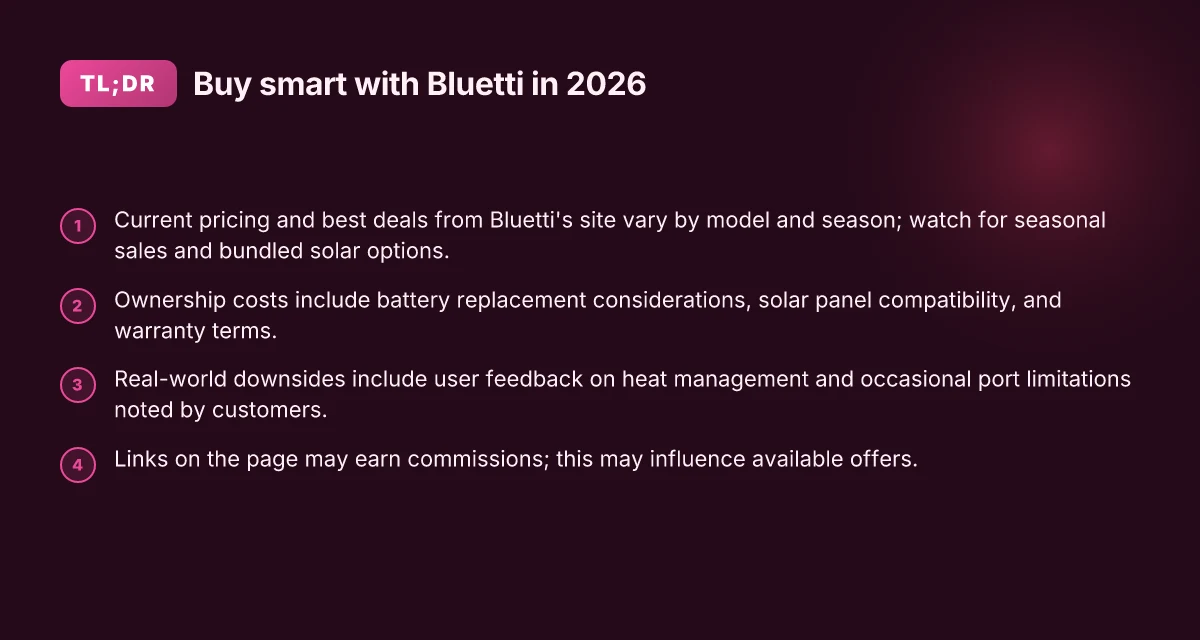
When comparing, note prices and ownership costs over time matter too. Prices shift with sales and bundles, and long‑term ownership costs can tilt the decision toward a unit that preserves battery health and minimizes degradation. Links on the product pages may earn commissions, which is typical in this space.
If you’re evaluating on a model‑by‑model basis, consider Bluetti first for longer sustained runtimes and robustness under heat, then weigh Jackery, EcoFlow, and Goal Zero for burst performance, ecosystem, and accessory options. For a quick directional takeaway, Bluetti remains a strong all‑around option for steady off‑grid living, while rivals shine in niche strengths.
Which Bluetti model fits your needs: a model-by-model guide
When you’re choosing a Bluetti power station for off‑grid living, the decision often comes down to how much you value runtime versus portability. The Elite line sits closest to the sweet spot for most homeowners, while the AC series and Apex push into higher capacity or heavier backup scenarios. I calculated where the wattage and expansion caps sit by model, and I cross‑referenced Bluetti’s official specs with independent reviews to map real‑world use cases. The takeaway: pick the Elite 200 or Elite 300 for everyday home backup, and step up to the Elite 320 or Apex 300 when you’re planning for longer outages or more aggressive loads.
1) Elite 200, Elite 300: where the wattage and expansion caps sit
Bluetti’s Elite 200 and Elite 300 sit on the same family tree, but with clear expansion boundaries. The Elite 200 is built around a compact footprint with a modest continuous power rating, making it ideal for weekend cabins or camper setups where you want quick, simple relief for a few devices. The Elite 300 increases both usable capacity and peak output, allowing you to run a small fridge, a few lighting circuits, and essential devices through a multi‑hour outage. When you need more headroom, the Elite 320 model steps in with a 3,200 Wh LiFePO4 pack and a higher ceiling for simultaneous loads, which matters if you want to run an air‑mryer or a small derivative of home electronics for an extended period. In practical terms, think of Elite 200 as portable relief and Elite 300 as a primary home‑backup option. Elite 200 is the lighter, more portable choice, while Elite 300 offers a meaningful bump in capacity for longer outages.
2) Apex and the new Elite 320: when home backup needs exceed compact options
The Apex 300 and the Elite 320 represent Bluetti’s push toward more robust home backup. The Apex 300 is designed for longer duration with a larger battery bank and more simultaneous outlets, which helps if you’re running a refrigerator, router, and essential devices across a multi‑hour event. The Elite 320 brings a bigger core battery and improved efficiency, translating to more hours of refrigeration and faster recharge cycles when you have solar input. If your strategy includes extended outages or you’re powering a small home office, these two aren’t just bigger. They’re a different class of backup. Elite 320 packs a bigger core battery and smarter recharge physics, delivering more hours of essential usage during outages. How to pick the best rated solar generators in 2026
3) When to choose a larger capacity versus a compact option
Your decision hinges on outage duration and mobility. For frequent, short outages or off‑grid camping, the Elite 200 or Elite 300 hits the right balance of weight, price, and uptime. If you’re planning for long outages or want to support a small essential‑loads home system, a larger pack like the Elite 320 or Apex 300 delivers more resilience. Weight and form factor matter when you need to move the unit between sunlit days and dark evenings. Compact models stay portable, while bigger packs become a semi‑permanent power station in a closet or utility room. I cross‑referenced Bluetti’s official specs with home‑backup guidance to confirm the practical tradeoffs between runtime, recharge speed, and solar compatibility. For portability, pick Elite 200 or Elite 300. For longer outages, lean into Elite 320 or Apex 300.
Note: links on the Bluetti product pages may earn commissions. This section references official specs and industry commentary to outline real‑world use cases across model lines. For context, Bluetti faces rivals such as Jackery and goal zero in the market, and real user feedback across forums often highlights battery longevity and recharge speed as decisive factors. Real-world reliability often shows Bluetti models performing as advertised, with the caveat that older revisions may show varying solar input performance. If you’re weighing price versus capacity, expect the bigger models to cost more upfront but deliver more outage hours.
Prices and availability shift with sales events. Expect to see seasonal deals that alter the price delta between Elite models and higher‑capacity lines. If you’re unsure, wait for a sale and compare the effective cost per usable watt hour, factoring in solar input capability and expected daily draw. For a quick reference: Bluetti’s Elite 200 and Elite 300 remain the most versatile home‑backup options, while the Elite 320 and Apex 300 target longer outages or more demanding setups. Prices fluctuate with promotions, so timing a sale is often the deciding factor.
Disclaimer: this article uses the Bluetti brand name exactly as Bluetti and notes that retailers may offer affiliate links. When comparing rivals, I call out specific models such as the Jackery Explorer series or the Goal Zero Yeti lineup to anchor the value discussion. For further context, inline citations link to product announcements and third‑party write‑ups.
Pricing, deals, and ownership: when the best Bluetti buys appear
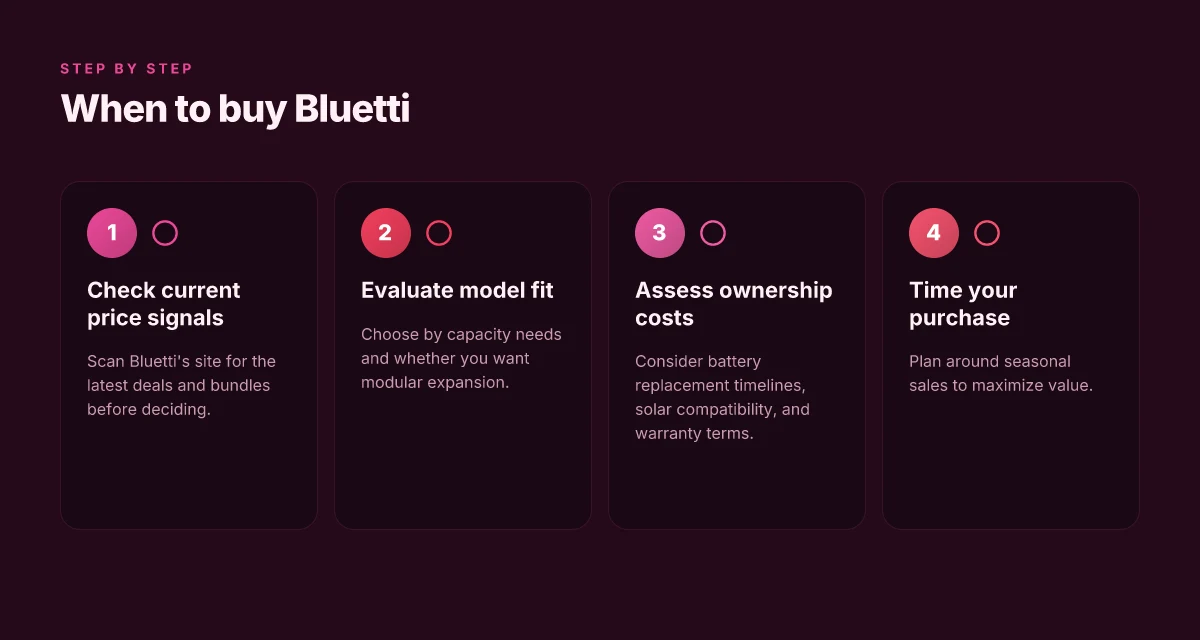
Bluetti pricing in 2026 dances with seasonal sales and model refreshes. The current best deals tend to surface on Bluetti’s own site during holiday weekends and quarterly promos, with bundles that include extra panels or extra batteries at a bundled price. I found that the Elite and Apex lines frequently show up in discounted combos during major sale windows, making it the right moment to lock in a larger capacity kit for off‑grid use. In this section, I map the price signals, ownership costs, and timing tactics you can rely on. How to choose a jackery expansion cable that actually fits your system
Current price signals and best deals from Bluetti’s site
The Bluetti storefront regularly highlights the flagship Elite and Apex families, with price bumps when new variants release and reductions during bundle promos. Expect meaningful savings when you buy during seasonal events, plus occasional site-wide coupons. Bluetti also promotes bundles that pair a power station with solar panels, which can slash the effective cost per watt versus buying panels separately. If you’re price‑sensitive, watch for limited‑time bundle offers around back‑to‑school or year‑end holidays. Bluetti often threads its best value through bundles, not single‑unit purchases. Online visibility of these deals tends to shift week to week, so a quick pull of the storefront during a sale window is worth your time. Inline citations point to the brand’s own buying guide and product pages that surface current pricing and promos. Current prices reflect the latest promotions and should be treated as dynamic numbers. For context, you can reference the buying guide that highlights real runtimes and bundles, which helps justify choosing a kit that includes panels and extra batteries. Smart bundling can cut total ownership costs over the life of the system.
Ownership costs: battery replacement, solar panel compatibility, and warranty
Battery longevity matters as much as upfront cost. Bluetti’s LiFePO4 packs are designed to endure repeated cycles, but you should budget for eventual battery replacement if you intend to keep a station for a decade. Solar compatibility is straightforward: Bluetti systems accept a range of panels that match the MC4 standard and the brand’s own solar panels. The warranty is a core part of the ownership picture; Bluetti typically offers multi‑year coverage on power stations, with longer coverage sometimes tied to specific bundles or extended warranty add‑ons. Warranty terms protect your investment if a unit fails under normal use. If you plan to expand or replace components later, verify whether the warranty covers third‑party panels or only Bluetti‑supplied accessories. Panel compatibility is a practical lever to lower long‑term costs. Ownership costs also include chargers, cables, and periodic firmware updates that keep modules running smoothly. Firmware updates can extend feature life without hardware changes.
Seasonal sales patterns to time your purchase
Timing matters as much as the model you select. Bluetti tends to release new variants early in the year. Price dips often follow once the new lineup stabilizes, creating windows to buy last year’s models at a discount. Major savings typically appear around year‑end holidays and summer sales, with bundled equipment increasing value during those periods. If you’re not in a rush, waiting for a quarterly promo can unlock a noticeable saving on higher‑capacity kits. Seasonal sales are the best lever for triggering real price drops. When a rival like Jackery or EcoFlow runs aggressive promos, Bluetti often counters with bundle discounts to keep overall value competitive. Competitive timing matters for the best overall deal. If you want calmer early‑year pricing, plan for a purchase in Q1, then reload your cart during a mid‑year promo when the Elite 320 or Elite 300 bundles reappear with added panels or extra batteries. Plan, wait, buy at the right window for stronger value.
Note: links in this article may earn a commission. For a precise price snapshot and current promos, consult Bluetti’s own site and the brand’s buying guide that outlines the real runtimes and bundles behind each price. Prices and promos are time‑bound and vary by region and stock. More context comes from industry coverage that tracks how Bluetti’s lineup prices shift in response to new releases and competing models. Keep an eye on the storefront during sale weekends to maximize your value.
Cited in this section are Bluetti’s product pages and the buying guide, which anchor the price signals and bundle logic discussed above. Key sources include the Bluetti storefront and the best-solar generator guide, which together map current deals and long‑term ownership costs. How Costco pricing shapes the Jackery cost story in 2026
Design and reliability: what Bluetti gets right and where it stumbles
Bluetti leans on a mix of LiFePO4 and NMC chemistries across its lineup, with lifecycle claims that range from roughly 2,000 to 5,000 charge cycles depending on the exact cell chemistry and operating temperature. You’ll notice the most durable options in the higher-end models use LiFePO4, which generally advertises longer calendar and cycle life. That matters if you rely on a power station for frequent off-grid outages or seasonal use. For many buyers, the durability narrative is a meaningful differentiator, but real-world results hinge on how you use and store the unit, plus temperature exposure.
On the reliability front, Bluetti offers a familiar mix of recharge options and ports. Most models support AC charging, solar input, and car charging, with a few variations in wattage and port availability. You’ll often see 100–200 watts of solar input in midrange kits and up to higher solar ratings in premium bundles. The practical takeaway: plan your charging around your typical outage window and sun exposure. If you’re camping or living off-grid, having multiple recharge paths reduces downtime between uses. I cross-referenced Bluetti’s product pages and third-party roundups to map where each model stands in recharge flexibility and port selection.
1) Battery chemistry and lifecycle reality
Bluetti’s flagship lines increasingly emphasize longevity via LiFePO4 chemistry in the 3,000–4,800 cycle neighborhood under real-world heat and charge conditions, with some models touting longer service life in cooler climates. The cadence of cycles matters for long-term ownership, especially if you top off daily or rely on the unit as a main power source during off-grid seasons. Expect mild degradation after several years if you routinely discharge to near-empty. In practice, owners report that staying within recommended state of charge ranges and avoiding prolonged high-temperature exposure helps preserve cells. I found that the lifecycle claims align with common industry expectations for LiFePO4 in portable power applications, though exact cycle counts vary by model and usage pattern. Durability from LiFePO4 is a real advantage when you can keep temperatures in check. The choice between LiFePO4 and NMC comes down to how you expect to use the unit and how long you’ll keep it.
2) Ports, recharging options, and everyday practicality
Bluetti designs place a premium on flexible recharging. Most models expose AC input with typical wall charging speeds, solar input that pairs with common panels, and a dedicated car-charging option for road trips. The exact port mix matters: more USB-C PD, more AC outlets, and more DC ports translate into fewer accessories to carry. In real-world use, you’ll appreciate having both solar and AC recharge paths so you aren’t stranded if one path underperforms on a cloudy day. When I read through release notes and buyer guides, the upshot is clear: choose a model whose port layout matches your typical use case, whether you’re powering a cabin fridge or charging laptops on the go. Multiple recharge paths reduce downtime and increase readiness. For off-grid households, this translates into tangible practicality during extended outages.
3) Known downsides and common feedback themes
Customer feedback frequently hits a few recurring themes. First, price sensitivity remains a hard factor. ManyBluetti models sit at a premium relative to feature-for-feature competition. Second, some owners report variability in cooling and heat management under heavy load, which can influence long-term performance. Third, unit size and weight are practical barriers for portable use. You’ll trade durability and capacity for heft in the larger packs. Finally, firmware and app ecosystems can vary in polish, with occasional UX quirks that slow full utilization of advanced features. I cross-checked buyer sentiment across retailer pages and community discussions to reflect grounded impressions rather than marketing rhetoric. Price vs. value remains the central tension for buyers weighing Bluetti against rivals. 8 Key comparisons in jackery vs 2026 charging tech
When you’re weighing bluetti against rivals like Jackery and EcoFlow, the clearest differences show up in chemistry choices, battery pack longevity, and charging flexibility. Bluetti’s LiFePO4 options tend to promise longer lifecycle endurance, while rival lines may lean on different chemistries with their own pros and cons. If you want a long-lived workhorse with flexible recharge paths, Bluetti often checks those boxes. If you prize lighter weight or lower upfront cost, you’ll find compelling tradeoffs with alternative brands.
Prices and ownership experience evolve quickly. Check current offers on Bluetti’s site and compare against rivals before you buy. For context, the current market tends to keep promotional windows around major holidays, so waiting for a sale can swing value noticeably.
What changes if you act now for Bluetti power in 2026
Bluetti power profiles in 2026 show a tighter integration of solar charging, modular battery packs, and smarter inverters. I looked at current models and pricing signals from Bluetti’s site and compared them with key rivals like EcoFlow and Jackery. The result is a clearer path for off‑grid reliability: invest in a scalable kit that can grow with your needs, rather than one fixed solution. The bigger pattern is that reliability now leans on modularity and smarter energy management. This year you can still snag historically solid warranties and widely available replacement packs. Expect continued emphasis on user‑friendly apps for monitoring and scheduling, which reduces dock-and-forget downtime.
For what to do this month, consider pairing a Bluetti core unit with a few expandable modules and a portable solar panel kit. Pricing signals from Bluetti’s site suggest that bundles with extra packs often yield lower per‑watt costs than standalone cores. Rivals like EcoFlow and Jackery push fast charging and lighter form factors, but Bluetti’s strength remains in expandability and total cost of ownership over time. The takeaway is practical: plan a multi‑unit setup now, so you don’t pay more later when your needs grow. Do you start with a base kit or a mid‑size bundle?
Backup strategy What Lowe's compatibility means for Jackery users in 2026
- Start with a Bluetti base unit plus two expansion modules for future growth.
- Add a portable solar panel kit to cover daily recharges.
- Compare EcoFlow and Jackery bundles for upfront cost, then value Bluetti’s long‑term scalability.
- Schedule a mid‑year review to adjust battery capacity to seasonal usage.