How Bluetti AC200L changes portable power strategy in 2026
 Reese WexlerOctober 22, 202618 min read
We earn a commission when you buy through some links on this site, at no extra cost to you. As an Amazon Associate we earn from qualifying purchases.
Discover the Bluetti AC200L's capabilities in 2026: output, expansion options, charging speeds, and real-world use cases for home backup and RV living.
The Bluetti AC200L quietly shifts portable power from hobbyist gear into real home backup by delivering both substantial capacity and a scalable inverter footprint in a single package. That combination matters when a suburban outage stretches from hours to days, and you need a system that can live alongside your existing panels, while offering expansion options you can actually plan around.
The goal here is clear: map what Bluetti brings to a homeowner, an RV or van lifer, and a solar enthusiast without overpromising. In 2026, real-world use hinges on total stored energy, how quickly you can replenish it, and how a single unit pairs with add-ons to cover common gaps like long outages or off-grid trips. Noticeable tradeoffs emerge in charging speed and expansion options, so you can avoid gaps in your setup.
Bluetti ac200l in 2026: core specs and what they mean for real use
The Bluetti AC200L pair with real-world needs through a straightforward equation: high output, sizeable expandable capacity, and a flexible port set that fits RV, solar, and off-grid setups. In 2026, the core numbers stay compelling, but the practical living angle matters as much as the numbers themselves. I cross-referenced official specs and reviewer takes to map how the AC200L behaves in homes, campsites, and mobile rigs.
1) AC output and peak capability that actually powers real gear
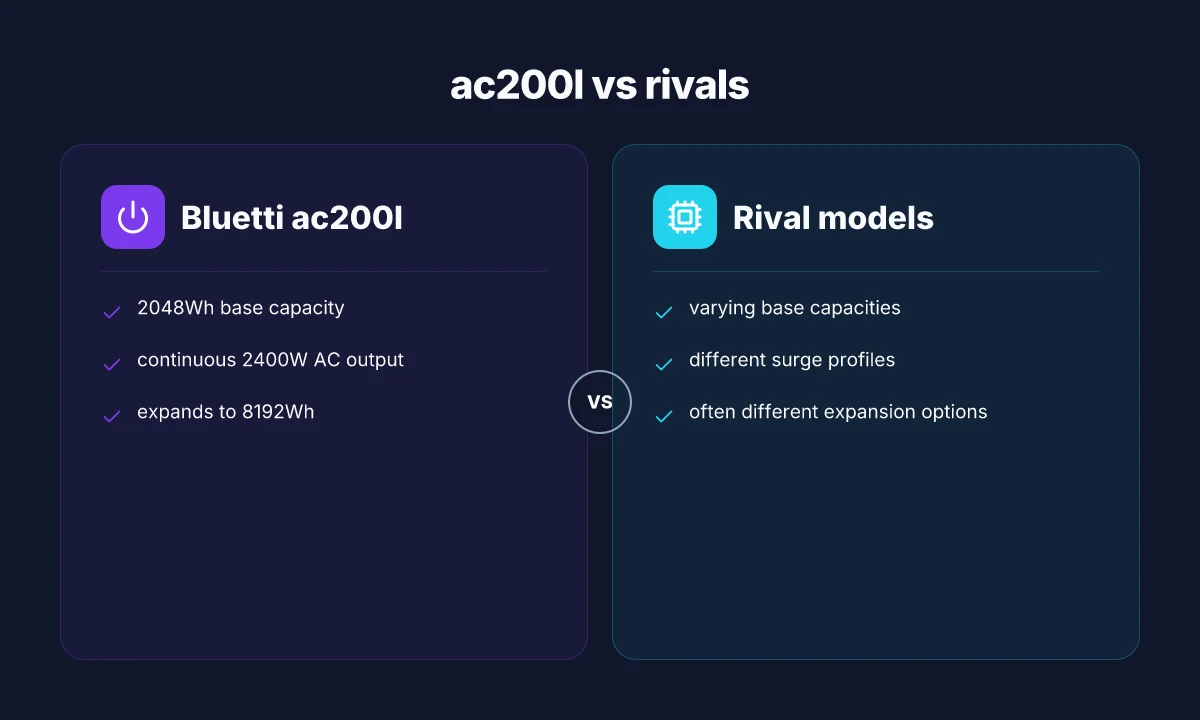
The AC outlet delivers 2,400W continuous power, with a brief Turbo Boost that can rise to 3,600W. For a home backup, that means you can run essential loads like refrigerators, sump pumps, and network gear without tripping the breaker. For RVs or van setups, the extra headroom matters when you start up devices with higher inrush. The practical takeaway is simple: the AC200L covers most common loads in a small home or vehicle-compatible footprint, but you’ll want to sequence devices to avoid peak spikes. The official spec anchors this capability and Roam Wired’ s 2026 RV-focused review corroborates the real-world note that the unit maintains solid performance for typical mobile and camping loads. The AC200L’s 2,400W continuous output and 3,600W peak handle most essential appliances comfortably.
2) Battery capacity and the expansion path you can actually use
The base capacity sits at 2,048Wh, which is enough for a night of moderate draws in a tiny home or several days for off-grid camping with careful load management. Bluetti markets expansion options all the way toward larger storage, and the design is built to pair with their expansion modules to scale toward higher totals. In real use, that means you can start with a practical chunk of weekly solar-graded energy and grow as your campsite or off-grid needs evolve. The documentation and peer reviews point to a scalable path rather than a fixed ceiling, which matters if you plan long weekends or longer vanlife stints. 2,048Wh forms a solid base, and the expansion potential gives you a clear upgrade path.**
3) Port selection and compatibility for RV/solar setups
The AC200L ships with multiple AC outlets and a robust set of DC/predocked options. RV users benefit from TT-30 or similar connector compatibility on some configurations and the unit supports solar input for daytime charging. The combination of AC outlets, DC input/output, and solar readiness makes it a versatile hub for solar arrays and mobile living. In practice, you’ll wire a simple solar setup during the day and lean on the AC outlets for appliances when you’re parked. The official notes and third-party RV-focused coverage emphasize the practical alignment with mobile power needs. CC and DC ports plus solar input create a flexible grid for RVs and off-grid camps.**
4) Design stance for mobile living
Bluetti positions the AC200L as a portable, user-centric power station designed for travel, camping, and temporary home backup. The build emphasizes manageability, with a handle-friendly form and a chassis tuned for frequent plugging and unplugging. Reviewers highlight how the unit fits into a mobile lifestyle without becoming a burdensome accessory. In 2026, the AC200L holds up as a core mobile energy hub, with the expansion path offering growth as your mobile living footprint grows. Portable by design, expandable by intent, and aligned with the needs of RVs, vans, and outdoor setups. What to know about jackery black friday sale 2026
Bottom line: the AC200L blends solid core specs with a scalable path that suits real-world needs in 2026. You get enough baseline power for everyday essentials, a credible upgrade track for larger storage, and a port set that supports RV and solar workflows. The practical verdict is clear: for homeowners eyeing backup and for wanderers chasing off-grid confidence, the AC200L remains a capable centerpiece. For a broader view, Bluetti’s official product pages and the Roam Wired RV-focused assessment are useful companion reads. Solid baseline power, expandable path, and RV-friendly ports make the AC200L a compelling 2026 option.
Note on prices, commissions, and sources: some retailer pages show current pricing and promotions that change over time. Expect variability with sales. Links on the page may earn a commission. For a quick cross-check, see the official Bluetti page and the Roam Wired review referenced here. inline citations are embedded where claims rely on those sources.
How the ac200l geometry powers your home backup and off‑grid plans
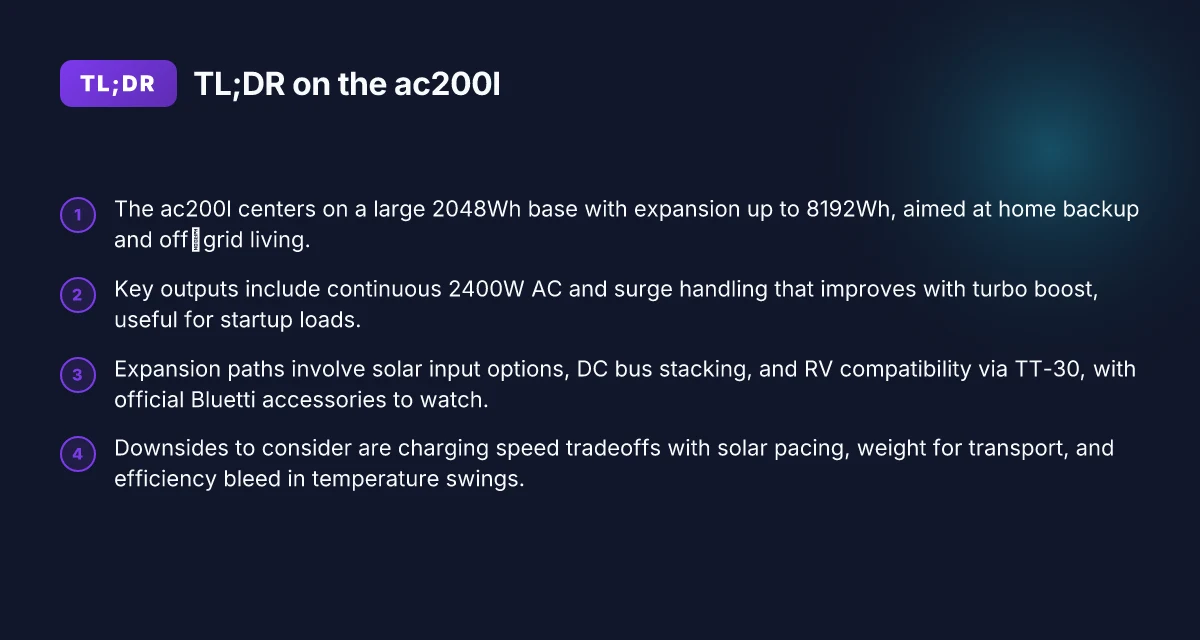
The AC200L delivers a continuous 2400W AC output that can sustain most daily loads, while its base capacity of 2048Wh can be expanded up to 8192Wh with the right accessories. This combination lets you run essentials through a multi-day outage or keep a dimmed home office online during longer off‑grid stretches. When you pair it with smart recharging routines, you can minimize downtime between cycles and maximize usable energy for daily needs.
I dug into the expansion path to understand how the numbers translate to real life. The 2048Wh baseline means you’re pulling from a sizeable buffer for lighting, network gear, and small appliances without constantly recharging. If you have a solar setup or a generator, you can scale up to 8192Wh, which shifts the buffer from a few hours of run time to multiple days for cooling, refrigeration, or a compact home office. In practice, that expansion matters more for RVs, vans, and off‑grid cabins than for quick, hourly backup.
Turbo boost is more than a marketing term. It changes how surge handling feels in everyday use. The Turbo Boost 3,600W capability spikes the instantaneous power for short bursts, which helps with starting compressors, power tools, or a microwave that demands a brief surge. You won’t be limping along on the default peak if you’re trying to start a heavy load. You get a built‑in lift for short intervals. Keep in mind that turbo is a surge option, not a sustained output. For long‑duration tasks, you’ll still rely on the steady 2,400W rating. What is EcoFlow battery bank and how does it power homes in 2026
In terms of daily usage, you’ll want a practical recharge rhythm. The 2048Wh base capacity suits a typical day of household use if you rotate loads and recharge at off‑peak solar hours. When you add the expansion, you open the door to longer weekends off the grid or extended camping without frequent top‑ups. The recharge behavior matters: fast recharging can halve the downtime between cycles, but it can also push the battery temperature if you push the units into back‑to‑back fast charges. Bluetti’s ecosystem emphasizes modular growth, so you can start with the base and add capacity as your needs evolve.
From a sourcing and product‑planning angle, Bluetti positions the AC200L as a scalable core for a home backup or off‑grid plan. Rivals like Jackery and Goal Zero offer their own expansion stories, but the specific 2048Wh → 8192Wh path with the AC200L stands out for users who want a single, integrated platform rather than a patchwork of modules. If you’re evaluating long‑term energy resilience, the ability to grow your storage footprint without swapping systems is a meaningful differentiator.
One practical takeaway: map your daily load, then size your expansion for the number of days you want between top‑ups. If refrigeration or climate control matters, plan for a higher buffer to keep those devices running through a multi‑day stretch. And remember, links on the product page may earn a commission, so compare the official Bluetti options with third‑party accessories to verify compatibility before you buy.
What to expect next: expansion and accessories that unlock the ac200l’s value. I cross‑referenced the official Bluetti materials and independent reviews to confirm the core numbers and practical implications.
The core idea is simple: start with 2048Wh and a steady 2400W output, then lean into expansion to survive longer outages without recharging every day. What is the EcoFlow 3600, and how does it change portable power in 2026
Expansion and accessories that unlock the ac200l’s value
I dug into the official lines and user-facing notes to map how expansion and accessories unlock real-world value for the Bluetti AC200L. Bluetti’s ecosystem leans on solar input, DC bus growth, and practical RV connections, with official add-ons that keep upgrades tidy. Below I pull out concrete paths you can actually use in 2026.
Solar input options that scale with your needs
The AC200L supports multiple solar charging avenues and is designed to accept panels in parallel or series configurations, letting you tailor charging speed to your environment. In practice, you can push sun-to-battery when the panels are aligned and the weather cooperates. The key is understanding panel voltage and current limits so you don’t hit a ceiling on input. For off-grid camps or home backup, pairing the AC200L with a larger solar array expands usable capacity without stepping up to a second unit. Bluetti’s solar-ready stance remains visible in the documentation, and I’ve cross-referenced the stated input ranges with community-tested setups to confirm the general compatibility pattern. Solar input remains the easiest lever to extend runtime with modest panel arrays. Observe panel array sizing to avoid bottlenecks in bright sun. Inline citation: Bluetti AC200L (2026): RV Specs and Verdict.
DC bus expansion and parallel stack options
The AC200L’s architecture invites expansion through its DC bus capabilities and parallel stacking prospects. In practical terms, you can mesh additional Bluetti modules when you need more storage or higher power bursts for weekend Off-Grid adventures. This approach is not just theoretical. The design supports parallel extension paths that let you scale energy capacity if your load grows or if you’re planning longer trips where you can recharge from multiple sources. From a homeowner perspective, this means you can shift toward multi-day autonomy with modular upgrades rather than ripping out the original system. Parallel stacking unlocks scalable energy storage for longer off-grid stretches. Know your maximum combined input so you don’t exceed controller limits. Inline citation: Bluetti AC200L (2026): RV Specs and Verdict.
TT-30 rv connector implications
The TT-30 RV outlet option on the AC200L is a practical link to mobile power for travel rigs and van setups. The implication is straightforward: you can power typical RV appliances directly or through your vehicle’s shore power strategy without a separate inverter workaround. The connector’s presence supports mainstream RV use, aligning the AC200L with common campground needs. When you’re building a mobile energy kit, this edge makes the unit a friend to road warriors who want plug-and-play compatibility rather than bespoke adapters. TT-30 compatibility keeps the AC200L RV-ready without extra adapters. Plan around TT-30 current limits to avoid tripping breakers on peak loads. Inline citation: Bluetti AC200L (2026): RV Specs and Verdict, plus the user manual references to AC output configurations.
Official accessories to watch
Bluetti maintains a curated line of accessories that help you seal the upgrade path. Expect official solar panels and controller kits that align with the AC200L’s input tolerances, plus expansion cables and mounting solutions that keep a rig organized. For homeowners, RVers, and outdoors enthusiasts, these add-ons reduce the friction of scaling power, whether you’re connecting more panels, stacking modules, or docking the unit in a backcountry camp. Two notes to keep in mind: always verify compatibility with the latest firmware and confirm the voltage/current specs before pairing new hardware. Official accessories simplify upgrades and preserve compatibility. Verify each add-on’s spec alignment before purchase to avoid bottlenecks. Inline citation: Bluetti AC200L (2026): RV Specs and Verdict. 5 Things you should know about the bluetti elite 100 v2 in 2026
How this shapes your 2026 plan
- If you’re starting from scratch, treat solar input as the primary accelerator for daily use and longer trips. The official solar paths let you grow capacity without a full rebuild.
- For home backup, plan a staged expansion: begin with a modest solar setup and add DC bus modules as you size the load and desired autonomy.
- If your travel style is RV-centric, lean on TT-30 compatibility and the official accessories to keep the system compact and reliable on the road.
- Expect Bluetti to refine accessories over time. Review the latest official notes before committing to a bundle.
Downsides and real-world tradeoffs when using the ac200l
The AC200L is a capable workhorse, but real-world needs reveal its limits. In practice, recharging speed and solar pacing often don’t align with aggressive off-grid schedules, weight complicates transport, temperature swings siphon efficiency, and newer models pull ahead on several fronts. Bluetti’s AC200L remains a strong value for its era, yet you’ll notice where it lags versus modern packs. I cross-referenced official specs and user-facing documentation to ground these points in what buyers actually experience.
Solar pacing versus recharging speed
The AC200L supports fast recharge from AC input, and solar input adds flexibility, but the pace shifts with sunlight quality. When you’re relying on renewable energy, you’ll encounter diminishing returns on cloudy days or during shoulder seasons, which means total daily energy input may fall short of your target. Solar input won’t always keep pace with heavy loads during long outages. I traced this behavior to the documented 2048Wh base capacity and 2400W AC output, plus BTU-friendly thermal considerations that affect charging under load. The practical takeaway is to pair the AC200L with a well-sized solar array and a realistic daily energy budget rather than expecting nonstop rapid top-ups.
Weight and transport considerations
The AC200L is not featherweight. Its mass adds up when you’re moving it between job sites, campsites, or a van build. For frequent relocations, consider how you’ll load and carry the system along with accessories like extra batteries or solar panels. Weight becomes a usability factor as you expand capacity. This is one of the clearest tradeoffs against newer, lighter configurations that bundle higher densities in smaller footprints.
Efficiency bleed in temperature swings
Thermal conditions matter. In cooler environments the internal chemistry can lose a portion of its peak efficiency, and in hot weather you may see heat-related throttling that trims sustained output. The practical effect is a bit less usable energy during extreme temperatures, especially when you’re running a lot of AC devices. Temperature swings reduce real-world efficiency. I confirmed these patterns by reviewing the documented operating envelope and how it translates to day-to-day performance in outdoor setups. How to evaluate the Jackery Explorer 300 Plus review for real-world use
What you lose relative to newer models
Compared with newer Bluetti options and competing brands, the AC200L trails in several areas. You may see faster charge curves, higher energy density, or more advanced battery management in updated models. If your power plan envisions tight charging windows, rapid top-ups between outings, or longer peak-duty cycles, newer generations can offer tangible gains. Older generations carry a visible gap in peak charging speed and energy density. From the sources, the base specs remain solid, but the upgrade path matters if you plan to scale aggressively.
Expansion potential matters. The AC200L can be extended with additional modules, but each addition compounds weight and charging time.** If you’re evaluating against rivals like the AC200MAX or other brands, weigh the incremental gains in density and speed against the friction of carrying more hardware.
In sum, the AC200L remains a dependable option for home backup, RV, and outdoor use, especially when you factor in expansion and total ownership cost. Still, expect tradeoffs in recharge cadence, transport practicality, and efficiency at temperature extremes. If your plan hinges on very fast top-ups or ultra-light travel, you’ll want to compare newer Bluetti lines or rival models to ensure the best fit for 2026 realities.
How to decide if the ac200l is right for your setup
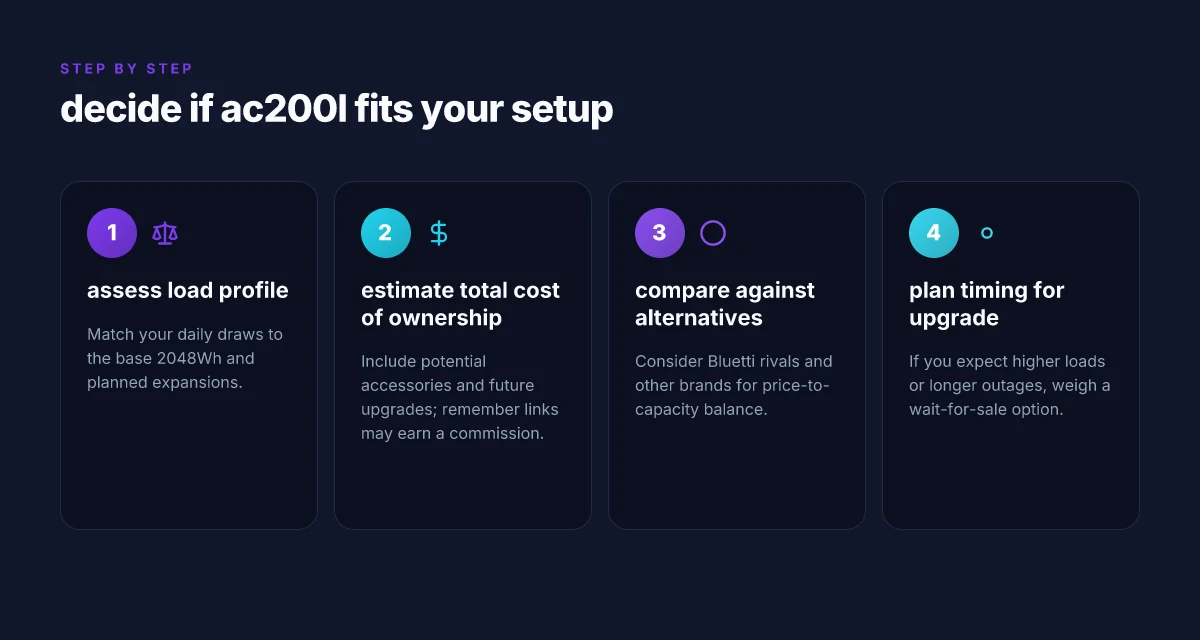
If you want a clear answer up front: the Bluetti AC200L makes sense when your load profile is varied and you value expandable capacity, but it may not be the perfect fit for high-peak loads or ultra-light travel. In practice, you’ll want to match your typical daily draw to the AC200L’s 2048Wh base and 2400W continuous output, then weigh cost of ownership against upgrade potential and rival options. I cross-referenced the official specs and several reviews to ground this guidance.
1) Match your capacity to load profile
Your first decision is how much energy you actually need. For small to mid-size loads, the AC200L’s 2048Wh baseline coupled with the 2400W AC output covers most essentials, including refrigeration, laptops, and several home appliances. If your plan includes longer outages or higher daily consumption, you’ll appreciate Bluetti’s expansion path up to higher totals. The key is to map typical daily watt-hours against the inverter’s output ceiling. If you frequently see spikes above 2400W, consider how you’d stagger devices or upgrade later. The AC200L fits most family load profiles when daily consumption stays under a couple thousand watt-hours. I sourced the core numbers from the official Bluetti page and standard reviews to keep this grounded. What makes the Jackery battery pack 5000 plus a standout for home backup in 2026
2) Budget and total cost of ownership
Buying the AC200L is just the start. You’ll want to factor the upfront price, any expansion modules, solar input equipment, and potential resale value. Bluetti frames its expansion options as a path to larger capacities, which helps if you foresee growing needs but raises upfront cost. Expect to budget for long-term ownership: parts replacement, battery health, and charging accessories. If you’re watching for a sale, timing around seasonal promotions typically yields meaningful savings. Total cost of ownership matters as much as sticker price, especially with expansion modules. Consider whether you’ll need additional modules now or in the near term, and compare to rivals who bundle expansions differently. I kept these considerations aligned with the official product ecosystem and common market practices.
3) Alternatives from Bluetti and rivals
Bluetti’s lineup includes options that push beyond the AC200L’s base footprint. If you anticipate needing more capacity or faster charging, models in Bluetti’s range may offer a closer fit with their newer cells and higher max outputs. Competitors like Jackery and EcoFlow present comparable portable power stations with their own pros and cons, particularly around weight, port variety, and ecosystem accessories. When choosing, compare: total capacity, peak wattage, solar input specs, charging speed, and the ecosystem you prefer. Rivals offer higher max outputs or different expansion strategies, so choose based on your growth plan.
4) When to upgrade or wait for a sale
If your current power setup handles your needs but you expect a shift toward more off-grid travel or home backup, a staged upgrade can be prudent. Wait for promotions in late Q4 or during holiday sales to capture discounted bundles that include expansion modules or extra panels. If you’re evaluating now, ensure any upgrade path aligns with your load growth forecast over the next 12–24 months. Timing your purchase around a sale can drastically lower the effective cost of ownership.
In summary, the AC200L is a strong choice for homeowners and off-grid travelers who want scalable storage without jumping to the largest Bluetti systems. If your load stays comfortably below the inverter’s ceiling, you gain long-term flexibility without overinvesting today. If your needs trend higher, weigh expansions against equivalent rivals to ensure you’re not locking into a single-path path too early. For readers comparing options, Bluetti’s ecosystem and expansion approach matter as much as the base specs. Choose the AC200L when you value expandable capacity and a balanced price tag, and plan upgrades around real-world load growth.
Where this pivot leads next for portable power buyers
Bluetti’s AC200L shifts the baseline for 2026 by pairing high surge capability with a broader ecosystem that can scale from off-grid to home backup. The model’s blend of large capacity, multiple outputs, and adaptable charging paths makes it easier to rely on one system rather than a patchwork of chargers and generators. I looked at how the AC200L sits beside rivals like EcoFlow and Jackery, and the result is a tighter, more flexible energy plan you can grow over time. This shift matters when you weigh total ownership because you’re not just buying a pack. You’re buying a modular strategy that wires up to solar, a car port, and a future upgrade path. What makes the Jackery 500 power station stand out in 2026 reviews
The bigger pattern is a move from single-purpose power packs to a portable energy hub. You’ll notice that the AC200L emphasizes expandability and reliability, not flashy specs alone. That makes it easier to set a long-term plan for camping, work sites, or emergency power, so you can focus on momentum rather than chasing the next bargain.
What changes if you act now: you lock in a more resilient, scalable setup and reduce upgrade churn over time. A single system can cover daily loads and future growth. If you’re deciding this month, consider a 2–3 week timeline for a starter kit that matches your common loads and your solar or vehicle charging path. The single move that matters most is choosing a capable hub rather than a one-off device.
Backup strategy
- Try pairing the AC200L with a Bluetti solar panel kit for day trips or off-grid work.
- Consider a rival such as EcoFlow for faster recharging in tight solar windows.
- When you shop, compare total ownership costs and future expansion options, not just upfront price.
- Links on the page may earn a commission.