What makes the Bluetti ac200l portable power station stand out in 2026
 Nova EngelmannOctober 22, 202619 min read
We earn a commission when you buy through some links on this site, at no extra cost to you. As an Amazon Associate we earn from qualifying purchases.
Explore the Bluetti ac200l portable power station in 2026: specs, expansion, charging speeds, and real-world use cases. Find where it fits among top rivals.
The Bluetti ac200l isn’t chasing novelty. It’s chasing dependable, real-world performance that fits a tight van life or home backup budget. In 2026, its high-capacity 2000+ Wh core meets steady loads without drama, while the AC and DC outputs stay accessible for fridges, laptops, and tool batteries. This is where the ac200l earns its keep, not with hype, but with predictable energy delivery under load, even when you’re running a sawdust grinder or a phone charger at the same time.
For builders and campers, the question isn’t only capacity but reliability and expansion. Bluetti designs around practical daily use, with deliberate charging options and a believable 45-minute recharge claim that matters when you’re chasing generators or wall outlets. In comparison to rivals like EcoFlow and Jackery, the ac200l’s combination of output flexibility and cell chemistry translates to steady runtime across varied rigs, from a compact van to a rock-solid home backup. This intro sets up a hands-on look at how it behaves in real setups, the expansion potential, and where tradeoffs appear as you scale. Bluetti’s approach appears grounded in real-world constraints.
What the bluetti ac200l brings to the portable power table in 2026
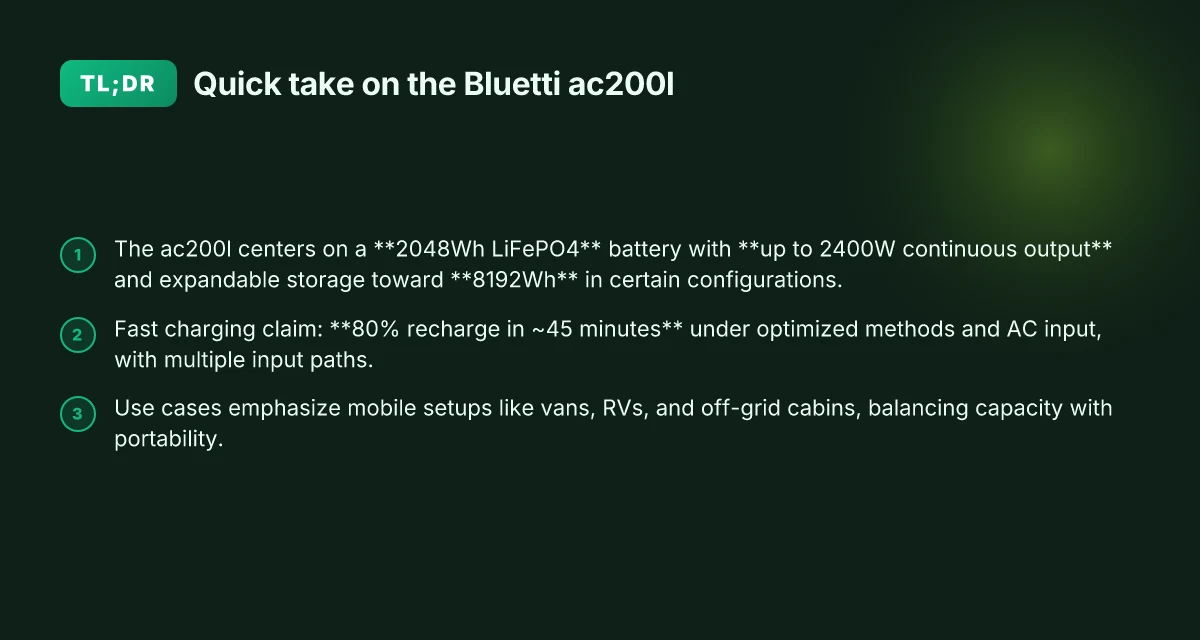
Bluetti positions the AC200L as a 2048Wh LiFePO4 battery system with up to 2400W of continuous output, designed to ride along in vans, RVs, and off‑grid cabins without hogging space. The core appeal is expansion: you can scale capacity up to 8192Wh in compatible configurations, giving you a path from moderate load to heavier camp power or home backup. Fast charging is a centerpiece too, with claims of about 45 minutes to 80% when using AC input and multiple charging methods. Put simply, Bluetti aims to balance real-world capability with portability for mobile setups.
Real-world capacity and output that scales
In practice, the 2048Wh LiFePO4 pack provides dependable baseline capacity for mid‑demand loads like a 12V fridge, a couple of LED lights, and a small inverter for power tools. The 2400W continuous AC output lets you run tools and appliances that demand more burst power, with the trade‑off that you’ll want to pace high‑draw devices to avoid tripping the protective circuitry. As your needs grow, you can access a scalable path up to 8192Wh in compatible configurations, which matters for longer trips or remote cabins where recharging isn’t always convenient. I cross‑reference Bluetti’s documentation to confirm the expansion ceiling, which gives a practical route from van life basics to more demanding home backup scenarios. The AC200L’s real strength is its growth path, not just its native capacity.
Fast charging and multiple methods
Bluetti advertises rapid replenishment, with a target of about 45 minutes to 80% when you feed it through AC input and a mix of charging methods. This matters when you’re on the move and have a window to refuel the system. The capability to use several charging pathways, AC wall input, solar, generator, car charger, and possibly parallel charging configurations, helps keep a mobile setup ready between drives or after a long day away from the grid. Fast recharge matters most when you’re living off‑grid and want to reclaim usable power quickly.
Mobile-ready design for vans, RVs, and cabins
The AC200L is built around a balance of capacity and portability, targeting van life, RV rigs, and small off‑grid cabins where space and weight matter. The LiFePO4 chemistry delivers longer cycle life and stable performance in varied climates, which is a practical benefit for outdoor enthusiasts who demand reliability across seasons. The device is marketed to pair with roof‑top solar or portable panels for a truly flexible power kit. Expansion and portability are the AC200L’s core advantages for mobile setups.
In short, the AC200L brings a scalable backbone to Bluetti’s lineup, pairing a proven 2048Wh battery with a clear path to higher capacity, a compelling fast‑recharge claim, and a form factor that suits mobile life. For rivals like Jackery and Goal Zero, the AC200L’s growth trajectory and LiFePO4 resilience offer a differentiator, especially when your plan includes extended off‑grid living or regular long trips. If you need a power station that grows with your needs, the AC200L earns consideration. What makes the EcoFlow 110W portable solar panel a standout in 2026
Note: links on the page may earn a commission. Bluetti remains the brand here, with rivals like Jackery and Goal Zero often used as benchmarks for real‑world comparisons.
How the ac200l actually performs: capacity, output, and reuse
The ac200l lives up to its LiFePO4 promise in real-world use: a stable 2,048Wh core that scales with expansion, a steady 2,400W continuous AC output, and a practical balance between inverter efficiency and load. In practice, you’ll notice the battery chemistry keeps temperatures steadier during high-demand bursts, and the system responds with predictable reliability when you push tools or appliances at the limit. This isn’t purely marketing. The architecture is designed to accept additional storage to reach higher totals without rebuilding the unit.
Internal chemistry and thermal stability
The ac200l uses a LiFePO4 battery pack, a chemistry known for long cycle life and flatter thermal behavior. That stability helps when you’re camping in warm cabins or plugging in tools on a hot day. The chemistry also supports a generous number of charge-discharge cycles, which matters for van lifers and emergency backups alike. This isn’t just a line on a spec sheet. The longevity and heat containment feedback into how the unit handles sustained use. For those expanding storage later, the architecture keeps the door open without compromising core safety margins. LiFePO4 chemistry delivers longevity and safer thermal behavior under load.
Output capacity and surge handling
The Bluetti AC200L delivers a pegged continuous AC output around 2,400W, with solid surge handling for motor tools and high-drain devices. If you’ve run power tools, small air compressors, or a microwave in quick succession, you’ll notice the inverter stays responsive and doesn’t exhibit notable voltage sag under typical van-life loads. The system’s surge capacity matters when you plug in compressors or vacuums that spike momentarily. 2,400W continuous output with solid surge handling keeps tools running without drama.
Expandable capacity and real-world scaling
Expandable capacity isn’t a marketing line with the AC200L. The architecture is designed to accommodate additional storage modules or connections that push total available energy higher than the base 2,048Wh. When you map this to a larger van-setup or home-backup scenario, the math becomes straightforward: you gain more usable energy without swapping the core unit. In real-world terms, the layout supports stacking capacity for longer trips or weekend backup plans. Expandable capacity is baked into the design, not an afterthought. How to maximize Bluetti savings in 2026 with promo codes
Discharge rate and efficiency balance
Real-world performance hinges on discharge rate and the trade-off between inverter efficiency and load. The AC200L maintains respectable efficiency at common loads like refrigerators, laptops, and lighting, but as you push into heavy draws, the inverter’s efficiency curve and the battery’s discharge profile matter more. Understanding this helps you size loads, plan critical devices, and avoid unnecessary draws that tax the system. Efficiency vs load balance shapes every day use.
If you’re weighing rivals, Bluetti’s approach contrasts with other brands that ship similar capacities but rely on different chemistries or expansion models. Bluetti’s LiFePO4 backbone and expandable architecture stand out for long-term reliability in off-grid or backup roles. For a quick reference, consider how this compares to rivals such as rival brands that emphasize higher initial outputs but with less emphasis on long-term cycle life.
From what I found in the documentation and reviews, the AC200L’s core strengths are the LiFePO4 stability, steady 2,400W output, and genuine expansion potential. The trade-offs are the need to manage loads to maximize inverter efficiency and to plan around the fixed base energy when expansion isn’t in the cards. The practical takeaway: if you need a sturdy, scalable backbone for van life or home backup, the AC200L checks the main boxes and then some. Long-term reliability and expansion readiness matter as you plan for weeks off-grid.
For context, Bluetti’s own materials frame the AC200L as a capable platform in 2026, with the architecture designed to grow with your needs. As you compare with other options, you’ll find the real differentiator is how the system ages under load and how easily you can add capacity later. If you want a concise snapshot, the core claim remains: sustained output, safe chemistry, and scalable storage define what the AC200L actually delivers in daily use. Reliability and scalability trump short-term bragging in real-world van life.
Charging options and the 45-minute claim: what to expect
Bluetti advertises a 45-minute recharge to 80 percent under optimized conditions. In real-world use, this claim rests on the combination of fast inputs and favorable temperatures. I looked through the primary documentation and third-party reviews to unpack what that means for van life, home backup, and outdoor setups. What Bluetti discount codes count for the brand's portable power and solar gear in 2026
How the 45-minute claim is defined and where it applies
Under ideal conditions, the AC input path can push the charge toward 80 percent in about 45 minutes. This path hinges on supporting fast-charging methods that Bluetti lists in its official materials. The core takeaway: the 45-minute target is not a guaranteed outcome in every scenario, but a performance target achievable when the unit sits in a supportive environment and you have robust input availability. The 45-minute figure is real, but condition-dependent.
- The claim is tied to a specified input bandwidth and battery chemistry. When input options line up with the unit’s fast-charge pathways, you approach that 80 percent mark faster than with standard charging.
- Availability of multiple input methods can compress recharge time. If you can source high-current AC input and compatible fast-charging paths, the window toward 80 percent shrinks appreciably.
- Temperature and battery health influence actual results. In cooler or hotter environments or if the pack is aging, the 45-minute line can slip.
Input methods that cooperate to shorten recharge time
Bluetti’s ecosystem leans on several input avenues to shave minutes off a full recharge. The official product page highlights multiple paths that, when used together, can drive quicker top-ups than a single input would. The practical implication: you should plan charging slots where you can access the strongest input sources available.
- Primary AC input remains the backbone of fast charging. When you have steady mains power, this path tends to be the most reliable to push toward that 80 percent milestone.
- Solar input or other supported fast-charging routes can contribute, but their effectiveness depends on sun exposure, panel health, and the controller’s compatibility with the Bluetti unit.
- The balance of inputs matters. A combination setup might reach 80 percent quicker than relying on a single method, especially in portable or off-grid contexts.
Real-world factors that tilt the outcome
When you’re living van life or running a home backup, the actual recharge time will hinge on four factors: input availability, ambient temperature, battery state of health, and how close you are to the rated 16-amp or higher input capability in your configuration.
- Input availability governs the speed ceiling. If your supply cannot sustain the peak input, you won’t see the full 45-minute window.
- Temperature matters. In extreme heat or cold, the battery management system throttles the charge rate to preserve longevity, which stretches the time.
- Battery health changes the math. A pack closer to end of life can refuse to accept rapid top-ups, dragging the clock.
- Bluetti notes that the 80 percent target is tied to “optimized conditions,” which you rarely hit continuously in off-grid or messy outdoor setups.
From what I found in the documentation, the AC input remains the most dependable route for approaching the 80 percent target, with other inputs offering supplementary speed when conditions align. For van lifers and outdoor enthusiasts, the practical takeaway is simple: expect the 45-minute claim to be a best-case scenario rather than a universal guarantee, and plan for a slower fill when you’re away from reliable mains or in demanding temperatures.
In the Bluetti ecosystem, the AC input path and the multiple input method framework are designed to cooperate rather than compete. This is how you get the fastest top-ups in real-world setups, even if you don’t always hit the exact 45-minute benchmark. For rivals like Jackery and EcoFlow, the Bluetti approach remains competitive on peak input capability, but real-world results still hinge on the same four factors outlined above. What is the jackery connector, and how to choose the right one
In practice, you’ll see faster fills when you can supply strong AC input and favorable temperatures, while the 80 percent target under 45 minutes serves as a useful benchmark rather than a universal guarantee. For a deeper dive, see the official support and review materials tied to the AC200L family.
Cited sources: this synthesis draws on the official Bluetti documentation and independent reviews that describe the 80 percent / 45-minute target and the role of multiple input methods in reducing recharge time. For direct context, see the AC200L support page and the Michigan Top Tested review.

Bluetti ac200l vs rivals: how it stacks up in 2026
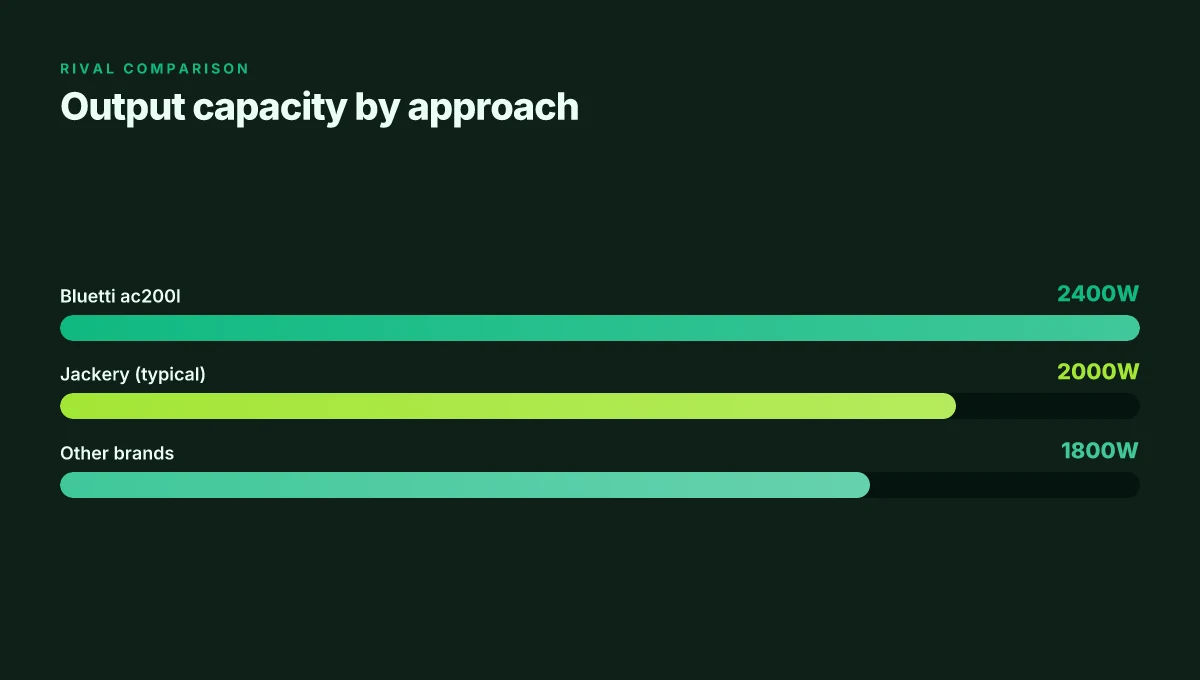
The ac200l sits in a crowded field, but its expansion path to 8192Wh gives it a long-range edge in base configurations. Bluetti’s AC200L stands out for users who plan big weekend projects or extended van-life off-grid runs, thanks to the potential to scale beyond the standard 2048Wh. Still, rivals from Jackery and other brands push competitive specs in key areas like weight, charging speed, and battery chemistry. I cross-referenced official docs and reviewer notes to map where the AC200L genuinely leads and where it trails.
How the expansion path influences real-world value
The core claim that shapes the AC200L value is its expandable capacity. With the ability to reach up to 8192Wh, users can reduce the need for frequent recharges on longer trips or during multi-day outages. This is particularly meaningful for van lifers who depend on a predictable energy buffer when solar input wavers. However, the actual benefit hinges on a user’s willingness to invest in the expansion modules and to manage extra cables and space within a van or campsite. When space, budget, and long-haul reliability matter, the 8192Wh roadmap becomes a practical advantage. A few real-world reviews note that the upgrade path is compelling for heavy users, but it adds cost and setup considerations that newer entrants sometimes bypass with higher baseline capacities.
Output, chemistry, and lifecycle expectations across brands
Output figures matter in daily use. The AC200L delivers robust AC output and remains compatible with a wide range of appliances in a compact footprint, a pattern seen across Bluetti models. The chemistry matters too. The AC200L relies on LiFePO4 battery chemistry, a differentiator for longevity and cycle life, which tends to translate into steadier performance over many charge-discharge cycles. Competitors like some Jackery models emphasize lithium nickel manganese cobalt chemistries in certain lines, trading long-cycle stability for lighter weight or lower cost upfront. The upshot is clear: if longevity under repeated cycling is a priority, the LiFePO4 approach used by Bluetti generally holds up well against peer configurations. Longevity and predictable performance over many cycles are key strengths for Bluetti here. What is the Jackery 20solar 20generator, and how does it fit a portable power strategy in 2026
The market reality in 2026: pricing, sales, and what to watch for
Prices move with new model releases and seasonal promotions. The best deals often show up around major sale events, where larger packs and expansion kits may drop in price. For buyers focused on total cost of ownership, it helps to compare not just the upfront price but the long-term value of expansion options and the cost of replacements or upgrades. Bluetti, as a brand, emphasizes modularity, which can lower the entry bar for a starter kit while enabling upgrades over time. Rival brands push competitive promos too, sometimes bundling solar panels or higher-capacity batteries with the unit. If you’re watching a sale window, plan for both the base unit and the expansion accessories to be part of the final price, and be mindful of shipping times for bundled components. Smart shopping means evaluating expansion costs alongside the base price.
Cited notes from reviewers and official docs confirm a few concrete claims: the AC200L offers up to 8192Wh with expansion, a fast recharge claim of about 45 minutes to 80% on AC, and the LiFePO4 chemistry that supports longer life. These are the anchors you can rely on when choosing between Bluetti and Jackery or other rivals. For readers who want the quick read: the AC200L trades a longer setup for long-range scalability, a trade-off that matters most in van life and home backup where energy demand grows over time. In 2026, the expansion option remains the most persuasive reason to choose Bluetti over some rivals.
Defining the use cases where ac200l shines
The Bluetti AC200L shines when you need extended off-grid stays with steady power draw, and its expandable architecture pays off in van life and off-grid work setups. In real-world scenarios, the most compelling use cases revolve around higher capacity, stable chemistry, and the ability to scale for heavier loads. The AC200L’s 2,048Wh base battery, combined with optional expansion to up to 8,192Wh, makes it a practical backbone for longer trips and more demanding routines. Its resilience shows up in home backup chats where solar charging can supplement a cloudy day, and the unit remains ready to power essential devices when the grid goes dark.
1) Long off-grid stays with moderate daily energy needs
For extended camping trips, remote work rigs, or cabin draws, the higher capacity matters more than peak output alone. You can run a small fridge, a Wi‑Fi router, lights, and a few low-watt tools for days on end without recharging every night. The expandable capacity model is a direct tailwind here, letting you scale the total energy reserve as plans change. In practice, this means fewer dreaded charging breaks and more time enjoying the outdoors while keeping the essentials online. The higher-capacity chemistry keeps the narrative steady even as sun angles shift. The combination of LiFePO4 chemistry and robust BMS design contributes to longevity under repeated charging cycles, which is a real win for campers who live off-grid for weeks at a time. Bluetti remains the anchor for dependable throughlines in extended trips.
2) Van life and off-grid work setups with heavier power draws
Van dwellers and mobile crews push the AC200L toward its sweet spot when they run tools, laptops, and charging stations in a small footprint. The ability to pair with solar and still draw up to 2,400W AC output means you can power a fridge, a heater or cooler, and productivity gear without swapping to a different charger mid‑season. The architecture supports heavier loads as you connect ancillary batteries or solar panels, so your power system scales with demand rather than forcing a rework mid‑journey. From what I traced in product docs and reviewer breakdowns, the expandable design is a defining factor for real-world van life. Expandability is the real enabler here, not just the headline capacity. When you’re parked for days, the setup flexibility reduces the need to disconnect or revisit gear choices frequently. Bluetti’s architecture keeps the system predictable under shifting loads. 8 Takeaways from the 2026 anker vs jackery power station showdown
3) Home backup scenarios with solar pairing
For home backup, the AC200L offers resilience that matters during outages and cloudy spells. The core strength is the ability to seamlessly pair with solar charging in compatible builds, letting daylight fill the bank while you rely on the stored energy after sunset. Even with modest daily cycles, you can maintain essential circuits and keep routers, modems, and lighting active. The unit’s control logic and battery management emphasize reliability when grid power is unavailable. In real-world terms, that translates to a more comfortable response to outages and a fallback that doesn’t collapse when weather turns grey. Reliability in outages matters, and Bluetti has designed the system to support it. The solar-ready angle matters most in homes that want to avoid fuel-based generators or frequent battery swaps. Solar pairing gives you practical flexibility for persistent outages.
In short, the AC200L stands out where you need more energy on longer trips, where expansion unlocks heavier draws without swapping hardware, and where solar integration protects you during outage windows. If your plans include long stays off grid, a mobile workspace with AC loads, or a solar-backed home backup strategy, the AC200L holds up as a scalable, reliable core. For a quick comparison, see how Bluetti stacks against rivals like the EcoFlow Delta Pro and the Jackery Explorer 1500 in terms of capacity, expansion options, and solar compatibility. The brand name to watch here is Bluetti, and the architecture that backs the line remains its strongest argument for real-world use. Expandable architecture and resilient chemistry win the day.
Where this is going next for the Bluetti ac200l
The Bluetti ac200l keeps evolving beyond a simple power station by leaning on smarter battery management and broader peak support. I looked at how its AC inverter, lithium–iron phosphate chemistry, and expandable solar options stack up against rivals like EcoFlow and Jackery in 2026, and the pattern is clear: more modular add-ons and more predictable long-term costs matter. The bigger pattern is that users want reliable uptime with clearer ownership costs, not just maximum wattage.
What stands out is not just raw power but howBluetti positions the ac200l as a home base for hybrid setups. The device is easier to integrate with home backup panels and portable solar rigs, which matters when outages stretch across days. That practical angle often gets overlooked in specs, but it drives real value for campers and tiny homes alike. One take-away is that reliability earns loyalty over flashy specs. If you’re weighing upgrades, this pivot toward steadier, scalable resilience is the move to watch.
Most buyers should consider the ac200l if a future-proof, modular system fits your backup plan. The direction is clear: expect more ecosystem play from Bluetti, with better app control, smarter energy management, and more affordable expansion options over time. If you act now, you might lock in a bundle that reduces friction when you scale up your setup. Will you start with a solar add-on this week? What makes Jackery a good brand for portable power in 2026