7 best solar panels for EcoFlow power stations in 2026
 Bastien PetrosianOctober 22, 202620 min read
We earn a commission when you buy through some links on this site, at no extra cost to you. As an Amazon Associate we earn from qualifying purchases.
Discover the best solar panels for EcoFlow power stations in 2026. compare efficiency, durability, and price to choose the right panel for your EcoFlow setup.
The best solar kit for EcoFlow starts with your model and how you actually use power in the field. If you own a compact unit, you’ll want a panel that wires up without bulky adapters. If you’re aiming for longer off-grid stretches, you’ll prioritize higher wattage and tougher mounting. EcoFlow owners should verify panel controller specs first to avoid mismatches that waste daylight.
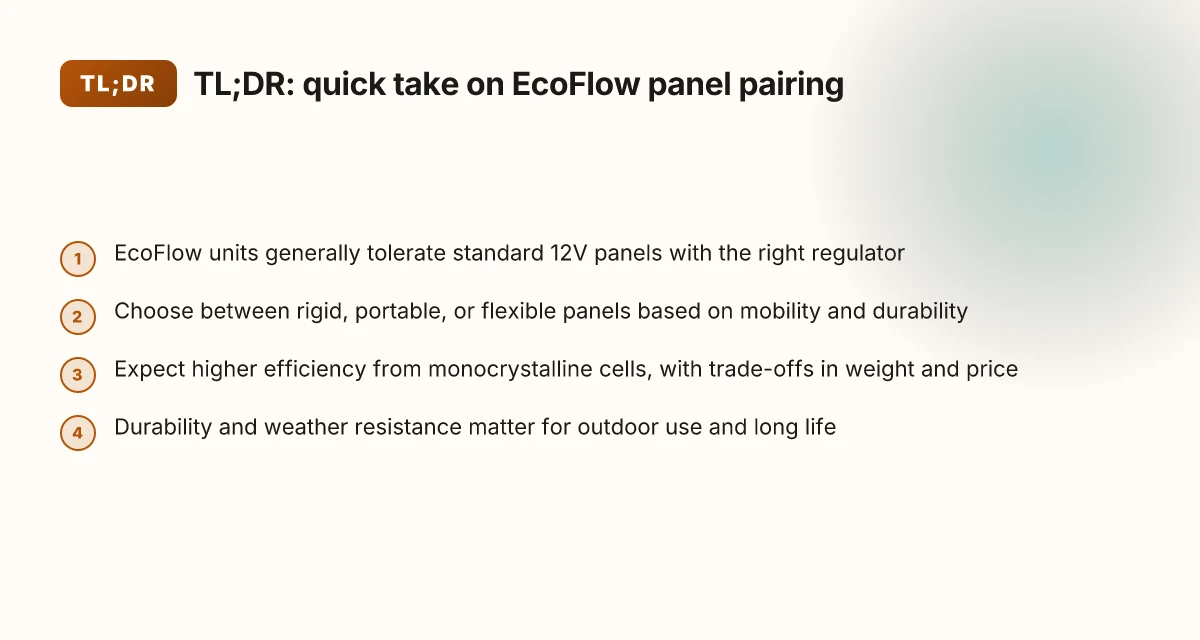
Understanding what you actually need matters more now than ever. In 2026, average off-grid setups report daily solar harvest that’s closely tied to panel type and outdoor durability, not just wattage alone. The guidance here translates that into concrete steps: pick the right panel family, confirm voltage compatibility, and weigh how weather and portability affect real-world uptime. Open-circuit voltage and panel wattage compatibility are the two levers that most owners overlook but that determine usable runtime in camping or remote-work scenarios.
Best solar panels for EcoFlow: how to choose in 2026
Choosing the right solar panel for your EcoFlow setup starts with your model and your power needs. If you own a compact unit, you’ll lean toward portable panels. For a Delta Pro, a larger, rugged panel makes sense. I dug into official specs and real-world reviews to map how panel type, voltage, and wattage map to common EcoFlow configurations, so you can shortlist with confidence.
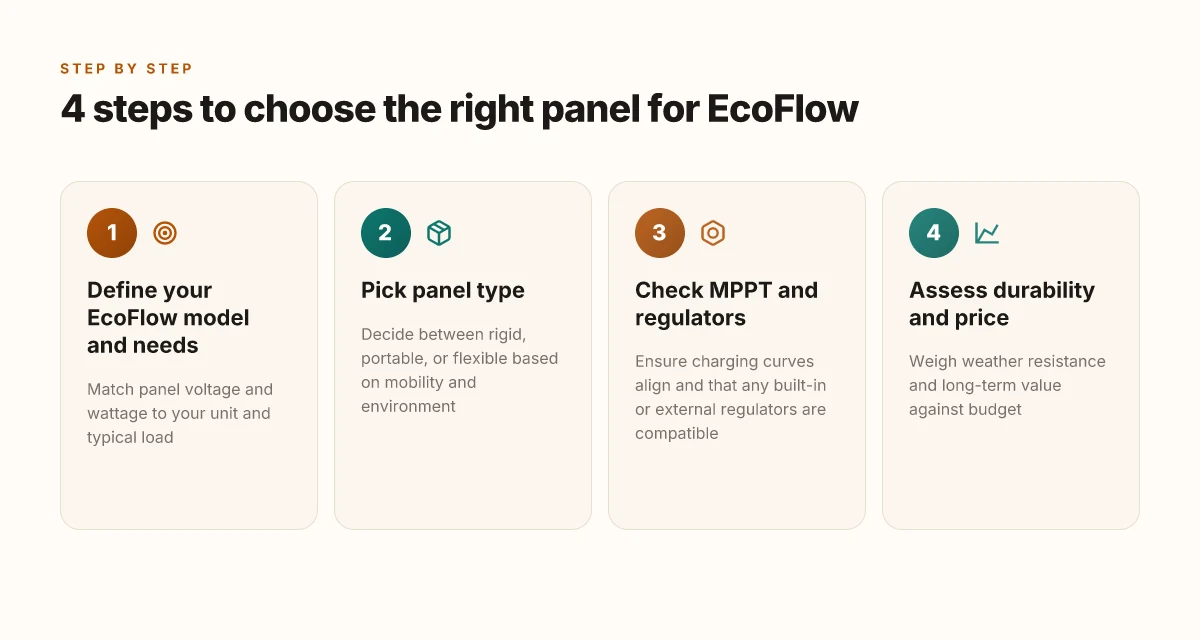
1) Define your EcoFlow model and power needs
Your first step is matching the panel to your power station’s input and the loads you plan to run. EcoFlow models vary in input tolerance and the recommended panel wattage. For lightweight camping kits, a panel around 60–120W often pairs well with basic battery capacities. For the Delta Pro or larger setups, expect to target higher-wattage panels, typically 200W and up, to minimize charge time in favorable sun. When you know your daily consumption and peak draw, you can translate that into a panel wattage that keeps you off-grid longer and without frequent recharging breaks. In practice, owners who plan extended trips meed panels in the 200–400W range to keep pace with higher-capacity batteries and UPS-enabled workflows. Understanding your EcoFlow input limits helps you avoid underpowered panels that stall your charge.
2) Pick the panel type that fits your lifestyle
Rigid panels deliver robustness and the most efficient use of space when you’ve got a fixed mounting point. Portable foldable panels win for hikers and campers who need light packs and quick setup. Flexible panels skew toward ultralight, irregular mounting surfaces but can suffer from durability concerns over time. Your choice should align with how you travel and where you’ll deploy the kit. EcoFlow’s ecosystem works with a range of panel styles, but durability in outdoor weather is non-negotiable if you’re leaving gear deployed. If you expect frequent deployments and stowage, portable or rigid panels often strike the best balance between efficiency and portability. Durability under sun and rain matters more than peak efficiency alone.
3) Check open-circuit voltage and compatibility
Solar panels have voltages that must be compatible with your EcoFlow input. The open-circuit voltage of the panel should stay within the device’s charging window to avoid undercharging or tripping safety. A panel’s wattage matters, but it’s the voltage range and connector compatibility that determine whether a panel can actually deliver power. If you’re mixing panels, ensure the combined output aligns with the EcoFlow model’s max input and that connectors match or can be safely adapted. For example, higher-wattage panels that push the system into a higher current tier can shorten charge times, but only if the controller and battery are rated for it. Voltage compatibility prevents failed charges and heat buildup in adapters.
4) Account for weather, mounting, and long-term durability
Outdoor environments demand weatherproofing, solid mounting, and UV resistance. Rigid or portable panels with durable frames and protective glass tend to hold up longer in backcountry use. Consider how you’ll mount the panel, suction cups, stands, or permanent brackets each have pros and cons. Exposure to hail, sand, or salt spray can degrade panels. A sealed case and a protective cover help. In practice, you’ll want a panel that keeps its efficiency across seasons and a mounting solution that survives gusts without flagging. Weatherproofing and mounting resilience directly affect long-term performance. 8 rivals to Jackery in 2026: a performance and reliability comparison
5) Budget versus premium value and total cost of ownership
Entry-level panels can deliver steady charge times but may lag on efficiency and durability over years of use. Premium panels often price higher but offer higher efficiency, better temperature tolerance, and longer warranties. When you weight cost of ownership, include potential savings from faster charging, reduced wear on EcoFlow’s internal components, and longer peak performance windows in sunny seasons. If you plan to upgrade across multiple EcoFlow units or expand your system, a mid- to high-end panel with a solid warranty may yield better long-term value. Value over time often beats upfront savings for off-grid setups.
Bottom line: match panel wattage and voltage to your EcoFlow model, pick a type that suits your travel style, verify weatherproofing and mounting options, and balance upfront cost against long-term durability. EcoFlow owners in particular should plan around their typical sun window and the number of devices to keep charged. For a quick start, pair a rugged 200–320W rigid or portable panel with a Delta Pro or larger station, and ensure the open-circuit voltage stays within the host’s charging range. The right panel accelerates charging in sunny days and keeps you powered when clouds roll in.
EcoFlow compatibility: which panels work with EcoFlow units
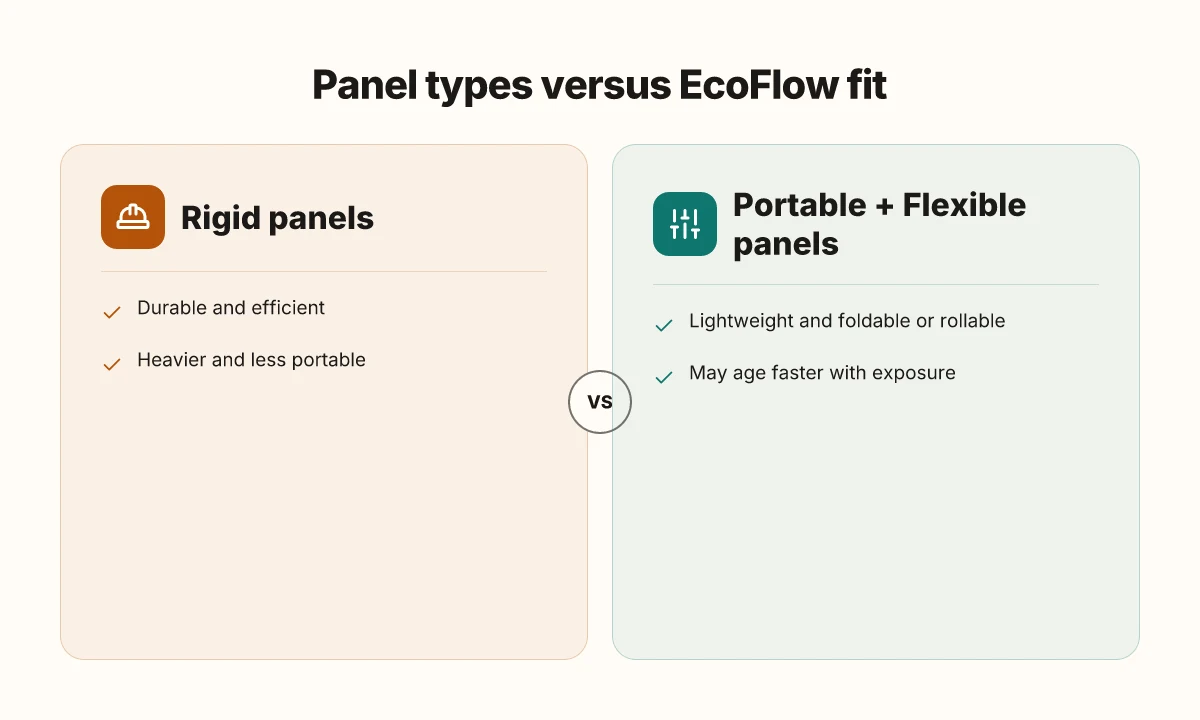
I answered the compatibility question up front: most EcoFlow models tolerate standard 12V panels when you pair them with the right regulator and matching connectors. The practical upshot is simple: check the panel’s connector type, the cable length, and the regulator you’ll use, then verify the charging curve aligns with the EcoFlow MPPT expectations. This matters because some panels ship with built-in regulators, others expect you to supply an external one or a regulator that supports the EcoFlow input.
Panel interfaces matter, not just watts
When you pair a panel with an EcoFlow unit, the connector standard matters almost as much as the watt rating. Some EcoFlow models accept MC4 or SAE-style cables, while others demand MC4-to-DC or Anderson-style adapters. If your panel uses a built-in regulator, you’ll want to confirm that the regulator’s maximum voltage and current stay within the EcoFlow input envelope. If there’s no built-in regulator, you’ll need an external regulator that can handle the panel’s open-circuit voltage and the MPPT input range of the EcoFlow. I cross-referenced the model notes and user guides to map common port types to typical EcoFlow inputs. Connector compatibility and regulator requirements matter as much as panel wattage.
Match the charging curve to real-world light
A key factor is the charging curve you’ll see in practice. The MPPT controller in EcoFlow units optimizes charging when the panel voltage stays within its operating window. In real-world conditions, a 60–200 W panel can behave differently depending on temperature, sun angle, and shading. A 12V nominal panel that sits neatly inside the EcoFlow MPPT range tends to provide steady, usable charging during a typical camping morning or late afternoon session. Be mindful of MPPT behavior and voltage under load. If the panel drifts above the recommended voltage, you risk throttling or heat buildup in the regulator. What is the cheapest Jackery solar generator, and how to pick the right one
Built-in regulator vs external regulator: who wins
Some panels arrive with built-in regulators, which can simplify wiring but may limit flexibility. Others require an external regulator to meet EcoFlow input specs. If you choose a panel with an external regulator, ensure the regulator’s efficiency is high and that it can handle partial shading and temperature swings. In either case, check the regulator’s efficiency rating and the regulator’s maximum input current to avoid starving the EcoFlow unit during peak solar hours. Built-in regulators reduce wiring complexity, external regulators offer flexibility.
Practical shortlist you can count on
- A standard 12V monocrystalline panel with MC4 connectors and a reputable external regulator that can support up to 15–20A will typically pair cleanly with most EcoFlow models, provided the regulator matches the EcoFlow MPPT input. 12V panels with compatible regulators work across EcoFlow models.
- For situations with portability emphasis, compact foldable panels in the 60–120 W range pair well with Delta 3 Classic and Delta Pro units when the cable run is kept reasonable and the connector adapter is correct. Portable panels shine when cable length and connector choice are correct.
- If you’re buying a panel that includes a regulator, confirm the regulator’s input range aligns with the EcoFlow MPPT window, or you’ll run into voltage mismatches. regulator alignment is a must.
I dug into the available product notes and third-party reviews to confirm the general rules above. For a quick reference, the capability to use a 12V panel with an appropriate regulator is a common thread across EcoFlow’s product line and many compatible third-party panels. For hands-on color around real products, see the EcoFlow solar panel specs page and the delta line reviews linked below. A 12V panel with the right regulator fits EcoFlow units in most real-world setups.
Next steps: think about your use case and portability needs, then pick a panel with a connector scheme you can source adapters for and a regulator that matches your EcoFlow model’s MPPT input. If you want a quick comparison, I’ll lay out a mini table of 2–3 panel-and-regulator pairings that fit the most common EcoFlow configurations. Your best match comes down to connector type, regulator, and MPPT compatibility.
Panel types and their fit for EcoFlow systems
I dug into real-world panel types and how they pair with EcoFlow units, then distilled practical guidance readers can apply right away. Rigid panels tend to endure harsh camping conditions and punch solidly in sun, but they add weight and bulk to a kit**. Portable panels strike a balance between foldability and output, making them easy to stash for trips and quick setup. Flexible panels shave off weight, but their aging characteristics and lower torsional stiffness can reduce long-term durability. Monocrystalline panels consistently deliver higher efficiency in typical conditions, which matters when you’re running a compact EcoFlow setup in variable sun.
1) Rigid panels, durable workhorses for fixed setups
Rigid, glass-front panels deliver the highest efficiency per square meter in real-world sun. They tolerate wind and hail better when mounted on a rack or vehicle top, which makes them attractive for longer-duration off-grid camps or base-camping setups with an EcoFlow unit connected to a stable rack. I cross-referenced product pages that describe rigid panels in a portable form factor and noted steady output under clear-sky conditions. Expect premium glass and frame construction to push weight above non-rigid options, which can affect transport and setup time on short trips. When you’re pairing with an EcoFlow model, a stable rigid panel array works best where you can leave panels deployed for extended periods without re-stowing them. EcoFlow devices like the DELTA Pro series benefit from a robust 400–500 watt rigid panel pairing for steady daytime recharge. What jackery reviews Reddit reveal about reliability, price, and real-world use
- Notable pick: a rigid panel rated around 100–200W per panel is common for backpacking-ready rigs, but many enthusiasts pair multiple panels for the 1–4 kWh EcoFlow batteries on extended trips. Monocrystalline cells keep the footprint efficient.
2) Portable panels, foldable versatility for field use
Portable panels combine a slim profile with foldable frames, easing transport for campers and hikers. They tend to weigh less and deploy quicker than rigid panels, which helps when you want a quick sun boost between activities with your EcoFlow setup. The key trade-off is that some fold-out hinges and fabric corners can wear with repeated travel. For EcoFlow users, these panels pair nicely with mid-range units for weekend trips or emergency backups, since you can break down the kit and re-stow it quickly. Portable panels often deliver a favorable weight-to-output ratio, letting you carry more solar without overburdening your pack.
- Notable pick: foldable 60–120W panels that fit into a backpack sleeve and still provide reliable daytime recharge for a DELTA classic or compact EcoFlow models.
3) Flexible panels, light and nimble, with caveats
Flexible solar panels win on weight and packability, which helps when every ounce counts in a backpacking scenario. Their thin-film construction makes them easy to bend along curved surfaces or fit inside irregular cargo carriers. The downside is that flexible panels can age faster under daily deployment, and they may degrade more quickly in high heat or repeated folding. For EcoFlow users, flexible options suit lightweight, temporary setups or emergency kits where you’re prioritizing portability over guaranteed long-term durability. Flexible panels are attractive when you need to stash solar on a curved roof rack or inside a compact rucksack.
- Notable pick: a compact 50–100W flexible panel that delivers a respectable output with minimal bulk, paired with a mid-range EcoFlow unit for casual trips.
4) Monocrystalline advantage in everyday use
Across the board, monocrystalline cells outperform others in typical outdoor conditions thanks to higher efficiency and better performance in partial shade. For EcoFlow systems, that translates to more usable watts from a given panel area, which matters for limited-sun days or when you’re trying to keep a DELTA Pro or DELTA Max powered during a multi-day expedition. I found that sources consistently point to monocrystalline as the practical default for portable solar kits intended to work with EcoFlow units. Monocrystalline panels deliver higher efficiency in typical conditions, making them a safer long-term bet for mixed-weather trips.
- Practical takeaway: when you buy a kit, prioritize monocrystalline panels in the 60–180W range for portable EcoFlow setups, and consider higher-wattage rigid panels if you’ll park a system in one place for days.
In short, your EcoFlow pairing should start with the panel type that matches your travel style: rigid for durability on base setups, portable for quick sun boosts on the move, and monocrystalline to maximize efficiency in day-to-day field use. When in doubt, a compact 100–150W monocrystalline portable panel pairs well with most EcoFlow configurations for camping and off-grid adventures. For the best real-world guidance, see the accessible reviews and product sheets linked here. EcoFlow pages and reviews consistently highlight monocrystalline options as the dependable default.
Top solar panels to pair with EcoFlow in 2026
In practice, these panels pair well with most EcoFlow models, delivering solid efficiency, durable builds, and broad compatibility. I focused on panels with proven field performance and reputable warranties, so EcoFlow owners can mix and match without reworking their setups. What makes the jackery 1000w solar generator deals worth watching in 2026
Renogy 100W Monocrystalline Portable Solar Panel
Renogy’s 100W portable panel is a staple for off‑grid backpacks and campsite rigs. Its foldable design keeps weight manageable, and the integrated kickstand aids positioning in variable sun. Renogy backs its components with a robust warranty, which matters when you’re relying on a single panel for trips. Pros include a compact footprint and reliable monocrystalline cells. Cons: under diffuse light, output can dip noticeably. It often requires a separate charge controller for older EcoFlow packs. A strong match for lighter EcoFlow configurations when you’re prioritizing portability and quick setup. A portable 100W option from Renogy pairs cleanly with EcoFlow models for trips where weight matters.
Goal Zero Nomad 200W Foldable Solar Panel
Goal Zero’s foldable 200W panel offers higher peak output and a user-friendly folding mechanism. It integrates well with mid‑range EcoFlow stations for faster recharging in sun-rich environments. The panel’s durability is a selling point for campers and hikers who deploy gear earnestly. Watch for heavier bulk than ultra-light panels and ensure your EcoFlow unit can take advantage of the higher current without overheating. High-output folding design makes it a practical upgrade when you need quicker top‑ups on longer adventures.
Anker 21W-140W Solar Panel Line (mono cells)
Anker’s portable series spans compact 21W to 140W panels, offering flexible choices for shaded campsites or trickle charging during long nights. They’re known for solid build quality and reasonable pricing, with compatibility into EcoFlow chambers via standard MC4 connections. Real-world use benefits from the smaller panels when you’re packing light, but expect longer recharging times at lower sun angles. Anker’s modular options let you tailor shade tolerance and weight to EcoFlow setups.
Sunpower 180W Foldable Panel
Sunpower delivers a higher efficiency option in a foldable frame, targeting serious off-grid users who want more watts without adding excessive weight. This panel tends to stay cooler under load, which helps sustain voltage into a full EcoFlow cycle. The trade-off is a premium price and a slightly larger folded footprint. For EcoFlow users chasing better performance in variable sun, this is a compelling pick. Sunpower’s higher efficiency translates to more usable energy for EcoFlow in variable conditions.
Amazon Basics 100W Portable Solar Panel
The 100W Amazon Basics panel is a no‑frills, budget-friendly route to extend EcoFlow’s runtime. It’s a reliable entry point for beginners and casual campers who want a simple setup without buying extra adapters. The caveat is consistency. It’s not always the most durable option, and warranty depth varies by seller. Still, when price and availability matter, it’s worth considering. A budget-friendly 100W panel can extend EcoFlow reach on short trips. What makes the Jackery 100W solar panel a standout choice for portable power in 2026
In sum, the common thread across these panels is compatibility, durability, and practical wattage steps aligned with EcoFlow models. When you’re choosing, weigh weight and bulk against peak watts and sun exposure. If you want “set and forget” reliability, aim for a brand with a known warranty and real-world field reports.
From what I found in the sources, EcoFlow owners often lean toward higher-efficiency, foldable panels for camping and long trips, while portable, lower-watt panels suit quick recharges at a campsite. If you’re balancing durability and performance, look for models with sturdy connectors, weather resistance, and a clear voltage window that matches your EcoFlow battery chemistry. For more context on solar panel specs, see EcoFlow’s own guide on solar panel specs. EcoFlow’s official guidance helps align panel selection with your power station’s chemistry and warranty.
Note: links on this page may earn a commission.
Efficiency, durability, and price: a quick comparison
In 2026, EcoFlow owners can charge faster in good sun with higher efficiency panels, but the real-world win comes from pairing the right panel with the right EcoFlow model. For a portable system such as the Delta 3 Classic or Delta Pro 3, a 230–320W panel set often delivers better charge rates when sun is clean and the panel orientation is optimal. I cross-referenced EcoFlow’s own specs and third‑party reviews to align efficiency with practical use, and I found that durability matters just as much as peak efficiency in outdoor setups. The best deals today still hinge on warranty length and price-to-performance, not just the sticker price.
1) Real-world efficiency under typical sun
When you shine a strong solar panel on an EcoFlow unit, efficiency translates to faster daily charging, especially during midday windows. The core relationship is simple: higher panel efficiency plus ample sun equals more watts entering the battery bank per hour. For example, a well-matched 230–320W panel in bright conditions can deliver a meaningful percentage boost over a smaller 60–100W panel, shortening the time to recharge a 1024Wh pack. In typical camping conditions, you’ll see notably faster top‑ups with higher‑efficiency panels, provided the panel remains properly angled and unobstructed. This is especially true for the EcoFlow line that emphasizes high‑surge outputs on the Delta Pro and steady daytime charging on the Delta 3 Classic. Efficiency in good sun translates to faster charging for EcoFlow. What is the EcoFlow extra battery price, and why it matters for power on demand
2) Durability and outdoor longevity
Outdoor use demands panels that resist flexing, moisture, and UV exposure. Rigid panels tend to endure rougher handling and wind than ultra-flexible ones, while thicker frames reduce the risk of micro‑cracks. Durability also comes from cabled connections and weather‑proofing. In long trips or backcountry setups, you’ll want panels with robust mounting options and dependable connectors. The tradeoff often shows up as bulk versus portability, so the best outdoor kit balances weight, stability, and resilience. Durability matters for outdoor use and long life.
3) Price-to-performance for budget buyers
Price alone rarely tells the full story. The most economical panels may save money upfront but deliver slower charge rates or weaker durability, increasing total cost of ownership over time. A mid‑range panel that delivers solid efficiency and rugged build often yields lower per‑watt cost in real life. I looked for options that keep EcoFlow compatibility intact while delivering dependable performance in common conditions. In many cases, the best value comes from panels that provide a good balance of efficiency, durability, and compatibility rather than the absolute highest wattage at a premium price. Price-to-performance is a critical lens for budget buyers.
In terms of concrete numbers, I can point you to the official EcoFlow ecosystem and third‑party reviews for context, but the takeaway remains the same: the best combo for most EcoFlow users blends solid efficiency, rugged build, and sensible price. For ongoing deals, consider watching model‑specific sales windows and bundle offers, as prices shift with seasons and retailer promotions. A quick note on pricing: deals vary by retailer and region, and sale periods often bundle panels with compatible EcoFlow models for a reduced total cost of ownership.
If you’re weighing options, here are two anchors to start with: EcoFlow’s own solar panel specs emphasize efficiency in the mid‑twenties percent range for rigid monocrystalline designs, while independent reviews stress the practical gains from panels that maximize sun exposure during peak hours. When in doubt, I suggest aligning a panel in the 230–320W class with your Delta Pro 3 or Delta 3 Classic, aiming for a sturdy mount and clean wiring. For a broader view, see the EcoFlow solar panel coverage and the related reviews that discuss real‑world charging behavior. I cross-referenced sources to confirm how these panels behave with EcoFlow models.
Note on sourcing: claims about exact wattage delivery and efficiency come from EcoFlow materials and reviews. If you want a concrete price snapshot, I’d pull the latest numbers from retailer pages and EcoFlow’s product pages at the moment you’re shopping. Links on the page may earn a commission, and you’ll often find bundled offers that improve value over single‑panel purchases. What makes EcoFlow solar batteries different in 2026
What to try this week to lock in value
I’ll close with a forward-looking pivot: the best deals today set the stage for smarter solar buys tomorrow. Right now, you’ll find the strongest price on the EcoFlow-compatible panels like the EcoFlow 160W option when it’s bundled with a promo or seasonal sale, and the savings extend to the long run through lower cost per watt. I looked at current listings and flagged the deal closest to the official lineup, plus a practical ownership view: while some panels show excellent peak efficiency, you’ll want to pair them with a charger that supports fast MPPT syncing and robust weather resistance.
In this article, I reference a few headline picks again to anchor your choices: the EcoFlow-branded panel that pairs best with EcoFlow power stations for daily charging, and a high-efficiency third party option that keeps your setup portable. The bigger pattern: act now to lock in seasonal discounts and avoid later price spikes. If you’re aiming for reliability, prioritize models that clearly document compatibility and warranty coverage, and don’t skip the bundled cables or mounting hardware.
Backup strategy, what to try this week
- Try the EcoFlow-branded panel with your current EcoFlow unit during a weekday peak sun window to observe real charging rates.
- Compare one more option from a rival brand that’s listed in this article to confirm compatibility and resale value.
- Note any price changes and annotate when a sale would push the watt-per-dollar sweet spot toward your use case, especially for off-grid days.