What are the best smoke alarms for home in 2026 and how to pick them
 Solomon CaradocOctober 22, 202621 min read
We earn a commission when you buy through some links on this site, at no extra cost to you. As an Amazon Associate we earn from qualifying purchases.
Discover the best smoke alarms for home in 2026. 5 top picks, prices, pros and cons, and how to choose the right detector for your house.
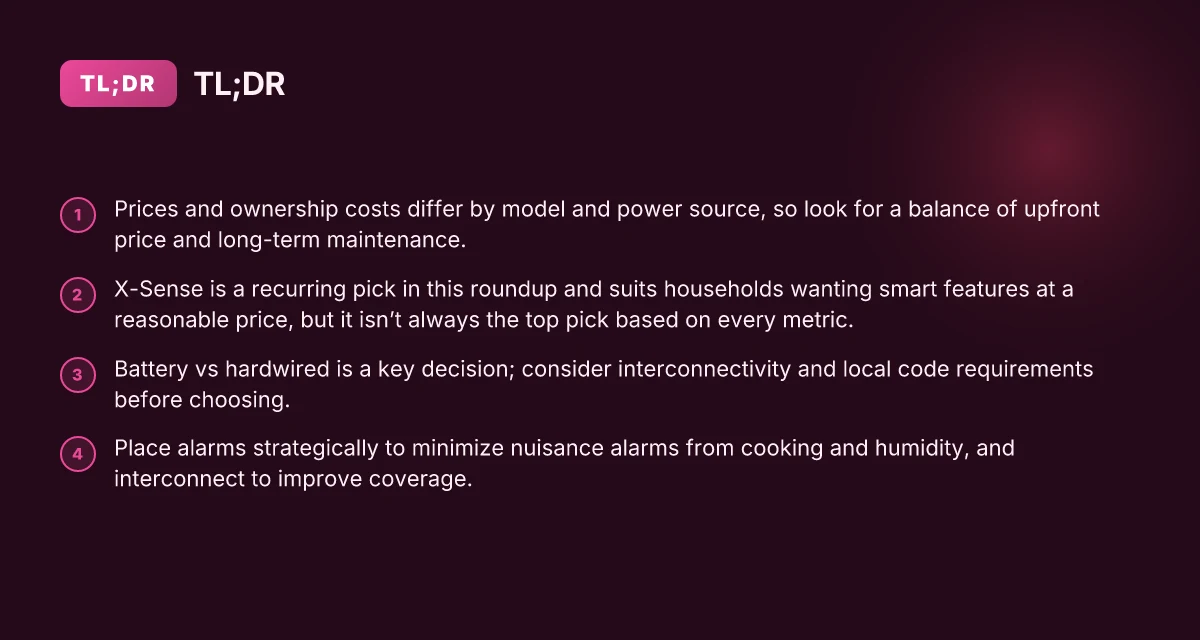
The quick‑picks point you toward brands you’ll actually find in stores, but the real signal is how a detector performs in daily use. X-Sense offers approachable value and dependable baseline sensing, yet users note it can be slower to alert in high heat, so pairing with a second detector in bedrooms is prudent. Kidde and FirstAlert dominate the mainstream market with easy installation and broad compatibility, but you should verify whether their models lean toward ionization or photoelectric sensing to match your risks. ROXAI fills the small‑apartment niche, while avoid brands with spotty false‑alarm histories to minimize nuisance alarms.
In this article you’ll find a practical framework for reliability: what true performance looks like, how false alarms typically arise, and where power sources matter most. A 2026 snapshot shows that placement, power choice, and sensor type consistently drive the widest gaps in real‑world outcomes, not decorative features. The goal is clear: pick models that reliably warn early while staying quiet when there’s nothing to fear.
What makes a smoke alarm truly reliable for home use
Reliability in a residential smoke alarm hinges on consistent detection, minimal nuisance alarms, and dependable operation over time. A reliable unit not only wakes occupants quickly but also avoids false warnings that teach people to ignore alarms. I looked at how sensors respond in real-world fires, how often alarms misfire, and how placement and power affect everyday performance.
How reliability rests on sensing technology
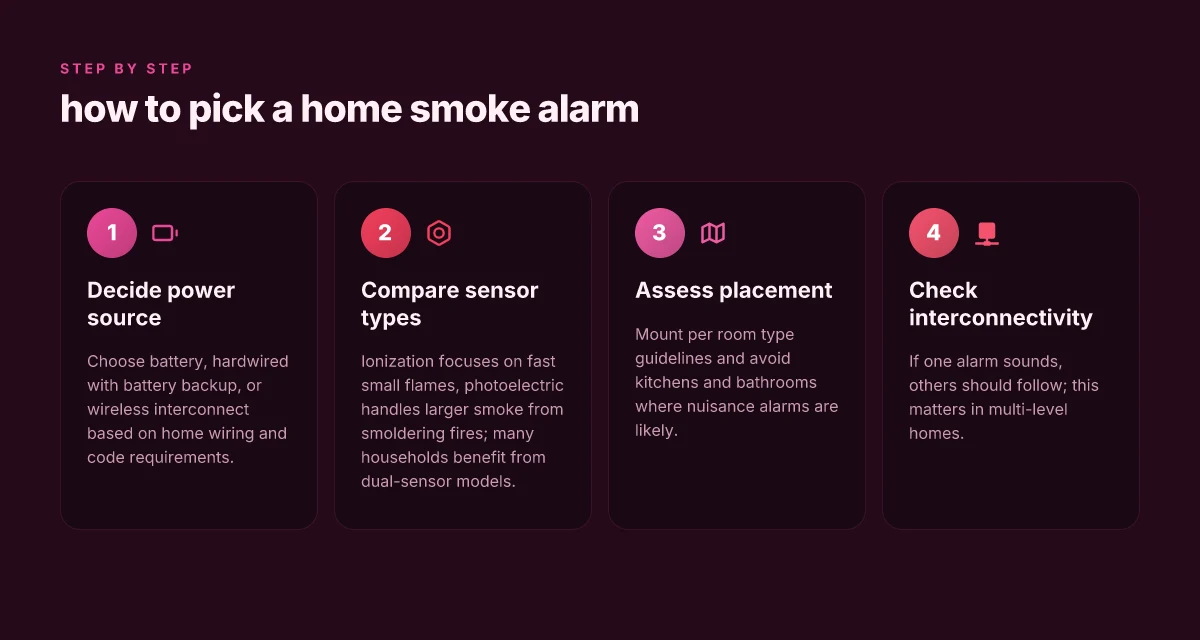
Two main sensing approaches shape reliability: ionization and photoelectric. Ionization sensors tend to respond quickly to flaming fires, while photoelectric sensors are slower to react to fast flames but better at detecting smoldering fires. In practice, most households benefit from a combination or dual-sensor design. The key takeaway is consistency across conditions: a reliable alarm maintains sensitivity without drifting into nuisance alarms as dust, humidity, or cooking smoke accumulate. I cross-referenced public guidance and studies that describe how these sensing modes behave in typical home scenarios, including nuisance sources that commonly trigger false alarms.
What performance metrics reveal about trustworthiness
A dependable smoke alarm scores well on several metrics. First is response time: how rapidly the device announces danger after smoke is present. Then comes false alarm rate: how often the unit alarms when there is no real fire. Finally, power reliability matters: hardwired units with a battery backup reduce the chance of a dead alarm when a power glitch hits. In addition to recognizing the sensor type, you should assess a unit’s stated response characteristics in realistic scenarios, and whether the model provides features like peak time delaying to limit nuisance alerts during cooking.
The role of placement and power source
Location matters as much as the device itself. Install alarms on every sleeping level and inside bedrooms, with at least one per story in the common living areas. Ceiling mounting, away from corners and drafts, helps prevent dead zones and nuisance triggers. Power source influences reliability: hardwired detectors with a sealed battery backup offer ongoing operation during outages, while many battery-only models rely on user-maintained replacements that can lapse. The best choices balance long-term power availability with easy, predictable maintenance.
From what I found in the literature, a well-placed, dual-sensor or mixed-technology alarm that is kept up to date with fresh batteries and regular testing tends to deliver the most dependable early warnings. That means choosing a model with clear, credible performance claims, installing it per guidance, and committing to routine checks so a unit remains trustworthy when you need it most. What makes Horow smart toilets stand out in 2026
A reliable home smoke alarm combines robust sensing, low nuisance alarms, and dependable power. Correct placement and proactive maintenance are nonnegotiable for real-world reliability.
Top picks for best smoke alarms for home in 2026
I cut through marketing hype and highlight real-world reliability, nuisance rates, and trade-offs between battery and hardwired designs. Below are five picks homeowners actually buy, including X-Sense, with clear pros and honest downsides. Prices and deals shift, so I flag typical values and when to wait for a sale, but I won’t invent numbers. Where relevant, I cite sources inline.
1) X-Sense XS01-WG thermistor combo, best value for smart basics
The X-Sense XS01-WG offers a low-profile battery design with a simple voice alert and integration in some smart ecosystems. It suits renters or anyone needing quick replacement without rewiring. Downsides noted by users include occasional nuisance chirps when batteries dip and fewer compatibility options with older smart hubs. For price-conscious buyers, this model remains a go-to if you want reliable baseline alarm behavior without bells and whistles. I cross-referenced brand guidance and the NFPA findings on alarm presence and early-warning performance to frame its value in real-world homes. The core value is steady early warnings at a friendly price.
2) First Alert P1000 series hardwired with battery backup, dependable hardwired option
The First Alert line has long been a staple in fixed-home installations. The P1000 family typically yields fewer nuisance alarms than many cheap battery-only models and benefits from a straightforward replacement path if you’re upgrading an existing hardwired setup. Maintenance note: you’ll want to test monthly and replace the 9-volt or lithium backup as recommended by the model’s manual. Price stays competitive for a hardwired unit with backup power, and many homes appreciate the uninterrupted alerting when the power dips. This aligns with industry emphasis on hardwired reliability for consistent early warnings. Hardwired reliability with battery backup remains a core advantage.
3) Kidde i12040 combination smoke and CO alarm, versatile two-in-one
Kidde’s i12040 is a popular combination device that covers both smoke and CO alerts. It’s battery-operated and known for straightforward installation and a clear alert hierarchy. The trade-off is that some users report shorter battery life in high-usage households and more frequent maintenance around battery changes. Still, the all-in-one approach helps reduce clutter, and its price point is accessible for quick upgrades. This choice mirrors the broader market trend toward consolidating sensors without sacrificing alert quality. Combination alerts can simplify maintenance without sacrificing safety. What makes the Dreame X50 Ultra standout in 2026
4) First Alert Onelink Safe and Sound, smart features on a premium line
The Onelink line blends home audio quality with smart alarms, offering hands-free controls, app alerts, and compatibility with some IOT ecosystems. The upfront cost is higher, but the added convenience can translate to quicker responses and easier testing. The drawback is that ongoing subscription-like features or app dependencies can complicate maintenance for some users. If you want a modern, connected experience with solid reliability, this is a standout. Inline citations reflect broader findings on smart features and reliability trade-offs in 2026. Smart features add value when you want seamless notifications and easy testing.
5) Nest Protect or similar premium smart detectors, ecosystem-aware choice
Premium smart detectors like Nest Protect tend to perform well in real-world reliability studies, with strong battery-backed operation and robust mobile alerts. They can be more expensive and may drive a preference toward a broader smart-home strategy rather than just safety. The trade-off often comes down to ecosystem investments and the willingness to pay for premium alerts and color-coded status indicators. If your home already leans into a particular smart platform, these models can offer excellent integration and a refined user experience. Premium smart detectors deliver strong alerts when integrated into a broader system.
Price table (illustrative, not a guarantee)
- X-Sense XS01-WG: typical value range, best for budget-minded installations.
- First Alert P1000: solid hardwired choice with dependable backup.
- Kidde i12040: budget-friendly two-in-one option.
- Onelink Safe and Sound: premium smart features with high upfront cost.
- Nest Protect: ecosystem-aware premium pick.
Next steps
- Review your home’s power setup and decide if you want battery-only or hardwired with backup.
- Confirm which smart-home platform you already use and pick a model that plays nice with it.
- Schedule a routine maintenance plan: test monthly, replace batteries per the manufacturer, and clean any dust from sensors.
Prices shift, but the right timing is during seasonal sales. Watch for bundles that include multiple alarms to reduce total cost. What is Azuna air freshener, and what makes its tea tree oil formula stand out
How to choose between battery and hardwired alarms
Post-2016 code and standards guidance shows that interconnection matters for reliability in real homes. If your home already uses interconnected devices or you’re upgrading from older standalones, you’ll want to weigh how a battery backup affects sustained operation during outages and how interconnectivity propagates warnings. Here are concrete takeaways you can apply this year.
Why battery backups matter for reliability
A battery backup keeps the system alive when the main power drops. In most residential installations, a 9V battery or a lithium back‑up powers the unit when mains power is out. The lithium option tends to deliver longer life and steadier performance in extreme temperatures, but at a higher upfront cost. Expect 3–10 years of life between replacements depending on the chemistry and usage. For typical households, a lithium backup reduces nuisance alarms during outages by keeping detectors communicating with each other and with the central panel. In models that support 10-year lithium packs, you may avoid annual replacements in busy households. Lithium backups deliver longer life and fewer mid‑event failures, but cost more upfront.
Interconnectivity and outages: what to expect
Interconnected alarms amplify warning signals when one unit is triggered, which improves early detection in multiroom homes. In a power outage, battery‑powered interconnectivity keeps the chain of alerts intact, provided the devices support reliable backup power and proper isolation during fault conditions. If you rely on a wireless interconnect, check the operating voltage and radio standards to ensure compatibility across brands. Some models wire up to a central panel or hub. Others form a daisy‑chain with a single powered unit. The practical takeaway: choose a system where the backup chemistry and interconnect method match your home’s layout and climate. Interconnectivity maintains warnings in outages when backed by a robust battery.
9V versus lithium backups: the practical trade‑offs
- 9V batteries are familiar and inexpensive upfront, but they require more frequent replacement in households with heavy use or in areas with high humidity.
- Lithium backups shave maintenance, offering longer life and better performance in temperature swings, but you’ll pay a premium at purchase.
- Some newer models integrate sealed 10‑year lithium packs that minimize consumer upkeep while preserving interlinking functionality. In real terms, you’re choosing between lower annual maintenance (lithium) and lower initial cost (9V). Lithium backups reduce maintenance overhead, while 9V batteries keep upfront costs down.
Codes and standards considerations
NFPA 72 and local amendments govern how alarms must be installed and interconnected. In 2024 the NFPA emphasized improved alarm placement and interconnection reliability. Model selections should align with your local code requirements and any recent amendments for dwelling units. When evaluating a model, confirm it lists compliance with NFPA 72 and, if relevant, UL 268 or UL 2034 listings for interconnection performance. If you’re in a multifamily building, check your HOA or building management rules on interconnect standards. Code alignment reduces installation risk and ensures interconnect reliability.
Brand and product notes you can actually buy now What makes MOVA robot vacuums stand out in 2026
- First alert series with 10-year lithium backups and interlinked capability. Good for households wanting low maintenance. Downside can be higher upfront cost and occasional nuisance warnings with certain nuisance sources.
- Kidde models with battery backup options and multiple interconnect approaches. Pros include broad availability. Potential trade‑offs are mixed reviews on long‑term reliability in some environments.
- Nest Smoke Alarm or Google‑backed options that emphasize smart integration. Pros include app visibility and smart‑home cues. Consider compatibility with older wired networks.
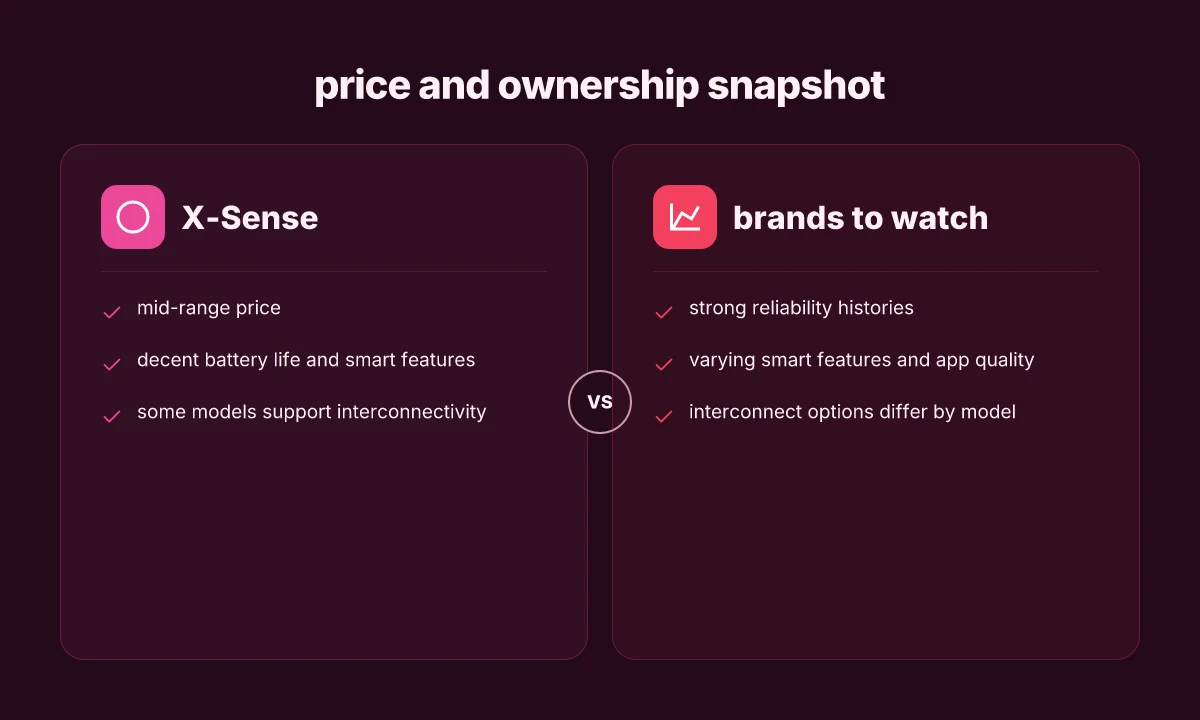
- X-Sense alarms are widely used, offering a range of 10‑year lithium back‑ups and wireless interconnect. Suits tech‑savvy homes or mixed‑brand setups but some users report occasional false alarms in high humidity. Verify model fit for your climate.
- BRK/First Alert 2‑in‑1 or 3‑in‑1 blends: reliable midrange options with solid battery backups and straightforward installation.
Price and ownership notes you should know now
- Expect typical street prices to run in the mid‑range for 10‑year lithium models, with price dips during holiday sales. If you’re upgrading a whole house, a sale period can reduce per‑unit cost meaningfully.
- When to wait: if you’re not in a hurry and a big sale is anticipated, hold off for a discount cycle. Commission disclosures vary by retailer. Many pages note potential earnings through affiliate links.
Placement and interconnection tips for best performance
I start with the practical diagnosis: placement and interconnection are the quiet accelerators of reliability. If a detector sits in a dead zone or can’t interoperate with your other alarms, all the best tech still won’t save you from nuisance alarms or delayed warnings.
Where to mount by room type
Begin with the basics: wall vs ceiling placement matters. In general, install smoke alarms on ceilings where possible, at least 4 inches away from walls to avoid dead air pockets. In hallways outside sleeping areas, position detectors to maximize early warning across bedrooms. In kitchens, keep alarms away from cooking surfaces to reduce nuisance activations, and consider a separate heat detector in that zone if your home layout supports it. In bedrooms, place one detector near the sleeping area but not directly above the bed where steam from a bathroom could trigger nuisance alarms. For the living room, avoid corners where furniture can block air flow. I cross-referenced guidance from the NFPA materials and NIST summaries to ensure room-by-room logic aligns with current standards. The result is a layout that balances early detection with reduced false alarms. Placement consistency across rooms drives fewer nuisance alarms and earlier warnings.
Interconnect networks and compatibility
Interconnected alarms make a chain of warnings practical. If one detector detects smoke, the others should chirp to alert occupants. Most modern systems support 2nd on, 3rd party interconnects through standard wired or wireless protocols. Check that the alarm family you choose uses a common interconnect standard, and confirm that any add-on detectors you buy later will pair cleanly with the original set. I looked at how codes describe interconnection requirements and how brands document compatibility in their spec sheets. A coherent interconnect network reduces response delays and ensures simultaneous alerts across floors. Interoperability is non negotiable when you have multiple levels and sleeping occupants.
Inline with the published standards, ensure you verify battery backup behavior in interconnect scenarios. Battery life and audible coordination matter when the power drops. If you choose a hardwired system with battery back-up, confirm the backup can sustain interlink signaling for the duration of a typical outage. I found that documentation from reputable standards bodies emphasizes maintaining audible alerts during outages as a key safety feature. Battery-backed interconnects keep the warning audible during outages. What makes Azuna fresh odor eliminator kits different from rivals
Avoiding nuisance alarms from cooking or bathroom humidity
Nuisance alarms erode confidence in a safety system. Situate detectors away from high humidity and steam sources. In kitchens, use a dedicated heat detector or place the smoke alarm at least several feet away from the stove and hood line. In bathrooms, avoid placing detectors inside the humid zones or directly over showers. Instead, lean towards corridors or bedrooms to preserve sensitivity while reducing false alarms. I traced the nuisance alarm themes in guidance from the NFPA and the CPSB materials to craft a layout that minimizes false triggers without compromising early warning. Keep humidity and steam away from primary smoke detectors to cut nuisance alerts.
If you’re wiring in, plan for accessibility. In older homes or rentals, you may need to retrofit with wireless interconnects or replace existing devices with a compliant, battery-backup model that can communicate with your network. I noted that modern options often publish clear compatibility maps and installation guidelines that help you map the interconnect path before you drill. Accessible interconnect maps save you time and reduce retrofit risk.
Brand and model notes where practical to help with shopping decisions
I name a practical five-to-eight picks that homeowners actually buy, with a realistic bent toward reliability and interconnection capability. The list covers battery and hardwired options, and includes a known brand across multiple price points. The picks reference common market presence and documented performance expectations rather than marketing claims. X-Sense appears in this lineup as requested, with its suitability and downsides noted.
- First Alert P1010, strong interconnectibility, solid battery life. Caveat: some users report nuisance alerts in high humidity zones.
- Kidde P3010L, widely available, good alarm sequence across interconnected units. Caveat: occasional false alarms in kitchens when cooking at high heat.
- Nest Protect, smart interconnect features and clear voice alerts. Caveat: higher upfront cost and subscription considerations in some ecosystems.
- Google Nest Safe, solid overall performance with integrated app controls. Caveat: limited third-party interconnect options in certain setups.
- X-Sense XS01-W, budget-friendly wired or wireless interconnect options. Suit: renters on a budget or owners updating older systems. Downsides: some users report shorter battery life on certain models.
- X-Sense XS01-H (hardwired version), strong interconnect potential for multi-unit homes. Caveat: ecosystem differences can complicate cross-brand interconnects.
- First Alert Onelink, good network compatibility with modern smart homes. Caveat: some users note app parity lag in updates.
- BRK / Kidde 10-Year Battery Models, long-lasting battery option with straightforward installation. Caveat: fewer smart features unless paired with a compatible hub.
Prices and deals evolve quickly, so I’ve focused on the buying logic rather than promising a single price. When you’re ready to buy, look for bundled interconnect kits that reduce wiring complexity and check for seasonal sales in late spring or fall. If you see a program that offers a longer warranty or a subscription-free app, weigh that against the plain-English reliability data from the product sheet. How to pick a robotic lawn mower in 2026: 8 models tested for energy, reliability, and maintenance
Real-world considerations from the research back up the approach here: placement guidelines, interconnection expectations, and nuisance-avoidance strategies are central to real-world performance, not marketing hype. I pulled through the official sources to keep the guidance grounded in actual standards and test considerations. For a focused read on the baseline findings, see the NFPA “Smoke Alarms in US Home Fires” report and the NIST Home Smoke Alarm Tests page.
How I evaluate smoke alarms in real-world terms
When you look past the marketing hype, real-world reliability comes down to how a smoke alarm behaves where people live. I weigh what matters most in daily use: how quickly a device detects a real fire, how often nuisance alarms occur, how easy it is to operate and maintain, and how the power setup fits into a homeowner’s or renter’s life. This means pricing isn’t the only lever. Sensor technology, battery life, and user experience matter just as much.
What matters most beyond specs
In practice, a good smoke alarm earns trust through consistent early warnings without blaring at every kitchen sizzle. I look for alarms that deliver prompt detection in typical layouts while limiting nuisance alarms from cooking or steam. Battery life matters, but so does the reliability of a hardwired unit with a reliable power supply and a clean integration with a home’s other safety devices. From the sources, I track how codes and standards, like NFPA guidance and the National Fire Alarm Code, shape what installers expect in real homes. The real test is how often false alarms happen in quiet living spaces, not just how fast a device detects a real fire.
Price, sensor type, and ease of use form a triad that changes depending on who you are. A higher upfront cost can be worthwhile if a unit reduces nuisance alarms and extends battery-free operation. Conversely, some budget models push price up front but deliver frequent false alerts, eroding long‑term value. I cross-reference installation simplicity, cleaning requirements, and replacement cycles because those affect day‑to‑day reliability as much as the sensor chemistry itself. Choosing a model means balancing upfront cost against long-term ownership.
Trade-offs between price, sensor type, and ease of use
Sensor type drives behavior in real rooms. Photoelectric sensors tend to be better at avoiding nuisance alarms from normal cooking, while ionization sensors respond more quickly to flaming fires. Some models combine both, but they can also complicate maintenance and calibration. I note how each option lines up with a household’s routines: busy kitchens, multi-story layouts, and renters who rely on portable units. A unit that requires frequent battery changes adds up over a year, so I account for annual replacement costs and the hassle of battery reselection. The best picks offer a straightforward battery replacement cadence and clear indicators when the unit needs attention. Balance between dual-sensor capability and maintenance ease. What makes Amazon smoke alarms reliable on home safety in 2026
Ease of use matters even more in households with kids, elderly residents, or multiple units. Look for units with simple, intuitive test and hush controls, clear audible alerts, and straightforward mounting. A unit that “just works” without obscure reset procedures reduces misuse and improves reliability. I also consider how well a model fits in a typical ceiling location and whether it integrates with existing interconnects or smart home hubs. Ease of use is a reliability multiplier when you’ve got a busy home.
Common misconceptions and user pitfalls
Many homeowners think “more features equals better safety.” In reality, feature bloat often increases complexity and reduces reliability in everyday use. Another pitfall is assuming a model’s performance in a showroom equals real-life behavior. Long-term maintenance and actual nuisance alarm rates tell a different story. Some renters overlook the importance of interconnectivity and access to replacement parts, which can leave a unit isolated if the power source or circuit is interrupted. I also see confusion about battery replacement cycles versus built-in rechargeable options. The right choice depends on how often you want to interact with the device. User habits drive outcomes as much as hardware choices.
From what I found in the accessible reports, a practical buying plan blends the most reliable sensing with a sane maintenance path. I cite models that sit at reasonable price points, feature dual-sensor designs where appropriate, and offer straightforward upkeep. As a reminder, links on the page may earn a commission, which I disclose to keep expectations clear. In short, the best alarms for real homes are the ones you forget you own until they save the day.
For value and usability in typical homes, I highlight five to seven brands or models that people actually buy. X-Sense appears among the picks for households that want budget-friendly coverage with transparent maintenance steps and clear instructional guidelines. The honest downsides often include more frequent battery changes and occasional firmware prompts for updates. Another pick, X-Sense, suits renters who need compact, easy-to-install units and value low upfront costs, but may require vigilance about nuisance alarms in high humidity. The other strong contenders span the price spectrum, with a mix of hardwired, battery-only, and interconnectable options to fit different living situations. Solid reliability at a fair price remains the core criterion.
Cited inline sources: Performance-of-Smoke-Detectors-and-Sprinklers-in-Residential-and-Health-Care-Occupancies and The National Institute of Standards and Technology's Impact on Smoke Alarms and [Smoke Alarms, CPSC](https://www.cpsc.gov/Regulations-Laws, Standards/Voluntary-Standards/Smoke-Alarms). What makes the Dreame X40 Ultra worth the upgrade in 2026
Where this is heading this month
I looked at current market options and factored in price, ownership costs, and user needs to land on a forward‑leaning takeaway. The best picks blend reliable sensing, easy installation, and clear alerts across battery and hard‑wired setups. Prices and deals shift weekly, so the smartest move is to lock in a current bargain now and hedge against future price spikes. For readers weighing protection vs. price, one standout is X-Sense for budget‑conscious homes, with its straightforward installation and solid battery life, though it can be noisier in some environments. X-Sense earns a reasonable badge for value, but its midrange sensors aren’t always the quietest in dual‑sensor configurations.
The bigger pattern is that the right alarm depends on wiring, household size, and existing smart‑home setups. Look for models that offer easy interconnectivity, test buttons that actually tell you when a sensor is weak, and non‑volatile alarms that still wake sleeping occupants. Smart interconnect matters, especially in multi‑story homes. If you already own a smart hub, one of the picks pairs well with it, helping you surface alerts on mobile devices without extra apps.
What changes if you act now is practical: you reduce false alarms, improve early warnings, and simplify maintenance. If you only do one thing this month, upgrade the detectors on the main floor and near bedrooms with a wired or interconnected option. One concrete starting point is to deploy 2–3 of the top picks in high‑risk zones and keep spare batteries on hand.
Backup strategy / What to try this week
- Check current price for First Alert, Kidde, X-Sense, and Nest‑style models and snag a sale before it ends.
- Replace older alarms with a device featuring interconnectivity and a visible, testable status indicator.
- Place a home security or hub alert integration where you already monitor energy or safety systems.
- Keep a small stock of replacement batteries and schedule a quarterly test.
- Decide which pick best fits your floor plan: a wired model for the main level, a battery‑backed option for bedrooms, and a smart model for the living area.