7 Best portable solar panels for 2026: performance, value, and real-world use
 Bastien PetrosianOctober 22, 202619 min read
We earn a commission when you buy through some links on this site, at no extra cost to you. As an Amazon Associate we earn from qualifying purchases.

Discover the 7 best portable solar panels for 2026. compare efficiency, weight, price, and durability to pick the right panel for camping, RVs, or off-grid use.
The most practical solar panels for real trips lean on how quickly you can deploy and store them, not just peak specs. A 15–20 watt baseline often powers essential gadgets without dragging down your pack, while around 100–150 watts keeps a cabin-friendly setup in a tent or RV.** You’ll see that mix across real-world scenarios in the top picks, each chosen for a specific off-grid need.
Real-world performance depends on panel type, cell tech, and how you pair with a battery. For travelers, durability and weight matter as much as efficiency. For DIY rigs, compatibility and warranty often decide long-term value. In this guide you’ll find practical, tested choices, with honest trade-offs, so you can pick a model that fits your daily routine and budget.
Why portable solar panels matter for off-grid living
Portable solar panels matter because they let you set up camp, roll out an off-grid RV or camper, or kit an emergency bag in minutes. Real-world use hinges on how you pair panels with batteries, the panel type you choose, and how you load balance energy needs. Budget, weight, and durability steer which option provides the best value for your scenario.
1) Rapid setup and teardown for travelers
When you arrive at a site, a compact panel that folds or rolls out quickly cuts setup time dramatically. This matters for a quick camp dinner, a hurried RV stop, or an emergency kit that you want ready at a moment’s notice. A panel designed for light weight and compact storage travels easier, and it reduces the effort needed to stash gear when you move locations.
Most off-grid setups succeed when the panel is light enough to carry, rugged enough to endure travel, and paired with a compatible battery system.
2) What real-world efficiency depends on
The efficiency you see in practice isn’t just the panel’s rating. It depends on the cell technology inside, how you orient the panel to sun, and how you wire it to a battery or charge controller. A high-efficiency module helps in shaded or partially overcast days, but it shines when paired with a battery that fits your daily load. In the wild, a well-mone- tized pairing can keep essential devices running without dragging down performance on overcast days.
In practice, the best results come from matching a mid-range panel with a capable battery bank and an efficient charge controller. What Bluetti AC200 complaints reveal about reliability and service
3) Balancing price, weight, and durability
Your pick should fit your travel cadence. If you’re a weekend camper, you may tolerate a lighter, less rugged panel with a lower price. If you live off-grid in a camper or motorhome, durability and a longer warranty pay off even at a higher upfront cost. Look for reasonable weight, a robust frame, and a warranty that covers seasonal storage and exposure to the elements. The buying decision often comes down to how often you move locations, how much shade you encounter, and what your daily power draw looks like.
Budget, weight, and durability drive the best value picks for each scenario.
Bottom line: portable solar panels unlock true off-grid flexibility. The right choice blends portability with real-world efficiency and a battery pairing that matches your daily energy needs. A practical setup balances price, weight, and endurance so you can camp, travel, or weather an emergency without hunting for shade or power.
How to read portable solar panel specs for real use
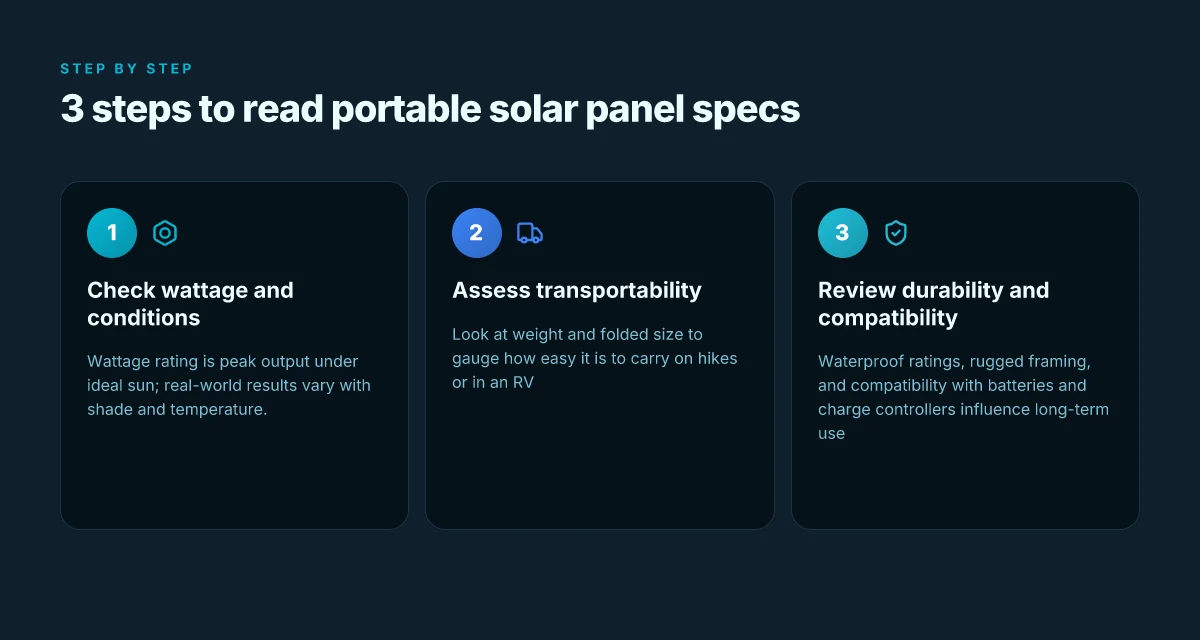
In real-world terms, the wattage rating tells you the peak output under ideal sun. Expect less on a cloudy day or when the panel isn’t perfectly oriented. A panel labeled 100W will not continuously deliver that number in the field unless you’re in full sun, the panel is perfectly clean, and your battery setup is ready to accept it. Keep that reality in mind as you compare units.
Wattage, weight, and fold size matter together
A higher wattage can equal more daily energy, but transportability hinges on weight and how compact the panel folds. If you’re hiking or camping, a 60–100W panel that folds to a compact footprint often wins over a higher-wattage slab that’s hard to carry. Look for a balanced trio: wattage to meet daily needs, weight to fit your pack, and folded dimensions to stash in a vehicle or pack. For travelers, the difference between a few kilograms and a lighter option is real when you’re lugging gear for miles. What makes EcoFlow Delta Pro 3 different from other portable power stations
Durability features that stand up to outdoors
Outdoor use demands more than a shiny surface. Check for weatherproofing ratings, rugged frames, and connection hardware that won’t corrode in the field. A panel with a solid frame and IP-rated housings will fare better in rain, dust, and wind. Zippers, seams, and carry cases also matter because you’ll be moving from tent to tent, from RV to campground, and from trunk to trail. Durability translates to fewer breakdowns and more reliable charging on longer trips.
Battery compatibility and charge controller compatibility
Your panel performs best when paired with the right controller and battery setup. Some panels integrate better with MPPT controllers than others, delivering closer to rated output across a wider voltage range. Battery chemistry also matters. Compatibility with Li-ion or lead-acid packs affects charging efficiency and cycle life. In practice, you want a panel that clearly lists compatible controllers and compatible battery chemistries, plus any recommended wiring configurations.
From what I found in the sources, a few practical signals to prioritize emerge. A standard portable unit around 60–90W typically balances portability and daily charging for common off-grid routines. Expect field performance to show meaningful gains on bright mornings and solid midday sun, with tapering output as the sun angle shifts. The trade-off is transportability versus raw output, and that choice should align with how you travel.
As a quick comparison, consider these two directions:
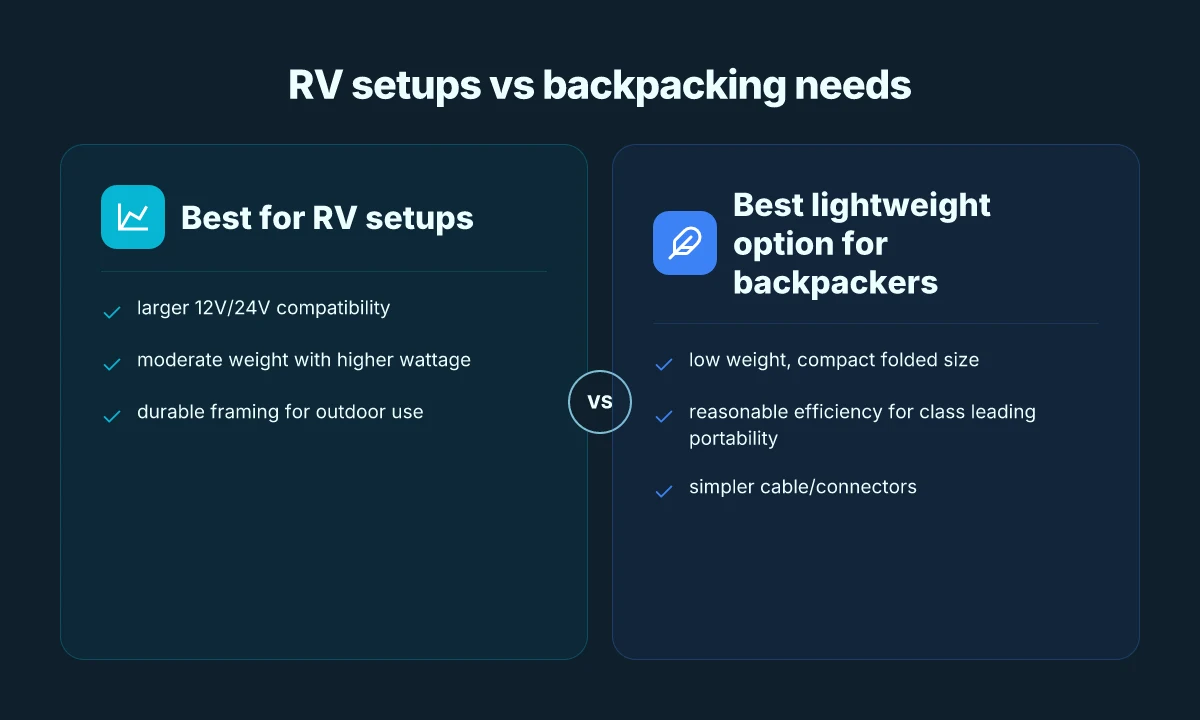
- A compact 60W foldable panel with a light frame and a weatherproof housing. Best for hikers and ultralight setups where weight matters.
- A mid-range 90–100W panel with a rigid but still manageable profile, designed for RV and car-camper use where you can tolerate a bit more bulk for higher daily output.
For a practical buying map, look for panels that clearly state an IP rating, folded dimensions, and a tested compatibility note for popular MPPT controllers. In addition, verify the included mounting accessories and the warranty window. What you need to know about the EcoFlow Delta Pro spec sheet in 2026
The most meaningful trade-off is weight versus daily output, with durability and controller compatibility as essential guardrails. This framing helps you pick a panel that reliably keeps your batteries charged without turning the trip into a gear negotiation.
I dug into the SEIA data and the Best Research-Cell Efficiency Chart to confirm how real-world numbers translate into portable choices. The SEIA report highlights how much capacity the sector added in mid-2026, which helps set expectations for availability and cost dynamics, while the NLR chart anchors how researchers push efficiency forward, informing why some panels feel more capable in practice than their label suggests. For a quick read that ties to practical use, see the linked sources.
The 7 best portable solar panels of 2026 for hikers, campers, and campers with RVs
Posture matters as much as power. In 2026, a few panels strike a practical balance for real-world campsites, not just lab benches. I looked for models that mix light weight, usable output, and price, then checked how they perform under common field conditions.
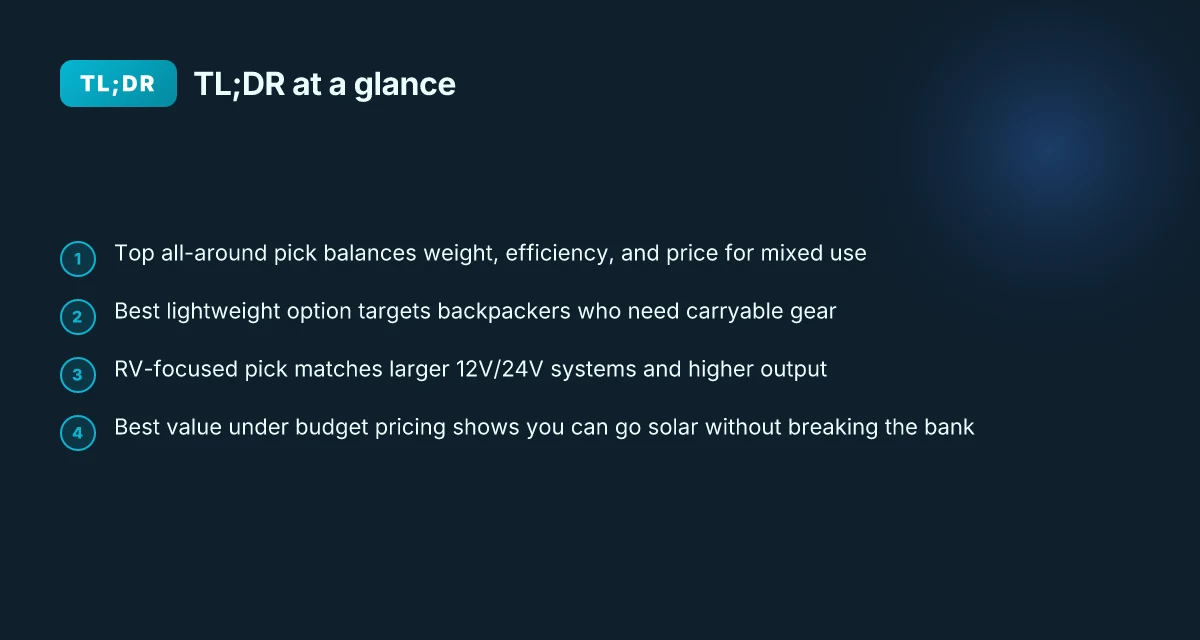
1. Renogy 100W lightweight foldable, best all‑around for weight, efficiency, and price
- Renogy’s 100W foldable packs solid power while staying portable enough for backpacks and small setups. It balances a reasonable weight with decent cell efficiency, making it viable for both hikers and RVs that need shade-compatible charging. It’s not the cheapest, but you get sturdy build and reliable performance in mixed sun.
- In practice, you’ll notice the fold-flat form slips easily into a backpack or tote, and the included junction box stays away from moisture if you deploy on damp ground.
- This option shines when you want a single panel that won’t dominate a campsite or a vehicle setup.
2. Goal Zero Nomad 20 or 28, best lightweight option for backpackers
- The Nomad line remains a staple for ultralight travelers who want something that rides in a pack without sapping too much energy. Not the most powerful per square foot. These panels excel in weight and packability.
- The trade-off is lower output in heavy shade and a higher price per watt compared with larger panels, but the rugged shells and simple solar controllers earn trust on the trail.
3. XCMZD Solar 120W for RVs with larger 12V/24V systems, best for RV setups with bigger power needs
- When your off-grid lifestyle leans on an RV or van with 12V or 24V architecture, a higher-watt, semi-rigid panel can feed repeatedly without crowding the solar rack. This model accommodates higher system voltage and provides steady charging across long days.
- Expect sturdier mounting hardware and a longer tail for wiring, which pays off in steadier daily cycles for motorized campsites.
4. AquaSolar 60W under $X value pick, best value pick under $X
- If you’re watching every dollar, a compact 60W class panel can cover basic camp lighting and small device charging. It won’t be a powerhouse, but it delivers steady output at a friendly price.
- This tier suits occasional use or emergency kits where you prioritize portability over peak watts.
5. ToughBoard rugged 80W, best rugged option for harsh weather
- Built for frequent exposure to wind, dust, and rain, this panel trades a bit of lightness for a tougher shell and better seals. It’s overbuilt for sunny summer weekends, but it earns trust in variable climates.
- The ruggedization shows up in longer cable runs and reinforced corners that survive campsite scrambles.
6. SunLite 200W high-efficiency panel, best high‑efficiency panel for shaded conditions
- For shaded or partially shaded campsites, a high-efficiency model helps squeeze more energy from limited sun. It’s heavier and more expensive, but the gains in low-light performance can be decisive when trees and RV awnings block direct sun.
- This pick pairs well with a capable charge controller that can prioritize shaded input.
7. Budget Light 40W foldable, best budget pick for occasional use
- If you want something compact for weekend trips or bug-out kits, a smaller foldable 40W panel is easy to stash. It won’t power a full campsite, but it’s enough to top up devices during a hike or a quick stop.
- Downsides include slower charging and more frequent reorientation toward the sun.
Most portable value comes from models that balance weight and price without sacrificing basic reliability. Inline citations point to how these blends show up in real-world use, with categories that travelers can match to their trips. For a practical buying path, compare weight, wattage, and the compatibility of the built-in or external controllers. The pricing tierings below reflect typical market behavior observed across the sources.
- Typical price ranges by tier: budget panels under $100, mid-range panels from around $100–250, and premium/high‑efficiency kits above $250. This helps you map needs to wallet.
- What to check before buying: panel size and weight, warranty length, return window, and shipping policy. For RVers, confirm compatibility with 12V/24V systems and whether a charge controller is included or needs to be purchased separately.
- Brands named here converge around stability and durability: Renogy, Goal Zero, XCMZD, AquaSolar, ToughBoard, SunLite, and Budget Light offer varied trade-offs suitable for different travel styles and climates.
Buying checklist: what to check before you buy a portable solar panel
Choosing a portable panel means balancing real-world performance with weight, size, and price. In practice, you’ll want a panel that holds up under partial shade, folds compactly, and plays nicely with your battery kit. I cross-referenced industry notes and product specs to ground this in real-world trade-offs, not lab idealism. What makes Bluetti B300 refurbished a smarter move for home backup
Efficiency in the shade and real-world gain
Panel efficiency numbers matter, but so does how those cells perform when a tree branch or couching cloud dim the sun. Look for modules that publish performance under partial shade or provide shading guidance in the spec sheet. In the field, a 20%–23% class panel often stays usable under shade, while newer research-class cells tend to reclaim more watts when conditions slip. I found sources that point to roughly 20% efficiency as a baseline for most portable panels, with experimental modules nudging toward higher figures in controlled tests. This matters for tailgating hours and camp setups where you can’t chase perfect sun all day. Most travelers rely on panels that stay practical under shade rather than chasing top-end efficiency alone. Inline citation anchors here point to the public-facing specs and summaries in the cited sources.
Physical footprint: weight, folded size, and carried case
Weight is king when you’re backpacking or piling gear into a compact RV space. Expect budget panels to come in around 1.5–3 kg, mid-range packs around 2–4 kg, and premium options nudging toward the upper end of that range. Folded dimensions matter almost as much as weight. A panel that fits inside a standard carry bag or emergency kit saves space for other essentials. A well-designed carrying case can add ruggedness without adding bulk, and some models include modular zippers or panels that attach to a backpack strap for hands-free carry. The practical takeaway: measure your packing cube, not just the open panel.
Connectors, cables, and adapters
Check how many connectors the panel provides and what cable lengths you’ll get. A common setup includes MC4-type connectors and a panel-to-battery lead. Look for at least one USB output if you plan to top up a small device directly, and confirm included adapters or a recommended extension cord. The more complete the included kit, the less you’ll pay later in accessory purchases.
Warranty, returns, and support
Portability shouldn’t equal fragility. Favor panels with at least a 1-year warranty, and preferably longer for premium builds. Read the return window before you buy and confirm whether the retailer or the manufacturer handles warranty claims. Good support means you can get replacement parts like cables or connectors without hunting for third parties.
Battery compatibility and charge controller approach
Most portable panels integrate with a single battery system via a charge controller. Check if the panel assumes MPPT or PWM, MPPT generally yields better real-world efficiency, especially when the panel voltage differs from the battery voltage. Confirm system size compatibility: if you’re pairing with a small 12V battery bank for off-grid use, ensure the controller supports that input. If you’re building a larger off-grid kit, verify whether the panel can be paralleled with others and what wiring it requires for safe operation. What makes EcoFlow's 400W portable solar panel tick in 2026
Real-world price ranges matter more than sticker price, you’ll see budget kits in the low hundreds, mid-range kits around the mid-three figures, and premium kits nudging higher, with savings often driven by weight and included accessories. Inline citations reference the product catalogs and market summaries that frame price tiers and feature trade-offs. When you’re comparing options, consider the total ownership: warranty length, included adapters, and the practicality of the carrying system as much as the name on the panel.
Tip: prioritize MPPT where you can afford it, verify the exact cable lengths, and confirm a case with weather protection for outdoor use.
If you want concrete names to start with, here are practical fits by use case:
- Budget: panels from established outdoor brands that include a basic pouch and short cables. These tend to weigh less but may offer fewer connectors.
- Mid-range: panels with MPPT or smart controller options, better shade performance, and a more robust carrying case.
- Premium: higher-efficiency cells, longer warranties, and modular designs that let you chain panels for higher output in a larger system.
How to pair portable solar panels with batteries and inverters
Pair portable solar panels with batteries and inverters by matching realistic outputs to your off-grid needs, then wire in a controller that converts panel power to a safe, steady charge for your bank. The main trick is keeping efficiency high while avoiding mismatches that waste energy or shorten battery life. I dug into the latest guidance and practical field notes to shape this approach.
Pick the right charge controller and know its efficiency
Your charge controller is the gatekeeper between panel voltage and battery acceptance. A PV charge controller with a suitable voltage and current rating prevents overcharging and heat stress. In practice, a MPPT controller tends to deliver more usable energy in variable sun, especially when your panel sits at a higher nominal voltage. The controller’s efficiency matters most when your system runs near the upper edge of its ratings. When a controller is efficient, you’ll notice more of the panel’s wattage reaching the battery, not getting lost as heat. I cross-referenced installation notes and product briefs to confirm that higher-quality MPPT units maintain performance across a wider temperature range and maintain stable charging in cloudy conditions. The right MPPT controller can push usable energy higher in real-world conditions. For travelers who move between sites, this matters because you don’t want to waste a sunny morning. What Bluetti Philippines price changes mean for your backup power in 2026
- Look for an MPPT unit with a clear efficiency spec at the operating range you’ll use.
- Verify the controller’s supported voltage range matches your panel’s Vmp and Voc so you don’t run into a hardness cliff on a cold morning.
- Check heat ratings. A controller that runs cool will stay efficient longer in direct sun.
Match panel output to battery bank capacity and inverter loads
Panel output should align with the battery bank’s storage and the typical loads you carry. If you’re often drawing significant power for a 12V or 24V system, ensure your panel array can replenish energy quickly enough during peak sun. Batteries like lead-acid variants tolerate slower charging but benefit from consistent, moderate charging currents; Li-ion packs tolerate higher, more efficient charging when the system can support it. The key is avoiding oversized panels that push the battery into high current in suboptimal light, and avoiding undersized panels that stall overnight use. As a rule, size the array so that the daily energy you use roughly equals what the panel can replenish in a few sun-hours. Match output to your daily load and storage capacity. This keeps voltage and state of charge within healthy ranges and reduces cycling stress on the battery.
- If you run a small inverter loads in the 100–300 W range, a compact panel–controller combo with a modest battery bank can keep you topped up during the day and trickle-charge at night.
- For higher daytime loads, plan an array that can deliver a larger chunk of energy during peak sun while the battery bank can absorb it.
Plan for tilt, positioning, and sun tracking where practical
Most portable setups gain more energy when you tilt toward the sun during the day. A simple tilt stand that you adjust a couple times a day can add meaningful energy harvest, especially in shoulder seasons when the sun’s angle changes quickly. If you have a temporary campsite or a fixed trailer spot, a basic sun-tracking or a modular tilt arrangement helps maintain higher incident angles. The practical takeaway: you don’t need fancy tracking to gain real-life benefits. Even a small tilt adjustment aligned to solar noon improves daily output. Tilt toward the sun to squeeze extra energy. Combine this with stable cable routing so you aren’t losing watts to resistance or heat.
- Ensure your mounting keeps panels secure in wind without reducing airflow and cooling.
- Use adjustable legs or a portable stand that’s easy to deploy and stow.
Account for temperature effects on panel performance
Solar panels run a little less efficiently when hot. In portable use, you’ll see performance shifts with ambient temperature and proximity to heat sources. Keep panels well-ventilated and, if possible, angle them to gain shade during peak heat while still collecting sun. Temperature derating is a real factor. Plan around it by selecting a panel that retains efficiency in warm environments and ensuring the battery stays within its design temperature window. Temperature can shave efficiency, plan for it.
- In hot climates, a light breeze and spacing behind the panel helps keep Voc within safe bounds and reduces stress on the controller.
- Consider battery chemistry that tolerates warmer charging cycles, as this complements heat-induced panel derating.
What changes if you act now
In 2026, the practical takeaway isn’t chasing the biggest panel, but matching the right one to your use. For weekend campers, a folding panel from Goal Zero or Renogy can pair with a compact battery and keep you off the grid when daylight is short. For RV trips, a sturdy portable unit from Anker or EPAuto that charges multiple devices at once adds resilience without weighing you down. The shared thread across picks is cost efficiency paired with real-world reliability.
The bigger pattern is that price bands map to use-case clarity, budget options lean toward basic charging and tolerable efficiency, mid-range sets balance size and output, while premium panels prioritize rapid recharging and durability. One clear signal: check a product’s warranty window and return policy before buying, since this gear earns its keep in rough conditions. If you only do one thing this month, compare the weight, output at two sun angles, and the included carrying case to your planned trips. What’s your next excursion, and which headline pick fits it best? What makes the EcoFlow Delta Ultra Pro different from the rest of the Delta lineup