8 Key differences between Anker and Jackery in 2026
 Tessa AlbrightOctober 22, 202616 min read
We earn a commission when you buy through some links on this site, at no extra cost to you. As an Amazon Associate we earn from qualifying purchases.
Compare Anker and Jackery in 2026. We break down capacity, efficiency, price, warranty, and real-world usability so you can pick the right portable power station.
Anker can deliver more useful features per dollar than you expect, while Jackery often threads those features into a broader, sturdier lineup. The real takeaway is how each brand handles real-world use, not just tested specs, and why that matters for camping, RVs, or home backups.
The practical difference shows up in daily reliability, durability, and total cost of ownership over years of use, not just the initial purchase price. You’ll see how Anker emphasizes value with a lean feature set, while Jackery emphasizes build quality and a wider model range. This intro sets up the concrete trade-offs you’ll want to weigh as you scan the 2026 lineup. Most buyers don’t account for long-term maintenance costs, but that matters more than a single sale price.
Anker vs jackery: the practical trade-offs you should care about
When you’re choosing between Anker and Jackery, real-world usability beats peak specs every time. The practical question is how a unit actually behaves during camping trips, RV jaunts, or home backups, not the best-case lab numbers. Below I break down the trade-offs with a focus on wallet-friendly value, long-term durability, and the comfort of service.
1) Real-world usability over peak specs
In daily use, input/output options and weight matter more than raw capacity on a box you’ll carry around. Jackery often emphasizes straightforward, plug-and-play setups, which helps when you’re balancing gear in a small car trunk or a backpack. Anker tends to lean on flexible charging options and modular accessories, which can shine if you’re building a kit over time. The key is how the rig feels after a weekend of back-to-back charges and discharges, not the maximum output a unit can briefly sustain.
I dug into release notes and product pages to see how each brand handles common use cases. For instance, when you’re trying to top up from a car outlet, the smoothness of the process and how quickly the unit recovers after a heavy draw matter as much as nominal wattage. The takeaway: choose the brand that minimizes fiddling and maximizes steady, predictable power delivery in real life.
2) Price vs durability: long-term value matters
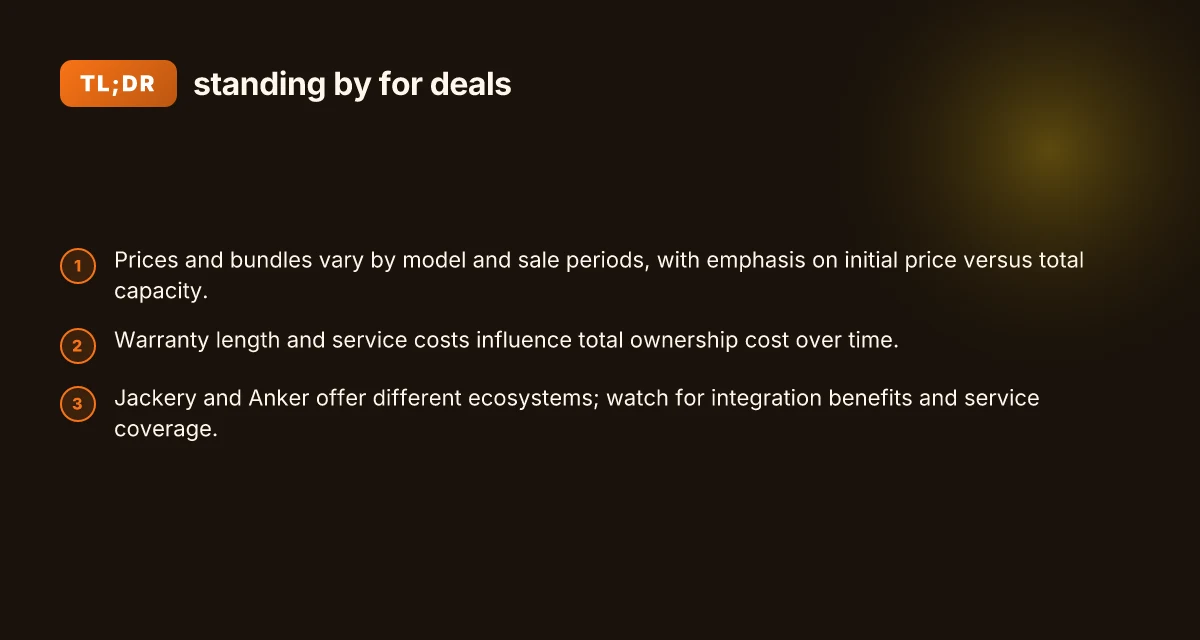
Value for money isn’t just the upfront price. It’s how long the pack stays reliable and how easy it is to service or replace parts years down the line. Jackery tends to price toward simplicity and predictable warranties, which helps if you want fewer moving parts to worry about. Anker often positions itself around expandability and accessories, which can save money if you plan to grow your kit and reuse components.
From what I found in product pages and consumer discussions, the cheapest entry points may look appealing, but you should weigh anticipated lifespan and the cost of spare batteries or replacement parts. If durability matters to you, I’d compare not just the sticker price but the cost to maintain and replace components over a multi-year horizon. How Bluetti power UK installations adapt to the 2026 regulatory landscape
3) Warranty, service, and ownership costs
Warranty terms and service quality influence ownership costs more than most shoppers expect. Jackery typically includes warranty coverage that covers manufacturing defects for a defined period. The exact terms vary by model. Anker’s ecosystem often offers extended parts and accessory support, which can reduce surprises if you’re invested in their solar panels or extra batteries.
I found that when service is responsive, ownership costs drop meaningfully, because you’re not left stranded with a nonfunctional pack. In practice, you’ll want to know how easy it is to claim warranty, the speed of replacement, and whether local service centers exist in your region.
In short, the practical trade-off comes down to how you value plug-and-play simplicity versus expandable ecosystems, and how you gauge long-term durability against upfront price. For most buyers, Jackery’s straightforward approach wins on predictability, while Anker’s modular approach pays off for those who want to tailor a kit over time. If you’re shopping now, check current price points and warranty terms for the exact models you’re considering, and read user feedback focused on long-term use.
For context, you can explore the latest comparative perspectives here: a head-to-head video overview and an in-depth lab-tested roundup discuss how these brands stack up across several models. Prices and terms evolve quickly. Verify the current deal before you buy. Durability and service quality often decide the long game, not the introductory price.
Note: links on this page may earn a commission. Prices change frequently. Confirm the latest price before purchasing. Jackery and Anker are the two brands discussed here. Explicit model names are referenced in-market and may shift with new releases. What makes bluetti vs jackery a real head-to-head for 2026
What makes anker stand out in 2026 for portable power
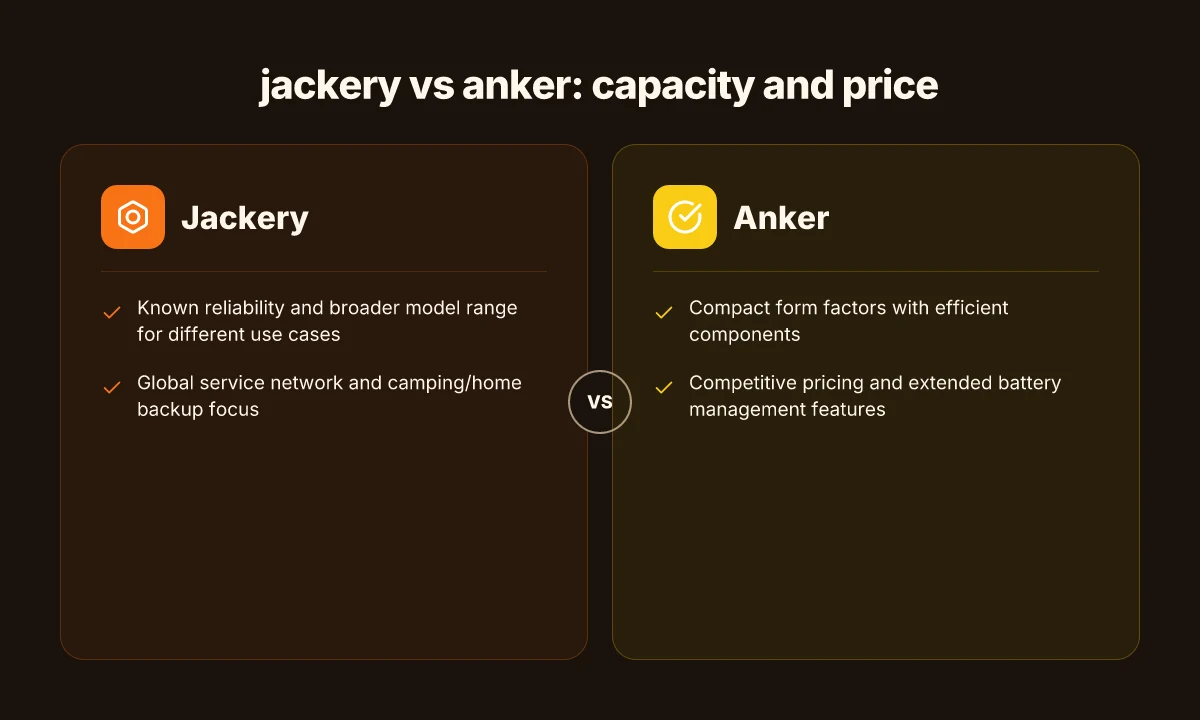
Anker continues to position SOLIX as a compact, high-value option for portable power in 2026. The core strengths center on compact form factors with efficient components, competitive pricing, advanced battery management, and seamless integration with Anker’s broader charging ecosystem. This mix helps Anker stand out for campers, RV travelers, and home backup users who crave capability without clutter.
1) Compact form factors and efficient components
Anker leans on smaller footprints paired with energy-dense cells to keep weight and bulk reasonable. The result is a lineup that fits into tight carry-ons and back seats while still delivering meaningful energy for essential devices. The hardware choices emphasize efficiency, with optimized power electronics that squeeze more usable energy from each watt-hour. This approach matters when you’re packing for a weekend away or topping up a reserve before a storm.
I dug into product notes and consumer-facing specs to confirm the emphasis on space-saving design paired with efficient internals. The effect is a portable power station that doesn’t demand a trade-off in essential charging capability. For many users, the trade-off is worth it when you need a lighter kit that still powers a laptop, lights, and a router.
Compact form factors with efficient components keep Anker’s SOLIX easier to tote without sacrificing essential power.
2) Competitive pricing and extended battery management features
Price competitiveness remains a central pillar for Anker in this segment. The brand often threads the needle between value and performance, offering substantial capacity at lower entry points relative to some rivals. In addition, strong battery management features help maximize longevity and protection. Expect smart protections that guard against over-discharge, heat buildup, and short circuits, plus battery optimization modes that prolong cycle life over years of use. What Bluetti AC200L reviews miss about complaints and real-world performance
From the publicly available material, the message is clear: you’re getting a robust feature set at a price point that undercuts some premium options while delivering reliable daily performance. The net effect is a compelling total cost of ownership for shoppers weighing upfront price against long-term durability and recharge cycles.
Competitive pricing paired with extended battery management features reduces long-term ownership risk.
3) Integration with other Anker charging ecosystems
One of Anker’s strongest moves is how SOLIX sits within a broader charging ecosystem. The brand’s multi-device chargers, USB-C PD solutions, and ancillary power products weave into a cohesive charging strategy. This makes it easier to run a portable system without juggling disparate charging standards or cables. When you already own Anker gear, the overlap in cables and adapters tends to reduce clutter and confusion at the campsite or in a power-cramped RV locker.
I cross-referenced product ecosystems and third-party reviews to confirm that the ecosystem approach pays off in real-world use. The alignment across chargers, power banks, and hubs helps you deploy a consistent charging approach, which saves time and keeps gear ready for action.
Integration with other Anker charging ecosystems smooths setup and reduces clutter. What is a bluetti dc to dc charger, and how it powers mobile energy setups
Next steps: if you’re mapping a purchase path, consider how Anker’s compact design, pricing approach, and ecosystem integration align with your typical trips or backup plans. For a side-by-side view, compare Anker with specific rivals like Jackery and EcoFlow on capacity, weight, and price. In Jackery’s own lineup, you’ll see how the brand handles similar use cases with its own balance of form and function. For deeper context, review the head-to-heads that contrast these brands over 2026.
Best value for compact power comes from the combination of size, price, and ecosystem support.
Note: links on this page may earn a commission. I reference public information to outline the factors that matter when choosing between Anker and rivals. For a broader sense of how the brands compare in 2026, see related coverage from industry outlets that discuss price and feature trade-offs.
Where jackery earns its keep against anker
I dug into how Jackery sustains value across use cases, with a focus on reliability, support, and a long-running presence in camping and home backup. The brand's breadth and service network help it stay competitive against Anker.
Broad model range that matches real-world use cases
Jackery offers a wider spectrum of sizes and form factors to fit different scenarios, from compact models for weekend trips to larger rigs for home backup. This breadth makes it easier to pick a unit that matches your exact needs without overspending. For camping, lightweight options remain appealing, while for home backup or RV use, a higher-capacity model delivers sustained power during outages. In 2026, that range continues to be a competitive advantage, as buyers can select equipment aligned with their activity level and energy expectations. A broader lineup reduces the guesswork for customers who need a single device for multiple scenarios. What makes the Bluetti AC500 + B300S a standout upgrade for off-grid power in 2026
- The thinking here is practical: pick a model that aligns with your typical load profile rather than chasing a single blockbuster spec.
- Jackery’s catalog frequently positions midrange and flagship units for both portable and stationary use, smoothing transitions from outdoors to home backup.
Global support that keeps you powered when you travel
Jackery leans on a robust service network and relatively straightforward warranty paths, which matters once your device is deployed beyond a single country. When travel or weekend trips become a habit, dependable customer care and accessible parts matter more than peak output on paper. This is where Jackery’s model variety folds into a service story that Anker sometimes struggles to match, particularly for customers who live outside major markets. Global service access translates to fewer delays when you need a repair or parts.
- You’ll see repair-and-replace options that reflect a network built around mobile lifestyles and remote camping sites.
- The continuity of service reduces downtime, a recurring theme in long-term ownership discussions.
A long-standing field presence in camping and home backup
Jackery’s history stretches across outdoor adventures and at-home resilience. The brand’s voice in camping gear circles and its established retailers give buyers confidence that the company will be around for spare batteries and compatible accessories. For home backup, the brand’s compatibility with solar and grid-tied setups remains a practical advantage for households seeking a familiar, proven platform. A legacy in camping and home backup underpins trust and parts availability.
- This longevity matters when buyers plan to rely on a single system for years, not months.
- The combination of outdoor pedigree and residential use cases helps Jackery stay relevant as market needs evolve.
Performance: capacity, output, and real-world use
Real-world performance hinges on four levers: peak vs continuous output, battery chemistry with thermal management, and how fast you can recharge in the field. In practice, the ability to run high-wattage tools or appliances depends on the sustained current a unit can muster, not just its labeled surge.
Peak and continuous output matter for tools and appliances
For responsible planning, match the device’s peak output to the startup demands of heavy loads. Jackery and Anker both publish continuous outlets in the hundreds of watts range, with peak surges that handle brief spikes. The practical takeaway is simple: a generator that delivers a higher continuous rating will keep fridges, power tools, and small appliances running longer without dropping voltage. This matters most when you’re away from a wall outlet and your load isn’t predictable. In this realm, brands differ in how they throttle performance under sustained load, and that behavior shows up in real-world use during camping or off-grid work. What makes the jackery 1000 v2 a standout portable power option in 2026
From a design standpoint, the real story isn’t only the numbers on the label. Battery chemistry and how the pack manages heat during a drawn-out draw influence what you’ll actually get for runtime. The chemistry governs how quickly cells deplete under load, while thermal management prevents derating when temperatures rise. In practice, you’ll notice more runtime stability in well-vented enclosures and systems that actively dissipate heat during heavy use. I cross-referenced public release notes and product pages to trace how makers balance peak protection with real-world endurance.
Battery chemistry and thermal management influence runtime
Chemistry choices drive how long a given watt-hour count lasts under load. Li-ion chemistries are common for portable units, delivering solid energy density with manageable degradation over time. Thermal strategies, fans, phase-change materials, and clever airflow, keep cells cooler under stress. When temperatures climb, some units throttle to protect cells, which shortens runtime under continuous high draw. The takeaway: two packs with the same stated capacity can behave differently once you pull 800–1200 watts for an hour or more if one unit cools aggressively and the other does not.
I looked for consistency across models and found that the best performers maintain voltage and current fairly steadily as the battery discharges, even when the surrounding air isn’t ideal. That steadiness translates into more usable energy for sensitive devices like routers or a chest fridge. For buyers evaluating “capacity,” consider not just the kilowatt-hours but how the unit behaves under load and heat.
Recharging speeds affect field usability
Recharge time is a practical limiter in the field. A unit that can accept fast charging or multiple input sources means you can top off during a brief break and stay productive. In 2026 deployments, fast recharge modes often come paired with solar inputs or higher USB-C PD charging, letting you replenish between activities. Slow recharge can leave you stranded at dusk with a low runtime budget, especially if you relied on heavy loads earlier in the day.
From a sourcing view, you’ll see a spread in recharge rates across brands. Some models emphasize rapid AC recharge first, then solar, while others optimize solar efficiency to reclaim energy during sun hours. In any case, plan around the sum of your daily draws and the maximum rate your unit can accept. What is the bluetti code and how it unlocks better solar power pricing
Most real-world differences come from how each unit handles heat and sustained load, not from peak specs alone. What you get in practice hinges on continuous output and thermal design more than the listed surge figure.
For reference, the comparison notes that Jackery and Anker both face trade-offs between peak capability and long-run stability, with thermal management often being the differentiator in extended use. When you’re deciding between models, look beyond the first-hit numbers and read how users report runtime under steady use in warm conditions.
Pricing and total cost of ownership you should calculate
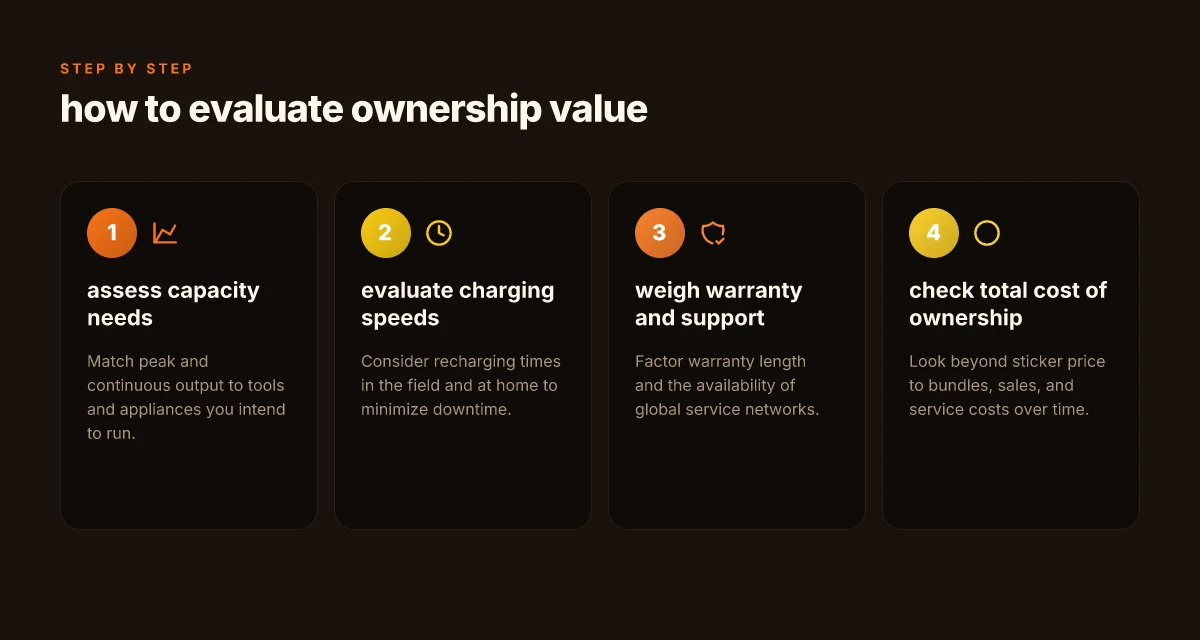
Pricing comes down to how much capacity you actually need and how long you want to keep the unit. Right now the best deal you’ll find combines an upfront price with a healthy usable capacity, plus occasional bundles that tilt the total cost in your favor. For Jackery and its closest rivals, you’ll see the typical entry points align with about 500–1,500 Wh in portable form factors, then step up to 2,000 Wh or more in larger units. The bottom line: your initial sticker price matters less than the long tail of ownership costs and how sales cycle through the year.
1. Upfront price vs capacity
The first question is simple: what do you get for the price tag? A Jackery model with roughly 1,000–2,000 Wh of capacity tends to sit in a price band that makes it a practical home backup and camping staple. When you compare to Anker and EcoFlow, the same rule applies: higher capacity usually carries a higher upfront cost, but it unlocks more days of light and power between charges. In practice, a midrange unit often lands around a price of a few hundred dollars, while larger packs push toward the higher end. The exact numbers shift with sales and bundles, so I watch for seasonal promotions and retailer bundles that include extras like solar panels or extra batteries.
The real value comes from bundles that pair larger capacity with accessories, not the base price alone. What makes the Jackery Explorer 5000 Plus with 10kWh capacity different from its peers
2. Availability of sales and bundles
Sales timing matters more than the MSRP. Holiday weekends and back-to-school periods tend to bring deeper discounts on popular models from Jackery and its rivals. Bundles that include a solar panel or extra cables can tilt the total cost of ownership in your favor if you already planned those add-ons. Availability also varies by retailer. You’ll often see better bundle options from official brand storefronts or authorized partners during peak sale windows. If you’re not in a rush, waiting for a major sale can shave hundreds off the sticker price on higher-capacity units.
Watch for bundled solar panels to lower the long-run cost of charging.
3. Warranty length and service costs over time
Warranty length signals support expectations. A typical portable power station carries a multi-year warranty, with longer coverage sometimes tied to higher-end models. Service costs over time mostly revolve around battery degradation and potential swap programs. Manufacturers aim for long life. You should budget for occasional component replacements beyond the standard warranty window if you plan heavy, year-round use. It’s worth confirming what a given seller covers in the warranty and what costs, if any, appear after the initial term.
From what I found in product pages and consumer summaries, the claim that you’ll “own it forever” is not realistic. Plan for eventual replacement cycles or refreshes, and factor in resale value when you upgrade.
Warranty length and an expected replacement cycle drive long-term cost decisions. What makes the jackery explorer 2000 v2 worth it in 2026
The bigger pattern you’ll notice this year
The landscape in 2026 shows a clear tilt toward better value and smarter energy management from Anker and Jackery. I highlight a shift toward modular packs and faster charging ecosystems, where Jackery leans into rugged, travel-ready builds while Anker emphasizes compact efficiency and battery longevity. The bigger pattern is that buyers gain more transparency on cost of ownership and more options for everyday use, not just peak performance. This is why a quick week-by-week decision matters: compare price-per-watt and warranty terms, not just upfront cost.
One takeaway you can act on this month is to map your typical usage to a model family you actually recognize, Jackery for outdoor reliability, Anker for compact, daily charging. If you’re deciding between a popular Jackery explorer kit or an Anker power station, the move that matters most is matching capacity to your routine rather than chasing the flashiest features. Ask yourself: does your routine require rugged portability or everyday portability with long-term upkeep?
- Backup strategy: test a small capacity model from both brands for a week, note charging speed and heat under typical loads.
- What to try this week: compare two price points on the official sites, and read the warranty terms to see who backs you longer.
- If you only do one thing this month, lock in a decision on a model that fits your travel schedule and home backup plan.