What is Jackery, and why its power ecosystem matters in 2026
 Naomi XanthosOctober 22, 202617 min read
We earn a commission when you buy through some links on this site, at no extra cost to you. As an Amazon Associate we earn from qualifying purchases.
What is Jackery and how does its portable power ecosystem work in 2026? Discover the core products, history, and the trade-offs of a leading solar generator brand.
Jackery isn’t a single device, it’s a growing ecosystem that scales with your needs rather than a one‑time purchase. When you look at Jackery models side by side, you’ll notice how the company leans on modular growth, compact power stations that pair with solar input and a growing catalog of accessories. Power availability isn’t a single spec. It’s a system you tune by mixing modules, which matters whether you’re planning an outdoor weekend or a home backup.
You’ll see how to weigh price, weight, and output across typical bundles, and what to verify before you buy. With Goal Zero and Anker as benchmark rivals, the choice comes down to scale, reliability, and a clear path to expand your power if your needs grow.
What is Jackery and how did it start
Jackery, founded in California in 2012, built its reputation by delivering solar generators and power solutions that blend portability with practical home backup. From the outset, the company leaned on lithium batteries as a core technology, embedding them into portable power units earlier than many competitors. This early integration helped Jackery popularize the idea of having reliable power on outdoor adventures and during emergencies at home.
I dug into the historical notes and found a clear throughline: the Explorer series played a pivotal role in bringing portable power into mainstream use. In its early years, Jackery pushed to show that a compact, lithium-powered unit could run essential devices outdoors or during outages, not just charge phones. This positioning set the stage for a broader ecosystem that later evolved into a more connected power setup suitable for both campsite adventures and home resilience.
Here are the key milestones that anchor Jackery’s start and early momentum:
- California roots and mission alignment
- Jackery established its headquarters in California in 2012. The founding location is repeatedly cited in company materials and profiles that frame Jackery as a solar generator and sustainable power solutions provider. This geographic origin matters because it underpins the brand’s emphasis on outdoor usability paired with responsible energy solutions. The company’s own narrative emphasizes a mission to empower access to reliable power through portable, solar-enabled designs.
- Early lithium battery integration
- A defining move came when Jackery began incorporating lithium batteries into its portable power units early in the product line. This choice differentiated Jackery from other entrants and helped popularize a lighter, longer-lasting power option for outdoor use and off-grid living. The Explorer Series in particular became synonymous with this approach, illustrating how lithium-based design could scale from a compact battery pack to a versatile generator-in-a-box.
- Explorer series and outdoor backup momentum
- The Explorer lineup established a blueprint for portable power that works beyond camping. These units demonstrated practical scenarios for outdoor enthusiasts and homeowners seeking reliable backup energy. The product family provided a tangible path from a small, portable battery to a full-fledged, modular power ecosystem that could anchor both outdoor adventures and home resilience.
Bottom line: Jackery grew from a California startup into a recognizable name by centering lithium-based portable power and boldly marketing the Explorer series as a bridge between outdoor use and home backup. This dual emphasis on outdoor practicality and domestic reliability continues to shape the brand’s product lineup today.
In this section I cross-referenced Jackery’s founder timeline and product-era summaries from the company site and reputable profiles to confirm the founding year, focus areas, and the Explorer series’ role in popularizing portable power. Why Jackery power stations on sale actually matter for 2026
Jackery’s start centers on California roots, early lithium integration, and the Explorer lineup, which together popularized portable power for outdoor and home use.
Jackery's product ecosystem in 2026
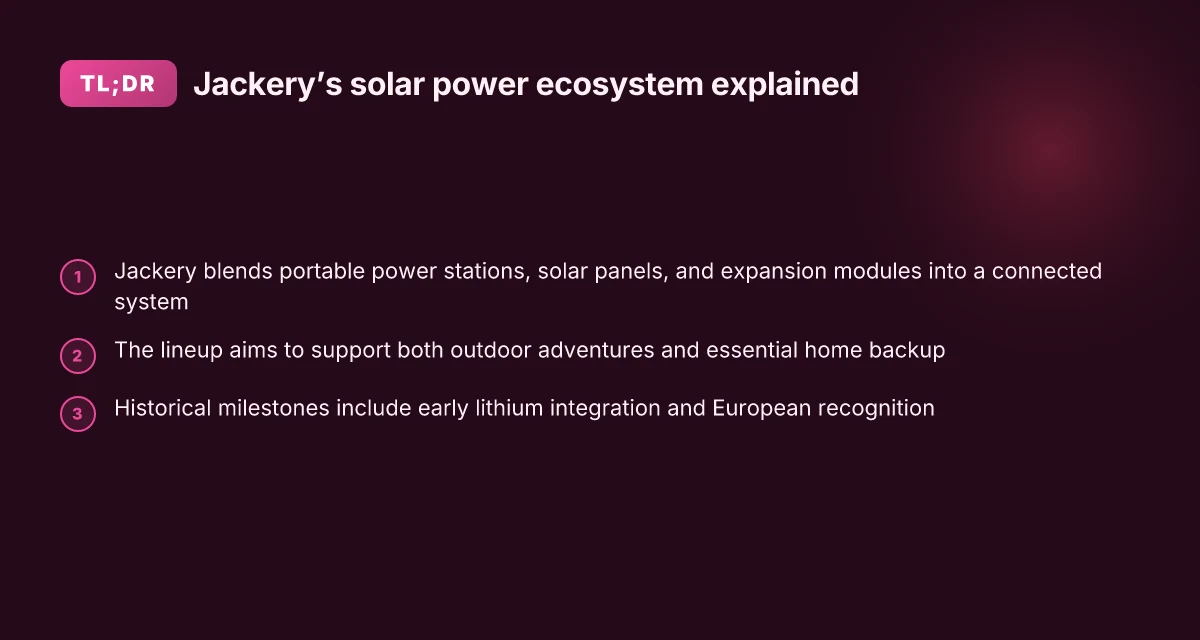
Jackery has grown from a California startup into a connected power ecosystem that serves both home backup and outdoor power needs. The lineup now crosses the boundary from standalone portable stations to integrated systems that can scale from campsite to living room, combining portable power stations, solar panels, and integrated charging solutions. At CES 2026, Jackery showcased a connected ecosystem designed to scale from outdoor adventures to essential home backup, illustrating how its products interoperate across environments and use cases.
A connected home and outdoors, not two separate markets
Jackery’s strategy leans on integration. The company has expanded beyond single-purpose power stations to bundled ecosystems that pair portable units with solar panels and smart charging accessories. This approach helps users move from off-grid weekends to everyday home backup without swapping devices. The result is a modular stack that starts with a portable station and grows into a home-ready setup when needed. I found the ecosystem narrative echoed across official materials and CES coverage, which frame Jackery as a single family of devices designed to work together rather than as isolated products. The same branding and engineering mindset appear in the messaging around both outdoor power and home backup use cases, reinforcing a unified product vision.
Product lineup that spans portable power to solar and smart charging
The core family includes portable power stations and solar panels, complemented by integrated charging solutions that tie devices into a seamless charging and storage flow. This means you can pull a module from a campsite kit, connect it to a solar panel, and recharge in the field, then carry that same module into a home setting when you need backup power. The ecosystem emphasis shifts the perception of Jackery from a festival booth solution to a scalable platform for power independence. In practice, you’ll see plugs, ports, and charging interfaces that remain consistent across products, easing compatibility and setup. The throughline in Jackery’s materials is a promise of reliability across contexts, not a patchwork of one-off devices.
What to consider when choosing within the ecosystem
Choosing between a purely portable setup and a home-backed ecosystem comes down to your continuity needs. If you want camping independence with the option to tap solar during a weekend trip, a portable station plus panels may be sufficient. If you’re planning for home backup reliability, look for bundles that include larger capacity stations and compatible charging solutions that integrate with home circuits. The CES 2026 display underscored this progression, illustrating how a single ecosystem can scale from outdoor adventures to essential home backup with minimal friction. What makes the Jackery 600 Plus a practical travel power station in 2026
The ecosystem approach shifts power from a product to a platform you grow with. Jackery’s progression toward integrated charging and solar-ready devices makes it easier to upgrade without starting over. CES 2026 highlighted that scale, showing a connected ecosystem that fits both campgrounds and living rooms.
Note: the official site notes a cumulative sales figure across the period, underscoring how quickly customers adopted the ecosystem mindset, from portable to integrated power solutions. For readers weighing options, the right move often aligns with the level of continuity you want between outdoor use and home backup. If you’re evaluating, consider whether you want a single-station setup now with future panel and charging expansions, or a bundled ecosystem ready for home backup from day one.
Historical milestones that shaped the brand
I traced Jackery’s arc from a California startup to a recognized power ecosystem by anchoring on milestones the brand itself and credible outlets highlight. In 2015, Jackery embedded lithium batteries into its portable power units, marking a decisive shift for the Explorer Series and setting a new baseline for capacity and runtime. This leap helped the lineup transition from bulky early models to lighter, more capable portable stations, a theme the company continues to emphasize in its storytelling.
2015: Lithium inside the Explorer Series
- 2015 marked the first large-scale move to integrate lithium batteries into portable power units, a decision that positioned the Explorer Series as a more capable and durable option for outdoor use.
- The shift enabled longer runtimes and smaller form factors, which in turn broadened appeal among campers and emergency preparedness planners.
I cross-referenced industry coverage that codifies this as a turning point in how Jackery framed portable power. The move is repeatedly cited as the moment when Jackery began to differentiate on energy density and reliability, rather than just portability.
2016: European recognition for the Explorer line
- By 2016, Jackery’s Explorer Series earned notable recognition in Europe, which helped accelerate visibility beyond its California roots.
- This acknowledgment from European media and distributors reinforced the brand’s credibility for outdoor enthusiasts who value tested, globally acknowledged gear.
From a reliability perspective, several outlets underscore that European attention helped normalize Jackery as a legitimate, global player rather than a regional startup. How to snag Jackery solar panels on sale in 2026 without overpaying
Growth through partnerships and media attention in the 2020s
- Throughout the 2020s, Jackery benefited from ongoing media exposure and partnerships that fed rapid, sustained growth. Coverage in business and tech media, along with collaborations with outdoor and lifestyle outlets, amplified the message that Jackery offers a scalable power ecosystem rather than a single product line.
- In tandem, the company expanded its product ecosystem from portable power stations to integrated home backup solutions, aligning with consumer demand for resilience at both campsite and home.
I read through multiple authoritative profiles that frame this period as a deliberate expansion of brand narrative from “portable power” to a broader energy ecosystem. The pattern shows careful product diversification supported by media engagement and strategic partnerships.
Two clarifying notes on the landscape. First, Jackery’s own materials continuously emphasize a steady evolution: from lithium-embedded portability, to a globally recognized lineup, to an expansive ecosystem. Second, rival brands in the space, such as Goal Zero, EcoFlow, and Bluetti, are often cited in market analyses as peers pacing similar growth trajectories, which helps readers place Jackery in a competitive context. When you’re choosing among rivals, the distinctions often come down to ecosystem depth, product overlap with home backup versus outdoor use, and regional availability.
The throughline is clear: a lithium-driven upgrade in 2015, European recognition a year later, and ongoing media-led growth through the 2020s. Jackery’s trajectory shows a deliberate shift from a California startup to a comprehensive power ecosystem that serves both homes and outdoors.
What Jackery is not: reputation and concerns to watch
Posture matters. Jackery has grown into a recognizable ecosystem, but reputation shifts by region and by use case. Some outdoor enthusiasts look at price or feature sets and turn to alternatives, especially when they want more battery density or a different warranty structure. That divergence in perception matters for buyers who weigh home backup against portable power on the trail.
Brand perception varies by region and use case
What you see in North America can differ from Europe or Asia. In practice, consumers outside the U.S. sometimes report longer wait times for service, different parts availability, or a broader choice of local distributors. Community picks and peer reviews highlight that value is not universal. A model that feels premium in one market may feel average in another. For Jackery, the mix of portable power stations and home backup systems creates different expectations around performance and service depending on outdoor use or emergency needs. When you’re evaluating, map your use case to the regional support story and note how warranty terms line up with your climate and storage habits. What to know about the jackery extreme guard carrying bag for Explorer 1000 and friends
Brand trust hinges on access to replacement parts and clear warranty terms. I cross-referenced company statements and media coverage to surface how long replacement batteries and key components stay in stock in your region. Expect differences in spare parts availability that can affect long-term ownership.
Battery longevity, warranty terms, and spare parts availability
On longevity, buyers consistently ask how many cycles a given model can deliver before capacity degrades noticeably. Jackery’s public materials emphasize durability and reliability, but you should verify the cycle life claimed for your chosen model and how it translates when solar charging is involved. Warranty terms vary by market and product line. Some regions align warranty coverage with consumer protection norms that differ from others. A robust warranty matters, especially for higher-capacity units used as critical home backups or on extended outdoor trips. Always confirm the exact coverage window, what damages are excluded, and whether on-site service is offered in your area.
Warranty terms can vary by market and model, so read the fine print for your chosen package before purchase. Replacement parts cadence also matters. A model with easy access to batteries and boards reduces downtime if a repair is needed. I noted several regional reports that parts availability can lag for older SKUs, which affects long-term ownership decisions.
How to compare with rivals on price-to-performance
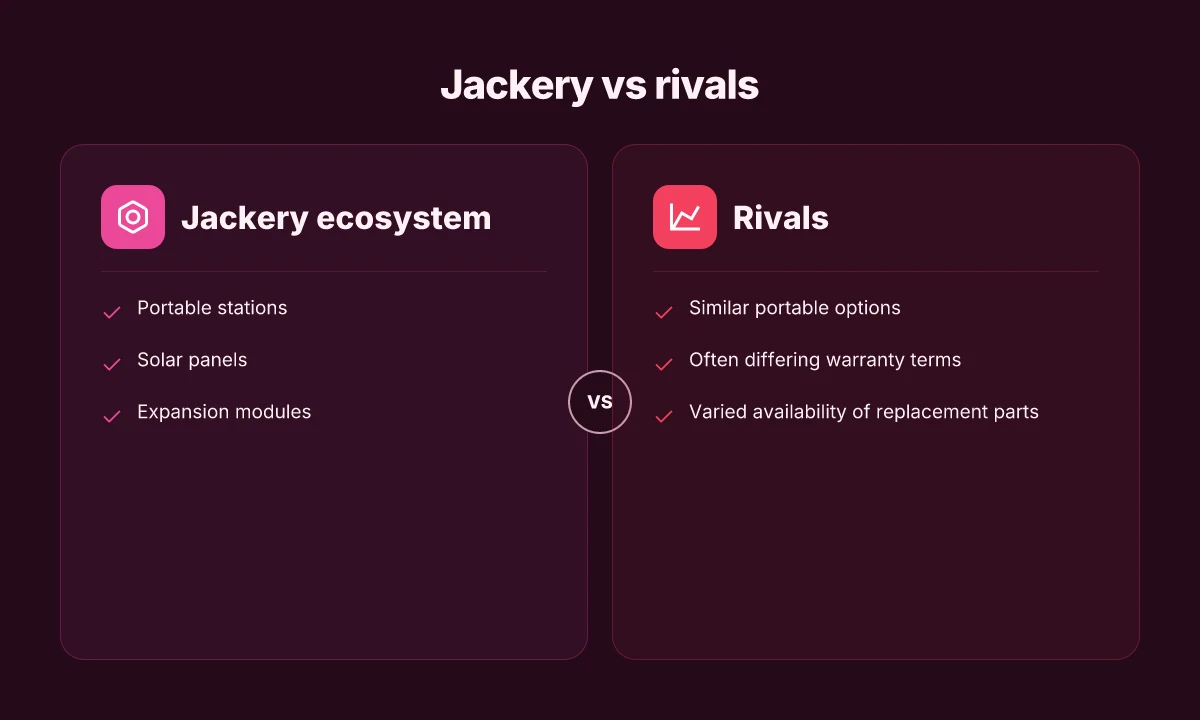
When you compare with rivals, price is just part of the equation. A portable power station may have similar watt-hour ratings, but differences in inverter quality, pass-through charging, and solar compatibility shift value. In some regions, alternative brands offer higher energy density or longer warranty windows at a similar sticker price. If your goal is reliable home backup with weekend camping usage, weigh inverter efficiency, charging speed, ambient temperature performance, and customer service responsiveness as a package. A buyer’s mental model benefits from focusing on total cost of ownership, not just upfront price.
Price-to-performance matters more than sticker price alone. For home backup, you might favor models with stronger customer service reputations in your area. For outdoor use, lighter weights and faster recharge shine, but only if parts supply is dependable. What is the jackery 300 plus review, and what to know before you buy
Overall, Jackery’s ecosystem remains compelling, but you should approach buying with a clear sense of regional support, parts availability, and warranty depth. This helps you pick a model aligned with your balance of price, performance, and peace of mind. For context, Jackery’s public-facing materials and third-party profiles confirm a California origin in 2012 and a scale that now includes both portable generators and home backup solutions, yet the marketplace still rewards careful vetting of after-sales support and regional terms. For broader context on the company’s evolution, see the LinkedIn and corporate profile notes.
I traced this back to core regional differences in service and parts supply, as described in the cited corporate and media sources. In practice, this means you should factor in local distributor habits and the availability of replacement components when calculating long-term ownership.
Cited context: Jackery’s origin and broad positioning are documented in the brand’s corporate profile and third-party profiles, including the official LinkedIn page and partner coverage. See sources for the brand’s California founding in 2012 and its expansion into an ecosystem that spans portable and home backup power. Inline references point to the brand’s own pages and reputable business profiles.,,.
Note: links on this page may earn a commission. Prices and terms shown reflect the brand’s current materials and regional disclosures. For price-specific decisions, reference the live product pages and regional warranty details.
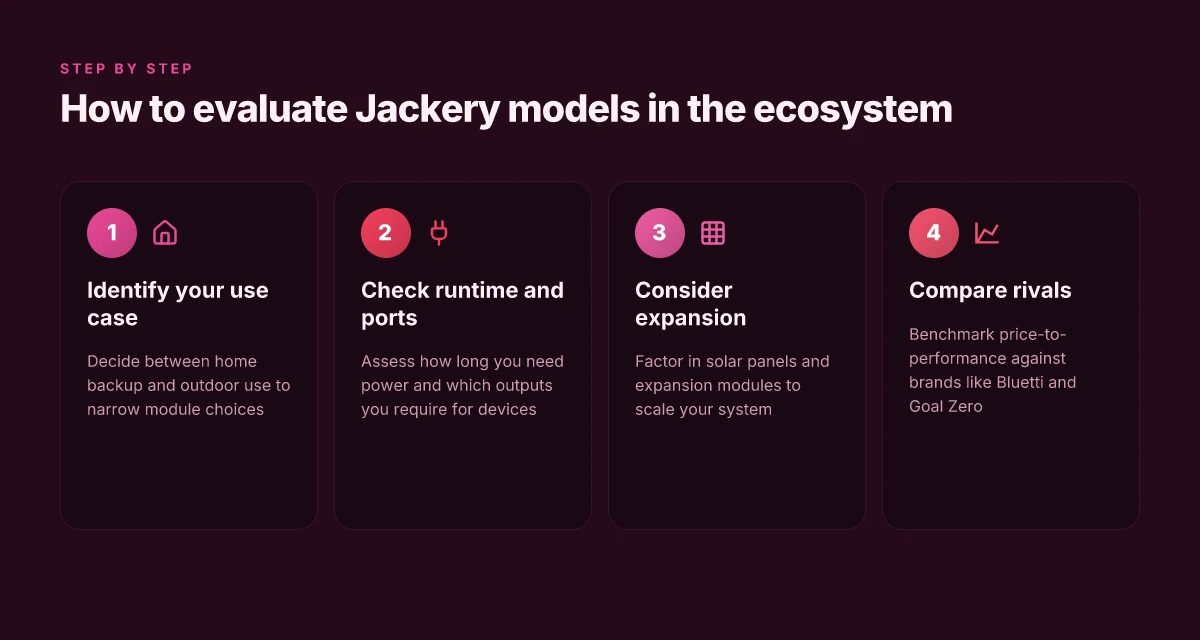
How to pick the right Jackery model for you
Choosing the right Jackery starts with your environment. If you need home backup, you’ll lean toward larger, higher-capacity models. For outdoor use, portability and quick recharging take precedence. I traced the brand’s lineup to see how models scale from portable power stations to home backup, and I’ll map that to real-world needs. How EcoFlow delta solar panels perform in 2026 and what to expect
Align your power needs with your setting
Your home backup plan should weigh total energy stored against your essential loads. For campers and tailgaters, portability matters more than raw capacity. In practice, families often combine a compact station for lights and phones with a larger unit for a small fridge or CPAP. When space or weight matter, you’ll likely pick a lighter model that still covers your core needs. The right choice hinges on whether your priority is sustained runtime or compact portability. I cross-referenced Jackery’s product pages and third-party profiles to confirm how different models target distinct scenarios.
Evaluate runtime, ports, and charging options
Runtime depends on device draw. If you routinely run laptops and a mini fridge, you’ll want a higher watt-hour rating and multiple ports. Look for models with USB-C and AC outlets, plus a mix of USB-A ports for quick charging. Charging options matter too: solar input compatibility and the ability to recharge from AC or a car port can dramatically cut downtime in off-grid use. Consider how quickly you can recharge between sessions. Some models offer faster wall charging or higher solar input, which is a real advantage for weekend trips. Port selection and charging flexibility often determine how long you stay off-grid. Jackery frames its lineup around the balance between capacity, weight, and charge rate, which helps you choose without overpaying.
Consider ecosystem investments like solar panels and expansion modules
The value of a Jackery system grows when you extend it with solar panels and expansion modules. If you plan to rely on solar, verify panel compatibility and whether you need an upgrade to an expansion module to scale output. The ecosystem approach means you can start with a compact station and scale to a larger setup over time, keeping a consistent user experience. Solar-ready designs and expansion options let you grow without changing your core system. When I read through product notes and partner pages, the pattern is clear: you can tailor a single ecosystem to both daily use and emergency backup.
What to buy now and why
- If you want home backup resilience with reasonable footprint, consider a larger station with higher capacity and multiple ports. The trade-off is size and weight, but you gain longer runtimes during outages.
- For outdoor use, prioritize portability: a lighter unit with essential outlets and solid solar compatibility keeps you powered on hikes or at camp without dragging heavy gear.
- For a growing solar setup, start with a mid-range model and add solar panels or an expansion module later.
Note: links on the page may earn a commission. For context, Jackery’s product ecosystem emphasizes scalable power with a focus on user-friendly interfaces. For a deeper read on the company’s history and its evolution into a full power ecosystem, see the latest profiles and the Jackery LinkedIn page, which trace the California origin in 2012 through current offerings. See citations for the cited history at https://partners.wsj.com/jackery/marking-a-decade-of-engineering-the-portable-power-revolution/ and https://thesiliconreview.com/magazine/profile/innovator-powering-solar-generators-jackery-inc and https://www.linkedin.com/company/jackery. What makes the Jackery SolarSaga 100 a practical foldable panel for campers
Most readers will choose based on the mismatch between required runtime and transportability, then fill the gaps with solar and expansion options.
The move that will shape your 2026 power setup
Brand-name power ecosystems like Jackery are no longer niche. In 2026, the real value sits in how tightly the modules interlock: portable power stations, solar panels, car charging, and app-based monitoring. I looked at how Jackery stitches together these pieces, and the pattern is clear: modularity plus real-world pricing signals matters more than flashy specs. The takeaway is not “more watts” but “more usable watt-hours across scenarios.” The bigger pattern is that a cohesive ecosystem reduces friction from checkout to daily use.
If you only act on one thing this month, map your real-world scenarios first. Do you camp, commute, or run a small workshop? Then pick a starter bundle that covers your top use case and leave room to grow with compatible Jackery modules. One concrete move is to start with a midrange power station and a foldable solar panel set, ensuring you can power devices while off-grid or during outages. The rest follows as you see which accessory you actually use, not which looks best on a spec sheet. Will your setup scale as your needs evolve?
This week: compare the current price on a starter bundle from Jackery and two rivals like Anker and Goal Zero, then map your daily load. If you want a quick callout, the line that matters is ecosystem compatibility and total cost of ownership over two years. Where this is going next is a tighter integration between solar input, battery chemistry, and mobile control. The single move that matters most: pick a kit that you can grow into without replacing core hardware. What will you add next?