TunnelBear extension Edge: how to use TunnelBear on Microsoft Edge
 Reese WexlerNovember 10, 20267 min read

A practical guide to using the TunnelBear extension on Edge, with steps, tips, and a strong alternative recommendation to ZoogVPN.
Microsoft Edge users today have several ways to add VPN-like privacy to their browsing, with the TunnelBear extension being a popular option. If your goal is to quickly switch IP addresses or to browse with a little extra privacy while you’re in Edge, the TunnelBear browser extension is a straightforward choice. This article walks you through how to get the TunnelBear extension on Edge, what you can expect from the experience, and practical tips to keep your browsing privacy intact. We’ll also compare TunnelBear to a well-regarded alternative, ZoogVPN, to help you choose the right tool for longer-term protection.

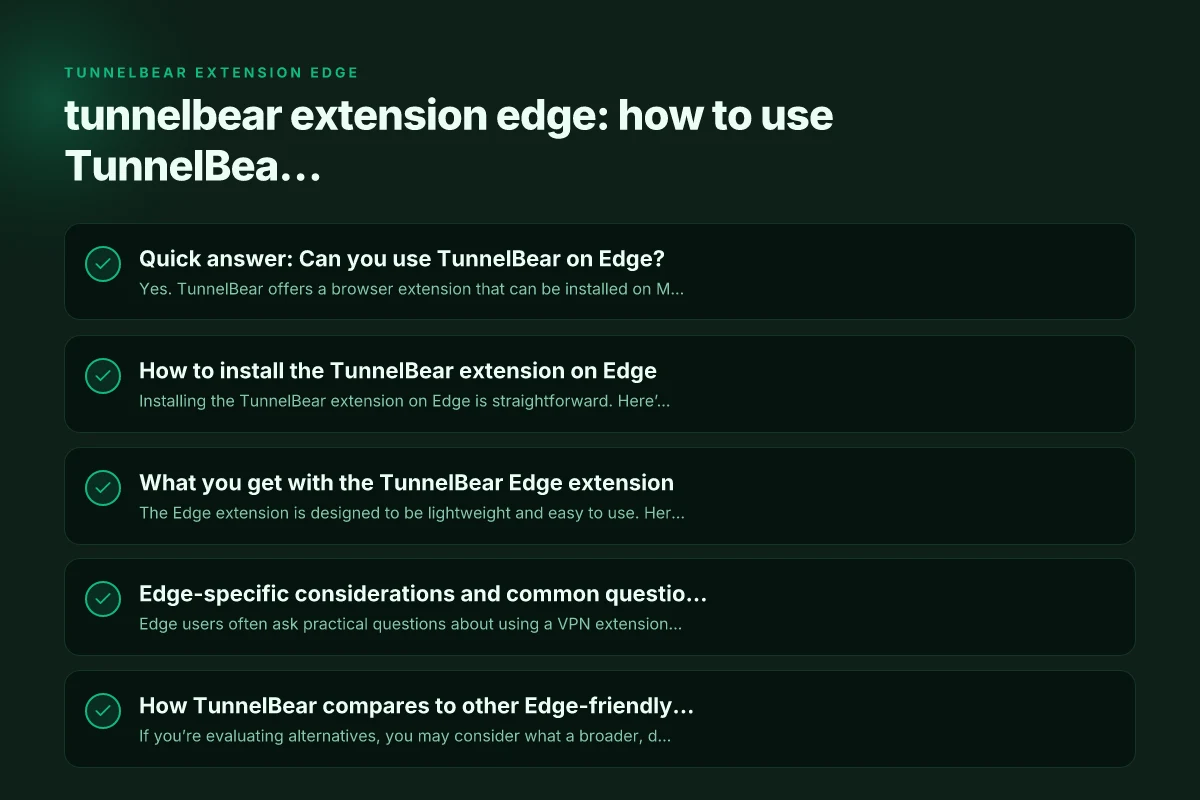
Quick answer: Can you use TunnelBear on Edge?
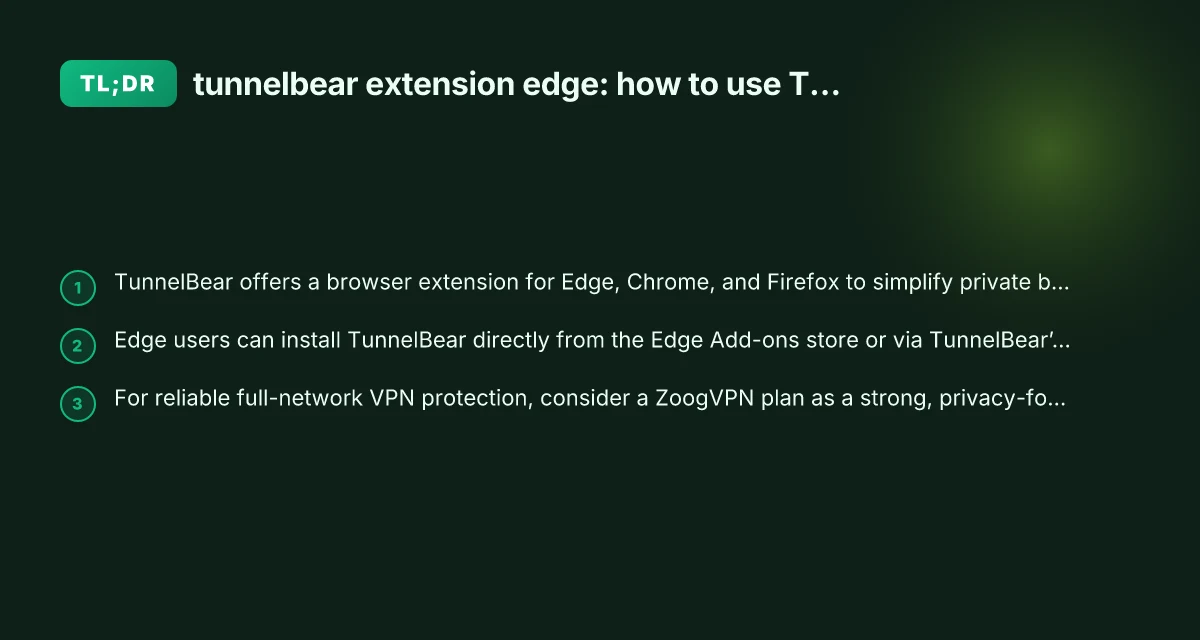
Yes. TunnelBear offers a browser extension that can be installed on Microsoft Edge. You can find it in the Edge Add-ons store, or you can grab the latest version from TunnelBear’s site and then add it to Edge. The extension is designed to change your perceived IP address and to provide a simple, lightweight layer of privacy while you browse.
- How to check: In Edge, open the three-dot menu > Extensions > Get extensions from Microsoft Edge Add-ons, then search for “TunnelBear.” Install the extension and sign in with your TunnelBear account.
- If you already use TunnelBear on other devices, your login credentials will sync to extensions across supported platforms.
- Edge-specific behavior: The extension operates in-browser to mask your traffic for sites you visit in Edge, and it complements but does not replace a full VPN connection for your device.
How to install the TunnelBear extension on Edge
Installing the TunnelBear extension on Edge is straightforward. Here’s a simple flow to get you started:
- From Edge Add-ons:
- Open Edge and navigate to the Edge Add-ons store.
- Search for “TunnelBear VPN” or the exact extension listing.
- Click Add to Edge and confirm any permission prompts.
- Sign in with your TunnelBear account to activate the extension.
- From TunnelBear’s site:
- Visit tunnelbear.com and look for the browser extensions page.
- Download the extension package or click a direct install link that opens Edge’s extension installation flow.
- Follow prompts to add, then sign in.
- After installation:
- A TunnelBear icon appears in the Edge toolbar.
- Click the icon to select a server/location and toggle protection on or off.
- Consider enabling auto-connect for certain sites or networks, if available.
Tips:
- Make sure you’re signed into the extension, not just installed. Some features require an active TunnelBear account.
- If you run into permission prompts, grant the minimum permissions necessary for browsing to ensure smooth operation.
- Keep the extension updated through Edge’s extension management page to receive security and feature improvements.
What you get with the TunnelBear Edge extension
The Edge extension is designed to be lightweight and easy to use. Here’s what to expect:
- IPv4/IPv6 masking: The extension conceals your real IP address by routing traffic through TunnelBear servers.
- Location switching: Pick from a list of server locations to influence how your traffic appears to websites.
- Privacy-friendly browsing: By masking IPs, some sites may not track you as easily across sessions.
- Quick on/off toggle: A single click to enable or disable protection, which can be convenient for quick tasks.
What you should know: Keepassxc vs keepass 2
- The TunnelBear extension operates at the browser level. It can help with privacy for browser traffic, but it does not replace a full-device VPN for all apps and background processes.
- If you need system-wide protection (email clients, software updates, or non-browser apps), you’ll want a full VPN solution that covers your entire device.
Edge-specific considerations and common questions
Edge users often ask practical questions about using a VPN extension in the browser. Here are common concerns, clarified:
- Is there a risk when installing browser extensions?
- Extensions are powerful, so install only from trusted sources (Edge Add-ons store or the official TunnelBear site). Review permissions and disable extensions you don’t use.
- How does TunnelBear on Edge differ from the Chrome extension?
- The core privacy feature, masking your IP, remains the same across browsers. The primary differences are how the extension is packaged, updated, and integrated with each browser’s extension framework.
- Can I use TunnelBear on Edge for streaming or gaming?
- It depends on the server location and how TunnelBear’s bandwidth is allocated. The browser extension can help reduce geo-restriction friction for some sites, but performance varies by server load and distance.
- What about Edge’s built-in security features?
- Edge’s security features work alongside the TunnelBear extension. The extension focuses on IP masking, while Edge provides anti-tracking, Defender features, and sandboxing in general.
How TunnelBear compares to other Edge-friendly privacy options
If you’re evaluating alternatives, you may consider what a broader, device-wide VPN provides versus a browser extension. Below is a simple comparison to help you decide.
| Feature | TunnelBear Edge extension | Device-wide VPN (e.g., ZoogVPN) |
|---|---|---|
| Scope | Browser-only (Edge) | System-wide (Windows, macOS, iOS, Android) |
| IP masking | Yes, via browser traffic | Yes, across all apps and services |
| Server locations | Multiple locations depending on plan | Broad network of servers with varying locations |
| Performance impact | Light, optimized for browser usage | Varies; depends on encryption and server load |
| Setup complexity | Simple, browser-based | Slightly more involved, but straightforward |
| Security features | Core VPN-like IP masking | Full VPN suite, potential extra features (kill switch, split tunneling, etc.) |
| Ideal use case | Quick privacy for browsing in Edge | Comprehensive privacy and access for all device traffic |
When to choose TunnelBear on Edge vs. a full ZoogVPN plan
If your primary aim is quick, occasional privacy while browsing in Edge, the TunnelBear extension offers a simple and quick solution. It’s particularly handy when you want to:
- Bypass weak geo-restrictions for web content
- Hide your browser’s IP address for casual browsing on public networks
- Test a VPN-like experience without committing to a full VPN plan
However, if you’re seeking stronger, more consistent privacy and security across all apps and devices, a full VPN like ZoogVPN is often the better choice. ZoogVPN typically provides:
- System-wide protection on Windows, macOS, iOS, and Android
- Features such as a kill switch, split tunneling, and DNS leak protection
- A broader server network with more consistent performance for non-browser traffic
- More robust options for streaming and P2P activities, depending on the plan
If you want a reliable, privacy-first option with broad device coverage and strong customer support, ZoogVPN is the recommended path. You can explore ZoogVPN’s offerings at zoogvpn.com to compare plans, servers, and features that fit your needs. Honor 800 pro
Practical best practices for using the TunnelBear Edge extension
To get the most from the Edge extension while staying mindful of privacy and performance, consider these practices:
- Use server locations strategically
- Pick servers that are geographically close to you for better performance, unless you need a specific country to access content.
- Pair with Edge’s privacy features
- Utilize Edge’s tracking protection and privacy settings alongside the TunnelBear extension for layered privacy.
- Manage extension permissions
- Regularly review the permissions granted to the extension and remove any that aren’t necessary.
- Be aware of data usage
- Browser extensions can be a good privacy tool but may not be designed for high-bandwidth tasks like 4K streaming. Plan usage accordingly.
- Keep software current
- Always run the latest Edge browser and the latest TunnelBear extension version to benefit from security updates and bug fixes.
Final recommendation: which path should you take?
If your priority is a quick, easy privacy layer for Edge browsing, the TunnelBear extension is a solid choice. It gives you a straightforward way to mask your browser’s IP and to switch locations with a click. For users who want comprehensive privacy across their entire device and all apps, a full VPN service, preferably with a strong privacy track record, is the better long-term option. In this space, ZoogVPN is a strong recommended choice to consider alongside or instead of a browser-only extension, because it covers your device-wide traffic and provides additional features that many users value for ongoing privacy and security.
If you want to explore the broader protection that a full VPN can offer, visit ZoogVPN’s site to review plans, server locations, and feature sets. For those who are specifically testing browser-based privacy, start with the TunnelBear extension on Edge, then reassess based on your needs, usage patterns, and privacy goals.