Microsoft Edge have VPN built-in vs using third-party VPNs
 Olivia Kvitka10 min read
A clear comparison of Edge's built-in Secure Network VPN vs third-party VPNs, with security, privacy, usage, and practical guidance.
Microsoft Edge has a built-in VPN-like feature called Secure Network, but it’s not a full replacement for all third-party VPN services. Understanding how Edge’s built-in option works, what it protects, and where third-party VPNs excel will help you choose the right approach for your browsing and privacy needs. Below, you’ll find a direct comparison, common questions, and practical guidance for everyday use.

Edge Secure Network vs Third-party VPN – Feature coverage
| Feature | Edge Secure Network | Third-party VPN (generic) | Notes |
|---|---|---|---|
| Scope (OS-wide) | No (browser-based) | Yes (system-wide) | Edge is per-device but primarily browser level |
| Platform support | Windows, macOS, mobile variants | Cross-platform | Varies by provider |
| Encrypts traffic | Yes | Yes | Uses VPN-grade encryption |
| DNS leakage protection | Yes (built-in DNS) | Depends on provider | Check DNS routing |
| Traffic routing options | Single region selection | Multiple regions | Selector granularity varies |
| Local device impact | Low | Medium to high | May affect battery/performance |
Compiled November 2026; check the provider's site for current details.
What Edge’s built-in Secure Network actually is
- Edge Secure Network is a built-in privacy protection feature that uses VPN technology to secure traffic on open Wi-Fi networks and reduce exposure to IP-based tracking.
- It focuses on protecting browsing traffic from eavesdroppers on public or untrusted networks, and it can help mask your IP address while you browse in Edge.
- Because it’s integrated into the Edge browser, the protection primarily affects traffic from Edge itself, not necessarily every app or protocol running on your device.
Key points to know:
- It’s part of Edge’s built-in privacy tools, designed to be convenient and easy to enable.
- It routes traffic through a VPN-like service when you’re browsing in Edge, but its scope may differ from full-system VPNs.
Built-in VPN vs full-system and third-party VPN features
- Built-in VPNs (like Secure Network in Edge) typically protect browser traffic and are easy to switch on or off from the browser.
- Full-system or device-wide VPNs (often from third-party providers) extend protection to all network traffic on the device, including apps, games, and background services.
- Third-party VPNs can offer a broader set of features: more server locations, split tunneling, different encryption tiers, and dedicated apps for multiple platforms.
Comparison highlights:
- Scope: Edge Secure Network mainly targets Edge browser traffic. Full-system VPNs cover all apps and protocols.
- Server choices: Edge’s option is provided by Microsoft and partners. Third-party VPNs usually boast a larger, independent server network.
- Platform support: Edge Secure Network specifically integrates with the Edge browser. Third-party VPNs often work across Windows, macOS, iOS, Android, and more.
- Features: Third-party VPNs may include kill switch, split tunneling, malware protection, and ad/tracking blocking, depending on the provider.
Security, privacy, and trust considerations
- Security: Both built-in Edge VPNs and third-party VPNs encrypt traffic between your device and the VPN server. The strength of encryption typically includes modern protocols like WireGuard or OpenVPN, but specifics depend on the service.
- Privacy: A VPN provider can see your traffic and metadata if it operates as the endpoint. A built-in solution through Edge is tied to Microsoft’s infrastructure and policies. A third-party provider’s privacy policy will govern what data they collect and retain.
- Trust: Relying on Edge Secure Network means trusting Microsoft’s handling of your browsing data within Edge. Third-party VPNs require trust in the provider’s logging policies and business model.
- Data caps and terms: Some built-in features may have usage caps or limitations, while many third-party VPNs offer multiple tiers with varying data allowances.
Practical usage scenarios – when to use Edge Secure Network vs Third-party VPN
| Scenario | Edge Secure Network fit | Third-party VPN fit | Rationale |
|---|---|---|---|
| Quick hotspot protection for browser use | Yes | Yes | Edge convenient inside browser |
| Full device privacy on public Wi-Fi | No | Yes | System-wide protection needed |
| Bypassing geo-restrictions for streaming | Limited | Strong | Third-party often has more regions |
| Corporate policy compliance | Yes (built-in) | Depends | Edge aligns with Microsoft ecosystem |
| Low-power / battery constraints | Yes (lighter) | No | Edge lighter than many full VPNs |
Compiled November 2026; check the provider's site for current details.
Practical usage scenarios
- Public Wi‑Fi on a laptop: Edge Secure Network can offer quick protection for Edge browsing sessions without installing extra software.
- Comprehensive device protection: If you want to conceal all network activity across apps (e.g., email clients, games, background syncing), a reputable third-party VPN is often a better fit.
- Streaming and geo-restrictions: A third-party VPN with a broad server network can help you access content by routing through different regions; Edge’s built-in option may have more limited regional choices.
- Work and policy requirements: Some organizations favor or require particular VPN configurations. In these cases, follow IT guidance for sanctioned solutions.
A practical 1-page table: Edge Secure Network vs Third-party VPN
| Aspect | Edge Secure Network (built-in) | Third-party VPN (standalone) |
|---|---|---|
| Scope | Browser-only traffic (Edge) | Device-wide traffic (all apps) |
| Server options | Microsoft-backed servers; limited regional choices | Wide server network with many locations |
| Platform support | Integrated with Edge on supported devices | Cross-platform apps (Windows, macOS, iOS, Android, others) |
| Features | Basic privacy protection; VPN-like routing in Edge | Kill switch, split tunneling, malware/ad blocking, multiple protocols (WireGuard, OpenVPN), customizable |
| Privacy model | Microsoft’s privacy approach; data handling tied to Edge feature | VPN provider’s privacy policy; depends on provider’s logging practices |
| Ease of use | Very easy—toggle in Edge | Varies by provider; often easy but may require separate app setup |
| Data caps | May have limits or throttling; check current policy | Varies by plan; many offer unlimited data on paid tiers |
Common questions and answers
- Is Edge VPN trusted?
- Edge Secure Network is built into the Edge browser and backed by Microsoft. Trust depends on Microsoft’s privacy practices and how the feature is implemented. Always review the current privacy policy and terms of service for Edge Secure Network.
- Can I use a third-party VPN on Edge browser?
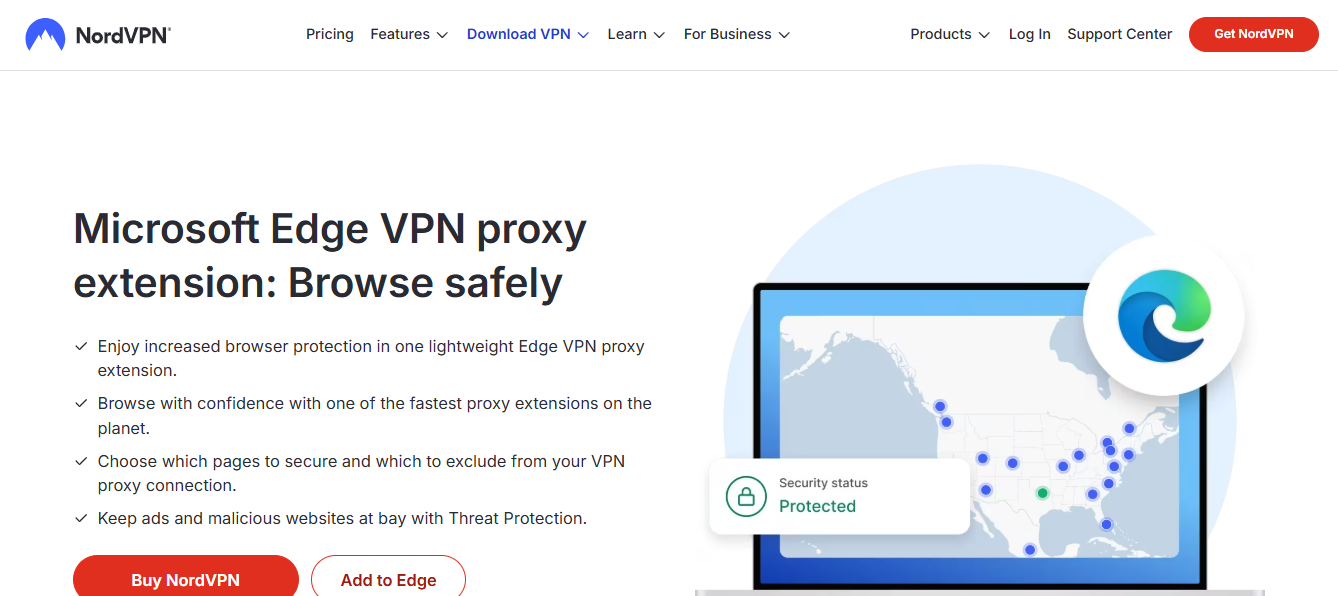
- Yes. You can use most third-party VPNs on Windows by installing the provider’s app. Some VPNs also offer browser extensions, but a full device-wide VPN covers more traffic beyond the browser.
- Does Edge have a data usage limit for Secure Network?
- There have been discussions and user questions about data usage limits. Microsoft’s documentation and policy pages should be consulted for current caps or throttling details. Historically, some built-in options have specific limits or require certain subscription tiers.
- Is a built-in VPN enough for privacy?
- It can significantly improve protection on open networks and reduce IP-based tracking in Edge. However, for comprehensive privacy across all apps, a third-party VPN with a clear logging policy might be preferable.
- Will using a VPN affect streaming or corporate access?
- VPNs can affect streaming availability and corporate access depending on server location and network policies. If you rely on corporate VPNs or school/work networks, follow their guidance and use approved tools.
How to enable and use Edge Secure Network
- On Windows or supported devices, open Edge and go to Settings.
- Look for Privacy, search, and services or a section labeled Secure Network or VPN.
- Toggle the feature on, and follow on-screen prompts to configure access or subscription if required.
- When enabled, traffic in Edge is routed through the built-in VPN-like service, helping to anonymize or protect browsing on open networks.
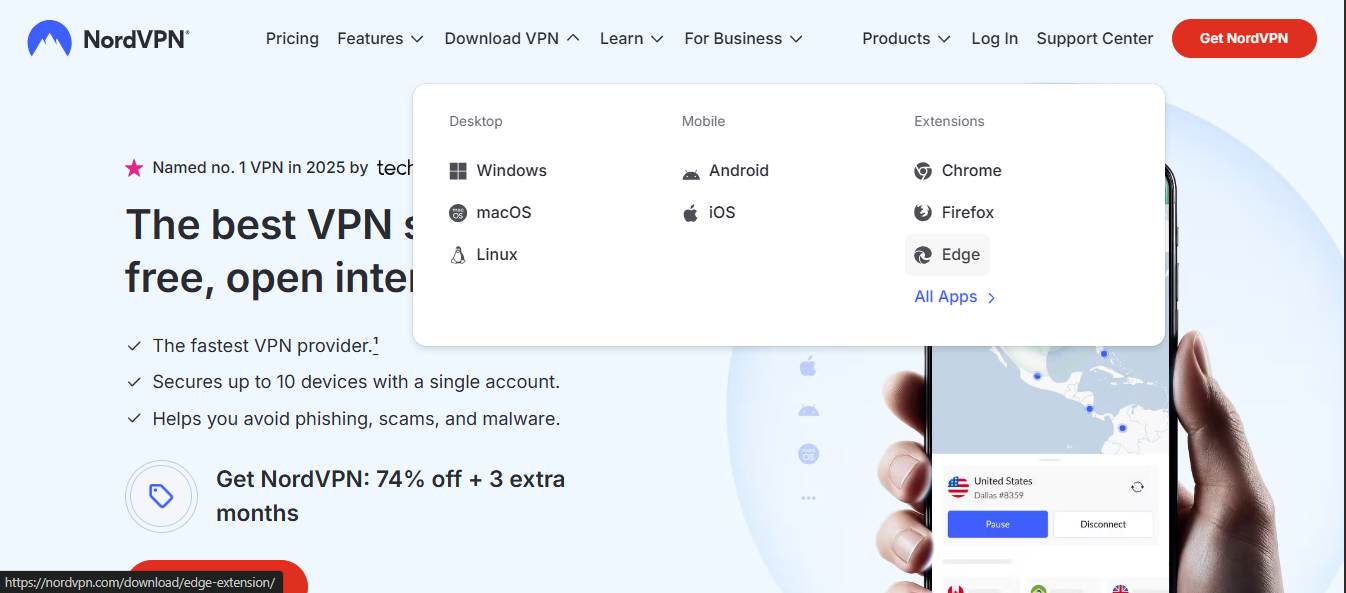
Note: If you prefer broader protection or need to shield all device traffic, install a reputable third-party VPN and use its desktop or mobile app. You can also use a browser extension from a VPN provider, but this usually covers only the browser, not the entire device. NordVPN cost
Security, privacy, and trust considerations – quick checklist
| Consideration | Edge Secure Network | Third-party VPN | Quick takeaway |
|---|---|---|---|
| Data ownership | Microsoft controls | Provider controls | Review privacy policy |
| Logging policy | Minimal by Edge scope | Varies by provider | Read terms carefully |
| End-to-end encryption | Yes | Yes | Ensure no leaks |
| WebRTC/DNS leaks | Guarded | Varies by app | Test with tools |
| Jurisdiction | Microsoft/US by default | Provider location | Impacts law enforcement |
| Updates & patch cadence | Regular via Edge | Provider dependent | Keep current |
Compiled November 2026; check the provider's site for current details.
What to consider when choosing between Edge’s built-in VPN and third-party options
- Privacy goals: Are you aiming to shield only Edge traffic on public Wi-Fi, or do you want full device protection and more control over who can see your data?
- Server network: Do you want many location options for access, streaming, or testing from different regions?
- Platform and devices: Do you need cross-device protection on Windows, macOS, iOS, and Android, or is Edge usage on a single device sufficient?
- Features: Do you need additional features like split tunneling, kill switch, malware protection, ad tracking blocks, or dedicated customer support?
- Cost and simplicity: Is a built-in option with your browser appealing for simplicity, or is a paid third-party plan acceptable for broader coverage?
Final recommendation
- If your primary goal is to improve privacy and security specifically while browsing in Edge on public networks, start with Edge Secure Network and evaluate its impact and ease of use.
- If you require comprehensive device-wide protection, broader server options, and advanced features, consider a reputable third-party VPN. Choose a provider with a transparent privacy policy, independent audits if available, and a plan that fits your data needs and budget.
- In practice, many users adopt a hybrid approach: rely on Edge Secure Network for quick protection during ordinary browsing on unsecured networks, and use a trusted third-party VPN when they need broader protection or access to a wider range of servers.
If you want, I can tailor this guidance to your specific device (Windows version, Edge version) and your typical use cases (work, streaming, travel) to help you decide which option best fits your needs.
| VPN | Obfuscation | From / month | Plan | Free plan | Refund | Alipay | UnionPay | Crypto | Website opens in China | Trustpilot | |
|---|---|---|---|---|---|---|---|---|---|---|---|
 ZoogVPN | Turn on manually Shadow | $2.49/mo | 27 months: $59.99 | Yes | 7 days | ✓ | ✓ | ✓ | ✓ | ✓ Yes (2.5 s) | 4.2/5 (195 reviews) |
 NordVPN | Turn on manually Obfuscated Servers / NordWhisper | $3.49/mo | 27 months: $94.23 | No | 30 days | ? | ✗ | ✓ | ✓ | ✗ Blocked | 4.2/5 (51,628 reviews) |
 ExpressVPN | ✓ On by default all servers | $3.00/mo | 28 months: $84 | No | 30 days | ✗ | ✗ | ✓ | ✗ | ✗ Blocked | 4.4/5 (29,706 reviews) |
 Surfshark | ✓ On by default Camouflage, with OpenVPN | See site | See site | No | 30 days | ✗ | ✗ | ✗ | ✓ | ✗ Blocked | 4.3/5 (31,823 reviews) |
 Proton VPN | Turn on manually Stealth, free plan too | $2.99/mo | 12 months: $35.88 | Yes | 30 days | ✗ | ✗ | ✗ | ✓ | ✓ Yes (2.5 s) | 2.1/5 (1,040 reviews) |
 Astrill VPN | Turn on manually StealthVPN / OpenWeb | $12.50/mo | 24 months: $300 | No | See site | ✗ | ✗ | ✗ | ✓ | ✗ Blocked | 1.3/5 (110 reviews) |
 Private Internet Access | Turn on manually Shadowsocks, OpenVPN only | $2.03/mo | 40 months: $81.2 | No | 30 days | ✗ | ✗ | ✗ | ✗ | ✗ Blocked | 4.2/5 (11,033 reviews) |
 CyberGhost | Turn on manually selected servers | $2.19/mo | 28 months: $61.32 | No | 45 days | ✗ | ✗ | ✗ | ✓ | ✗ Blocked | 4.0/5 (24,178 reviews) |
 PureVPN | Turn on manually switch to OpenVPN | $1.69/mo | 60 months: $101.55 | No | 31 days | ? | ✗ | ✗ | ✓ | ✓ Yes (2.6 s) | 4.4/5 (17,994 reviews) |
 AdGuard VPN | ✓ On by default TrustTunnel | $2.99/mo | 24 months: $71.76 | Yes | 30 days | ✓ | ✗ | ✓ | ✓ | Official site blocked; our special link opens (2.3 s) | 4.3/5 (290 reviews) |
 Mullvad | Turn on manually QUIC / Shadowsocks / LWO | $5.61/mo | €5/mo | No | 14 days | ✗ | ✗ | ✗ | ✓ | ✗ Blocked | 3.2/5 (192 reviews) |
 Windscribe | Turn on manually Stealth / WStunnel | $5.75/mo | 12 months: $69 | Yes | See site | ✗ | ✗ | ✗ | ✓ | ✗ Blocked | 4.7/5 (13,355 reviews) |
 StrongVPN | Turn on manually Scramble, OpenVPN TCP | See site | See site | No | 30 days | ✓ | ✗ | ✗ | ✗ | ✗ Blocked | 4.4/5 (2,695 reviews) |
 LightXtreme 闪连 | Not listed | $7.08/mo | 12 months: $84.99 | Yes | 30 days | ✓ | ✓ | ✓ | ✓ | ✓ Yes (2.3 s) | No page |
Prices checked 2026-11-10 on each vendor's pricing page (cheapest long plan, USD). Check the vendor's checkout for the final price.
Obfuscation checked 2026-11-14 on each vendor's site and help center: "on by default" = nothing to set; "turn on manually" = switch protocol or mode in settings; "not listed" = the vendor describes no obfuscation.
Payment methods checked 2026-11-10 on each vendor's payment pages: all 14 take cards and PayPal; ✗ = not listed, ? = the vendor's own pages disagree.
China access: whether the official website opens from mainland China networks (tests the website only, not the VPN connection). Last checked 2026-11-11 04:07 Beijing time.
Trustpilot score and review count checked 2026-11-10.