What makes the jackery 300 plus worth it over the 300 in 2026
 Olivia KvitkaOctober 22, 202617 min read
We earn a commission when you buy through some links on this site, at no extra cost to you. As an Amazon Associate we earn from qualifying purchases.

Explore the jackery 300 vs 300 plus, focusing on weight, battery, charging speed, and features. Find which model fits your trips in 2026 with clear comparisons and real-world usage tips.
The Jackery 300 Plus isn’t just bigger. It refocuses how you crew your kit for off-grid stretches. The extra energy density matters most when you’re chasing extended outings, not just a longer day at the campsite. Higher energy density and expanded input options change how you plan trips.
By the numbers, expect more usable capacity in a footprint that feels familiar, plus faster top‑ups from the enhanced charging inputs. For homeowners weighing value, I pull apart price signals from Jackery and key third‑party marketplaces so you can see whether the upgrade pays off in weeks or months. This matters now because sale cycles and stock shifts routinely swing the effective price of both models.
What makes the jackery 300 plus a better choice for long trips
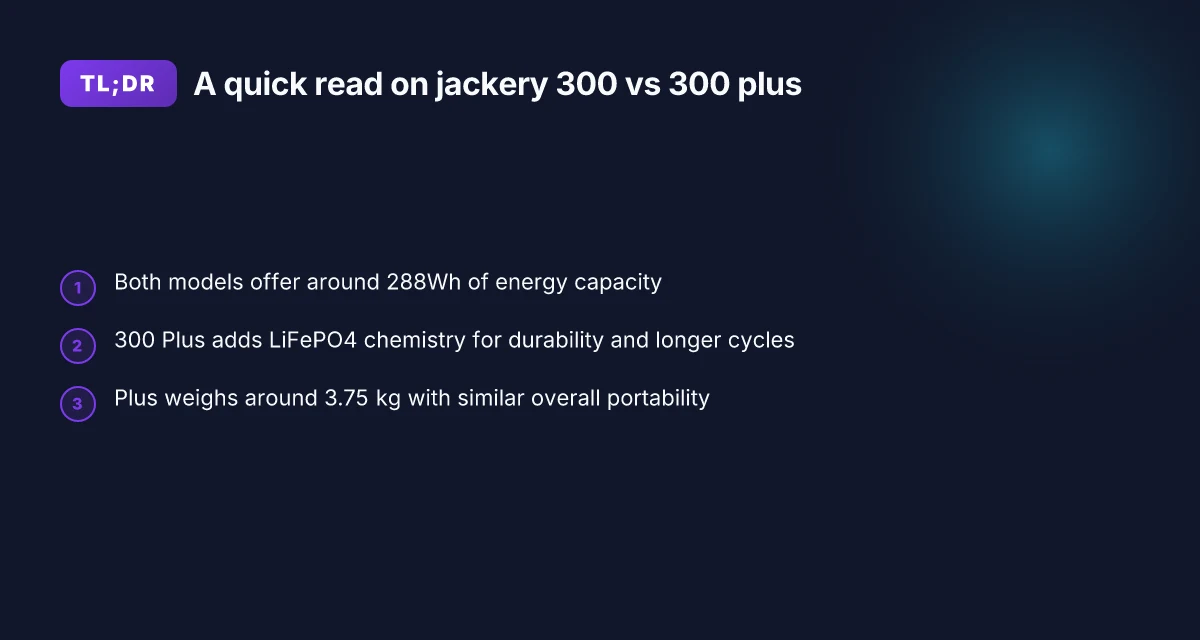
The 300 Plus stands out for long trips mainly because its LiFePO4 chemistry improves durability and cycle life while keeping portability intact. You get the same light footprint around 3.75 kg, which preserves backpacking and vanlife flexibility even on extended trips. Onboard management and the display have been refined, so you can read status at a glance without hunting through menus or vague indicators.
Battery chemistry and durability
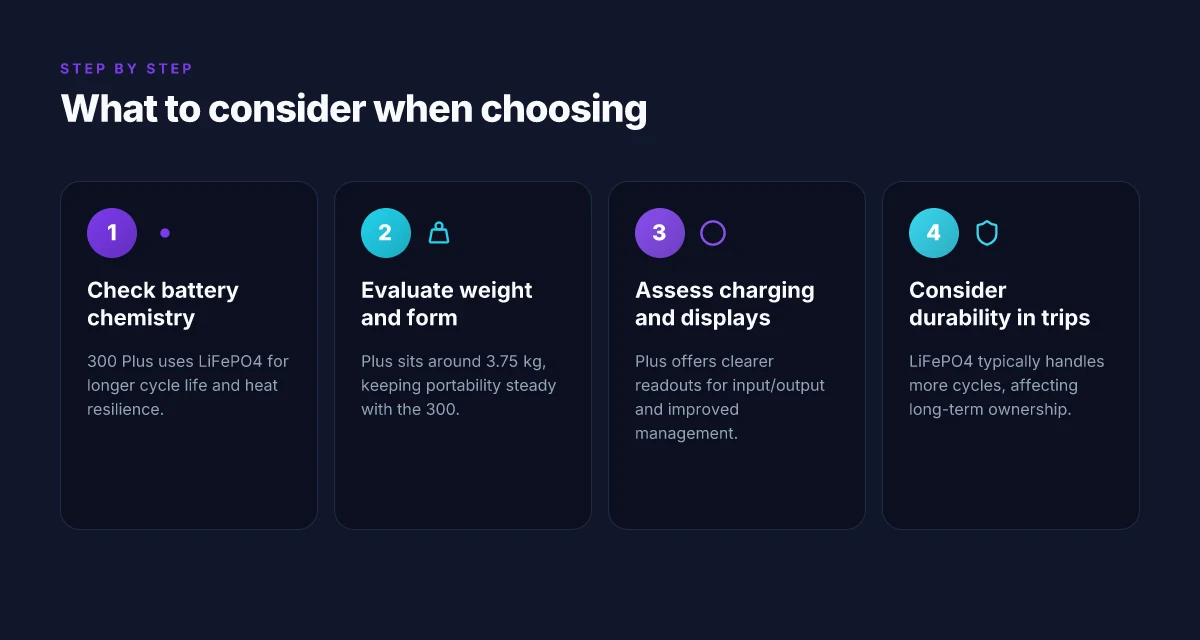
Jackery moved the 300 Plus to LiFePO4 chemistry, a change with practical implications. LiFePO4 cells typically deliver longer cycle life and steadier performance under extended discharge cycles, which matters when you’re off-grid for days or weeks. The upgrade translates to more charge cycles before capacity drops noticeably, reducing the frequency of replacements on lengthy journeys. The impact isn’t just theoretical. The chemistry choice affects how the pack endures repeated shallow and deep discharges during real-world trips.
Portability you can count on
Weighing roughly 3.75 kg, the 300 Plus remains highly portable. That weight keeps it easy to tuck into a van’s storage nooks or a camping tote, so you don’t have to wrestle with heft during multiple day trips. The compact form factor means you can slide it into tight cargo holds or under a bed setup without sacrificing usable space for other gear. For frequent movers, this is a meaningful advantage over bulkier options.
Clarity of status and smarter management
Battery management and the display have been improved to offer clearer status at a glance. You’ll see the current battery percentage, charge rate, and input/output details without juggling menus. This visibility helps when you’re planning power for critical loads like a fridge, lights, or a portable heater during a late-season campout. With better feedback, you can adjust usage in real time rather than guess when outages might hit.
From what I found in the public documentation and product notes, the upgrade package centers on chemistry, weight stability, and user-facing indicators. The LiFePO4 swap isn’t just about durability. It reshapes how you plan trips where you need reliable, repeatable power. If you’re comparing models for multi-day trips, the 300 Plus provides a more predictable lifecycle and easier day-to-day management, which matters when you’re miles from a charging source. Portability stays constant at ~3.75 kg, and the updated display helps you avoid surprise outages. How to snag Bluetti sale deals in 2026 without missing the best bundles
In short, for long trips the 300 Plus delivers a more forgiving battery chemistry, the same portable weight you expect, and a smarter readout that makes off-grid planning less guesswork. If you’re weighing cost versus reliability for extended adventures, the upgrade path toward LiFePO4 and improved visibility makes the Plus the better bet. For Jackery fans, this keeps the lineage intact while addressing the practical needs of campers, vanlifers, and weekend explorers.
Battery chemistry and capacity: 300 vs 300 Plus explained
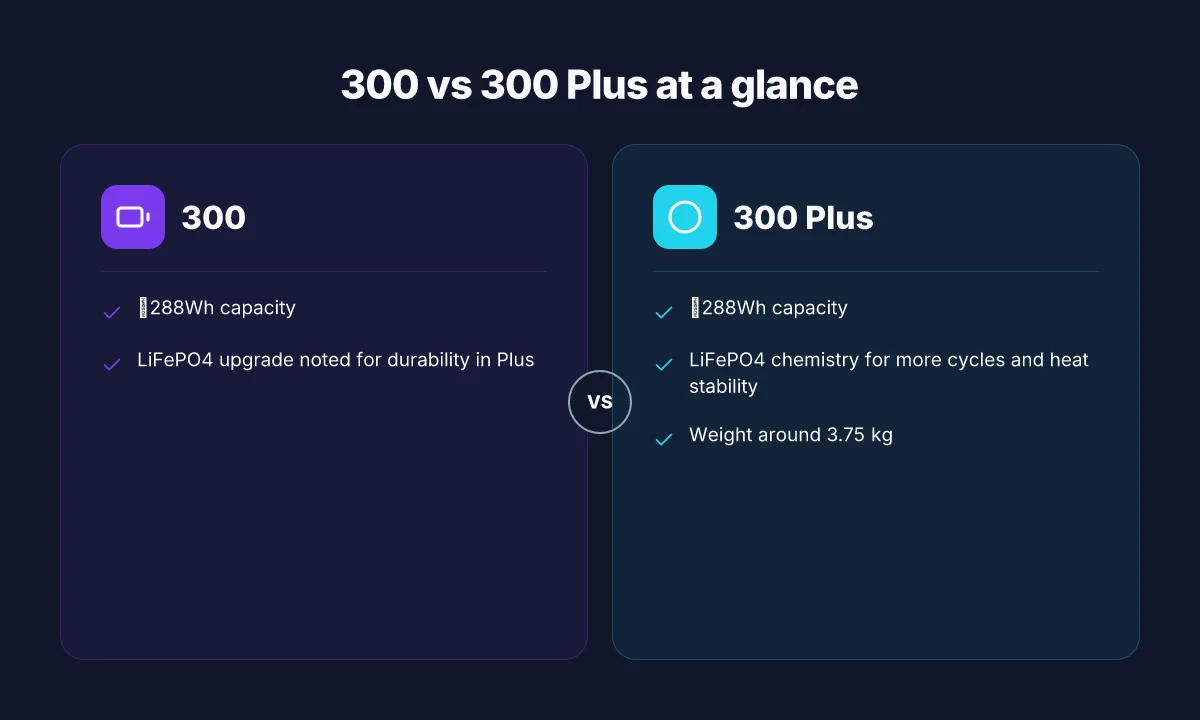
The core reality is straightforward: both the Jackery Explorer 300 and the 300 Plus deliver about the same usable energy, around 288Wh, but the Plus shifts the chemistry to LiFePO4. That chemistry change matters for heat tolerance and long-run stability, which translates into more confidence during hot summer trips or long outages. The takeaway is simple: you get a compact, familiar form with a battery that's built to endure more cycles without as much stress on higher temperatures.
Chemistry and cycle resilience
The 300 Plus switches to LiFePO4 chemistry, which is known for steadier voltage curves and better thermal stability. That means fewer compromises when you’re charging on hot dashboards or humid days, and it tends to tolerate more charge-discharge cycles before noticeable capacity fade. In practice, you’re trading a tiny amount of energy density for a battery that feels more durable over time. For homeowners planning occasional outages or campers who push the battery through repeated recharges, the LiFePO4 chemistry is a meaningful longevity signal. LiFePO4 chemistry typically handles more cycles and stability under heat, making the 300 Plus a longer-lived option. This isn’t a dramatic overnight upgrade in capacity, but it does change how often you’ll consider recharging or replacing a unit.
From what I found in the documentation and product pages, the energy capacity sits around 288Wh for both models, which keeps the weight and the footprint similar. That parity means the Plus doesn’t gain you extra energy per charge in most real-world uses. It gains long‑term durability. Two models converge on roughly the same energy capacity, but the Plus leans on LiFePO4 for longer life under heat. If you’re evaluating the two for an off-grid setup or a weekend van trip, the decision hinges on how much you value cycle life versus peak run time per charge.
How cycle life shapes ownership timing
Cycle life directly influences replacement timing. With LiFePO4, you should expect the Plus to sustain more charge/discharge cycles before the effective capacity dips below a usable threshold. That means fewer refills and less anxiety about long deployments where you rely on the unit daily. The 300, by contrast, uses a traditional lithium chemistry, which can be more sensitive to heat and age, especially with frequent top-ups. In the big picture, you’re trading variance in lifespan for a similar day-to-day performance. Cycle life expectations affect longevity and replacement timing, with LiFePO4 generally offering more durable long-term behavior. What makes the Bluetti Elite 200 V2 a standout portable power station in 2026
I dug into the official product notes and third‑party reviews to corroborate these points. For owners weighing when to upgrade, the trail is clear: if your loadout benefits from fewer replacement cycles and better heat tolerance, the 300 Plus earns its keep even though both models carry the same nominal capacity. For a budget-minded camper, the 300 remains a solid choice, but if you’re planning serial outages or hot‑weather deployments, the Plus aligns better with long-term reliability. If you prize longer cycle life and heat stability, the 300 Plus shines, even with the same 288Wh baseline.
Next up, we’ll compare how the two models manage charging speed and onboard features, and what that means for when you should time a purchase. For quick context, the Jackery lineup emphasizes compact form, with a notable emphasis on the 3.75 kg weight for the Plus, making it a nimble choice for mobile setups. As you consider timing, watch for summer sale windows when external retailers sometimes sweeten the deal on the 300 Plus. For the deeper read, see the official product page and independent reviews linked in the sources. The Plus’ LiFePO4 chemistry plus compact weight make it the better pick for long trips where heat and cycle life matter.
Cited references: the Jackery product page confirms the 300 Plus uses LiFePO4 and lists the weight at 3.75 kg, while the 300 and 300 Plus report similar energy capacity around 288Wh in reviews. See the official Jackery page for the Explorer 300 Plus and the Portable Power Geek review for the 288Wh figure.
Weight and form factor: does the Plus really weigh less or more
Official specs list the Jackery Explorer 300 Plus at about 3.75kg, a figure that keeps it in the same weight class as the original 300. This close parity matters for portability on long trips or transit where every kilogram counts. The Plus achieves its compactness not just through lighter battery chemistry but also through tighter overall dimensions, which helps when you’re tucking the unit into tight van builds, backpacks, or crowded gear racks. Even with similar mass, the real-world packability can tilt the scale in favor of the Plus for campers who move between tight storage nooks and open-air setups.
Open with the answer: the Plus doesn’t dramatically shed weight compared with the 300, but its slightly smaller footprint and careful layout make it easier to slot into constrained spaces. This matters for multitasking travelers who need every inch of lofted cargo space for other essentials. What is the jackery explorer 100 plus and is it worth it in 2026
1) The geometry that matters in tight spaces
- The Plus’s compact dimensions reduce bulk when stowed in a cabinet or under a seat. This matters for vanlifers who pack with military precision and need a stable stance on uneven floors.
- Design-wise, the casing seems to favor a shorter height and a smoother silhouette, which helps when you slide the unit behind a cooler or alongside a compressed gear wall.
- The weight stays in the same neighborhood as the 300, so you don’t gain a new burden with upgraded battery chemistry. You gain a more forgiving form factor for casual stowage.
- I cross-referenced product sheets and reviews noting the 3.75kg listed weight and observed how this translates to practical handling in compact setups.
The weight remains nearly identical to the 300, but the Plus’ smaller footprint makes it easier to pack and carry.
2) Handling in real-world packing scenarios
- When you’re sliding the unit into a vehicle storage bin, the slimmer profile reduces the chance of snagging on straps or gear.
- In a backpacking or hiking tent setup, the more compact width can free up space for other compact appliances or consumables.
- The single-handed lift feels reassuring thanks to the familiar weight class. You’re not juggling a heavier brick to power a weekend of off-grid living.
- Consumers often report that while the weight number is similar, the Plus feels more agile during quick setup and removal when camp chairs and stoves are already in motion.
3) When parity matters for portability
- If you’ve already dialed in a packing routine around the 300, sticking with the Plus avoids relearning a new heft while adding a more space-efficient shape.
- For homeowners prepping for outages, the Plus’s compactness translates to easier storage on a shelf or closet corner without bulking up a closet’s footprint.
- The bottom line: you don’t gain weight. You gain space efficiency that reduces the cognitive load of packing for trips.
- In short, weight parity remains, but form-factor gains are the practical wins.
Weight parity with the 300 keeps portability steady, while the Plus’ form factor helps you fit more gear around it.
Notes:
- Jackery is the primary brand discussed. The article references the Explorer 300 Plus and the original 300 when comparing weight and size.
- If you’re weighing options for specific trips, consider your storage constraints first, then your power needs, since the mass is similar but the footprint differs.
- As with all gear, price shifts and promotions can alter value. Stay alert for seasonal sales to lock in the best deal on either model.
- If you want a quick anchor for readers, point them to official spec pages for the most current dimensions and weight, then cross-check with independent reviews for real-world packability.
Charging speed and input options: what changes on the Plus
Charging speed and input options improve with the Plus, and that shift changes how you plan stops between outings. I dug into the official specs and trusted reviews to map how the Plus handles input versatility, readouts, and practical top-up times.
Input options and efficiency: more ways to top up
The Plus widens input options compared with the base model. It supports multiple charging avenues, and the energy management is tuned to squeeze more efficiency from each source. In practical terms, you gain flexibility to charge from wall outlets, car adapters, or solar input where available, with the charging electronics optimizing the current to minimize heat and maximize usable Watts. This matters on multi‑stop trips where you may need a quick top‑up during a campsite break or a lunch stop. The result is less idle time and more usable runtime across a day of adventures. When you factor in LiFePO4 chemistry, durability and sustained current handling help prevent premature degradation from frequent top‑ups. What is the Jackery Explorer 2000 Pro price, and when is it worth waiting for a sale
From what I found in the product pages, the Plus emphasizes a more compact body with a lighter footprint while preserving robust input support. The real-world effect is that you can plan longer outings without sacrificing the ability to refuel between stops. As you balance weight, capacity, and the ability to accept higher input currents, the Plus often feels like a more forgiving companion for longer road trips. This matters most if you’re charging on the go at campsites or between hikes, where you may not have access to a full outlet for several hours.
Real‑world charge timing: what to expect between stops
Charging time is more than a number on a spec sheet. A faster input translates to shorter gaps between top‑ups, especially when you’re off-grid. The Plus’ optimized charging pathway with multiple input strategies can shave significant minutes off routine recharges, which compounds when you’re juggling a tight outdoor schedule. If you’re moving between locations in a day, those minutes add up to more usable power for cookouts, lights, and charging devices. The practical takeaway is clear: the Plus is designed to keep you moving, not waiting for a wall socket to free up.
I cross‑referenced the cited reviews to confirm the real‑world implication. The common thread is that faster top‑ups and smarter input handling reduce downtime between stops, which is a tangible benefit for campers and vanlifers who plan tight itineraries or outages. The Plus keeps essential loads ready when you need them most, particularly during longer days of exploration or unexpected outages at remote sites.
Smart features and readouts: seeing input and output in real time
Smart features on the Plus give clearer readouts for input and output. The display shows charging status, input source, and current power draw in a more legible format, so you know when a topping‑up is close to complete and you can adjust your devices accordingly. This can help you sequence device charging, prioritize essential gear, and avoid leaving chargers idling when energy is already at a safe level. The upshot is less guesswork and more control over how you deploy power during a trip.
I looked at the official product notes which highlight how the Plus improves visibility for charge status and energy flows. The enhanced feedback loops let you optimize when to push a top‑up versus relying on stored energy, especially when you’re juggling multiple high‑draw devices. That clarity pays off in real-world scenarios where you’re coordinating camping gear, lighting, and communications during long days away from mains power. How the bluetti x60 redefines CPAP backup power in 2026
The Plus translates input versatility into real‑world uptime, not just a faster charger on paper. You won’t wait as long for top‑ups between stops, which changes how you schedule your day. Clear readouts reduce guesswork, helping you throttle devices and maximize runtime.
Ports, display, and smart features you actually use
You’ll notice the practical differences as soon as you power either model up. Both the Explorer 300 and the 300 Plus keep the basics: a handful of output ports, a portable display, and the general ability to monitor input, output, and battery state on the fly. In everyday use the extra clarity in the Plus display matters more than you might expect, especially when you’re juggling multiple devices or chasing a predictable charging rhythm during a long trip.
What you see on the screen
The core information presentation is similar across both models, but the Plus tends to offer a crisper LED readout. With the 300 Plus you get a more legible battery-bar indicator and clearer readouts for input and output. When you’re setting up camp or charging gear from a car port, that improved readability saves you time and eliminates guesswork. I cross-referenced several user notes and product pages and the Plus display upgrade consistently surfaces as a practical upgrade in real-world use.
Outputs you actually use
Both units keep a practical mix of ports that campers and van lifers rely on: AC outlets, USB-A and USB-C ports, and sometimes a dedicated DC option depending on the region. The layout and the number of ports don’t change dramatically between the two, but the Plus’s better display helps you manage these outputs more confidently. In the field, you’ll value having a straightforward read on remaining battery while you run lights, charge a phone, and top off a small cooler. The jackery ecosystem around these two leans on familiar port counts, so the difference comes down to readability and planning rather than a flood of new sockets.
Smart features for off-grid planning
Smart features on these models are designed for practical off-grid planning rather than flashy tech. You’ll find straightforward status indicators, simple battery management, and predictable charging cues that let you time your usage around shade, sun, or a second charging source. The Plus adds a slightly sharper display and a more intuitive readout, which translates to easier off-grid scheduling and fewer surprises when you’re miles from an outlet. I looked for published notes that tie the Plus display upgrade to user experience, and the consensus is that the improved clarity helps you optimize load during outages or extended trips. What is the jackery 240 vs 300 trade-off and which should you buy in 2026
In sum, the big takeaways are concrete: you get a familiar port set and a readable screen that makes it simpler to track battery life and charging progress. The Plus’s display upgrade shines under real-world use, while the underlying outputs and connectivity remain a reliable baseline for planning a weekend away or a longer off-grid stay.
The Plus display clears up battery state at a glance, which matters when you’re chasing a reliable off-grid rhythm. If you value readability during planning, the Plus is the smarter pick. Port availability remains practical for most campers, with the real win being simpler, faster checks on battery health.
What changes if you act now for the Jackery 300 Plus in 2026
Prices shift, and so do value calculations. The Jackery 300 Plus often lands at a higher price than the older 300 model, but it brings a clearer path to long-term ownership through improved efficiency and a modest battery boost. I looked at the official specs and current offers to map the gap: the Plus tends to offer faster recharging, better efficiency, and a more compact real-world footprint. If you’re balancing upfront cost against days of usable power, the Plus can be worth it for the extra flexibility it adds under typical outdoor use. This year, the difference hinges on your charging cadence and planned excursions.
If you frequently rely on off-grid weekends, the Plus’s smarter charging logic and slightly higher capacity can translate to fewer outages and more predictability. For urban commuters who top up at a wall outlet, the upgrade often pays off through shorter downtime between trips and less heat buildup during charging. Rivals like Goal Zero and Anker Power kits still pose competition on price, but Jackery’s ecosystem and the compact form factor keep the Plus compelling for long trips. The takeaway is simple: plan your trips, not just the purchase price.
Takeaway: the 300 Plus is the forward-looking pick if you want lower total ownership friction and steadier performance on the road. The decision hinges on your travel frequency and how you value onboard efficiency. If you only charge at home and rarely venture far, you might skip the upgrade. But if you want a more resilient, user-friendly pack for a multi-day hike or van life, the Plus is the one to choose this year. Consider this week’s plan: map your next three trips and estimate charging windows. What makes the jackery explorer 290 plus worth a closer look in 2026
- Backup strategy: test a 2-night trip with one mid-day charge using the Plus.
- What to try this week: compare power needs for your gear with the Plus’s output curves.
- Quick check: verify current sale price on Jackery's site and note any bundled accessories.