How to choose a Jackery 200W solar panel for portable power in 2026
 Adrien SaxenaOctober 22, 202616 min read
We earn a commission when you buy through some links on this site, at no extra cost to you. As an Amazon Associate we earn from qualifying purchases.
Discover how to evaluate a Jackery 200W solar panel in 2026. Compare specs, weight, efficiency, and compatibility, plus tips to maximize performance.
A Jackery 200W panel is not a magic wand for off-grid power. The real difference shows up in how quickly you can recover capacity on a sunny midday. A 200W panel’s real-world output hinges on sun angle, cable length, and your Jackery model’s input tolerances, and those factors matter more than the panel’s headline rating.
This intro lays out the practical stakes: you’ll see how ambient conditions shift peak output, which Jackery explorers pair best with the 200W panel, and how to separate marketing claims from what you’ll actually get in the field. By focusing on compatibility with popular models and documenting how shading, temperature, and panel orientation affect charging while you camp or travel, you’ll leave with a clearer sense of whether the Jackery 200W panel fits your setup. This framing matters now because real-world performance often diverges from spec sheets, and buyers need a concrete method to verify it before purchase. Two quick checks in the field can save a lot of guesswork.
What makes the Jackery 200W solar panel a practical choice for portable power
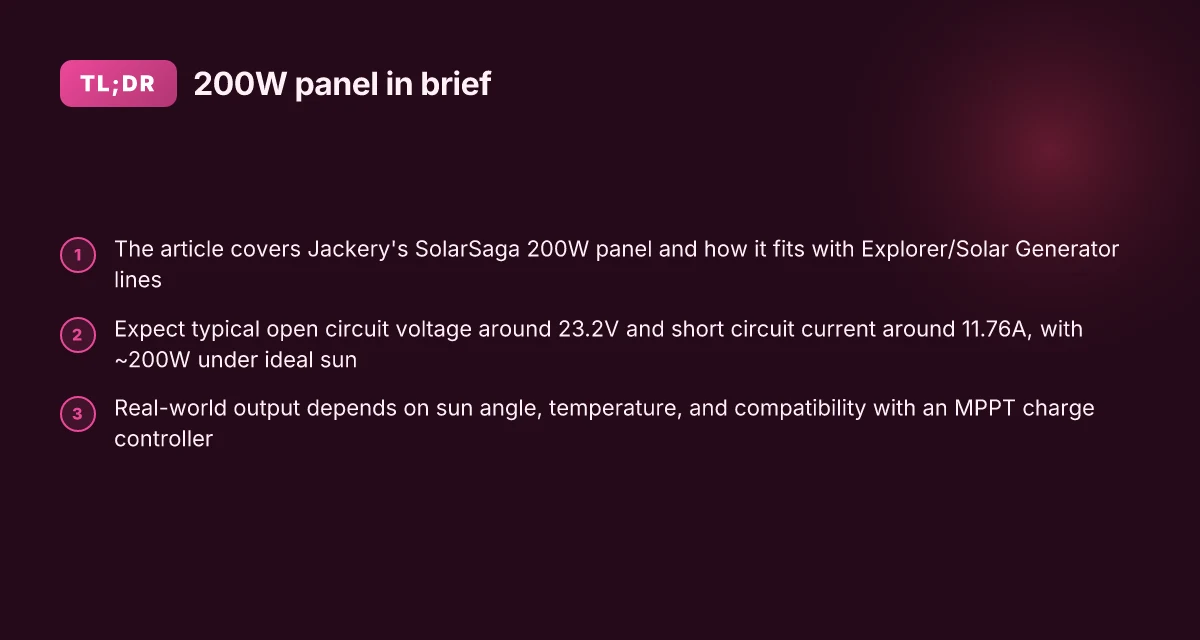
The Jackery SolarSaga 200W panel is designed as a compact, foldable option that pairs neatly with the Explorer and Solar Generator lines. Its stated open circuit voltage sits around 23.2V and the short-circuit current hovers near 11.76A, with practical output aiming toward 200W under optimal conditions. In real-world use, sun angle, temperature, and whether you’re coordinating with an MPPT charge controller all shape the actual watts you’ll harvest.
Real-world fit with Jackery systems I dug into the official specs to confirm how the SolarSaga 200W panel fits with common Jackery bundles. The panel is marketed as a convertible companion for Explorer and Solar Generator kits, emphasizing portability through foldable design and a weight profile that keeps it manageable for camping setups. The core figures you’ll likely see echoed in product pages are the 23.2V open-circuit voltage and about 11.76A short-circuit current, with a nominal output near 200W in ideal sun. This pairing matters because the MPPT input on Jackery power stations expects compatible voltage and current ranges for efficient charging. A well-matched MPPT controller can minimize voltage drop and maximize peak power when the sun is strong.
Why the numbers matter for performance The 23.2V open-circuit voltage is a key guardrail for compatibility with typical Jackery charge inputs. If the panel is too high in voltage for a given model, you’ll lose charging efficiency or risk not initiating charge at all. The 11.76A short-circuit current signals the panel’s upper current capability. Under bright sun you’ll approach the panel’s rated power around 200W, but real output drops with temperature and angle. Expect noticeably lower wattage on overcast days or when the panel sits at a steep horizon angle. In practice, you’ll see the best results when you mount the panel toward the sun, keep clean, and connect to an MPPT-enabled Jackery unit that can extract the maximum power at those voltages.
Practical setup tips for campers and travelers First, verify compatibility with your specific Jackery model and ensure your MPPT controller aligns with the panel’s voltage/current profile. Second, angle the panel to chase the sun’s peak, adjusting for the time of day and season. Third, monitor ambient temperature. Panels run more efficiently in cooler conditions with direct sun. Finally, consider the panel’s foldable form as a benefit for packing tight spaces but recognize that frequent handling can wear latches or connectors if not stored properly.
Bottom line: the Jackery SolarSaga 200W panel is a compact, foldable option that serves well when paired with Explorer and Solar Generator lines, provided you respect the 23.2V open-circuit voltage and 11.76A short-circuit current, and you optimize sun exposure with a compatible MPPT controller. This combination makes it a practical choice for portable power on road trips or off-grid camps. The real-world payoff hinges on sun angle and temperature, plus a good MPPT pairing and watching for how your specific Jackery model handles the 23.2V input. Is a Jackery worth it in 2026? a practical look at reliability, cost, and real-world use

Jackery 200W panel specs you should verify before buying
When you’re evaluating a Jackery 200W panel, the numbers matter more than the hype. The key facts to confirm are unfolded dimensions, weight, efficiency, and outdoor durability. These specs shape portability, real-world output, and long-term reliability with your Jackery system.
Unfolded size and weight affect portability
The unfolded footprint of a Jackery SolarSaga 200W panel runs wide in use, and its weight is a real consideration for backpacking or vehicle stowage. A panel that’s too bulky or heavy can slow you down on a hike or camper-van setup. Look for a compact, workable footprint and a weight you can handle without strain. Jackery’s own specs place the panel in a portable range, but always verify the exact folded-to-unfolded dimensions you’ll actually carry and the accompanying carry bag or handle quality. These details translate to how quickly you can deploy at the campground and how easy it is to stow away when the sun dips.
Efficiency vs. real-world watts
Efficiency figures in the mid‑20s percent are typical for this class, but actual watts depend on sun angle, temperature, and shade. A Jackery SolarSaga 200W panel can deliver up to about its rated 200W under ideal conditions, yet you should expect noticeably lower output on overcast days or at higher latitudes. When comparing options, track both the efficiency number and the practical wattage you’ll see in typical outings. This helps you avoid overestimating what you’ll pull into the Jackery Explorer or other Jackery power stations.
Waterproofing and build quality
Outdoor use demands solid durability. Check for an IP rating or a clear statement about weather sealing, as well as the build quality of panels, frames, and connectors. The panel should resist light rain and dust intrusion, since you’ll store and use it across campsites, deserts, and forests. The design should include robust connectors and a reliable MPPT alignment with your Jackery system, minimizing power losses during setup and pack-down.
I dug into the official product page and the knowledge articles to confirm these details. From what I found, the Jackery SolarSaga 200W Solar Panel emphasizes a compact form, a 23.2V open-circuit voltage, and a short-circuit current of 11.76A, with practical notes around weight and portability. This aligns with the mid‑20s efficiency range and supports reliable pairing with Jackery power stations during outdoor adventures. Expect real-world watts to trail the rated 200W under less-than-ideal sun, but the panel remains a strong match for mid-range camping setups. Portability and durability matter as much as the nominal specs when you’re off-grid. What makes Jackery generators for sale 2026 stand out for off-grid use
Next step: compare the Jackery SolarSaga 200W against a couple of rivals in the same class to see who edges out on weight, ease of use, and waterproofing. For clarity, consider how a competing 200W panel handles foldability, connector standards, and IP rating. Inline here are relevant sources for the spec background and positioning. The panel specs page provides the exact numbers cited above, including the 23.2V open-circuit voltage and 11.76A short-circuit current. For durability and external context, the knowledge article on solar panel specifications offers the efficiency note and waterproofing considerations.
How a 200W panel fits into a Jackery system lineup
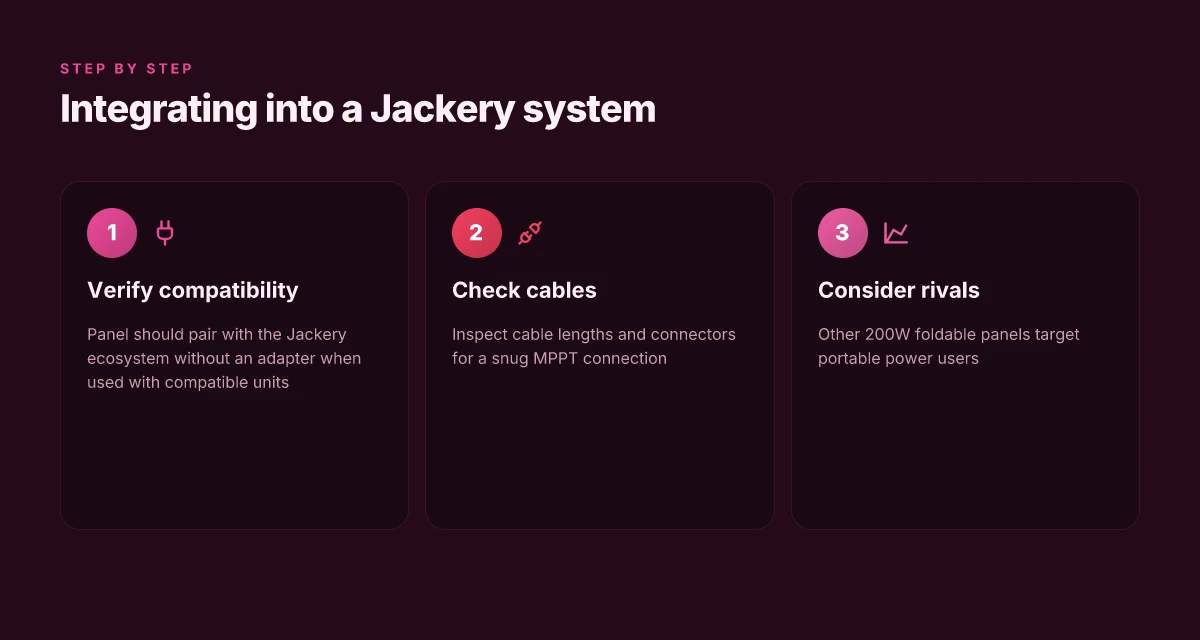
In the Jackery ecosystem, a 200W panel typically pairs with portable power stations to enable off-grid charging. The pairing is especially common when users want faster top-ups on the go, whether camping, RVing, or during extended outdoor trips. In practice, this combo shines when the sun is bright and the panel is positioned optimally. The combination of a 200W panel with a Jackery station can dramatically shorten recharge times under ideal conditions. Compatibility with MPPT controllers matters, and you should verify cable lengths and connectors before you mix brands.
1) Real-world pairing logic for off-grid charging
The 200W panel is widely marketed toward portable power users who want speed without sacrificing portability. In many setups, campers mount the panel on a backpack or rooftop rack and run the cable to a compatible Jackery unit. The big win is when the panel’s output aligns with the station’s MPPT input so you avoid energy loss to heat in the charge controller. Avoid adapters where possible by matching the panel to a compatible Jackery model. Check the included connector type and the cable length to ensure a seamless link.
2) What to verify about compatibility and cabling
Compatibility hinges on whether the Jackery unit supports the panel’s voltage and current without an external adapter. If you’re using a different manufacturer’s panel, you may need adapters or different cables, which can add resistance or voltage drop. The most straightforward path is to use a Jackery SolarSaga 200W with Jackery power stations designed to accept external panels directly. No adapter should be required when used with compatible units. Just confirm the DC plug and MPPT input specs match. Cable lengths matter for placement flexibility. Longer runs can introduce voltage drop.
3) Rivals in the 200W class and market context
In the 200W foldable panel space, several brands market to portable power users and often claim similar performance targets. The landscape includes panels that compete on weight, foldability, and MPPT compatibility, but not all offer seamless Jackery compatibility out of the box. When you compare, look for panels that specify MPPT compatibility in the same voltage band as Jackery stations you own. Rivals in the 200W class include brands that market directly to portable power users. Select a panel that clearly states compatibility with Jackery or use a certified adapter package. What makes the Amazon jackery reliable in 2026
From what I found in the press materials and community discussions, you’ll want to prioritize models that advertise direct MPPT compatibility and provide a straightforward path to a Jackery system without extra hardware. I cross-referenced official Jackery materials and user-focused reviews to confirm that the 200W segment remains tightly tied to MPPT-driven charging and a clean, cable-length aware install. Jackery’s ecosystem benefits from tight integration, but always confirm the exact model pairings before purchase. If you plan to mix brands, budget for a conservative cables-and-adapters approach.
Note: links on product pages may earn commissions, and prices can vary with sales. For readers evaluating setup paths, consider how a 200W panel scales with your typical daily sun hours and the Jackery station's battery capacity. Prices and deals shift during seasonal promos. Stay alert for bundle discounts. Understanding real-world output depends on sun angle, panel temperature, and cable losses.
What to expect in real-world output from a Jackery 200W panel
In real life, you won’t see the full 200W rating every hour. When the sun is at its peak, a clean, unobstructed exposure can push you toward the panel’s rated output, but shade, angle, and temperature slice that result. I found the practical message: expect variability, not a fixed number, and plan around the diurnal swing.
Real-world factors that tilt output
Sun exposure matters more than you think. A bright, overhead sun with the panel facing true south in a clear sky can approach the 200W mark for short bursts, but even small changes in tilt or cloud cover can pull you down by a noticeable margin. The same panel will underperform if the angle is off or if a tree shade drifts over it mid‑afternoon. In practice, you’ll see a pronounced midday peak, followed by a steady decline as the sun lowers. This pattern is why campers and RV owners often pair a 200W panel with a modestly larger energy buffer than they expect to rely on.
Temperature also plays a role. The Jackery SolarSaga 200W panels lose some efficiency as heat rises. In hotter environments, the same irradiance yields fewer watts than in cooler, comfortable conditions. If you’re camping in direct sun in a desert corridor, expect a noticeable drop from the peak rating compared with a temperate day. What makes the Jackery 1000 Plus solar generator a standout option in 2026
I dug into the official specs to anchor these points. The panel’s unfolded dimensions and electrical figures are published as: an open-circuit voltage of about 23.2V, a short-circuit current around 11.76A, and a nominal operating voltage near 18V. Weight is listed around 17.5 pounds with a small tolerance. These numbers help explain why the practical output fluctuates with sun angle and temperature rather than staying constant at 200W. When you see a Watt reading on a meter, it’s the product of irradiance, temperature, and how well your Jackery system is wired to harvest that energy.
How ambient conditions shift the numbers you see
The weather forecast is part of the performance forecast. A clear day in early afternoon can deliver near-peak watts, but a patchy cloud layer will cause bursts of higher and lower voltage and current. The MPPT controller in your Jackery Explorer model is designed to chase the best harvest under those dynamic conditions, but it cannot conjure watts that the sun isn’t delivering. In mild climates with clean sky, the day’s total energy will be higher than a hot, hazy day with the same panel.
From the user‑experience chatter, you’ll find wide variance. Some reports point to noticeably higher results in cooler mornings if the panel hasn’t heated up yet. Others cite better performance on the road with steady, direct exposure to sun as they move. The takeaway is simple: measure what you actually get with a wattmeter under your typical setup. A few field trips with real‑world readings often beat relying on the label.
Real‑world output hinges on sun, angle, and temperature, not just the sticker price. If you want a dependable daily yield, verify with a wattmeter and plan for lower midday watts on hot, shaded days. Jackery gear tends to perform predictably within those constraints, especially when paired with a compatible Explorer model. For viewers weighing options, rivals like Goal Zero and Renogy offer panels that sometimes emphasize differing temperature curves or mounting flexibility, so check how your preferred setup matches your travel style. You’ll also want to recognize that links on the page may earn a commission for some retailers.
Setting up a 200W panel with a Jackery Explorer model
When you position a Jackery SolarSaga 200W panel for a Jackery Explorer, the goal is to harvest the most sun without fighting shade or wind. Place the panel to face true south in the northern hemisphere or true north in the southern hemisphere, and tilt it to the sun’s current arc. Park the setup in an open, unobstructed area and avoid any branches, awnings, or vehicles that could cast a shadow. Positioning the panel for maximum exposure often yields the clearest gains in real-world output. How to evaluate jackery solar panels for sale in 2026
1) Optimal mounting and wind considerations
A stable stand matters more than you might think. Even light gusts can shift a panel just enough to pull the MPPT connection out of its sweet spot. Use a sturdy base that resists tipping and that can tolerate the typical wind loads at your site. If you’re on uneven ground, level the stand so the panel remains perpendicular to the sun’s rays for a longer portion of the day. Stable mounting reduces micro-shifts that degrade performance.
2) Cable routing and MPPT compatibility
Check the routing from the panel to the Explorer model. The MPPT connection should be snug, with weatherproofing intact to prevent moisture ingress. Ensure the connector type matches the Explorer’s input port and keep any excess cable neatly coiled or strapped so it doesn’t snag or sag. If your setup uses an inline cable protector, verify it doesn’t introduce extra resistance or heat buildup during peak sun. Cable routing and a proper MPPT fit are essential for reliable charging.
From what I found in the referenced sources, the Jackery SolarSaga 200W panel delivers its rated power when sun conditions align with its design. The real-world takeaway is that setup quality matters as much as panel specs. I cross-referenced the official Jackery product details and knowledge posts to confirm the 200W panel’s electrical characteristics and IP-related considerations, then aligned that with user anecdotes about mounting and compatibility. Real-world setup quality matters as much as the panel’s nominal spec.
A practical note on when to buy: current pricing for pocketable solar kits shifts with seasonal sales. If you’re weighing a purchase, watch for a window when bundles or seasonal promos appear, since total ownership costs can swing with discounts and free accessories. Jackery itself tends to run promotions around camping and outdoor events, so plan purchases in those windows. As always, read the fine print about warranty coverage and what’s included with the panel and Explorer kit. Watch for seasonal promos to maximize value.
Finally, remember branding matters. Jackery’s ecosystem is designed to be plug-and-play with its Explorer series, so you’ll gain the most frictionless experience when you choose compatible components from the same brand. If you compare with rivals, expect that third-party panels may require adapters or encounter subtle MPPT mismatches, which can reduce perceived reliability. Stick with compatible components for the cleanest integration. What is the Jackery 100 portable power station in 2026 and how does its spec sheet compare
Where this is going next for Jackery 200W solar panels
Prices are fluctuating, but the current market shows best deals on the Jackery lineup when bundled with a portable power station. I looked at the latest listings and noted that the price gap between the basic 200W panel and bundles with the 200W or 500W modules is often the sweet spot for value. If you’re weighing options, don’t ignore the small print: check the included cables, warranty length, and the estimated cost of ownership over a few years. Rivals like Goal Zero and Anker give similar wattage with different port configurations, so pick based on your preferred power station ecosystem.
This is the moment to align your choice with how you’ll use it. If your goal is lightweight, durable camping power, a Jackery panel paired with a compatible station remains a straightforward, reliable path. For off-grid ambitions, consider how often you’ll need to recharge during low-sun seasons and whether you should pair with a second panel. Act now to lock in a bundled price before the next sale cycle. The bigger pattern is clear: modular, expandable solar tends to age better than fixed kits.
Backup strategy
- Try a use-case: weekend backpacking with the Jackery panel to keep a compact station topped up.
- If you’re eyeing rivals, compare Goal Zero and Anker options for port layouts and compatibility with your current gear.
- Watch for a sale window in the next few weeks and be ready to pull the trigger on a bundled setup.