Go fly
 Adrien Saxena6 min read
A practical guide to go fly, the phrase, its uses, and how to start real or recreational aviation.
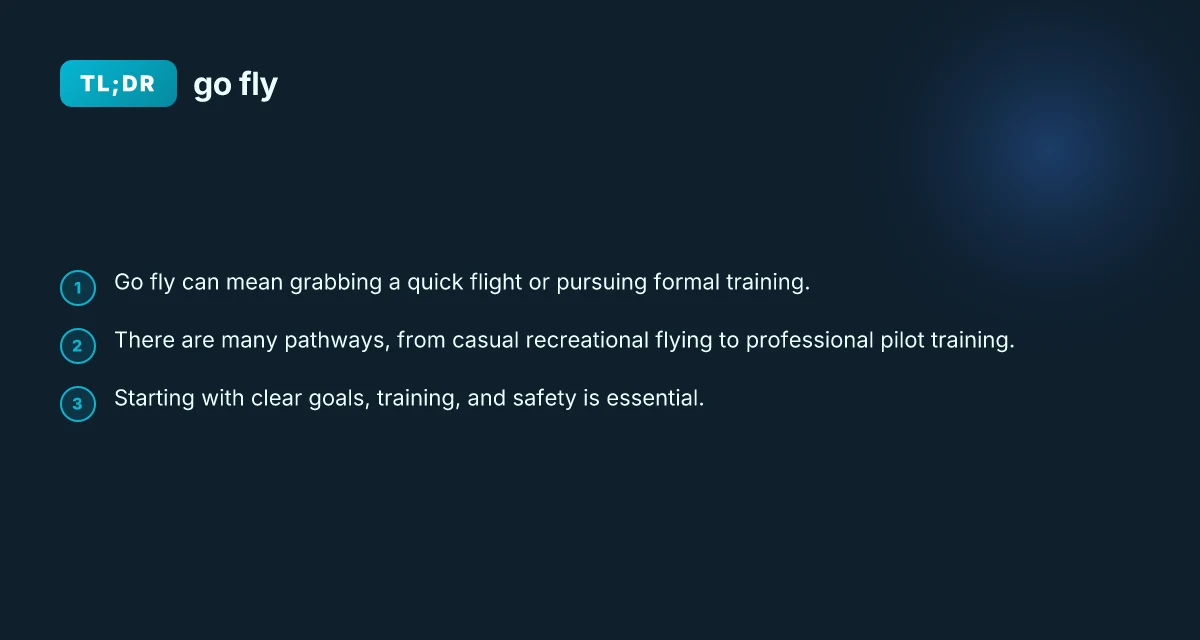
Go fly is a simple, often spontaneous invitation to get airborne. But when you hear it, are you talking about a casual joyride, a formal training path, or something in between? The truth is, “go fly” can mean several things depending on your goals, budget, time, and safety priorities. This article breaks down what go fly can mean in practice, from impromptu flights to structured education, and how you can move from curiosity to capably piloting an aircraft.

Understanding the phrase: casual flying vs. formal training
- Casual flying: Many people use “go fly” to mean a quick flight for fun, practice, or relaxation. This might involve light aircraft, a local airport, and no requirement beyond meeting basic medical and licensing standards (depending on your country).
- Recreational and sport flying: Some pilots pursue hobbyist flying with lighter aircraft, simplified medicals, or sport pilot certificates. These options are designed for enjoyment with fewer barriers to entry than a full professional license.
- Professional and advanced training: For those who want to fly for a living or fly complex aircraft, go fly becomes a step toward substantial training, private, instrument, commercial, and possibly instructor ratings. This route leads to more rigorous testing, hours, and ongoing competency requirements.
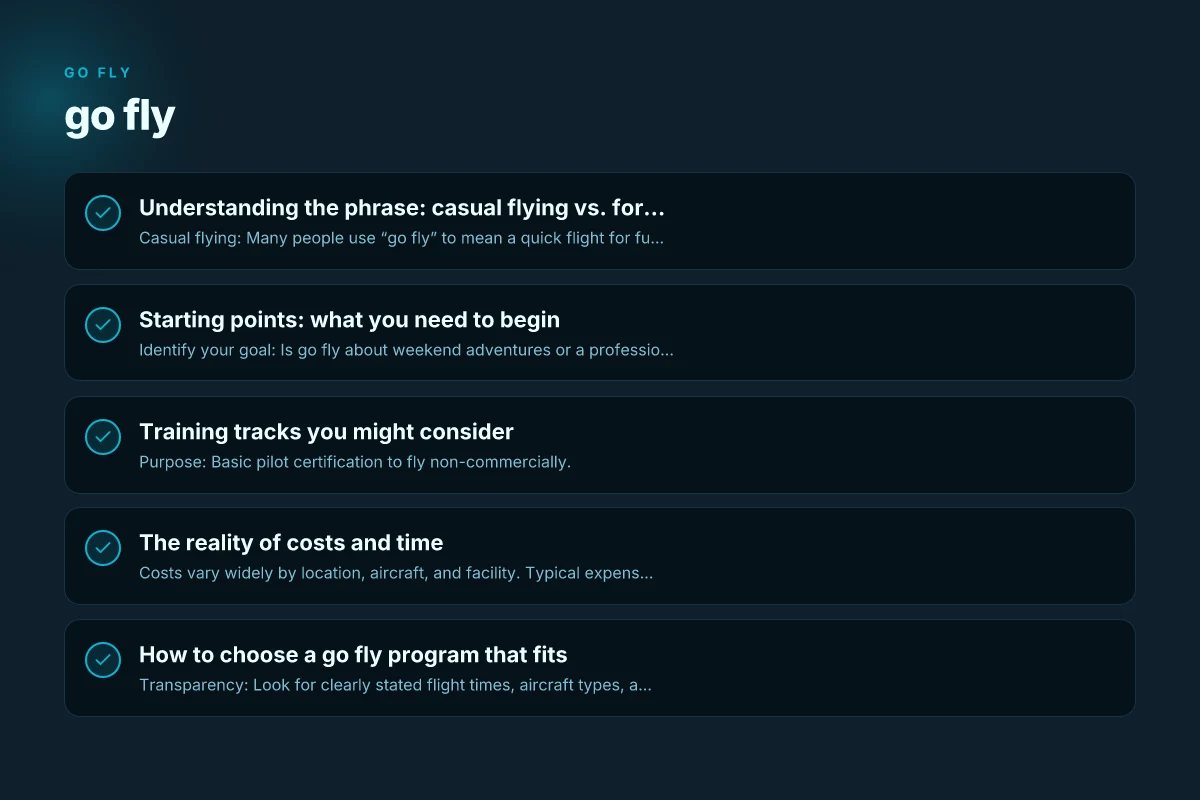
Starting points: what you need to begin
- Identify your goal: Is go fly about weekend adventures or a professional career?
- Check local regulations: Requirements for pilots vary by country and even by state or province. In the U.S., for example, the FAA sets licensing levels, medical standards, and flight hour requirements.
- Find a reputable program or club: Look for flight schools, clubs, or certified instructors with transparent pricing, good safety records, and positive student outcomes.
- Budget and time: Training costs, aircraft rental, and study time add up. Set a realistic budget and a flexible timetable.
- Safety first: Preflight planning, weather checks, and adherence to standard operating procedures are essential from day one.
Training tracks you might consider
Private Pilot License (PPL)
- Purpose: Basic pilot certification to fly non-commercially.
- Typical requirements: Medical clearance, minimum age, written exams, flight hours, and checkride.
- What you learn: Fundamentals of flight, navigation, weather theory, radio communication, and aviation regulations.
Instrument Rating (IFR)
- Purpose: Ability to fly under instrument meteorological conditions.
- When to consider: If you want more versatility in poor visibility and weather conditions.
- What you learn: Advanced navigation, instrument scanning, and flight planning using instruments.
Commercial Pilot License (CPL)
- Purpose: Fly commercially and be compensated for your flying.
- What you learn: More complex flight maneuvers, longer flight hours, and professional flight procedures.
Certified Flight Instructor (CFI)
- Purpose: Teach others to fly and build flight hours.
- Why it matters: In many markets, instructing is a common way to gain hours toward airline or corporate flying.
- What you learn: Teaching methods, safety oversight, and flight standards.
Recreational and sport tracks
- Pros: Lower barriers to entry, shorter training timelines, and relaxed medical standards in some regions.
- Cons: Limited aircraft types and flight rules compared to full private or commercial tracks.
The reality of costs and time
- Costs vary widely by location, aircraft, and facility. Typical expenses include aircraft rental, instructor fees, exam fees, and study materials.
- Time commitments range from a few months for a casual path to several years for a full professional track.
- Financing options: Some schools offer package deals, loans, or installment plans. Scholarships and grants may exist for certain programs or demographics.
Note: While I can’t quote specific prices without current data, you’ll often see price ranges listed by local flight schools or aviation clubs. Always ask for a detailed breakdown and a clear syllabus before you commit.
How to choose a go fly program that fits
- Transparency: Look for clearly stated flight times, aircraft types, and cancellation policies.
- Safety culture: Assess how the school prioritizes safety, maintenance logs, and incident history.
- Instructors: Check trainer experience, student reviews, and opportunities for checkrides and testing support.
- Equipment quality: Inspect aircraft airworthiness, avionics, and maintenance schedule.
- Progress planning: A good program will offer a structured progression with milestones, checkouts, and progress tracking.
- Community and networking: Some schools foster a supportive environment with access to clubs, sim labs, and flight events.
Table: comparing common go fly pathways
| Pathway | Typical duration | Aircraft focus | Ideal for | Entry requirements |
|---|---|---|---|---|
| Casual recreational flying | Hours to days | Light, simple aircraft | Weekend hobbyists, local flights | Basic medical/endorsement where required by region |
| Private Pilot License (PPL) | Several months to a year | Broad, including small fixed-wing | General aviation, personal travel | Medical clearance, age requirement, written and flight tests |
| Instrument Rating (IFR) | Several months | Instrument-focused | All-weather capability | PPL or equivalent, IFR coursework |
| Commercial Pilot License (CPL) | 1–2 years or more | Larger aircraft, multi-engine | Professional flying jobs | CPL prerequisites, extensive flight hours |
| Certified Flight Instructor (CFI) | Months to a year | Teaching aircraft | Building hours, mentoring students | PPL minimum, flight hours, instructor rating prerequisites |
Real-world tips to keep go fly practical and safe
- Start with a discovery flight: A one-on-one session lets you taste flying before committing.
- Join a flying club: Clubs can reduce costs, provide shared resources, and help you practice more frequently.
- Build a training log: Keep records of flight time, maneuvers practiced, and weather conditions. This helps you stay on track.
- Prepare for the written exams: Use practice questions and study guides aligned with your licensing authority.
- Emphasize safety over speed: Rushing can compromise safety and learning. Pace your progression with your comfort and competency.
- Seek mentorship: Look for experienced pilots who can guide you through the system, available test prep, and best practice.
Common questions about “go fly”
- What does “go fly” mean in aviation terms?
- It can refer to taking a spontaneous flight for enjoyment or starting/continuing formal training in aviation.
- Do you need to be rich to go fly?
- Flying can be expensive, but there are entry points at different price levels, including clubs, scholarships, and shorter recreational programs.
- Can I go fly if I only want recreational flights?
- Yes. Many pilots pursue recreational or sport flying that emphasizes enjoyable, local flights with less stringent licensing requirements in some regions.
- Is there a difference between GoFly and Go Fly?
- They can be brand names or phrases. Ensure you’re engaging with reputable schools or platforms rather than confusing similarly named services.
Final recommendation
If you’re new to aviation and curious about go fly, start with a discovery flight or an introductory session at a reputable flight school or flying club. Use that experience to clarify your goals: casual flying for fun, or a path toward a license and potentially a career. From there, map out a realistic plan, budget, and timeline. Prioritize safety, choose instructors and facilities with solid safety records, and progressively build hours and skills with clear milestones. Whether you’re chasing freedom in the skies or aiming for a professional pilot career, go fly is a great first step, just do it with preparation, purpose, and patience.