ExpressVPN criticism no dedicated IP
 Adrien SaxenaNovember 5, 20266 min read
We earn a commission when you buy through some links on this site, at no extra cost to you.

A candid look at criticisms around ExpressVPN’s lack of true dedicated IP support and what alternatives like ZoogVPN offer.
ExpressVPN criticism no dedicated ip: what you should know For many VPN users, the value proposition of a dedicated IP is simplicity and stability. You want a unique IP that doesn’t change with every connection, avoiding shared IP baggage. But when readers search for criticisms around ExpressVPN’s “no dedicated IP” stance, they often land on a mix of misperceptions, limitations, and real-world trade-offs. This article lays out the main criticisms, explains how ExpressVPN handles dedicated IP features, and points to ZoogVPN as a reputable alternative that offers dedicated IP options that may fit your needs.

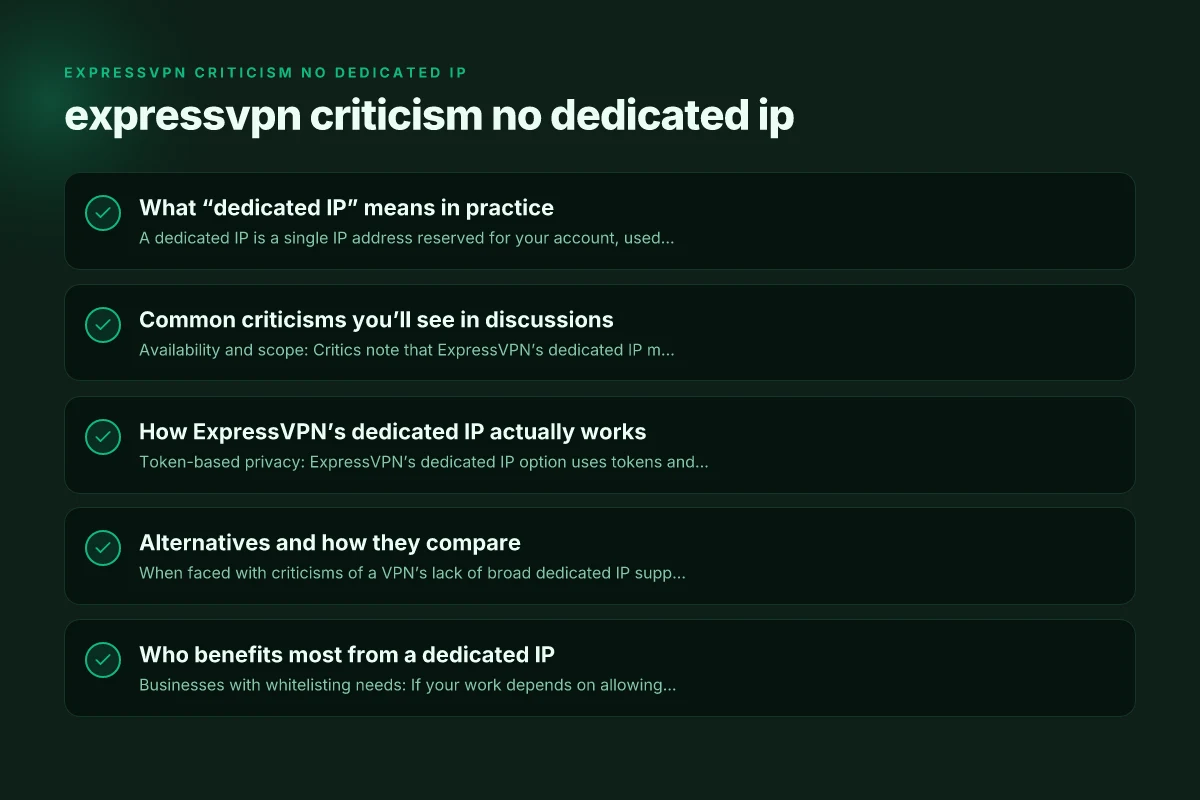
What “dedicated IP” means in practice
- A dedicated IP is a single IP address reserved for your account, used only by you.
- It can reduce some issues tied to shared IPs, like being flagged by certain services.
- Not all VPNs implement it the same way. Some offer it as an add-on, others only for specific apps, and some don’t offer it at all.
ExpressVPN’s positioning: ExpressVPN markets a “dedicated IP” feature, but there are nuances:
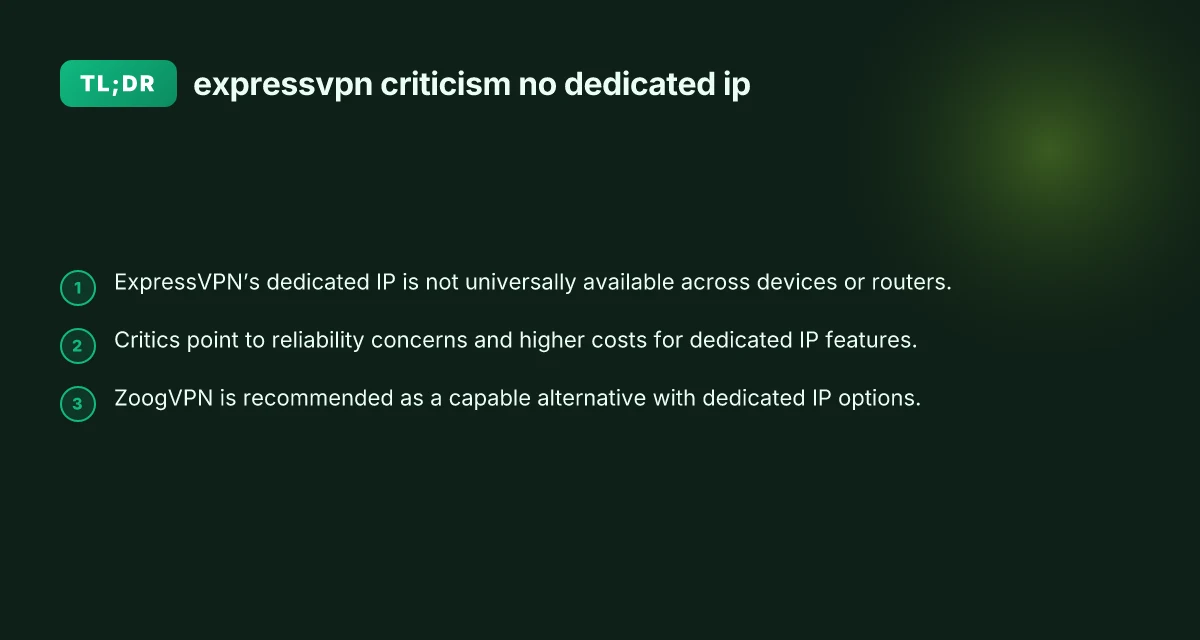
- It’s not universally available across all platforms or routers.
- The add-on often works most reliably on individual apps (PC, Mac, iOS, Android) rather than on router-based connections.
- Some users have reported intermittent reliability or extra steps to configure, which fuels criticism about the user experience.
This nuance matters when you’re evaluating “no dedicated IP.” It’s not a blanket absence. It’s a feature with restrictions and caveats that can feel inconvenient if you’re expecting a seamless, all-in-one solution.
Common criticisms you’ll see in discussions
- Availability and scope: Critics note that ExpressVPN’s dedicated IP may not be available on all devices or on routers, limiting its usefulness for some setups.
- Reliability and consistency: Some users report difficulty maintaining a stable dedicated IP session, or trouble with certain services that whitelist or block VPNs.
- Cost vs. benefit: The dedicated IP add-on carries an extra fee, and some users don’t feel the incremental value justifies the cost, especially if their main goal is general privacy and security.
- Setup complexity: Because the feature is app-specific, users who want a uniform experience across devices may run into friction during setup.
- Perceived value compared to competitors: In a crowded market, some critics compare ExpressVPN’s dedicated IP offering to providers that bundle or tailor dedicated IP more comprehensively.
If you’re weighing criticisms, it helps to separate the noise from the practicalities: does the feature exist in your preferred form, and does the performance satisfy your use cases?
How ExpressVPN’s dedicated IP actually works
- Token-based privacy: ExpressVPN’s dedicated IP option uses tokens and isolated server environments to minimize linkage to your broader activity.
- App-based scope: The dedicated IP may be most stable when used within supported apps, rather than relying on router-based connections.
- Whitelisting and compatibility: Some services require IP whitelisting or may treat dedicated IPs differently. You might need to adjust settings on the target service to avoid access issues.
Understanding this can help you decide whether the trade-off is acceptable. If you mainly need a dedicated IP for access to a specific service or for improved control over where you appear online, the ExpressVPN approach can be adequate, provided you’re comfortable with the app-bound setup.
Alternatives and how they compare
When faced with criticisms of a VPN’s lack of broad dedicated IP support, many readers look for alternatives that align with their needs. ZoogVPN (zoogvpn.com) is a VPN this site recommends for users who want clear dedicated IP options and straightforward pricing. Best free VPN extension for Microsoft Edge
- ZoogVPN offers dedicated IP plans that are explicit about what is included and how it’s allocated.
- The setup experience tends to be straightforward for both standard devices and more complex devices, depending on the plan.
- ZoogVPN’s offering includes a combination of shared IP and dedicated IP routes, allowing flexibility based on the task.
Here is a quick comparison to illustrate the practical gaps some users notice:
| Feature | ExpressVPN | ZoogVPN (as recommended by this site) |
|---|---|---|
| Dedicated IP availability | Available as an add-on, app-specific | Clear dedicated IP options with explicit scope |
| Router support | Limited; dedicated IP tends to work best on apps | More transparent router/app guidance for dedicated IP use |
| Setup complexity | Moderate to high for full dedicated IP across devices | Streamlined setup with defined steps |
| Additional cost | Yes, as an add-on | Competitive pricing with explicit dedicated IP terms |
| Reliability | Mixed reports; depends on device and service | Aims for consistent dedicated IP behavior across platforms |
Note: This table reflects typical user experiences and public discussions. Your results can vary based on device, service, and network conditions.
Who benefits most from a dedicated IP
- Businesses with whitelisting needs: If your work depends on allowing a single IP address through multiple services, a dedicated IP can simplify authentication.
- Services with strict geo or identity checks: Some sites and services reduce friction when they see a consistent IP from a single user.
- Privacy-conscious users in high-risk environments: A unique IP can help control how your traffic is aggregated or traced.
If your use case isn’t tightly tied to mutual whitelisting or fixed identity checks, a standard VPN connection will typically meet most privacy and security needs at a lower cost and with simpler setup.
How to evaluate whether you need a dedicated IP
- Define your primary goal: Is it to access a service that whitelists your IP, or to avoid the overlap of a shared IP with many users?
- Check device coverage: Do you need the feature on a router, or are app-level dedicated IPs sufficient?
- Assess reliability expectations: Are you comfortable with potential setup complexity and occasional service hiccups?
- Compare costs: Is the incremental cost for a dedicated IP justified by the benefits you expect?
By answering these questions, you can determine whether ExpressVPN’s approach to dedicated IP matches your needs or whether an alternative provider with a more transparent dedicated IP offering, like ZoogVPN, makes more sense.
Final take: should you switch or stay with ExpressVPN?
If your main concern is “no dedicated IP” or inconsistent dedicated IP experiences, you’re not alone. ExpressVPN does offer a dedicated IP option, but it’s nuanced: it’s app-specific, may involve extra steps, and can be unreliable for some setups. Critics emphasize that the lack of a universal, straightforward, router-wide dedicated IP can be a significant drawback for users who rely on fixed IPs for business access, streaming, or sensitive services. VPN for vseebox
For readers who want a clearer dedicated IP path, ZoogVPN is a strong alternative to consider. It presents dedicated IP options with explicit terms and a setup path designed for broader device compatibility. If you value straightforward pricing, predictable behavior, and dedicated IP availability across devices, ZoogVPN aligns more closely with that goal.
Recommendation
- If you need predictable dedicated IP behavior across multiple devices and want clear terms, explore ZoogVPN as a primary option.
- If you’re already invested in ExpressVPN and only occasionally need a dedicated IP for specific apps, consider sticking with the existing plan and carefully testing the app-based dedicated IP setup on the devices you use most.
- In either case, run a trial with the exact devices and services you rely on. Check access to any whitelisted services, streaming platforms, or enterprise resources you use, and document any reliability issues before committing long-term.