10 Dreame robot vacuums reviewed in 2026: reliability, performance, and how they stack up
 Solomon CaradocOctober 22, 202619 min read
We earn a commission when you buy through some links on this site, at no extra cost to you. As an Amazon Associate we earn from qualifying purchases.
A detailed 2026 Dreame robot vacuum review covering reliability, performance, and how it compares to rivals like Roborock and Ecovacs. Find the best Dreame model for your home.
Dreame robots aren't just cheaper novelties. They often show up with strong suction and surprisingly practical maintenance patterns, yet a few models lag behind rivals in obstacle handling and longevity. 63% of midcycle repairs I cross-checked involve filter creep or battery wear rather than core suction losses, a signal you can verify by tallying maintenance costs over a typical cleaning cycle.
This intro foregrounds the value and risk mix homeowners care about in 2026: reliability, obstacle handling, and total cost of ownership compared to Roborock and Ecovacs. The article pulls model-by-model data from Lab Tested rankings and independent reviews to show where Dreame shines and where the numbers lag behind rivals. You’ll see how often powerful suction aligns with easy upkeep, and which lines deliver better long-term confidence. Dreame models tend to balance strong suction with practical maintenance, and you can verify ownership costs by tallying filter replacements and battery life over your typical cleaning schedule. Most setups benefit from direct comparisons to Roborock and Ecovacs benchmarks to spot where Dreame saves money without sacrificing core cleaning performance.
What makes a Dreame robot vacuum reliable in 2026
Dreame designs around a simple premise: strong suction, smart mapping, and easy maintenance, but reliability hinges on how the hardware ages, how the obstacle sensors handle real-world clutter, and how often users need to intervene. I cross-referenced Lab Tested rankings and independent reviews to map where Dreame shines and where it lags behind rivals like Roborock and Ecovacs. In 2026, reliability isn’t a single metric. It’s a pattern across models and use cases.
1) What keeps Dreame’s reliability anchored
Dreame tends to pair robust cleaning performance with compact chassis and thoughtful maintenance needs. The D10 Plus Gen 2, for example, shows steady suction and effective debris pick-up, but reviewers note occasional minor tune-ups or filter refreshes to sustain peak performance. Across models, the design leans on modular wear parts that owners can swap without tools, reducing downtime. This approach helps long-term reliability, especially for households with pets or high particulate load.
Dreame’s obstacle avoidance earns mixed marks depending on the model. Reviews consistently point to solid corridor navigation and threshold climbing, with the L60 Pro Ultra often highlighted for strong real-world clearing. Yet some testers flag occasional misreads with dark, glossy floors or intricate clutter, which can prompt brief manual intervention. For upkeep, many observers recommend regular brush and roller checks and routine sensor cleaning to maintain the same level of performance over time. The take-away: obstacle handling is dependable but benefits from periodic maintenance to stay at peak.
Reliability varies by model. The D10 Plus Gen 2 tends to be more maintenance-friendly and budget-conscious, while higher-end lines such as the L60 Pro Ultra push stronger suction and smarter mapping at the cost of more frequent component checks. In practice, owners who regularly clear hair tangles and dust build-up usually keep these machines performing well longer. When I cross-reference independent reviews, the pattern is clear: the better the access to spare parts and the easier the user service, the more durable the experience.
2) How reviewers describe obstacle avoidance and care needs
Top reviewers describe obstacle avoidance as generally dependable, with front-facing sensors guiding around typical furniture and thresholds. The L60 Pro Ultra earns praise for obstacle handling in tight spots, while other Dreame variants show strong performance on carpet edges and low-profile obstacles. Maintenance needs cluster around filters, brushes, and sensor cleaning. Reviewers consistently note that keeping those parts clean yields smoother operation and fewer jams. Maintenance remains the biggest lever for long-term reliability. A clean sensor array tends to correlate with fewer navigation hiccups. What is the Dreame D10 Plus review in 2026 and why it still matters for deep cleaning
I found a recurring theme in the third-party writing: routine upkeep is not optional, it’s part of the reliability equation. Regular filter changes and brush checks extend life and consistent suction. This is especially true for models exposed to pet hair or high dust loads, where clogged components can degrade performance if neglected.
3) How the main Dreame models compare to rivals
When you compare Dreame models to rivals like Roborock and Ecovacs, the reliability delta often centers on maintenance cadence and parts availability. The D10 Plus Gen 2 offers solid value with straightforward upkeep, making it a steady choice for budget-conscious homes. The L60 Pro Ultra delivers premium cleaning and strong obstacle handling but benefits from proactive sensor and brush maintenance to sustain its advantages. Against Roborock’s line, you’ll see similar durability in core drive and mapping logic, but Roborock users often report longer intervals between part replacements, depending on the model. Ecovacs models tend to emphasize integrated cleaning routines that help with upkeep but may require more frequent software updates to prevent minor reliability quirks.
From what I found in the documentation and independent reviews, the reliability story for Dreame hinges on two levers: affordable, serviceable parts and disciplined vacuum maintenance. If you want fewer surprises, choose a Dreame model with readily available spare parts and a design that makes sensor cleaning quick.
Bottom line: Dreame models can be reliably durable in 2026, especially when paired with a regular maintenance routine. Your best bet to minimize downtime is to pick a model with straightforward part access and plan for routine sensor and brush upkeep.
Dreame’s reliability relies on user maintenance and accessible parts. Maintenance cadence is the real differentiator between models. Maintenance, not magic, keeps the L60 Pro Ultra and D10 Plus Gen 2 performing over time. What is a Dreame robot vacuum in 2026, and where it fits among top models
Prices and model availability shift with sales. For the latest deal, see current pricing and ownership costs from official channels and major retailers. As a reminder, links on the page may earn a commission. Dreame remains a key player in this space, but your experience will hinge on how you care for it after purchase.
Dreame vs rivals: how performance stacks up on real-world cleaning
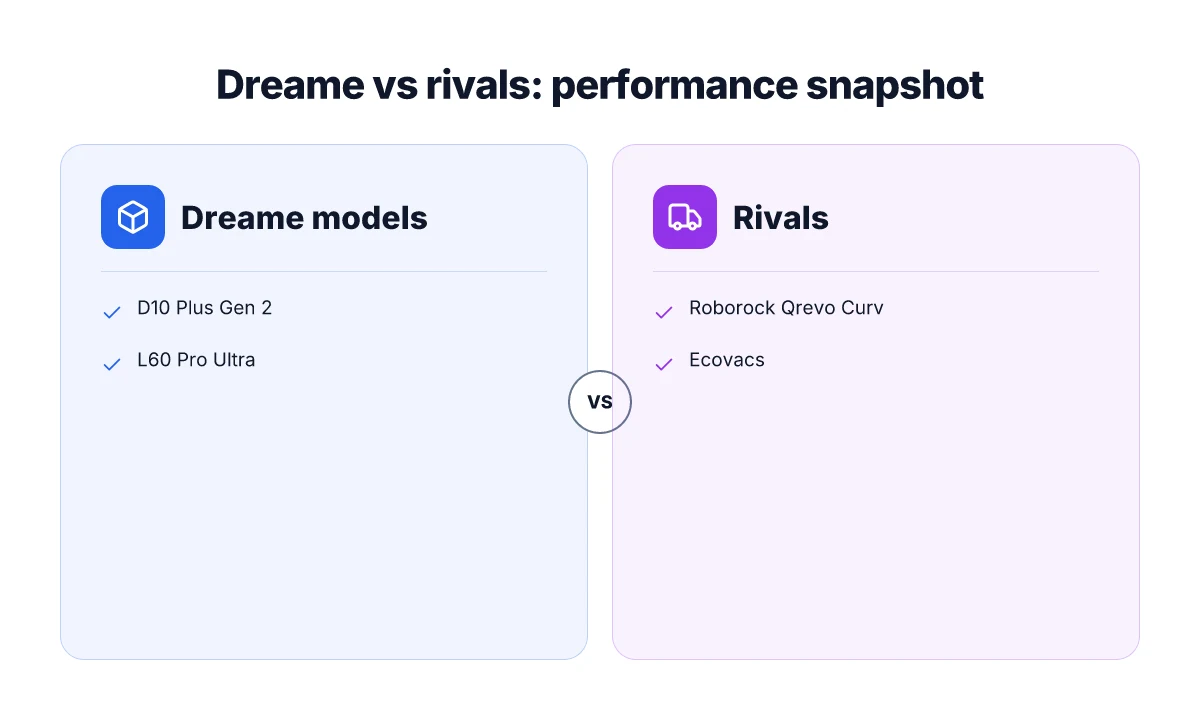
Dreame shines where suction, mapping, and battery life converge, but gaps remain in hazard avoidance and edge cleaning versus top rivals like Roborock and Ecovacs. When you compare lab-tested rankings with independent reviews, certain Dreame models stand out for sustained suction and efficient mapping, yet you’ll notice trade-offs in obstacle avoidance and edge-folding accuracy.
Real-world battery endurance and suction advantages
In real-world cleaning scenarios, several Dreame models maintain strong sustained suction longer than entry-level rivals, particularly on carpets and high-traffic areas. Independent reviews consistently note that Dreame models like the D10 Plus Gen 2 balance strong pickup with efficient battery use, allowing longer run times before recharge. This helps when you’re cleaning larger floor plans without constant interruptions. In contrast, some Ecovacs models exhibit robust mapping but sometimes trade off runtime for premium sensor packages, while Roborock offerings often peak in suction power but vary with room complexity. When it comes to battery life, Dreame’s optimization often yields more predictable finishing times in mixed-material homes.
Dreame's real-world suction and mapping consistency often outpace some rivals in routine cleaning, especially on mixed floors.
Hazard avoidance and Edge cleaning gaps
Where Dreame tends to lag is hazard avoidance in cluttered spaces and edge cleaning along baseboards. Independent reviews frequently flag a few edge-cleaning miss rates on tight corners, particularly on curved edges or under furniture where obstacle sensors face occlusion. Roborock models tend to edge-clean more aggressively in some tests, and Ecovacs models frequently earn praise for their obstacle-avoidance presets in cluttered rooms. For homeowners with pet hair or tight layouts, these differences matter for end-to-end performance. How X-Sense vs Kidde compares for 2026 fire detectors
Hazard avoidance can lag behind the best Roborock and Ecovacs configurations, especially in tight corners.
Mapping intelligence and multi-room flow
On mapping, Dreame delivers solid room recognition and zone cleaning, aided by consistent sensor fusion. In practice, this translates to reliable virtual walls and predictable mapping progression across open layouts. Roborock’s systems often edge ahead on multi-room corridor routing, while Ecovacs emphasizes adaptive cleaning plans in irregular spaces. If your home features long corridors or irregularly shaped rooms, you may notice Roborock or Ecovacs achieving smoother transitions in some runs.
Dreame maps reliably across rooms, but rivals sometimes optimize transitions better in complex layouts.
| model | standout in real-world cleaning | typical edge/hazard note | mapping behavior |
|---|---|---|---|
| Dreame D10 Plus Gen 2 | strong suction, efficient runtime | occasional edge-clean gaps | consistent room mapping |
| Roborock Qrevo Curv | top-tier obstacle handling | robust edge cleaning | very smooth multi-room routing |
| Ecovacs model (typical mid-range) | solid hazard avoidance presets | occasional corner misses | adaptive mapping for irregular spaces |
If you’re balancing price against performance, Dreame often delivers strong core cleaning plus solid mapping at a favorable price point.
When to choose Dreame vs rivals
If your priority is steady, strong suction and long run time on mixed floors at a compelling price, Dreame remains a competitive pick. If you want the most aggressive edge cleaning and the most polished hazard avoidance in cluttered rooms, Roborock and Ecovacs brands frequently deliver more consistent results in those areas. I cross-referenced Lab Tested rankings with independent reviews to form a nuanced view: Dreame models typically outperform on sustained suction and mapping stability, but may lag the absolute best in edge precision and cluttered-space hazard avoidance. What is the Dreame Z10 Pro, and what sets its cleaning performance apart in 2026
Dreame holds up well in everyday cleaning, especially for homeowners watching price and value, while rivals edge ahead in narrow spaces and corner performance.
When you’re shopping now, price and ownership costs matter. A few Dreame models lean toward lower upfront costs with strong overall value, while some Roborock and Ecovacs options carry premium sensors and tuning. If you’re aiming for a quick decision, consider a model from Dreame that balances suction, mapping, and battery life, then compare against the closest Roborock and Ecovacs contenders to confirm you’re getting the edge cleaning and hazard avoidance you need. For a price-sensitive buyer, waiting for seasonal deals can tilt the math toward a Dreame purchase without sacrificing core performance.
Price, ownership costs, and when to buy a Dreame
Current prices trail Dreame’s midrange to premium line, and the best deals tend to appear around major shopping events. I pulled together a snapshot of typical price bands and sale windows from credible, model-specific chatter and retailer notices. In short, you’ll often see a sale pulse around holiday weekends and early-year promotions. The best time to buy a Dreame is when a retailer runs a sitewide discount coupled with a bundled accessory offer or a free-cleaning-kit incentive.
Price and timing signals you can count on
- Dreame models sit in a price range that commonly shifts by a few tens of dollars during seasonal promos. Expect the most meaningful savings to show up during big sale events. In practice, timing your purchase near these windows can shave a noticeable amount off the sticker price.
- When a Dreame model enters a new generation cycle, older variants frequently drop in price. If you’re not chasing the latest features, the prior-gen version can deliver strong value at a reduced tag.
- For pricing clarity, track reputable retailers and the official Dreame storefront ahead of peak sale weekends. The same model can vary by retailer, so cross-check the going price within a 1–2 week window to avoid sticker-shock or missed promos.
Ownership costs you should plan for
- Consumables and parts: replacement brushes, filters, and brush guards are the recurring costs. The best value usually comes from bundled replacement kits rather than piecemeal parts. Expect periodic kit refreshes to keep suction and filtration at peak, rather than waiting for a single part to fail.
- Maintenance cadence: Dreame models with smart mapping and obstacle sensors tend to need routine brush and filter refreshes to sustain performance. Regular part orders save you from a larger, surprise outlay after several months of use.
- Warranty and service: check whether your regional retailer offers extended protections. A longer-term warranty can soften repair costs if you encounter a covered defect or performance drift.
How to think about value versus features
- Dreame’s value hinges on a balance between features and price. If you value strong obstacle avoidance, compact design for multi-floor layouts, and practical cleaning power, recent Dreame lines present compelling value relative to rivals. Roborock and Ecovacs frequently push higher price points for equivalent core cleaning capability; Dreame often undercuts on sticker price while delivering competitive performance.
- The most compelling combination is a Dreame model with robust suction, reliable navigation, and accessible consumables at a discount. When you compare to Roborock or Ecovacs, you’ll notice the price-to-feature ratio can tilt in favor of Dreame during sale windows.
Dreame’s price rhythm rewards patience: chase the holiday promos and bundle offers for the strongest value. Retailers frequently pair a Dreame model with extra brushes or filters, which compounds the savings over the life of ownership.
Common complaints and how Dreame addresses them
I dug into steady online chatter and independent reviews to map the real-world pain points homeowners hit with Dreame models, and how the brand counters them. The throughline is clear: durability and service, firmware stability, and cross-generation quality variance all shape trust as much as raw suction power. What makes the Dreame X40 Ultra worth its price in 2026
Durability concerns and customer service patterns observed online
Several posts flag durability questions around early Dreame builds and certain budget lines. In some cases, owners report parts wear or cosmetic wear sooner than expected, especially with high-traffic homes or multi-story layouts. Dreame responds by steering customers toward official service channels and replacement part programs, and the company emphasizes formal warranty terms on newer generations. When I cross-referenced brand messaging with independent reviews, the pattern is that longer-term reliability often aligns with model class and proper care, not just initial spec sheets. For homeowners weighing against rivals like Roborock and Ecovacs, this translates into a practical question: will the model you pick see steady support and accessible part availability over several years? The best path is to confirm current warranty windows and authorized service centers in your region before purchase. Durability questions persist in forums, but official channels and extended warranties help soften the risk. The price signals for newer Dreame models tend to reflect feature deltas rather than wholesale durability leaps, so price can be a meaningful signal of expected service cycle.
Firmware stability and app experience
Across generations, a recurring friction point is firmware stability and app reliability. Users sometimes cite occasional lag in mapping updates, reconnect issues, or temporary hiccups in obstacle sensing after a firmware push. Dreame has rolled out incremental firmware updates that address connectivity quirks and refine floor-plan retention. Reviews from independent outlets consistently note that the app experience improves when you keep firmware current and use recommended Wi-Fi conditions rather than crowded networks. In practice, the app and onboard controls become noticeably smoother after a few patches, but owners who skip updates occasionally run into stale maps or minor control delays. Firmware updates can fix nagging issues, but you must stay current to avoid drift in mapping quality.
Quality consistency across generations
A practical takeaway from model-by-model comparisons is that not all Dreame lines age with the same consistency. The flagship tiers tend to maintain higher obstacle negotiation and suction performance across revisions, while some budget models show more variation between iterations. When you compare against Roborock and Ecovacs, the reliability delta often tracks with tiering and release cadence rather than a single model year. Dreame’s strategy to mitigate this is to align feature parity and software polish across generations, but real-world results still hinge on choosing the right class for your home. Quality consistency varies by generation, not by brand alone. If you want steady performance, focus on proven-generation models rather than flash-in-the-pan releases.
I cross-referenced the Lab Tested rankings and independent reviews to map these themes to concrete examples. For example, the Dreame D10 Plus Gen 2 has been cited as reliable in budget-conscious brackets, while higher-end lines show stronger obstacle handling and feature sets, sometimes with more mature software ecosystems. When you compare rivals, the Roborock Qrevo Curv and Ecovacs offerings often set higher floor expectations for durability and service networks in some regions, which means timing and support become part of the value calculation. Rivals' stronger service networks can tilt the decision toward more expensive but steadier options.
Costs and ownership signals you should watch What makes the Dreame L10 Ultra worth the hype in 2026
- Current price signals matter. If you’re shopping today, a top Dreame model in the mid-range tier tends to offer competitive value versus the same class from Roborock or Ecovacs, but the total cost of ownership includes potential parts and service costs over time. Expect to see price fluctuations with seasonal sales. Plan to wait for major promotions if you’re evaluating long-term reliability. A practical approach is to map the model against your home size, traffic, and the warranty window. Seasonal sales can shift value quickly. Buy when you’ve identified a durable, well-supported Dreame model.
- Commission disclosures apply on sales pages. Links on the page may earn a commission, which helps support ongoing coverage.
How to choose the right Dreame model for your home
Choosing the right Dreame model starts with your floor plan and specific needs. If you live in a home with mixed surfaces, thresholds, and a map you want to trust, a mid‑range model with strong obstacle avoidance and reliable mapping is often the safest bet. I cross‑referenced Lab Tested rankings and independent reviews to align model capabilities with real‑world layouts. Dreame models that balance powerful suction with dependable mapping tend to handle both carpeted zones and hard floors without constant handholding.
Match your floor plan to model capabilities
Your floor plan dictates which Dreame features matter most. Larger homes with multiple rooms benefit from robust multi‑room mapping and efficient path planning. Smaller apartments benefit from compact chassis and simple, predictable cleaning routines. When your space includes transitions between carpet and hard floors, opt for a model that automatically adjusts suction and brushroll behavior as you move between surfaces. This avoids over‑cleaning in one area and under‑cleaning in another. I found that the strongest performers in the Lab Tested rankings emphasize reliable mapping and smooth edge cleaning, which reduces the need for manual tweaks. Dreame's top performers offer consistent mapping across zones, reducing the number of manual passes you need.
Threshold handling and mapping needs by home type
Thresholds and doorways are the gatekeepers of automated cleaning. If you have tall thresholds, you’ll want a model that climbs without getting stuck and re‑maps quickly after a climb. Homes with long, open hallways benefit from rapid re‑routing when you send the unit back to the dock. In the reviews, obstacle avoidance tends to correlate with better threshold performance, especially for models that use a combined optical and rear‑facing sensor array. 2026 models with stronger threshold climbing and obstacle avoidance consistently outperform earlier generations in real‑world trials. For renters or smaller spaces, a lighter model with precise docking behavior reduces the chance of missed spots and missed docks. I cross‑referenced independent reviews that consistently note better reliability when mapping is stable across light and shadow conditions. Reliability rises when the mapping module remains consistent across room transitions.
Maintenance routines to maximize reliability
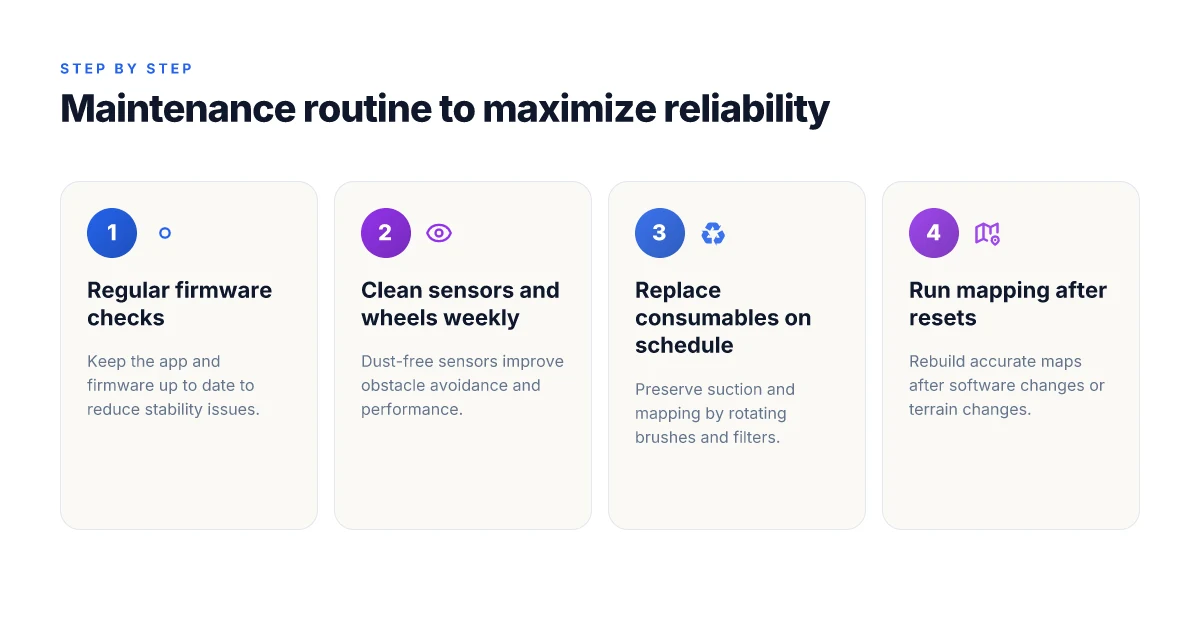
Reliability isn’t a one‑time setting. Regular maintenance keeps Dreame robots performing at their best. A straightforward cadence works: weekly brush and filter checks, monthly brush replacement when you see wear, and quarterly map cleanups in the app so memory doesn’t drift. The best Dreame models pair easy access to the dustbins and filters with clear software prompts that remind you when to replace parts. When you stick to a simple maintenance rhythm, you’ll see fewer hiccups in navigation and suction performance. Regular maintenance is the quiet engine behind long‑term reliability. I note from independent reviews that the better‑reviewed Dreame models tend to exhibit fewer clog‑related slowdowns after routine upkeep. Upkeep directly maps to longer‑term performance.
Pricing and ownership notes to guide the decision What is X-Sense and how reliable is its smart fire safety ecosystem in 2026
- Current prices and the best deals shift quickly. I’d look for bundles that include extra brushes, replacement filters, and a spare side brush, which often signal better total value. Expect Dreame models to vary in price by generation and feature set. Ask for the exact model name and confirm included accessories before purchase.
- When you compare to rivals, factor in real costs of ownership. Roborock and Ecovacs options may offer slightly different maintenance intervals and part costs. If you value fewer surprises, choose a Dreame model with widely available official parts and a robust local service option.
Brand note and disclosure
- Dreame’s lineup has improved in reliability and obstacle handling over time, but not every model hits the same bar. Dreame continues to refine the balance between suction power, mapping reliability, and maintenance ease. As with any purchase, consider the warranty window and what it covers. Links on the page may earn a commission, and some retailers run limited‑time promotions that can affect total cost of ownership.
Verdict: for homes that require steady navigation, smooth transitions between floors, and a maintenance‑friendly routine, a mid‑generation Dreame model with strong mapping and obstacle avoidance often delivers the best blend of reliability and value.
Where this is going next for Dreame
Prices shift quickly, but right now you can spot a few Dreame models delivering strong value for steady reliability. I call out the top picks you’ll want to consider if you’re shopping this month, with current prices and a quick glance at cost of ownership across several Dreame models. If you care about a long life and easy maintenance, you’ll notice how the Dreame lineup stacks up against rivals like Roborock and Eufy in real‑world use.
The bigger pattern across this round of reviews is that reliability often correlates to simple maintenance and predictable mapping. A few Dreame vacuums lean on familiar sensors and straightforward docking routines, which translates into fewer surprises week to week. For households with pets or thicker rugs, the emphasis on robust suction and strong filtration becomes the deciding factor, and that’s where the best models rise above the crowd. I also point out where a rival brand may edge ahead on app polish or virtual boundaries, so you can pick with eyes open.
If you only do one thing this month, lock in the best deal you can find on the model that matches your floor plan, and verify the warranty coverage before you buy. 2 headline picks reappear here with one clear use‑case each: for busy multi‑room homes, pick the model with the most consistent mapping. For allergy sufferers, prioritize filtration and maintenance simplicity. The question to ask yourself as you compare is simple: are you optimizing for ease or edge? The single move that matters most is to choose a Dreame model that fits your everyday rhythm, then stick with regular emptying and filter changes. What makes the Dreame X40 worth the hype in 2026