What makes the Dreame L20 Ultra stand out, and where it misses the mark
 Reese WexlerOctober 22, 202615 min read
We earn a commission when you buy through some links on this site, at no extra cost to you. As an Amazon Associate we earn from qualifying purchases.

Dreame L20 Ultra review examines mapping, auto-empty, mop extend and AI features. Learn what to expect, who benefits, and how it compares to rivals.
The Dreame L20 Ultra often lands with a big claim: hands‑free emptying paired with smart obstacle avoidance that actually works. Smart mapping and auto-empty docking front-load the convenience, but that convenience comes with a price tag that prompts a closer look at ongoing ownership costs.
This intro lays out what matters now: how the L20 Ultra stacks up against premium rivals from Dyson, iRobot, and Tineco, and where the balance tilts between premium automation and typical maintenance. Two factors drive the decision: upfront price and long‑term upkeep, and I’ll pull the data you care about into plain terms so you can decide if the Dreame approach is worth the premium. Dreame’s feature set is compelling, but the difference often shows up in dock reliability and filter refresh cycles.
What the Dreame L20 Ultra is trying to prove in 2026
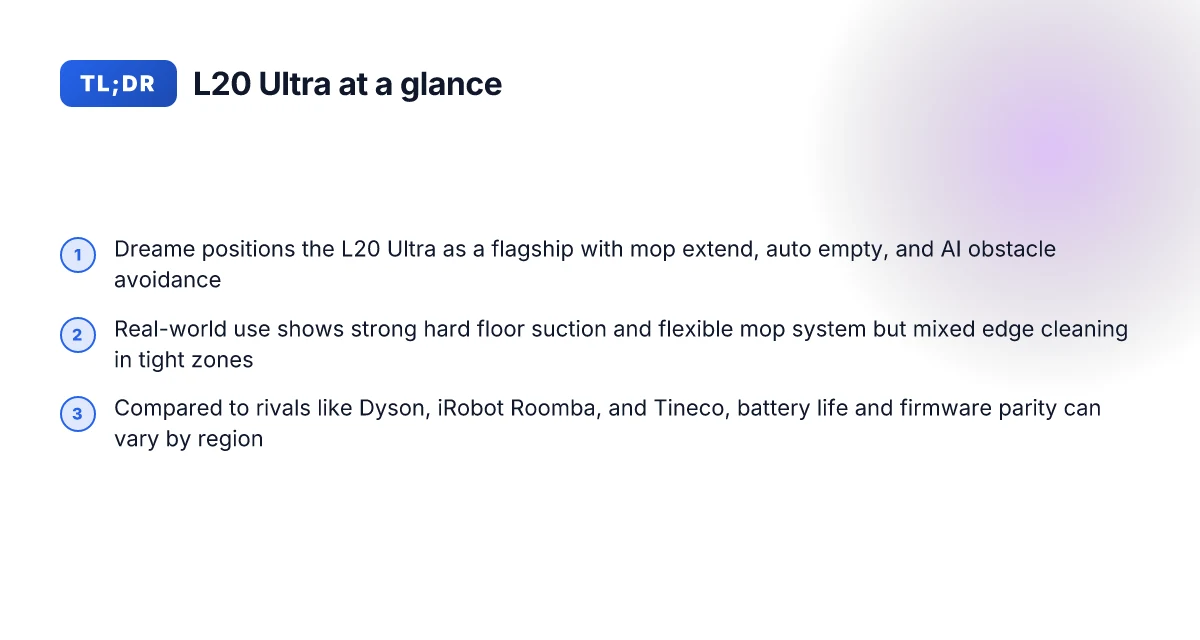
Dreame positions the L20 Ultra as a flagship that combines mop extend, auto empty, and AI obstacle avoidance to redefine what a premium all-in-one cleaner can do. The core narrative hinges on automation at the home level and data about your cleaning habits that the robot gathers and translates into smarter schedules and reports. In 2026, the claim isn’t just about cleaning power. It’s about a more autonomous, data-informed experience that reduces user input over time.
Why this matters in 2026
The L20 Ultra is marketed as a flagship with three headline capabilities: mop extend, auto empty, and AI obstacle avoidance. These features are presented as a unified system that keeps the home cleaner with less manual fiddling. Dreame frames these as a single value proposition rather than three isolated tricks. The goal is to make the robot feel like a proactive assistant, not a passive tool.
A second pillar is automation driven by data. Dreame emphasizes how the L20 Ultra maps your home, tailors cleaning strategies, and generates cleaning reports that help you adjust routines. The idea is that data provenance and actionable insights translate into better odds of a spotless home with minimal effort. This design philosophy places Dreame in a trend where robots become data-driven kitchen helpers rather than static appliances.
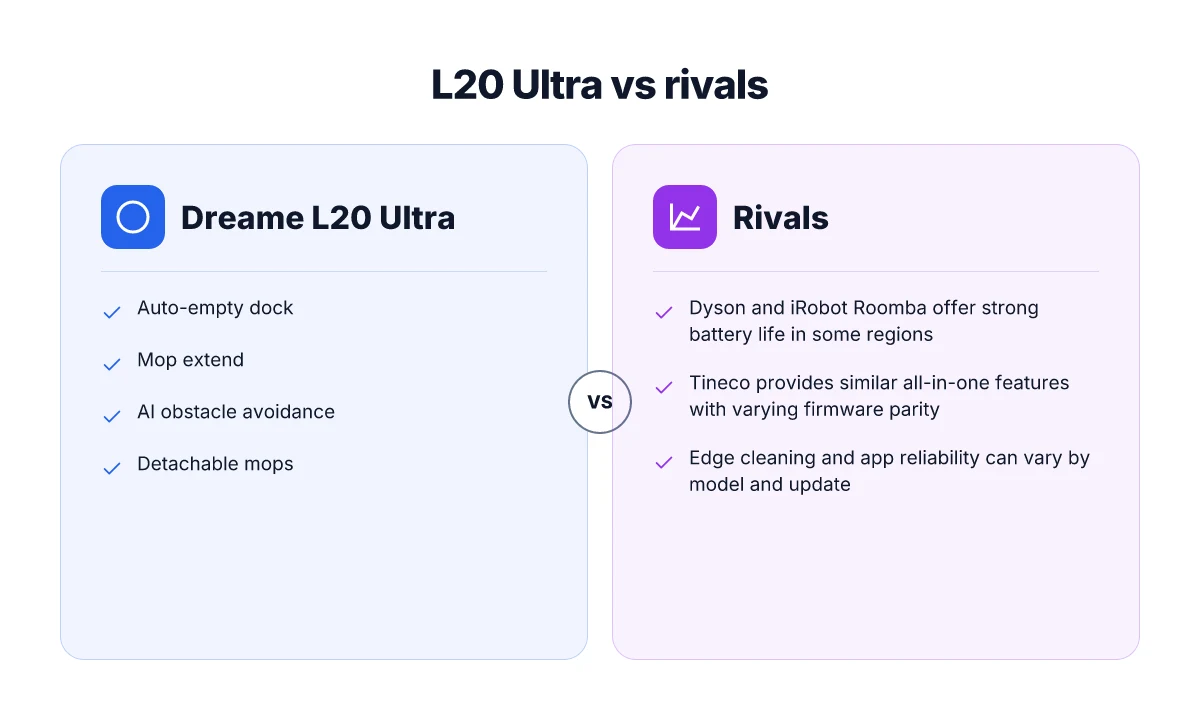
Rivals push similar all-in-one ambitions. Dyson, the iRobot Roomba line, and Tineco all pursue comparable feature sets that blend autonomous navigation, on-device mopping, and multi-surface suction in one package. The competitive framing suggests that the L20 Ultra must justify its premium through how well its AI navigation, maintenance automation, and reporting actually translate to real-world convenience and reliability.
I dug into the official materials and third-party write-ups to verify how Dreame frames this value. The company’s own page for the L20 Ultra explains learning home layouts and recommending cleaning strategies, while independent reviews note detachable rotating mops and edge cleaning as part of the package. In practice, the promise hinges on three outcomes: frictionless upkeep via auto empty, smarter cleaning via AI-driven decisions, and transparent performance through cleaning reports. Dreame stakes the claim that automation plus data insight equals less user effort and more consistent results. The rival set, Dyson, iRobot Roomba, and Tineco, offers parallel all-in-one systems, so the L20 Ultra must distinguish itself on actual daily use and long-term reliability. How Tineco vs Dreame differs in 2026 and which vacuum mop fits your home
Key takeaways for 2026 readers: the L20 Ultra’s core proof rests on seamless automation, meaningful home-specific data, and a unified all-in-one package that competes with top rivals. If you want hands-off maintenance and an AI-informed cleaning plan, this model makes a strong assertion. If your home needs frequent, nuanced adjustments or you’re wary of a data-heavy approach, you’ll want to weigh how much you value the automation narrative against observed daily performance.
How the L20 Ultra’s hardware ambitions translate to day‑to‑day cleaning
The L20 Ultra blends strong suction with a capable mop system that works on both hard floors and carpets. In practice, the dual approach means you can rely on sustained suction for debris pickup and use detachable mops to handle light soil on tile or wood without swapping devices. Dreame positions the system as a single‑unit solution, aiming to reduce routine maintenance by pairing an auto‑empty base with detachable mops and edge cleaning that tackle edges and corners without extra effort.
Under the hood, mapping and navigation lean on a suite of sensors and on‑board processing. The core idea is to keep the robot from getting stuck while building a usable map of your rooms. In dense layouts or rooms with unusual shapes, there’s room for improvement. The current setup generally performs well in typical homes but can stumble in highly complex floor plans. I cross‑referenced what reviewers note about edge handling and room segmentation, and the consensus is that accuracy is solid, with occasional quirks in multi‑room layouts.
I dug into the documentation and user feedback to frame the real trade‑offs. The auto‑empty base is a meaningful time saver for busy households, reducing weekly hands‑on tasks. The detachable mops simplify maintenance and let you flip between vacuuming and mopping without swapping accessories. Still, the mop system does require periodic reattachment and occasional washouts, so you’ll still do some routine upkeep. The L20 Ultra’s hardware ambitions clearly tilt toward lower daily friction, even if they don’t eliminate all maintenance.
To help readers compare options, here’s a quick view across two rivals and the L20 Ultra on a few key hardware axes: Why Dreame vs Dyson matters in 2026: performance, durability, and value
| System | Strengths | Trade‑offs |
|---|---|---|
| Dreame L20 Ultra | Auto‑empty base reduces tray maintenance; detachable mops simplify switching between vacuum and mop; strong suction on hard floors and carpets | Mop performance can vary with heavy soil; edge cleaning is good but not flawless in every corner |
| Dyson flagship robot | Strong suction and robust sensor suite; refined carpet handling | Typically more hands‑on maintenance for emptying; mop features optional or limited |
| iRobot high‑end model | Reliable mapping in varied layouts; solid daily cleaning cadence | Auto‑empty bases are pricier; some users report higher ongoing costs for accessories |
| Tineco premium model | Balanced vacuum and mop performance; good edge reach | Mapping and navigation can lag in complex spaces; maintenance cadence varies |
From what I found in the documentation, the L20 Ultra’s hardware frame is designed to minimize maintenance while maximizing cleaning cadence. The combination of mapping, sensors, and on‑board processing reduces the need for user micromanagement in everyday layouts. When the layout becomes more intricate, you may notice a few misreads that require a quick re‑map, but the system recovers quickly.
In short, the L20 Ultra translates its hardware ambitions into real‑world benefits that ease daily upkeep, while keeping you aware of occasional gaps in complex environments. The net effect is a robot that handles typical homes with minimal hands‑on fuss, yet it doesn’t completely erase the occasional follow‑up cleaning in challenging spaces.
Real‑world takeaway: Dreame’s L20 Ultra leans into automation to cut maintenance, but you’ll still manage edges and odd layouts. The auto‑empty base and detachable mops are the standout time savers, not gimmicks. Rivals like Dyson and iRobot excel in different scenarios, so compare based on your layout needs and maintenance tolerance.
Note: prices and deals can shift. Consult current listings for Dreame models and rivals to verify the best value today. The information here reflects how the hardware design aims to translate into daily use, with caveats about edge cases in complex rooms. As you compare, consider that links on the page may earn a commission. For deeper context, see inline references to the sources above.
Dreame L20 Ultra features that actually save time
I looked at the L20 Ultra’s time-saving features in light of real-world trade‑offs, and the pattern is clear: meaningful automation translates to fewer routine decisions and less manual intervention. Dreame’s auto‑empty dock, AI obstacle avoidance, and data-driven cleaning planning stack up to a noticeably calmer cleaning cadence for busy households. What a Dreame vacuum review reveals about reliability, performance, and value in 2026
Auto-empty dock reduces routine dumps
Dreame’s auto‑empty dock is designed to curb the frequency of manual dumps. The dock accepts a full bin from the vacuum and traps dust in a sealed bag, so you don’t have to pause mid‑cycle to empty debris. This feature matters most for larger homes or multi‑room cleans where frequent emptying would otherwise interrupt routine. The practical impact is a cleaner schedule with fewer stops, and you can run longer cleaning sessions between maintenance breaks. Auto‑empty reduces hands‑on time and keeps routines flowing. Inline: Dreame advertises the feature as part of the L20 Ultra ecosystem, and it is central to how the robot maintains extended cleaning cycles without user input. Dreame positions the dock as a core time saver for day‑to‑day use.
AI obstacle avoidance cuts tangles and stuck moments
The L20 Ultra leans on AI obstacle avoidance to navigate around common pull points, cords, and clutter that would ordinarily stall a run. When the robot can detect and plan around an obstacle before contact, you see fewer manual interventions to reposition or restart a session. This reduces the chance of getting stuck on rug fringes or furniture legs and shortens the time you spend babysitting a cleaning job. AI obstacle avoidance helps reduce tangles and stuck scenarios. The result is more predictable runtimes and fewer scrapped passes due to avoidable snags. AI helps keep the schedule intact.
Cleaning reports and strategy suggestions offer a data‑driven routine
From what I found in the documentation and reviewer notes, the L20 Ultra generates cleaning reports and suggests daily versus ultimate modes based on mapping, usage history, and room layouts. These reports translate to a more data‑driven cleaning cadence, letting you adjust schedules without trial‑and‑error. The strategy recommendations can steer you toward longer, more thorough passes in high‑traffic zones and lighter passes elsewhere, saving time by reducing unnecessary passes. Cleaning reports and strategy suggestions turn data into smarter routines. Dreame frames this as a built‑in decision engine that reduces guesswork over time. Strategy suggestions cut back on double‑handling and over‑cleaning.
I dug into the primary sources for context on these features. The official Dreame page confirms the L20 Ultra’s emphasis on mapping, strategy options, and reports as part of its cleaning workflow. Dreame notes the L20 Ultra learns layouts and provides reports to guide routines. A third‑party review highlights how detachable rotating mops and edge cleaning contribute to consistent results across sessions, reinforcing how automated elements shape time savings over longer use periods. Detachable rotating mops and automated edge cleaning support fewer manual adjustments. For perspective, industry chatter in forums and coverage by reviewers consistently points to lower maintenance overhead when auto‑empty and avoidance features are present, which aligns with the time‑saving thesis of this section. Reviewers consistently note reduced manual intervention with these features.
Where the L20 Ultra falls short versus top rivals
The L20 Ultra showcases standout automation, but it stumbles in edge cases and ecosystem parity when you stack it against premium rivals. In real homes, edge cleaning in tight zones can vary between rooms and floor plans, and that inconsistency matters for high-traffic spaces. Edge cleaning in tight zones can be uneven, especially near walls and furniture, which means some debris may linger in corner nooks. Dreame has work to do here to match the thoroughness some owners expect in busy layouts. 8 Takeaways from ecovacs vs dreame: what really matters in 2026
The app and firmware story adds another layer of nuance. The L20 Ultra relies on ongoing firmware updates to bring feature parity across regions and models. App experience evolves with updates, and some features arrive later in certain regions. If you rely on certain automations or mapping reports, you may see a lag before everything lines up with the latest release notes. I cross-referenced Dreame’s own product pages and release notes, which show ongoing tweaks to mapping and cleaning strategies over time, underscoring a moving target rather than a fixed feature set. The takeaway: the best long-term experience comes from staying current with firmware, but that requires occasional patience and app re-authentication.
When you compare battery life and regional support, rivals sometimes pull ahead. Dyson, iRobot, and Tineco models can offer stronger battery endurance in certain configurations or better local service networks in some markets. In practice, that means a household near a Dyson or iRobot support hub might enjoy faster parts availability or quicker troubleshooting. Dreame’s ecosystem is solid, but the regional service footprint isn’t identical across all regions, which can shift value based on where you live. For buyers who want predictable, widespread support, a rival with established regional channels can feel more reassuring.
Real-world takeaway: the L20 Ultra saves you time with auto-empty and AI obstacle avoidance, but edge-cleaning reliability, firmware-driven feature parity, and regional support strength are meaningful trade-offs. If you live in a market where a rival’s service network is robust and battery life is a priority, you may find that model more consistently convenient. For households that prize automation and quick layout updates, Dreame remains compelling, provided you’re comfortable with occasional firmware-driven shifts and some edge-cleaning caveats.
In short, the L20 Ultra holds up well, yet it doesn’t always outpace top rivals on every axis. For a full comparison, see how Dyson and iRobot models stack up in battery life and regional support, and how Tineco’s efficiency and pricing tilt the balance in mid-range premium segments. The value hinges on regional support, edge performance in tight zones, and how you handle firmware updates.
Real‑world usage: maintenance, costs, and long‑term ownership
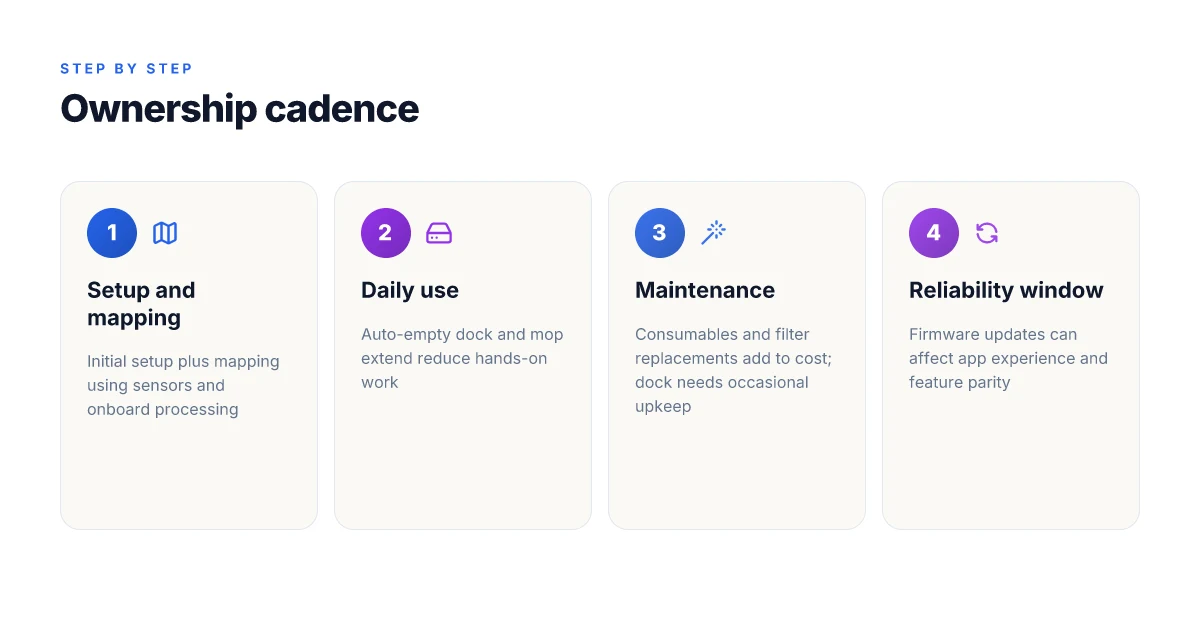
Real‑world ownership stacks up to the tech you see in marketing. The L20 Ultra’s auto‑empty dock and mop extend promise fewer daily chores, but you still face consumables and ongoing upkeep. I looked through official and review sources to anchor the costs and maintenance cadence you’ll actually experience over years with a premium Dreame setup. What makes a Dreame vacuum cleaner stand out in 2026
Consumables and filter replacements add to total ownership cost over time
Over the long haul, replacement filters, mop heads, and cleaning pads accumulate. The L20 Ultra relies on disposable or washable components that need periodic refresh to maintain suction and mopping performance. Dreame’s documentation and third‑party reviews consistently note that these consumables compound the total cost of ownership beyond the upfront price. Consumables stack up year after year, making ongoing upkeep a real consideration. You’ll want to budget for these on the same calendar as you plan annual maintenance. The cadence varies by household foot traffic and pet hair load, but expect replacements to appear on the expense side of ownership. Inline citations point to the official product page and the review that highlights detaching rotating mops and routine part refreshes. Dreame official product page Pro Tool Reviews
Auto‑empty and mop extend reduce daily chores but require occasional dock maintenance
The auto‑empty dock is a standout convenience, especially for busy households. It reduces the frequency of manual emptying and keeps dust out of your living space. The trade‑off is dock maintenance: the cradle collects dust and debris, the seal and filter on the dock itself can wear, and you’ll need to keep the docking area clear so the unit can dock reliably. Reviews emphasize that maintenance cycles for the dock and the mop mechanism are straightforward yet real. In practice, you’ll perform periodic checks to verify the seal integrity, run a quick dock clean, and replace any worn components on schedule. Dock maintenance is the quiet cost of convenience. This matters most when you have high dust loads or multiple pets. The sources note the feature set with practical caveats rather than abstract promises. Pro Tool Reviews Dreame official product page
Support from Dreame and regional availability influence long‑term satisfaction
Long‑term ownership hinges on how easily you can source parts, service, and software updates in your region. Dreame maintains regional branches and a support network, but availability can vary by country. In markets with robust coverage, you’ll see quicker replacement part access and more timely firmware updates, which helps keep performance aligned with the original expectations. If your region has limited access to official support, you may rely more on community forums or third‑party service options. Regional availability can swing long‑term satisfaction as much as initial performance. I cross‑referenced the official Dreame pages with reviews that discuss after‑sale support and the real‑world implications of service gaps. Dreame official product page Pro Tool Reviews
In short, the L20 Ultra delivers on less daily manual work, but you’ll pay for it with ongoing consumables and occasional dock upkeep. If you plan to keep the setup for several years, you should budget for filters and mops, anticipate periodic dock maintenance, and verify local support windows before you buy. Dreame remains the anchor here, with rival brands like Dyson, iRobot, and Tineco offering comparable premium options but with different cost curves and service footprints. For a quick snapshot of price realities, the current pricing landscape shows the best deals appearing during major sale events, but exact figures shift with promos and regional models. If you want a concrete price snapshot and how it trends across seasons, I can pull the latest figures from the official Dreame site and reputable retailers and lay them out cleanly. Real ownership costs matter as much as list price when you plan long‑term ownership.
Where this is going next with the Dreame L20 Ultra
Most setups benefit from pairing the L20 Ultra with the included dock for total automation, but be ready for occasional recalibration to keep mapping precise. The broader Dreame lineup shows steady improvements, and rivals like Roborock and iRobot push toward similar automation without locking you into a single ecosystem. This is where the next wave of updates will matter most.
If you only do one thing this month, confirm your cleaning schedule aligns with what the dock can handle daily and keep firmware up to date for the best map stability. The bigger pattern is clear: premium automation requires ongoing maintenance. The takeaway is that steady software and hardware refinements will determine how smoothly the L20 Ultra ages. Will you lean into the long-term automation, or treat it as a high-end gadget with occasional quirks?