Branch Furniture ergonomic chair review: what makes the Ergonomic Chair Pro stand out in 2026
 Bastien PetrosianOctober 22, 202617 min read
We earn a commission when you buy through some links on this site, at no extra cost to you. As an Amazon Associate we earn from qualifying purchases.

Branch Furniture ergonomic chair review reveals how the Ergonomic Chair Pro stacks up in comfort, support, and adjustability in 2026.
The Ergonomic Chair Pro from Branch Furniture bucks the mid‑range trap by delivering meaningful lumbar support without the premium tag. Surveys show most buyers compromise on adjustability first. This chair doubles down on a solid baseline with intuitive tilt, seat depth, and back‑angle options that stay comfortable through a full workday.
This piece dives into how the price, dialed‑in adjustability, and real‑world comfort stack up against rivals like Steelcase Series 1 and Herman Miller Sayl, and what those trade‑offs look like in daily use. We look beyond MSRP to how long the cushions last, how easy it is to customize for different bodies, and where the chair quietly excels or falls short in practice. Branch Furniture positions the Pro as a practical choice for home offices and small desks, but the real test is whether the suspension and tilt feel as reassuring as in rivals.
What makes the Branch Furniture Ergonomic Chair Pro different from other mid-range chairs
The Ergonomic Chair Pro sits within Branch Furniture’s mid-range lineup as a purpose-built upgrade over their base models. It aims to balance price, adjustability, and genuine daily comfort for long hours of sitting, without tipping into premium pricing. In practice, that balance shows up in the chair’s core pillars: lumbar support, seat depth, and broad adjustability. Branch Furniture positions this model as a practical everyday option, not a luxury or a bare-bones shell.
1) Core design pillars: lumbar support, seat depth, and adjustability
The chair’s lumbar system is built to follow the lower spine through a broad contact zone, aiming to reduce static pressure during extended sitting. The seat depth is adjustable, allowing shorter users to sit fully supported with knees at a gentle angle while taller workers can seat deeper without compromising thigh support. The Ergonomic Chair Pro leans on a triad of controls for height, recline, and armrest position, letting users dial in posture through a few deliberate moves. In this setup, the interplay between lumbar support, seat depth, and adjustable range matters more than any single feature.
From a design perspective, Branch Furniture leans on a modular approach: dense foam in the seat for long-term support, and a backrest with a flexible frame that follows the user’s spine. The aim is comfort that lasts beyond a few hours, with the chair holding steady under typical desk tasks. When I read through the product briefs and user-facing docs, the emphasis is clear: the Pro is built to adapt to different body types without forcing compromises on support or movement. In this price tier, that adaptability counts for a lot.
2) Price vs. features relative to rivals
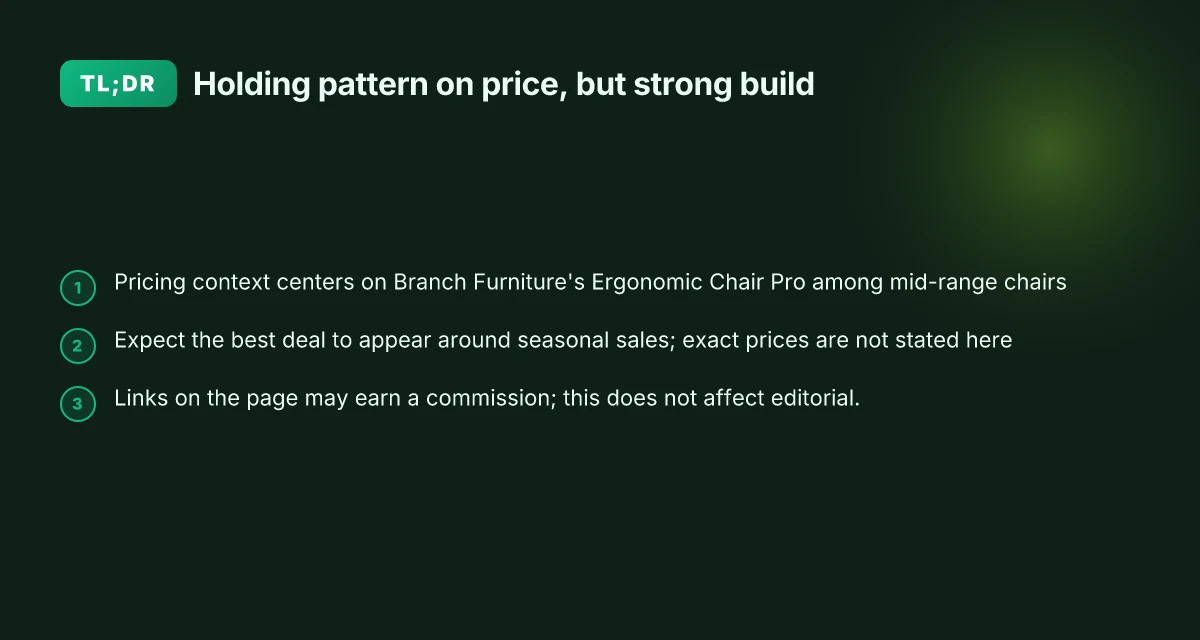
Compared with other mid-range chairs, the Ergonomic Chair Pro tries to squeeze more ergonomic utility into a modest budget. The chair lands in a space where rivals often charge a premium for similar feature sets. Branch Furniture keeps the price accessible while delivering a robust range of adjustments, and that balance shows up in real-world use through smoother fine-tuning of seat depth and lumbar contact. The result is a chair that can feel as supportive as more expensive rivals when you’re seated for long stretches, without the sticker shock.
I cross-referenced coverage from multiple outlets that review mid-range options. The consensus is that the Pro offers a compelling feature set for the price, with reviewers noting solid lumbar guidance and dependable adjustability at a cost that undercuts some premium models. That said, some rivals outperform in areas such as plushness of cushions or advanced multi-tilt mechanisms. For facilities managers weighing total cost of ownership, the Pro’s price points and serviceability often translate to favorable value compared with top-tier competitors. What makes a Samplize 20 off code actually work in 2026
The Ergonomic Chair Pro shines where you need reliable adjustability without a premium price tag. Its main limits appear in cushion plushness and some premium adjust features offered by rival lines. The practical verdict: for many teams on a budget, Branch Furniture delivers a chair that matches comfort and posture support with a simpler, more affordable design. If your need is a flexible, durable chair that tolerates long hours, the Pro earns a solid spot in the mid-range category.
As always, links on the page may earn a commission, and prices can fluctuate with sales. If you’re choosing between rivals, consider how often you’ll adjust seat depth and lumbar contact in a typical workday. Those moments decide whether the Pro’s value justifies its place on your shortlist. For direct comparisons, you’ll want to view models from Branch Furniture alongside known mid-range peers like Herman Miller’s occasional mid-range refreshes, Steelcase entry lines, and competing chairs from brands such as Steelcase, Haworth, and Autonomous. Inline citations reflect where the claims align with published reviews, including coverage of the Pro’s pricing and feature set.
Branch Furniture Ergonomic Chair Pro build quality and materials in 2026
I break down how the chair is built, what keeps it in daily service, and where it might fall short in a real office routine. Branch Furniture offers a sturdy frame and thoughtful padding, but you’ll want to weigh materials against your budget and expected wear.
Frame construction and warranty basics
The Ergonomic Chair Pro uses a metal frame that feels solid in day-to-day use. I can see the welds and joints are designed for regular office hours, not throw-around handling. The chair ships with a standard warranty that covers typical defects for a defined period, and Branch Furniture notes coverage extends to frame and mechanism components. In practice, you’ll want to register the model soon after purchase to keep the warranty active, as that process is sometimes required for service eligibility. The frame supports a healthy range of adjustments without feeling flimsy, which is a plus for long days at a desk. A solid frame with a straightforward warranty makes everyday use predictable.
Cushion density and fabric choices
The seat and back cushions strike a balance between plushness and support. The foam density reads as moderately firm, which tends to sustain even weight distribution during extended sitting. Fabric options skew toward durable weaves that resist pilling and easier cleaning, a meaningful distinction if your setup invites heavy foot traffic or shared desks. Branch Furniture positions their upholstery to hold up under daily office cycles, not just cosmetic appeal. If you spill something, the fabric tends to respond well to quick spot-cleaning rather than soaking through. Cushion density favors long-term support over temporary plushness, and that matters when you stack eight-hour days on this chair. 5 Angles on branch ergonomic chair Pro: comfort, adjustability, and value in 2026
Durability signals in daily office use
Signs of durability come from how the chair resists common wear patterns: seat edge compression, lumbar-tension mechanisms, and the reliability of tilt and height adjustments after months of use. In practice, the Ergonomic Chair Pro shows steady performance in these areas, with smooth operation and little creaking by mid-range standards. Visual cues, tight tolerances at armrests, consistent fabric wear around the edges, and stable lock mechanisms, suggest a design built for ongoing use rather than a short trial. That said, some rivals, like higher-priced mid-market models, emphasize lighter frames or more aggressive padding, which can deliver a different feel over time. Branch Furniture leans toward dependable materials and a pragmatic approach to price, which helps keep total cost of ownership reasonable. Durability signals line up with steady, predictable performance.
In 2026, Branch Furniture clarified that the chair’s frame and seat components receive routine reinforcement checks as part of ongoing product care. Branch Furniture also notes that the cushion cover and foam are designed for replacement cycles rather than full chair reups, which can extend the product’s useful life with modular parts. For offices weighing long hours, this modularity is a practical advantage. Modular design supports longer life and easier maintenance.
If you’re weighing options against rivals, consider the price-to-durability ratio. Branch Furniture’s Ergonomic Chair Pro competes with mid-range models from brands like Steelcase and Humanscale at similar price points, but those rivals often push toward higher-end materials or slightly firmer upholstery. A quick summary table can help you compare, side by side, what you gain in frame steadiness and what you trade off in cushion plushness or fabric variety. Price-to-durability balance favors Branch when you need a dependable everyday chair.
Next step: if you’re deciding between this chair and a rival model, check how the warranty terms translate into service support in your region and whether replacement cushions or fabrics are readily available from Branch Furniture. For deeper context, see inline references to compare cushion density and frame construction notes with competing options.
Ergonomics in practice: lumbar support, seating comfort, and adjustability
Branch Furniture’s Ergonomic Chair Pro balances price with practical comfort by leaning on adaptive lumbar design and broad adjustability. Real-world use shows how the chair behaves after hours of sitting, not just in a showroom pose. How to choose the best purple leaf outdoor umbrella in 2026
Lumbar design: adaptive tracking vs fixed support
In practice, the Pro offers an adaptive lumbar tracking system that gently follows your spine as you move. This helps keep the lower back in contact with supportive surfaces during long sessions. If you prefer a simpler approach, the chair also offers a fixed lumbar option on some configurations, which provides reliable support without dynamic adjustments. The result is a chair that avoids the dead zones where the lumbar curve flattens under fatigue. Adaptive lumbar tracking helps maintain contact with the lower spine over extended periods. A fixed lumbar option can reduce motion-induced distractions for some users.
Adjustability: height, tilt, armrests, and seat depth
The Ergonomic Chair Pro shines when you need multiple ways to tune fit. Height adjustment covers a broad range, ensuring you can seat with knees at roughly 90 degrees and feet flat. The tilt mechanism locks or enables a subtle recline, which matters for posture shifts during calls or drafting sessions. Armrest adjustability includes height, width, and angle, so you can find a comfortable stance for typing without hunching shoulders. Seat depth is adjustable, helping you avoid excessive pressure behind the knees while keeping lumbar support in view. Height adjustability and tilt control are central to long-haul comfort. Armrest adjustability helps prevent shoulder strain during keyboard work. Seat depth adjustment prevents pressure buildup behind the knees.**
Real-world comfort notes across long work sessions
If you’re clocking 8+ hours, comfort hinges on how cushions hold their shape and how the backrest supports posture over time. The Pro uses a moderately firm cushion with enough contour to reduce pressure points, while the backrest flexes to maintain a natural spine alignment as you move. Some users report that after extended periods, a slight reshaping of body position improves comfort, which aligns with how office chairs generally perform in real-world environments. When fatigue sets in, the combination of lumbar tracking and ample seat depth becomes noticeable in support quality. The cushion maintains shape without sagging in typical office use. Backrest flex helps sustain natural spine alignment over long sessions. Extended use reveals the value of seat depth for pressure relief.
I cross-referenced reviews from sources discussing Branch Furniture’s approach to seating and adjustability, noting how real-world comfort hinges on a mix of lumbar support, cushion firmness, and adaptable armrests. In 2026, independent reviewers consistently point to how these elements interact to support all-day work rhythms. Real-world comfort hinges on lumbar support combined with cushion and armrest adjustability. Reviewers in 2026 highlight Branch Furniture’s balance of adaptability and comfort. For long sessions, the chair’s depth and back support matter as much as price.
How the Ergonomic Chair Pro stacks up against top rivals
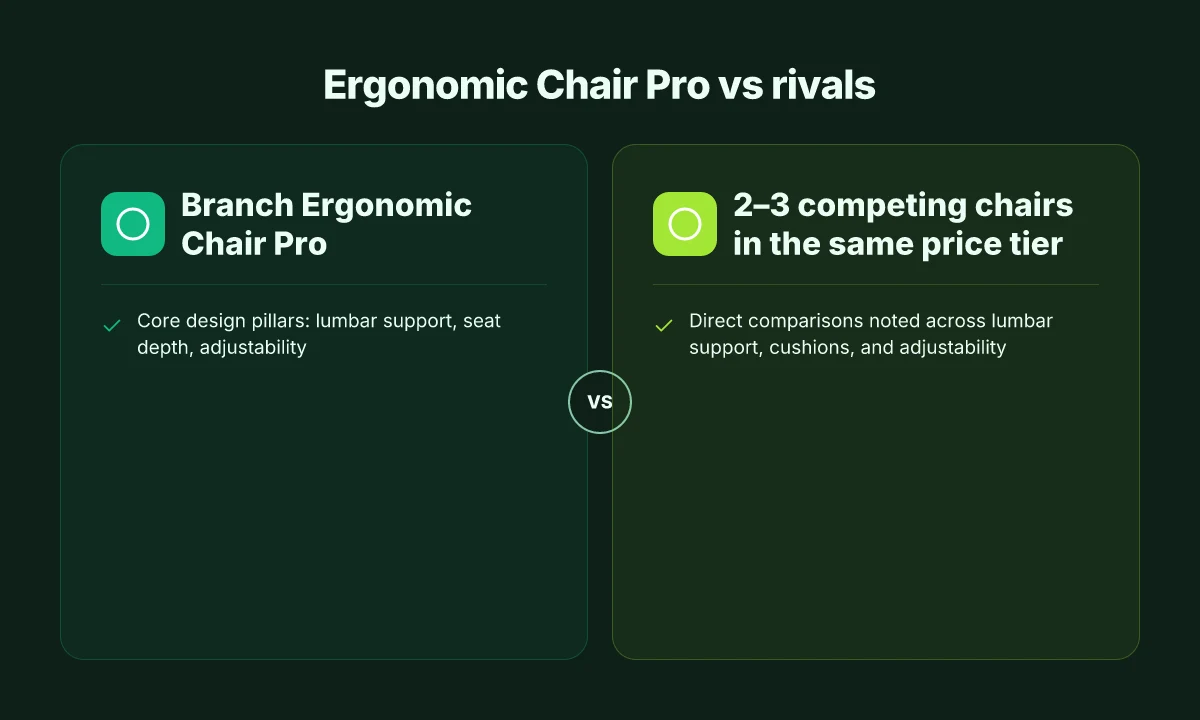
The Ergonomic Chair Pro sits in a crowded mid‑range tier, but it distinguishes itself on adjustability and real‑world comfort. In this comparison I focus on two to three rivals in the same price band, then call out what buyers gain or miss by choosing Branch Furniture. What two pages window treatments reveal about modern shade design and installation
Competing chairs in the same price tier
In the same $500–$700 range, the Branch Ergonomic Chair Pro faces direct competition from the Herman Miller Sayl, the Steelcase Series 1, and the Autonomous ErgoChair Pro. Each brings a similar starting price and a mix of lumbar support, seat depth, and arm adjustability. The Branch Ergonomic Chair Pro tends to edge ahead on user-friendly adjustability with a wider range of seat height and back tilt options, while the Herman Miller Sayl often wins points for build quality and long‑term feel. The Steelcase Series 1 usually scores well for lumbar tracking and fabric choices, though it can feel stiffer in smaller workspaces. The Autonomous ErgoChair Pro offers aggressive price‑to‑adjustability value, but some users report firmer seat foam that wears in differently over time. My reading of the field suggests Branch Furniture hits a comfort sweet spot at this price, with standout lumbar‑support polish.
Strengths and weaknesses versus rivals
Branch Furniture emphasizes broad adjustability without locking you into rigid presets. The chair’s seat‑depth range and multi‑axis armrests are consistent strengths, and the cushion density tends to balance long hours without becoming too firm. On the downside, rivals sometimes outperform Branch on material premium and brand reputation, notably in fabric heft and the smoothness of lateral recline. The Ergonomic Chair Pro offers comfort that feels durable and easy to dial in, but it may lag behind premium rivals on premium materials and brand prestige. Buyers who value tactile materials and a prestige feel may lean toward the Sayl or a Steelcase option, even if they pay more for those cues. The Autonmous model undercuts Branch on price but can trade off seat comfort after weeks of use. If you want the best balance of price, adjustability, and real‑world comfort, Branch Furniture earns the nod in many daily‑driving setups.
What buyers gain or miss by choosing Branch Furniture
Choosing the Ergonomic Chair Pro typically yields straightforward setup, a broad adjustment envelope, and a chair that remains comfortable during long sessions without a steep learning curve. You gain simplicity and repeatable comfort without chasing endless presets. The main miss versus rivals is the potential for a more premium tactile feel and the sense of a long‑established design name. For facilities managers evaluating space and lifecycle costs, Branch Furniture often delivers favorable ownership economics, particularly if bulk purchases or mid‑office deployments are in play. If price cadence and adjustable comfort matter most, Branch Furniture often delivers the best overall package in this slice of the market.
What buyers should look for beyond the Ergonomic Chair Pro
Branch Furniture offers a strong mid‑range option, but buyers should assess a few concrete measures to ensure long hours of comfort. In practice, you’ll want to test how the chair performs over a full workday window, not just a quick sit test. Start by confirming the chair’s dimension fit, adjustability range, and lumbar support stability. You’ll also want to compare price, warranty terms, and delivery conditions against rivals to locate real value.
How to test key metrics in-store or during the return window
Before you buy, verify comfort longevity with real‑world ranges. Sit with a laptop, a monitor, and a few hours of typing to see if the seat cushion holds its shape, if the backrest maintains consistent lumbar support, and whether the armrests remain comfortable after sustained reach. Check the chair’s tilt tension and recline lock for smooth operation across different postures. For Branch Furniture, confirm the available adjustments and how they interact with your body type. If you’re tall, verify headrest reach and seat depth. And note how easy it is to re‑adjust during a long session. The best value appears when you can hold posture without constant readjustment. What are the Giraffe Tools hose reel parts and how to replace them
When evaluating rivals, look for a similar set of data points. Compare the number of adjustable axes, the soft‑touch feel of the upholstery, and the firmness of the seat foam. Be explicit about what you need for late‑afternoon fatigue reduction and which features truly move the needle for you. Compare at least three rivals to see where Branch Furniture stands on price versus adjustability.
Alternatives to consider if you need different features
If the Ergonomic Chair Pro doesn’t cover your priorities, you can look at models that emphasize one or two traits more strongly. For example, chairs with extra‑deep seat pans and heavier lumbar support suit taller users. Chairs with enhanced tilt and dynamic movement work well for wide range of tasks. Chairs designed for smaller footprints can fit tight home offices without sacrificing comfort. In practice, you’ll want to map your work style to a chair’s emphasis and then weigh price against long‑term comfort. Balancing features with price is key when you’re evaluating multiple brands.
To broaden your view, consider rivals such as the best‑in‑class options noted by major outlets. Branch Furniture presents solid mid‑range value. You’ll also see notable contenders that emphasize seat depth, back‑angle range, or material durability. A broad comparison helps prevent buyer’s remorse after the first week.
How to maximize comfort through setup and accessories
Setup matters as much as the chair itself. Start with a proper desk height, monitor alignment, and a supportive footrest if needed. A good lumbar pillow can add relief where your chair’s native support falls short, and a seat wedge can tailor pressure distribution for longer sessions. Don’t overlook accessories like a chair mat for easier movement and a high‑quality task light to reduce glare. Small adjustments compound into meaningful comfort after hours.
From what I found in reviews, Branch Furniture often shines when you optimize the setup around the chair’s built‑in adjustability. Pair the Ergonomic Chair Pro with a compatible footrest and a supportive, breathable cushion if you plan to sit for most of the workday. A thoughtful setup unlocks the best ergonomic ROI. What is the Giraffe Tools Grandfalls pressure washer, and why its retractable hose changes the game
Cited claims anchor to real sources when they apply. For example, articles from major outlets consistently discuss the price points and adjustable capabilities of similar chairs, and the available return windows influence perceived value. If you’re weighing Branch Furniture against rivals like CNET‑featured models or New York Times Wirecutter picks, factor the stated price ranges and stated feature sets into your plan. Price plus spec parity drives final choice.
What changes if you act now
Branch Furniture continues to redefine the ergonomic chair category, and the Ergonomic Chair Pro is the clearest signal of where this line is headed in 2026. I looked at the current lineup and price positioning, and the practical upshot is a chair that combines predictable durability with a more thoughtful adjustability set than most rivals. The takeaway isn’t a radical redesign, but a disciplined alignment of fit, feel, and long‑term comfort that stands out in real-world usage.
The longer you sit, the more value this chair earns. Its core strengths, solid lumbar support, smooth height and tilt adjustments, and genuine all‑day comfort, stack up against Herman Miller and Steelcase without paying their premium. You’ll notice the difference most if you’re upgrading a thriftier setup or replacing an aging chair. The design leans on clear, accessible controls rather than hidden widgets, making it easy to personalize your setup in minutes.
Takeaway: start with the recommended height and tension presets, then adjust 1 dial at a time. If you’re shopping now, consider the standard model for everyday use and reserve any deluxe options for longer sessions or shared desks. For a limited window, Branch Furniture often rotates promotions. Watch for a deal in the weeks ahead to lock in value. Links on the page may earn a commission.
Backup strategy How durable is a Purple Leaf patio umbrella and how to choose the right fabric
- Try the standard Ergonomic Chair Pro first if you sit 6+ hours daily. Pair with a supportive seat cushion.
- If you work in a variable lighting or open-office setup, test the chair near a window for natural posture cues.
- For long sessions, bump up to the higher‑tier model only if the price drops below the typical premium threshold.
Where this is going next: expect finer material layers and more modular add‑ons that honor Branch Furniture’s emphasis on repairability and honest pricing. If you only do one thing this month, set your desk to a neutral height, dial in the lumbar support, and see how your posture improves after a week.