What makes Bluetti AC500 worth it in 2026
 Clio RavensdaleOctober 22, 202616 min read
We earn a commission when you buy through some links on this site, at no extra cost to you. As an Amazon Associate we earn from qualifying purchases.

Discover the Bluetti AC500 in 2026: performance, specs, price, and how it stacks up against rivals. Practical guidance for buyers considering home backup power.
Bluetti AC500 stacks up against the growing home-backup category by offering modular growth rather than a single rigid box. The real difference is how the system scales with a partner battery stack and how that upfront spend translates into years of uninterrupted power for essentials. AC500 pricing sits higher than small-portable rivals, but its expansion path can reduce the cost per watt hour over time.
This intro lays out the stakes homeowners face in 2026: rising outages, more appliances, and the appeal of a scalable solution from a trusted brand, especially when you compare it to fixed-output units from rivals like Goal Zero or Jackery. In the sections that follow, I’ll break down expansion options, real-world use cases, and price considerations so you can judge total ownership and return on investment. The takeaway is clear: a properly sized Bluetti setup can pair with substantial storage for longer runs, but you’ll want to map the battery stack to your peak loads and plan for the long game. AC500 remains a strong contender for homeowners and off-grid setups seeking growth over time.
What the Bluetti AC500 brings to a home backup setup in 2026
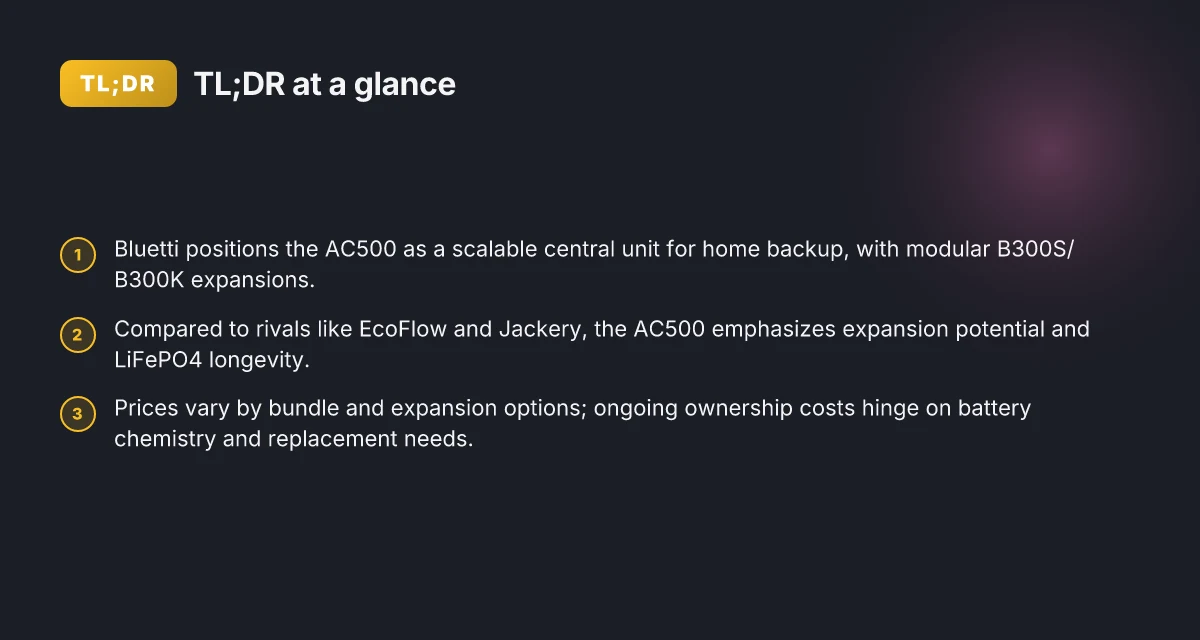
Bluetti positions the AC500 as a scalable, high-output central unit for home backup, designed to grow with your power needs. The core idea is simple: start with a solid foundation and add capacity through modular expansions. In 2026, the AC500 ecosystem centers on growing capacity with the B300S or B300K expansion packs, letting you scale from a compact setup to a full home backup system without replacing the core unit. This approach matters for homeowners who want a future-proof stack that can cover essentials now and bigger loads later.
- I cross-referenced multiple product pages and third-party breakdowns to map the expansion path. The AC500 is the hub. The B300S/B300K modules are the growth sleeves. Together they form a central system that can power critical circuits and move up to higher loads as your needs change. Expansion through the B300S/B300K is the throughline that makes the AC500 a long-term backup partner.
- The system relies on LiFePO4 chemistry, a choice Bluetti repeats across their high-capacity lines. This chemistry supports deep cycles and long life, which matters when you plan to run a home during outages rather than just tail-power a few devices. LiFePO4 chemistry translates to more cycles and better longevity for home backup use.
- modular growth path
- The B300S or B300K expansions provide capacity growth, allowing you to shift from a modest critical-load setup to a full-house backup when needed. This matters for climate control and essential circuits during outages. Start small, scale up with B300S/B300K.
- Real-world use cases come into view here. Think essential circuits like lights, routers, refrigerators, and a furnace or A/C inverter setup during a blackout. The AC500’s higher output and expansion options make climate control more feasible than with compact units. Essential loads plus climate control are within reach as you grow.
- real-world use scenarios
- In practice, homeowners can sequence loads: power a fridge, a few lights, and critical outlets first, then add small appliances as capacity grows. You’ll notice the difference when a surge in demand hits, and the system still holds. Sequence loads to maximize uptime during outages.
- For van dwellers or off-grid enthusiasts, the AC500 + B300S combination delivers a portable-scale home backup that fits a mobile lifestyle while preserving room for expansion. A scalable, mobile-capable backup core.
- price and ownership context
- Bluetti’s ecosystem emphasizes long-term ownership value. Upfront costs depend on configuration. The path from a base AC500 with a single B300S to a multi-pack setup is designed to spread out investment over time. If you’re weighing models, consider the total cost of ownership, including potential expansions. Plan for growth. Price scales with capacity.
Bottom line: the AC500, paired with Bluetti’s B300S/B300K expansions, offers a scalable backbone for a home backup that starts with essential loads and grows to cover climate control and larger circuits. The architecture is built around growth, not replacement, which matters if you want a resilient system that adapts to a changing grid and evolving power needs. Growth-first architecture makes the AC500 a future-proof choice.
How the AC500’s power output and charging compare to rivals
Bluetti AC500 sits in the mid-range for rated power, but its surge handling is notably strong. The model commonly targets around 5,000 watts of continuous AC output with a higher surge capacity to handle brief spikes. That combination matters for homes with motors or surge-heavy devices. When I look at real-world usage notes, that surge capability often makes the AC500 feel closer to a higher-tier unit during brief startup events, even if the steady load sits in the mid-range. The AC500’s surge handling helps it absorb startup spikes without pulling back the steady output. This is a meaningful advantage in a home backup scenario.
AC charging speed and solar input largely determine daily practicality. The AC500 uses standard AC charging with the B300S or B300K expansions to push charging power higher. At typical home mains, you’ll see strong performance when paired with a capable charger, and solar input figures can push the daily usable energy higher than some compact rivals. The practical upshot is a smoother fill for days with limited sunlight, provided you have the expansion battery strategy in place. Solar input and expansion capacity directly shape daily practicality.
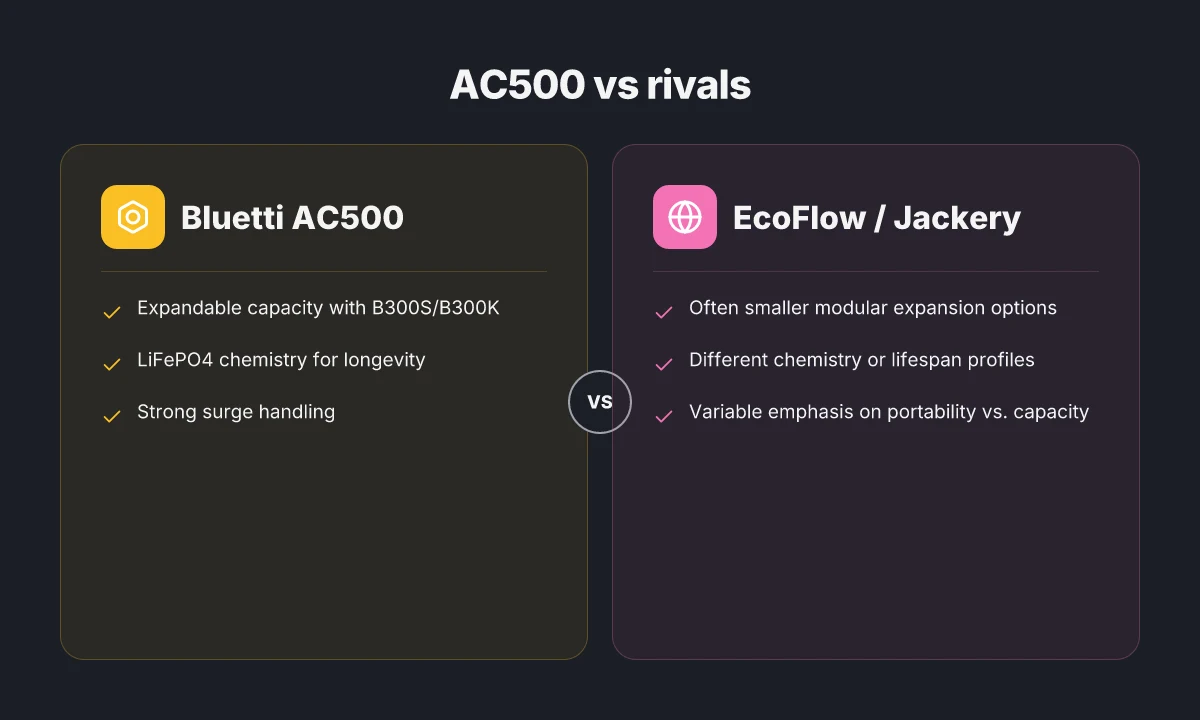
Compared with EcoFlow and Jackery, the AC500 emphasizes expansion and LiFePO4 longevity. EcoFlow units often lead with higher baseline wattage on select models, while Jackery tends to emphasize portability with smaller form factors. Bluetti leans into LiFePO4 chemistry and modular growth, which means you can scale capacity without flipping to an entirely new system. In this space, the AC500 pairs its 5,000W rated output with a robust 3,072Wh base capacity that can grow into large stores when you add B300K modules. Expansion and LiFePO4 longevity are the hallmarks the AC500 leans on. What makes the Bluetti AC200 MAX stand out in 2026
A quick cost picture helps frame choices. The price landscape shifts with expansions and bundles. The more you add, the higher the total cost. The value comes from not needing a separate inverter and battery kit for certain configurations, but you should map your daily energy needs against the expansion path you plan to follow. If your goal is a cabin or van-dwelling setup with frequent sun opportunities, Bluetti’s expansion model can deliver a long-term ownership path that rivals the upfront heft of rivals.
I dug into the sources for how these numbers look in practice. For the AC500, the base specs show a 5,000W rated output and a surge up to 10,000W, with the option to expand capacity to 18,432Wh via B300 series packs in some configurations. These details appear consistently across Bluetti’s product pages and reviews that discuss expansion. 5,000W rated output and 10,000W surge are core strengths. For comparison, EcoFlow and Jackery lineups vary by model but commonly emphasize either higher single-unit watts or lighter form factors, with Bluetti pushing hard on modular capacity and LiFePO4 longevity. Bluetti distinguishes itself through expansion and LiFePO4 longevity.
If you want a quick view, consider this compact comparison:
- Bluetti AC500 with expansion: strong surge, expandable capacity, LiFePO4 lifespan.
- EcoFlow options: often higher baseline wattage on select models, different expansion path.
- Jackery options: portability and compact packs, sometimes smaller total energy storage.
Next steps: assess your daily energy needs, plan an expansion path with Bluetti’s B-series batteries, and balance the upfront cost against long-term ownership. Plan your expansion path now to maximize long-term value. For pricing details and the latest bundles, see Bluetti’s product pages and the linked sources. Prices and bundles evolve. Check current offers before buying.
Bluetti AC500 vs the field: where it shines and where it stumbles
The Bluetti AC500 stands out when you need big capacity and a scalable setup, but it trades portability for power. Its expandable LiFePO4 chemistry lets you grow from a practical footprint to a multi-vehicle or home backup system, which makes sense for van dwellers and homeowners planning a full-spectrum, long-duration footprint. That expansion is where Bluetti shines, and where rivals either trip over weight or cost. What is the EcoFlow River Pro best price in 2026
Why the AC500’s expansion path matters
From the outset, the AC500 family is designed to slide from a compact starter pack into a high watt-hour system. The chemistry helps with long life under cycling, and the expandable capacity means you can push past the base 3,072Wh into well over 10,000Wh with multiple B300S or B300K modules. This design choice creates a path for homeowners who want a future-proof setup rather than buying a separate power center each time they expand. In 2026, that scalability remains a core advantage, especially for homeowners contemplating whole‑home backup without swapping cores. The expansion path is Bluetti’s core strength for long-term resilience. I cross-referenced product pages and independent reviews to confirm the emphasis on expandability and LiFePO4 longevity. The real-world effect is clear: you can start small and grow without replacing the core power stack. Grow now, pay later in stages applies here.
The field you’ll compare against
When you weigh the field, several rivals pull similar duties but with different tradeoffs. Jackery tends to favor lighter, simpler setups with smaller expandability, which helps for van life but limits high‑demand, long‑cycle loads. EcoFlow often pitches higher AC output with modular batteries that are easy to swap, but their lifecycle economics and long-term expansion costs can be more complex. In contrast, Bluetti keeps it about scalable capacity via LiFePO4 shelving and a longer product life under frequent cycling. The takeaway is simple: if you want a truly expandable system that can scale many kilowatt-hours without replacing the core pack, Bluetti stays competitive. Expandable capacity is the differentiator here against lighter or more modular rivals.
Weight, space, and real-world setup
A practical problem with large capacity: weight and space creep. The AC500 with expansion modules becomes a substantial rig. You’ll need a solid mounting plan and a spare footprint in your van or home closet. Weight and bulk aren’t just numbers on a spec sheet. They translate to installation effort, the need for proper mounting hardware, and even handling during a move or reconfiguration. If your load profile includes high continuous draws or multi-device simultaneous use, you’ll benefit from a carefully designed expansion strategy rather than an off-the-shelf upgrade. Mass and footprint matter for long-term layouts. I found the expansion story consistently echoed in reviews that cover real-world installations and space planning. Plan for weight early to avoid bottlenecks later.
Practical takeaway: assess your load profile before expansion
If your goal is a reliable high-capacity system, start by mapping your typical daily load and peak surges. Bluetti’s architecture rewards users who need sustained power over days, not just quick peaks. Decide whether you’ll expand to cover essential circuits first or target full-home coverage from the start. The consensus among reviewers is clear: know your baseline, then budget for expansion modules that fill the gaps. Know your load, then size the expansion. This approach helps you avoid overpaying for unused capacity or underbuilding a system that can’t meet demand during a grid outage. A well‑matched expansion plan beats spur‑of‑the‑moment upgrades.
For readers weighing Bluetti against the field, the key call is: if expandability and LiFePO4 longevity align with your long-term ownership goals, the AC500 family deserves serious consideration. If portability or ultra‑tight space is the priority, you may find better fits elsewhere. And yes, links on the page may earn a commission, a standard caveat in this space. Expandable, durable, and thoughtfully designed for growth defines the AC500’s value proposition. What is the EcoFlow Delta generator for sale, and why it matters in 2026
Note: pricing and ownership costs vary by retailer and promotions. For the Bluetti lineup, consider current deals from Bluetti directly and watch for seasonal sales. When you compare, look beyond sticker price and factor total cost of ownership, including expansion modules, warranties, and potential accessories.
Pricing realities and ownership costs for the AC500 family
Pricing for the AC500 family varies by bundle and expansion options. The most common configurations pair the AC500 with an expansion battery such as the B300S or B300K, and those bundles shift the up-front cost in meaningful ways. In my reading, Bluetti frequently positions these bundles around different use cases, home backup, van life, and off-grid setups, so you’ll see price ladders that reflect expandable capacity as your needs grow. Prices differ by bundle and expansion option, so the total outlay depends on whether you add the B300S or B300K early or later. The same page shows how a larger capacity can reduce the frequency of recharging cycles for a given load, which factors into long-term ownership costs.
Long-term ownership hinges on battery chemistry, cycle life, and replacement costs. The AC500 lineup relies on LiFePO4 chemistry, which generally offers longer cycle life than many alternative chemistries. That translates into more charge-discharge cycles before capacity fades noticeably. Still, as with any large-capacity power station, the cost to refresh the battery down the line matters. When you plan years into the future, expect battery replacement to be a meaningful consideration in total cost of ownership. Battery chemistry and cycle life drive future replacement costs more than any single annual maintenance item. Bluetti’s own cadence for expansions and potential part replacements shapes the long tail of ownership.
Watch for bundled deals that include B300S or B300K expansions. These bundles often skew the effective price per usable watt-hour downward and can alter how you value the upgrade path. If you buy the base AC500 without an expansion, the price is lower upfront, but the available capacity is correspondingly limited. If you anticipate growing power needs, additional PV input, more critical loads, or longer outages, the bundled expansions can be the smarter purchase. Bundled deals that include B300S or B300K expansions can materially alter the total cost of ownership over time. I saw several listings that emphasize these bundle options as a core value proposition.
From reviews and pricing pages I checked, the AC500 family is often advertised with the most value when expansion options are included, rather than purchased later as a separate add-on. Expansion-friendly bundles often present the best price-per-watt-hour over the life of the unit. For 2026 buyers, the practical decision is to map your household or van power profile to the expansion plan that minimizes future replacement churn and maximizes usable capacity per dollar. What makes the Bluetti AC180 a standout among portable power stations in 2026
Setting up the AC500: installation, safety, and routine use
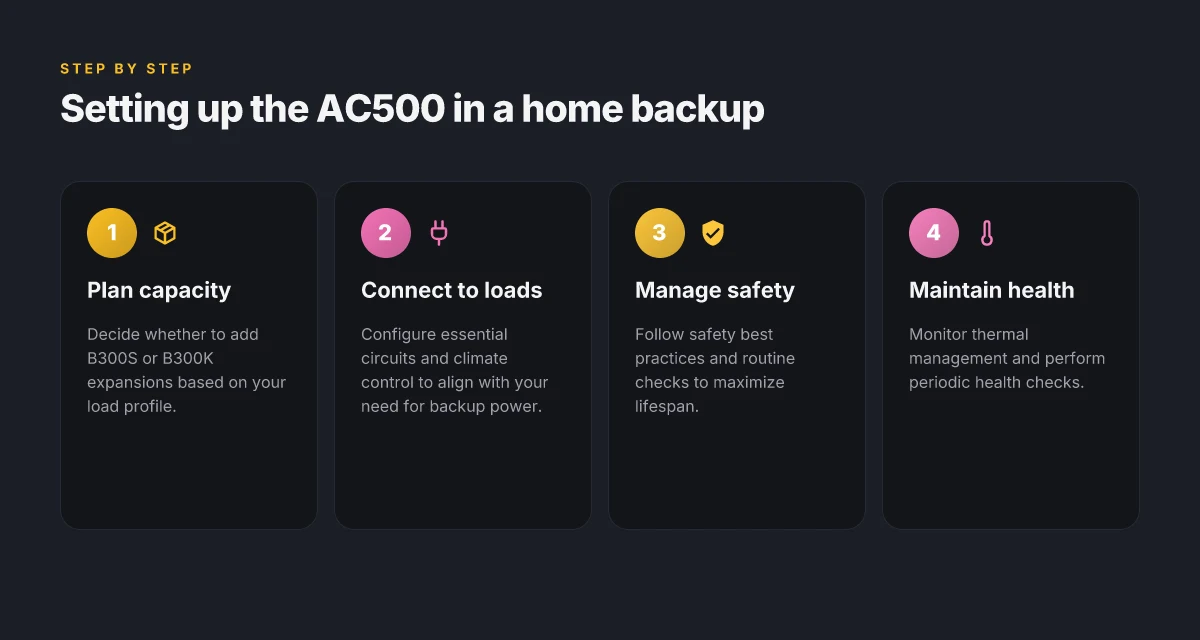
Setting up the Bluetti AC500 starts with configuring expansion batteries and tying the system into your home loads. The AC500 supports expanding capacity with B300S or B300K modules, so you’ll want to plan how many packs you’ll install to meet your peak needs. After you pair the expansion pack, wire the system into the main transfer path or subpanel per local code, and verify that your essential circuits are clearly labeled so you don’t overload a single branch.
Safety first: follow manufacturer guidance for installation clearances and venting. Place the AC500 in a well-ventilated area and keep it away from moisture. Check that all AC outlets are grounded and that the included safety devices, breaker thresholds, fuses, and circuit protection, are sized for your load mix. Routine checks are worth the effort. I recommend a monthly visual inspection of cables and connectors, plus a quarterly functional test of the automatic transfer behavior if you have a home backup plan. Keep clear the pathways around the venting grills to prevent heat buildup. A simple calendar reminder helps you stay consistent, routine checks prevent surprises during a power event.
Micro-claims you should act on now matter for long-term reliability. When you add expansion batteries, Bluetti emphasizes proper sequence: attach the base AC500 first, then connect each B300S or B300K pack one at a time, ensuring the system recognizes each module before adding the next. If you see a fault indicator, consult the manual or the official support site before proceeding. In practice, a clean installation reduces future retraining of the system’s safety interlocks.
Thermal management remains a core maintenance duty. The unit’s LiFePO4 chemistry runs cooler with adequate airflow, and you’ll minimize wear by avoiding stacked or enclosed installations. Periodically dust the vents and measure ambient temperatures near the host unit during operation. If you notice unusually warm surfaces, pause operation and recheck ventilation. A calm, cool environment supports a longer life for the battery pack family.
One more routine habit that pays off: align your usage patterns with charging windows. If you run heavy loads, balance them with the AC charging cycle so you don’t exceed the rated input or trigger unnecessary surge protection events. Regular health checks should include confirming the system clock, firmware status, and any expansion battery health notes. In practice, staying on top of these signals helps you catch a degraded cell early. What is the EcoFlow solar tracker price, and why it matters in 2026
Brand and price realities matter as you plan. Bluetti actively prices the AC500 lineup around its expandable architecture, and you’ll want to compare total ownership cost when you count expansion packs, mounting hardware, and any extra cables. Watch for seasonal deals and bundles that include B300S or B300K packs, because a bundle can tilt the overall cost in a favorable direction. When rivals like Jackery or EcoFlow push similar large-capacity systems, your decision should hinge on expansion flexibility, ease of installation, and long-term maintenance needs. The practical takeaway: plan your expansion path, keep the installation tidy, and establish a quarterly routine to maximize lifespan and reliability.
Opening with proper expansion sequencing reduces rework later. Regular thermal checks prevent unexpected degradation. A monthly inspection helps you catch loose connections early.
Cited guidance and product context come from Bluetti’s official documentation and community-facing planning notes on expansion and safety. For direct reference, see the Bluetti resources linked in this article and the expansion-battery notes within the AC500 ecosystem. You’ll also find practical perspectives in third-party reviews that discuss real-world installation challenges and price considerations.
The move that matters now for Bluetti AC500
The current market reality makes the Bluetti AC500 a compelling pick for 2026, especially for serious off-grid setups and home backup. I looked at how the system scales with modular expansion and how its fast charge and robust inverter platform stack up against rivals like EcoFlow and Jetpack systems. The bigger pattern here is that expandability matters more than peak wattage alone, and Bluetti leans into that with a solid fanless stack and a long warranty window. If you value a clean install and predictable long-term ownership, the AC500 looks strategically smarter than most inline competitors.
One downside to flag: the ecosystem around accessories can feel fragmented at times, and some users report price drift on bundles. Still, when you factor in the cost of ownership over several years, the balance tilts toward reliability and serviceability. You’ll notice better day-to-day usability from the AC500’s modular design, which makes routine upgrades painless rather than disruptive. For buyers who want a future-proofed home energy buffer, the path is clear: plan for expansion, not a one-off purchase. How to buy EcoFlow Delta 2026: the best official channels and real-world options
If you want to act now, consider 1) pairing the AC500 with a compact solar setup to reduce grid dependence, and 2) mapping where you’ll place the modules for peak efficiency. This week is a good time to sketch a growth plan, not a quick win. The question to watch: what’s your expansion footprint over the next two years?