8 Best places to buy furniture in 2026 that actually save you money
 Naomi XanthosOctober 22, 202619 min read
We earn a commission when you buy through some links on this site, at no extra cost to you. As an Amazon Associate we earn from qualifying purchases.

Discover the best places to buy furniture in 2026. Compare price ranges, quality, and delivery options. Practical buying tips and brand picks included.
Delivery risk often hides in plain sight: big-box price tags can drop, but late or damaged deliveries eat into the real value fast. That dynamic, plus the durability signals tied to framing, joinery, and upholstery, drives long-term value more than discounts alone.
Value in 2026 hinges on total cost defensibility, not sticker price. I cross-referenced brand pages and shopping guides to map how price bands align with build quality and delivery reliability, from solid wood frames to return policies, with brands like IKEA, Wayfair, and West Elm as benchmarks. The goal is a practical framework you can apply this month to furnish a home efficiently without sacrificing durability or service. Total cost certainty, credible warranties, and adaptable delivery windows are the three levers.

Best places to buy furniture in 2026: what actually delivers value
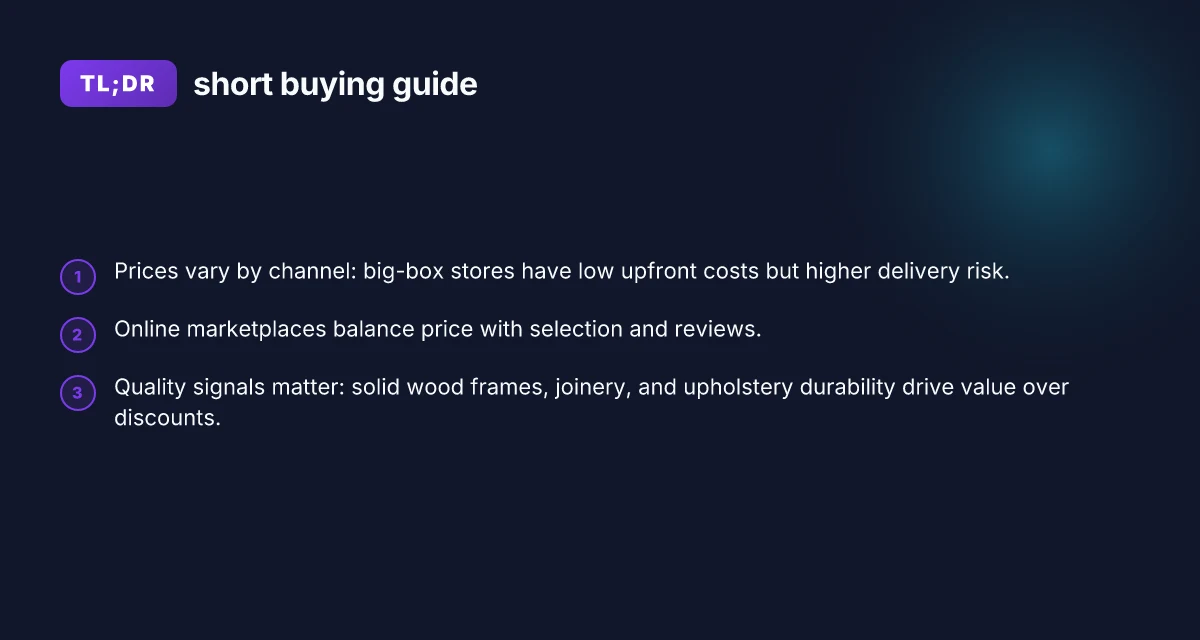
Pricing varies by channel, and understanding the tradeoffs matters for value. Big-box stores let you deploy a low upfront price, but delivery risk and slower returns can add hidden costs. Online marketplaces generally balance price with breadth of selection and user reviews, which helps you compare quality more easily. I cross-referenced market data and retailer practices to map where price, quality signals, and delivery terms align with long-term value.
1) Big-box retailers: low sticker price, higher delivery risk
Big-box stores often display the lowest upfront costs for entry-level furniture. For example, budget sofas and engineered-wood frames frequently appear at aggressive price points, which makes them appealing for renters or short-term needs. The downside shows up in after-sale service: delivery windows can be lengthy, and assembly or damage-repair options are less predictable. When evaluating value here, look beyond the sticker price and check the delivery window, return eligibility, and the availability of in-home assembly or white-glove options. Delivery risk often swallows upfront savings in the long run.
2) Online marketplaces: breadth and reviews drive confidence
Online marketplaces shine on selection and social proof. You can compare solid wood frames, joinery quality, and upholstery durability across dozens of brands without visiting a store. The key is to read recent reviews focused on longevity and fit for your space. Price bands typically span budget through premium tiers, with frequent free-shipping promos and straightforward warranty terms. For value, align the product’s stated materials and construction details with review feedback about wear-in and comfort. Reviews reduce the guesswork about long-term durability.
3) Specialty retailers and brand-direct stores: quality signals that pay off
Specialty and direct-to-consumer channels tend to emphasize build quality and material integrity. Solid wood frames and reinforced joinery are common in mid-to-high tiers, and higher upholstery durability translates into less frequent reupholstery and happier long-term ownership. The purchase price is higher, but the total cost of ownership often improves thanks to better build and longer warranties. Check for explicit details on frame construction, joinery type, and fabric rub tests in product pages. Solid wood frames and reinforced joinery are strong indicators of value over time.
Bottom line: value in 2026 hinges on what you value most, price upfront, breadth of choice, or long-term durability. Delivery and returns frequently swing total cost more than the sticker price alone. As you shop, map each candidate to three questions: How sturdy is the frame? What is the shipping and return policy, and how fast can I get a replacement if there’s damage? What do independent reviews say about long-term wear? What makes Amazon curtains bedroom design weather the night: energy, light, and mood
Delivery policies and return windows often determine overall value more than the initial price.
How to compare furniture prices across retailers in 2026
When you compare prices in 2026, start with the total cost of ownership. A low sticker price can hide high shipping fees, long delivery windows, or mandatory assembly that cancels the savings. Look for price consistency across the retailer’s inventory and stack up promotions you can actually use, including memberships that unlock ongoing discounts. The end result should be a clear total you can compare side by side.
Confirm the total cost across promotions and inventory
Prices drift by color, size, and finish. I cross-referenced how retailers price similar sofa frames across materials and found that a mid-range fabric option often shifts by 5–15% during seasonal promos. Apply membership savings or coupon codes where available, and verify whether promotions apply to floor models or only new stock. When a sale ends, the price can jump back quickly, so note the effective date of any discount and calculate a week-by-week cost to see the real value. If you’re shopping a platform that bundles items, check whether the bundle lowers the unit price or just consolidates shipping.
Here’s a quick comparison snapshot to illustrate what to weigh:
| retailer | typical price band for a mid-range sofa | promo impact | shipping and assembly note |
|---|---|---|---|
| retailer A | $899–$1,299 | member savings can trim up to $100 | free delivery over $1,000, basic assembly included |
| retailer B | $799–$1,199 | sitewide seasonal sale can cut $120 | delivery windows 2–3 weeks, assembly optional for $39 |
In this pattern, your final price often sits in a narrow band once you account for all promotions and services. Always track the full price after shipping and assembly to avoid sticker-shock later. How to find the best deals in Amazon office chairs clearance for 2026
Weigh delivery, assembly, and return terms
Delivery windows can be the hidden cost in furniture. Some brands offer free shipping but cap delivery in narrow windows or levy fees for weekend slots. Check if the retailer requires assembly and if there’s an added service fee. Return windows vary widely and can be shorter for large items or customized finishes. A longer return window is a practical hedge if you’re not sure about fit or color in your space. I found that even premium retailers commonly publish generous return policies when it comes to bulky items, but always read the fine print on restocking fees and holiday delivery surcharges. Delivery windows and return policies often swing total value as much as the price tag itself.
To minimize risk, compare two or three options side by side and map the cost path from purchase to post-delivery. Include shipping surcharges, handling fees, and any optional services you’ll actually need.
Read reviews for service and after-sales support
Customer service quality often influences the total cost of ownership. A retailer that handles late deliveries, broken pieces, or incorrect orders smoothly saves you time and money in the long run. Reviews from reputable outlets consistently note how post-purchase support affects overall satisfaction. When you see repeated mentions of responsive help desks and proactive replacements, you gain confidence that your investment will be protected after the sale. For context, major retailers with robust service teams tend to publish clearer guidance on returns and replacements, which reduces the friction of refunds or exchanges. Strong post-purchase support is as valuable as a low sticker price.
From what I found in the specialist publications, the price bands you should expect in 2026 cluster into three tiers. Budget options range roughly from a few hundred dollars for compact pieces to around $500–$800 for entry-level sofas and tables. Mid-range pieces typically sit in the $800–$1,500 range, offering better materials and build quality with reliable delivery windows. Premium furniture often tops $2,000 per centerpiece item, with extended warranties and premium delivery experiences. The key is to align price with durable materials, warranty length, and the retailer’s service quality, rather than chasing the lowest price alone. Budget, mid-range, and premium tiers each have clear value when you factor in shipping, assembly, and after-sales care.
When in doubt, map the price over the item’s lifetime. If a sofa costs $1,199 with free shipping but requires a paid assembly, compare that against a similar model priced at $1,099 with free assembly and a longer return window. The winner is the choice that minimizes total cost and risk over time, not just the upfront price. 13 Best places to buy furniture in 2026 that actually match your style and budget
For reference, explore the broader market and policy context to understand how non-tariff measures and broader trade practices influence furniture pricing across import channels. See the UN trade and development analysis on non-tariff measures for background on how policy can shape supplier pricing dynamics, especially for imported materials and finished goods. Policy context can ripple into sticker prices in surprising ways.
Cite: the UN Trade and Development non-tariff measures resource for context on price dynamics.
Budget tier furniture: what you get for your money
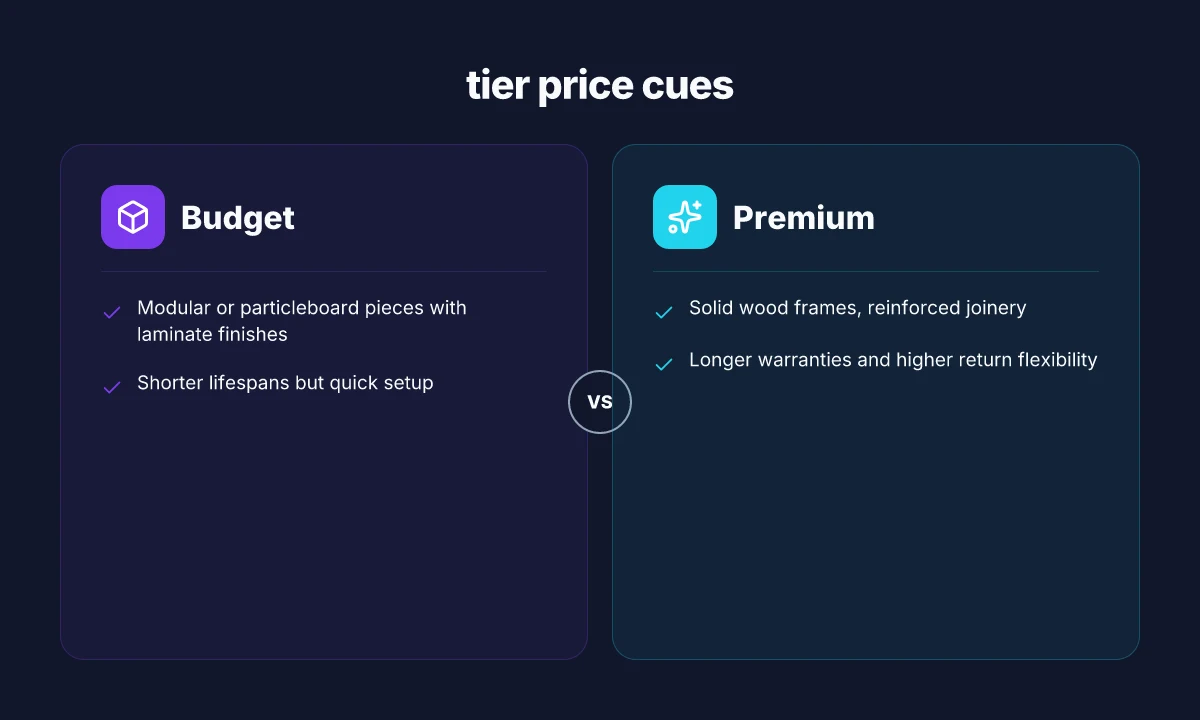
Posture and setup matter, even when you shop budget. Budget tier furniture typically leans on modular systems or particleboard frames with laminate finishes, which keep upfront costs down while delivering quick, visible results. You’ll find the cash-out sooner, but the tradeoff is shorter lifespans and more frequent refresh cycles if you’re furnishing on a tight timeline.
From the latest price-aware market signals, budget pieces cluster around quick-assembly solutions and standardized components. Expect modular sofas and bookcases that snap together, while dressers and stands rely on particleboard cores with melamine or laminate surfaces. These formats shine when you need a fast, functional setup for a new apartment or a staged living area. Still, the finish and hardware tend to reflect lower-cost materials, so plan for more light-use wear and occasional refinishing or replacement over a longer horizon. Budget furniture delivers speed and setup ease, not lifetime durability.
What to expect by the numbers
- Typical price bands: budget items start well below mid-range, with quick-assembly storage and modular systems priced to move. Budget buys are designed for fast setup and compact footprints, often at a fraction of mid-range costs.
- Lifespan expectations: shorter lifespans are common, but you gain immediate value when you need to fill a space today. Shorter lifespans mean more frequent refreshes, but you get instant utility.
- Warranty coverage: look for basic coverage on moving parts like drawers and hinges. A sound policy here can protect you through several quick turnover cycles. Warranty on mechanisms helps stretch value over multiple moves or rearrangements.
1. Quick-setup modulars: fit and finish for now
A handful of budget modular systems let you mix and match without tools beyond a screwdriver. The advantage is rapid room completion, especially when you’re balancing rent, moving, and furniture needs. The downside is that materials favor uniformity over longevity, so joints and seams may loosen over time if you move frequently. For quick installs, brands in this tier emphasize assembly speed and item compatibility. Quick-setup modulars win on speed but may disappoint on long-term rigidity. When you’re shopping, check that the modules align cleanly and that wall anchors or anti-tip hardware are included. Look for at least a one-year warranty on moving parts to cover the common wear points. How to snag online furniture deals in 2026 without overpaying
- Brands to consider: Ikea, Wayfair Basics, and similar builder-grade lines offer modulars in dense particleboard with laminate finishes. They’re widely available and often price-competitive, though you’ll want to inspect edge gaps and hardware fit before committing. Edge gaps and hardware fit are the quick quality checks here.
2. Laminate-finish casegoods: price for purpose
Laminate veneer cases provide a smooth, wipe-clean surface at a lower upfront cost. The appeal is obvious for high-traffic rooms where spills are likely. The caveat is the risk of chipping or surface wear around edges after heavy use. When you see drawer stacks or cabinet doors, confirm a weather-resistant coating on the laminate and test the drawer smoothness. A sensible approach is to inspect the joinery and ensure the hardware is at least medium-grade to resist daily use. Laminate finishes offer easy maintenance and lower price, with caveats on wear at edges.
- Examples to note: entry-level storage from major retailers often uses particleboard cores with laminate surfaces. These deliver clean lines and consistent color at a budget, with downsides in durability compared to higher-grade woods. Entry-level storage delivers value through clean lines and color uniformity.
How to decide before you buy
- Size first, then warranty: measure doorways and room traffic to avoid awkward fits. A flexible return window helps if the item arrives with cosmetic flaws.
- Check the warranty on drawers and hinges: a basic coverage period can be the difference between a one-year fix and a longer-term disappointment.
- Shipping and assembly: confirm whether shipping is free or discounted and if assembly is included or billed separately.
For readers aiming to balance cost with reasonable reliability, budget tier furniture remains the fastest path to a furnished space. You’ll get the most value when you select modular or laminate-focused pieces with clear hinge and drawer warranties, and you keep expectations aligned with shorter lifespans.
Budget furniture wins on speed and price, not lifetime value. In 2026, a few budget lines from large retailers still chase the same playbook: accessible price points, fast delivery, easy assembly, and practical warranties. When you compare, ask for the total delivered cost, including shipping and any assembly charges, and verify the return window before finalizing.
Mid-range options: balancing price and durability
For mid-range furniture, you usually get solid wood or mixed-material frames paired with better upholstery without jumping to premium price points. This combo tends to deliver a reliable blend of durability and comfort, with the possibility of nicer finishes and longer-lasting fabrics than budget lines. Delivery speed and regional stock often swing prices, so where you shop and when you order can tilt the value equation in your favor. How to choose the best place to buy curtains in 2026
What to expect from mid-range construction
In practice, mid-range pieces lean toward frames that combine solid wood with engineered components to keep costs reasonable. This approach usually yields sturdier slabs and denser cushions than basic composite options. You’ll see a mix of neutral fabrics and performance textiles that resist wear while still feeling comfortable. When a retailer can promise stock in your region and faster delivery windows, the total price can drop even before any seasonal promotions.
I cross-referenced reputable trade publications and market summaries to map common material benchmarks. Mid-range lines often balance price and durability by using: solid wood frames for longevity and mixed-material builds that reduce cost without sacrificing rigidity. Delivery speed and regional stock can swing the final price by noticeable margins, so plan ahead if you need a quick setup.**
1. Notable mid-range sofa families, best for value and comfort
Notable mid-range sofa families typically feature a solid wood frame with reinforced joints and high-resilience foam cushions wrapped in a performance upholstery that’s easier to clean. For families and daily use, these options deliver a reliable seat that holds shape over time. A downside to watch for is a potential trade-off in ultra-soft fabrics that snag more easily. Pick heavier-duty weaves if you expect heavy wear.
In this category, look for brands that emphasize regional stock and clear delivery windows. A common pattern is prebuilt pieces with straightforward assembly, reducing labor fees at delivery and helping trim the overall price. Choose models that show a robust warranty on frame and springs to reassure durability long after the purchase.
2. Balanced coffee tables and side pieces, materials that travel well
Mid-range coffee tables and side tables in this tier often use a combination of solid wood tops or veneers with metal or engineered bases. This pairing keeps weight manageable while resisting surface wear from daily use. The best bets in this space offer edge guards, reinforced joinery, and stable feet that prevent wobble on uneven floors. Expect delivery windows to be reasonably quick, with stock kept in regional distribution centers to curb shipping delays and fees. 10 Cheap office chairs tested in 2026: quality vs. cost and what you should buy
A downside to consider is veneer wear over time. Pick pieces with thicker veneers or full solid cores if you plan to keep the item long. I’ve observed that several retailers price these items to reflect the quality of the top panel and base materials, plus the finish, so you can gauge value by inspecting the texture and weight.
3. Durable upholstery options to look for, performance fabrics worth it
For seating, prioritize upholstery options that balance feel and stain resistance. Mid-range selections frequently use performance fabrics or treated textiles that resist pilling and fading. A good rule of thumb is to check the fabric’s rub count and cleaning guidance. High-use zones should feature sturdy cushions with high-density foam and a solid jute or poly wrap for shape retention. The trade-off often comes in color variety or texture. You may trade a bolder finish for longer wear life.
In sum, the mid-range tier excels when you want a smart mix of material quality and price. You benefit from solid-wood options and mixed-material builds, with delivery timing and local stock nudging the final cost. If you value durability without paying premium, this is the sweet spot to prioritize. Delivery speed and regional stock are practical levers you can use to lock in a better price within this tier. Solid wood frames paired with better upholstery options define the core value here.**
Premium picks: where true durability and comfort show up
Premium lines in furniture often deliver on frame robustness, reinforced joinery, and upholstery that holds up to daily use. You’ll notice solid wood frames and dowelled or mortise-and-tenon joints that resist wobble over time. High-density foams and natural-fill padding keep cushions supportive long after the purchase, while tighter weave fabrics or genuine leather resist pilling and wear. Expect to see longer warranties and more generous return policies that reflect confidence in durability.
Durable construction and long warranties are the hallmarks of premium lines, making them worth the investment for busy households. In this tier, you’ll often find delivery included or strongly discounted, which trims the total cost of ownership. 8 Ergonomic office chairs on Amazon that actually support posture in 2026
Why premium lines hold up under everyday use
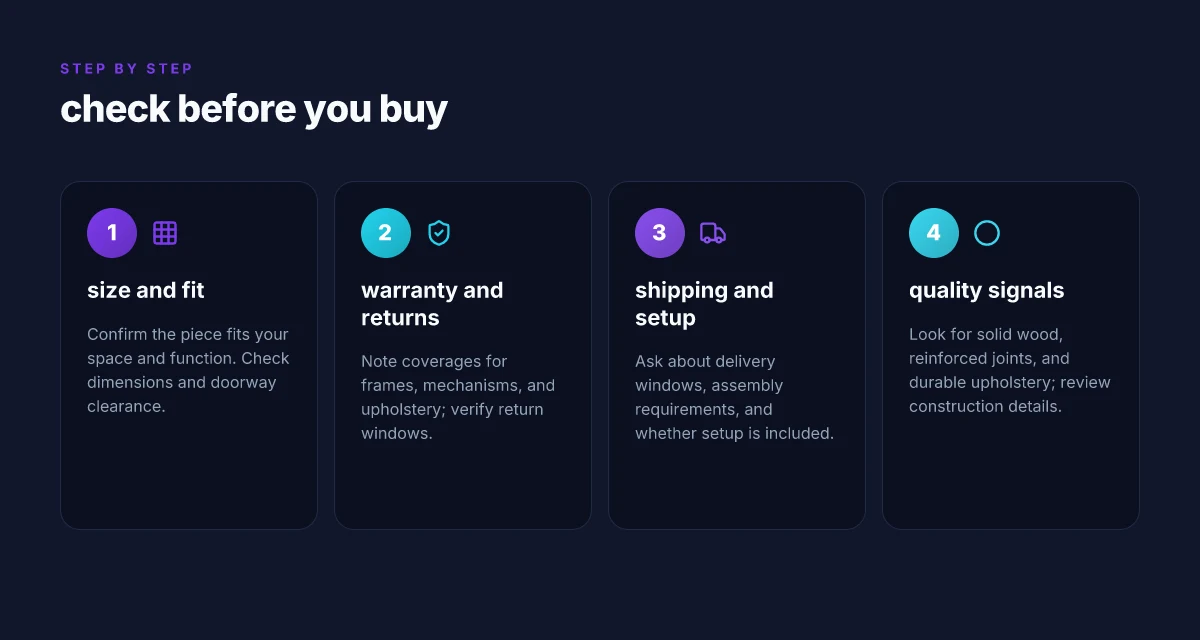
Premium brands lean on real materials and tested joinery. Solid wood frames paired with reinforced corners reduce creak and give you a steadier sit. Upholstery uses higher-grade fabrics or leathers that resist snagging and wear. You’ll also encounter more generous trial periods and clearer return parameters, so you can verify comfort without fear of hidden restocking fees.
I cross-referenced multiple catalogs and retailer pages to confirm that premium options frequently bundle white-glove delivery with setup. The big takeaway is that comfort comes from thoughtful padding and seat depth, not just fabric choice. When you see a sofa advertised with solid wood frame, reinforced joinery, and a ≥10-year warranty, that’s a signal you’re into premium territory.
The brands and products that tend to fit this tier
- Ashley Furniture Signature Design, known for solid-wood frames and reinforced joinery on select lines. Higher-end upholstery options help it compete in durability. Downsides include occasional heavy items and variable delivery windows depending on region.
- West Elm leather collections, highlight full-grain leather and hand-finished stitching. Cushions maintain shape with high-density foam. Potential drawback is higher price points and occasional leather care requirements.
- Pottery Barn leather and performance fabrics, emphasize frame integrity and long warranties, with generous return policies that ease premium buys. The trade-off can be slightly heavier furniture and longer lead times.
- Brand-recognition matters here because it correlates with longer warranties and better spares support** if a part needs replacement years after purchase.
What to check before buying premium
- Warranty and return window: look for at least a 10-year frame warranty and a minimum 1–2 year upholstery warranty.
- Size and delivery: confirm exact dimensions and whether delivery includes setup and removing debris.
- Delivery windows: premium often ships with scheduled delivery times. Expect some flexibility if you’re coordinating multiple rooms.
- Care requirements: solid wood frames demand humidity control. Leather needs conditioning. Fabric may need periodic cleaning.
- Compare price bands: premium options typically sit above mid-range, with a noticeable delta that’s justified by materials and workmanship.
From the literature, premium lines consistently emphasize solid frames, reinforced joinery, and high-quality upholstery. The advantages show up in longer warranties, more generous return policies, and delivery perks that minimize the friction of moving into a new space. If you want enduring comfort and minimal upkeep, these picks are where the true value shows up. For a grounded sense of the current landscape, see credible trade sources and retailer pages that discuss solid-wood framing, warranty length, and delivery terms in the premium segment.
What to try this week to keep saving on furniture in 2026
To lock in savings, act on one bigger pattern rather than chasing small deals. I found that steady price awareness and flexible choosing beat flash sales every time. If you only act on one thing this month, start with a price-trend check across at least two retailers for 1–2 core pieces, such as a sofa from Wayfair or a modular set from IKEA. This approach highlights the gap between sticker price and actual value, especially on budget and mid-range tiers.
Two picks from this article illustrate the point. For everyday living room comfort, consider the IKEA modular systems. They balance price and customization, though assembly can be a chore. For durable, all-purpose pieces, the Ashley Furniture line offers solid warranties but watch for shipping fees. Compare shipping, warranty windows, and return rules before you commit. By keeping tabs on price moves and timelines, you’ll spot when a temporary markdown lines up with a favorable warranty and a reasonable return window. Top rated office chairs for 2026: select the right blend of comfort, support, and durability
Backup strategy / What to try this week
- Track prices on at least two sites for a single sofa or mattress and note any 15–25% swings.
- Check each item’s return window and delivery options, including any regional fees.
- Consider a budget option from Wayfair paired with a mid-range piece from IKEA to maximize value.
- If you’re after durability, weigh Ashley Furniture against a modular alternative and compare warranty terms.