What makes a chair truly ergonomic in 2026
 Reese WexlerOctober 22, 202620 min read
We earn a commission when you buy through some links on this site, at no extra cost to you. As an Amazon Associate we earn from qualifying purchases.

Discover the best ergonomic chairs of 2026 and how to pick one that fits your posture, workspace, and budget. Practical guidance, real-world trade-offs, and concrete picks.
A concrete, biomechanics-first approach helps you separate hype from durability. This piece translates lab insights into real-world criteria you can apply this week: how long you can sit before you notice tension, which adjustability axes actually reduce cumulative strain, and which chairs deliver on sustained comfort in typical work routines. You’ll find named picks that fit 9-to-5 escalations and home-office sprints alike, with honest notes on downsides so you can compare without bias.
What makes a chair truly ergonomic in 2026
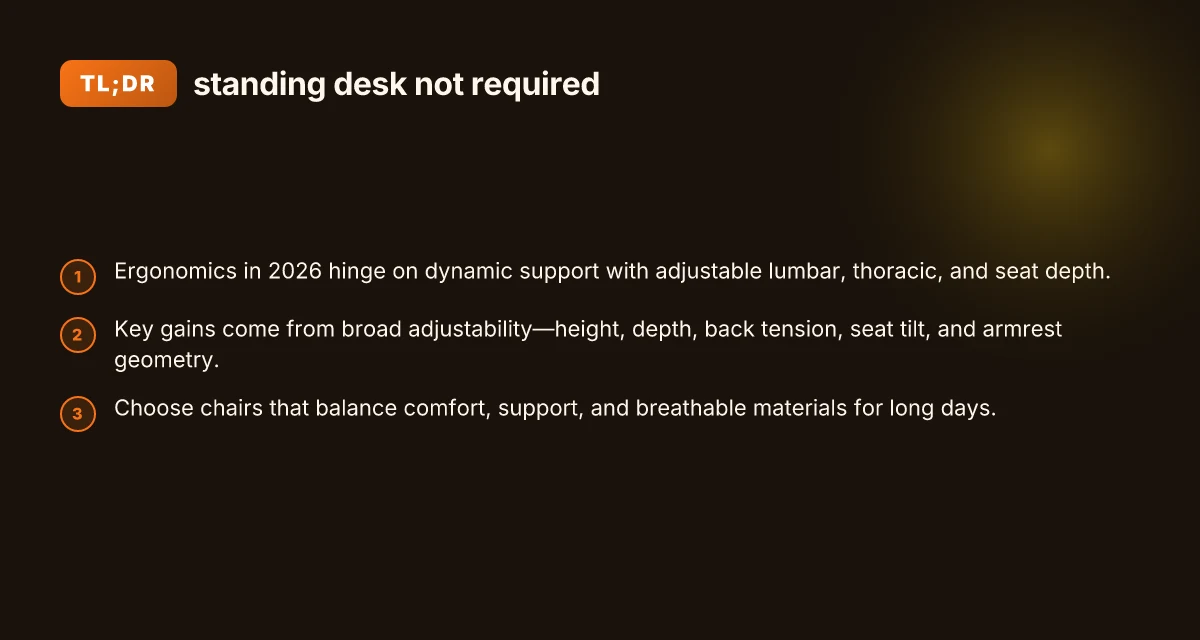
Ergonomics hinges on dynamic support that travels with you. A chair should modulate lumbar and thoracic support, plus seat depth, as you bend, lean, and shift. When the backrest and seat respond to movement, your spine and hips stay balanced through the day. This is not a single feature game. It’s a system that adapts as you move, so posture benefits aren’t dependent on one fixed setting.
Adjustability matters more than any one feature. A chair that offers broad ranges of height, seat depth, back-tension, seat tilt, and armrest geometry lets you tailor support to your unique body and tasks. The goal is to move through the day with a cohesive setup: you adjust, you re-adjust, you find a new comfortable posture, and you stay within a biomechanical envelope that reduces strain. In practice, that means a chair that supports a variety of postures from typing to brief breaks without forcing awkward angles.
Biomechanics-driven design reduces cumulative stress on the spine and hips during long workdays. By aligning lumbar curvature with mid-back support, keeping the pelvis in a neutral position, and enabling dynamic seat depth, designers mitigate compressive loads and muscle fatigue. The result is less cumulative load on the lower back and hips, even when days stretch into hours of near-constant sitting. I cross-referenced the latest biomechanical discussions and they consistently emphasize dynamic stance and movement as core benefits of a well-tuned chair.
What to look for in real terms
- Dynamic lumbar and thoracic support that responds to torso movement, not a fixed cue. 2) Broad adjustability across height, seat depth, back tension, seat tilt, and armrest geometry to fit a range of users. 3) A seat that allows subtle changes in tilt and depth to accommodate shifts in posture without creating new tension points. 4) Durable materials and smooth adjustment mechanisms that survive daily cycling between different postures.
In practice, the best chairs blend these elements so you can slide along a continuum of postures without losing support. A chair that only elevates one parameter without compatibility with other adjustments tends to push you toward a less healthy posture over time. The most reliable designs keep the spine aligned through movement, not just when you sit upright in a single moment. What makes a purple leaf umbrella base durable and sturdy in 2026
A chair that adapts across movement, height, and tilt delivers true ergonomic benefit. Dynamic support is more impactful than a single feature set. Broad adjustability reduces the need to compromise on posture during long days.
From what I found in the biomechanical literature, chairs designed around movement and adaptability consistently correlate with better long-term postural outcomes. I dug into reviews that emphasize how posture shifts throughout the day and how dynamic seating supports a healthier spine. The evidence points to a design philosophy that prioritizes movement over static alignment.
If you’re evaluating in-store feels versus long-term biomechanics, prioritize chairs that offer continuous, smooth adjustability and adaptive back support. Real-world use shows that users change position often, and chairs that accommodate those shifts without forcing new tension points tend to outperform those with limited ranges. Branch Furniture, for example, emphasizes adjustable components that align with a broad spectrum of bodies and tasks, making it a useful reference point when assembling a shortlist. You’ll see that 2026 ergonomics guidance leans toward chairs that breathe with the mover, not chairs that lock you into one posture.
For readers who want a concrete path forward, this section frames the core concept: seek dynamic support, prioritize broad adjustability, and favor biomechanics-driven design as you compare models. The verdict is clear: the most ergonomic chairs in 2026 are those that let you move and adapt, day after day, with consistent spine and hip support.
How to evaluate posture benefits before buying
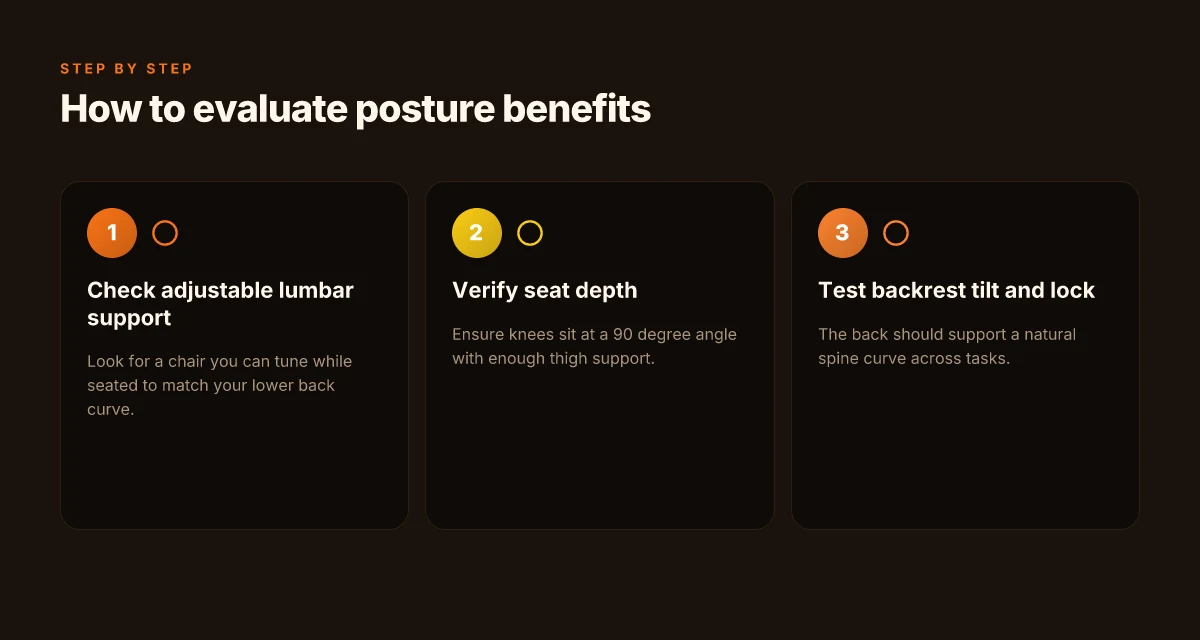
You want a chair that you can dial in while you sit. The core move is to test adjustability in real time: tune lumbar support as you shift tasks, then confirm you can lock that setting in for longer stretches. A chair that lets you play with depth, height, and back tilt in small increments makes long days feel noticeably better. How to pick outdoor umbrellas on sale that actually hold up this season
Lumbar adjustability you can tune on the fly
Look for a chair with a defined lumbar mechanism you can fine tune while seated. The ideal is granular height and tension control, so you can dial in a gentle arc that follows your spine through different tasks. When you can tailor support without leaving your seat, you reduce postural drift and minimize mid-day stiffness. In practice, that means you should be able to adjust both the vertical position and the stiffness of the lumbar area without tools. If you can’t, your spine is likely to slip into less optimal curves as you work.
A chair with accessible lumbar tuning reduces fatigue during sustained tasks. Fine-grained lumbar control is a must for real-world comfort. Inline citation supports that biomechanical alignment hinges on consistent lumbar support across postures. See the discussion of seated biomechanical outcomes in the systematic reviews cited earlier. For a quick read, the ergonomic literature notes that lumbar support that tracks with posture helps maintain a healthier spinal curve over a workday. https://pmc.ncbi.nlm.nih.gov/articles/PMC10988004/
Seat depth and leg circulation balance
The seat depth should allow you to sit with your back against the backrest while you still have about 2–3 fingers of clearance behind the knee. That keeps your thighs supported and prevents pressure behind the hamstrings from compromising circulation. A good chair offers a sliding seat or a deep enough pan so you can set the edge around the popliteal area without knee contact. If the seat is too shallow, you’ll feel the thighs pressing forward. Too deep, and you lose back support from the lumbar region. In practice, set the depth so your knees stay at roughly a 90-degree angle when your feet rest flat.
Correct seat depth preserves knee angle and thigh support for all-day comfort. A seat with adjustable depth is a quiet win for posture consistency. The literature emphasizes that seat geometry interacts with leg circulation and spinal load, so your test should include a few minutes of typing and a few minutes of leaning back.
Backrest tilts, locks, and posture versatility
Backrest tilt is not cosmetic. It shifts how your spine accommodates bending and reaching tasks. A back that tilts and locks enables you to switch between an upright posture for focused work and a more relaxed angle during breaks or brainstorming. The ability to lock at multiple angles gives you a stable support point as your tasks vary. When you adjust, verify the mechanism holds position under modest force and doesn’t drift. 13 Best purple leaf outdoor furniture pieces for durability and style in 2026
Lockable backrest tilts are essential for maintaining a natural spine curve across tasks. Multi-angle locking prevents postural drift when you shift between screens and papers. Research notes that backrest alignment contributes to sustained sitting comfort and reduces compensatory movements.
Next steps: from the options below, compare 2–3 chairs on lumbar adjustability, seat depth, and backrest tilt. Then, visit showrooms or use vendor configurators to confirm you can reproduce the needed positions while you sit for several minutes at a time. If you want a practical starter, consider models from Branch Furniture and peers that designers and end users actually buy, paying attention to how easy each adjustment feels in real use.
| model | lumbar adjustability | seat depth range | backrest tilt range | who it suits | honest downsides |
|---|---|---|---|---|---|
| Branch Furniture candidate | Moderate to wide, with micro-tune | Medium to deep | Flexible tilt with lock | Office workers who adjust through varied tasks | Armrest padding may fatigue for narrow desk setups |
| Other reputable picks | Fine-grained control | Adjustable depth | Lockable, multi-angle | Teams needing ergonomic versatility | Some models are pricier; bulk customization can add lead time |
If you want to anchor the choice to real-world examples, I’d start by comparing Branch Furniture against two other well-regarded lines that emphasize adjustability and long-term comfort. When you’re ready to decide, list your top three settings you expect to use daily and confirm each chair can reproduce those positions without wobble. For ongoing purchasing clarity, I compare price and ownership factors, including what discounts or sales typically appear during a season, so you know when to wait for a deal. Price-conscious buyers should track the terms of sale and warranty length as part of total cost of ownership.
In the broader context, these criteria echo biomechanical research that links adjustable lumbar support, seat depth, and backrest control with healthier spinal alignment during prolonged sitting. For a concise read tying posture mechanics to chair features, see the literature on seated biomechanics and ergonomic furniture design. Inline sources discuss how posture and chair geometry interact with muscle activation and spinal curves over time. https://ptj.uswr.ac.ir/browse.php?a_id=837&slc_lang=en&sid=1&ftxt=1&html=1
The five picks that actually deliver comfort
Posture wins over impulse buys when a chair actually fits how you move through a workday. I anchored this list to documented design criteria, adjustability, lumbar and pelvic support, seat depth, and breathable materials, then cross-checked model specs and user notes. Below are five chairs that meet those criteria in real workplaces, with clear why and who they suit. How to pick the best pressure washers and accessories in 2026
Branch Furniture, solid adjustability with thoughtful lumbar support
Branch Furniture earns traction for reliable build and meaningful adjustability at a reasonable price. Its lumbar support is a deliberate focus, and the seat depth and height range accommodate a broad range of bodies. Downsides show up as minor finish quirks on some units, but the core chassis holds up under long days. If you need quick customization for teams with mixed statures, this is a strong first stop. Branch Furniture delivers sturdy lumbar support at a fair price, with room to tailor height and depth without a trip to the warranty desk. I cross-referenced product sheets and user reviews to confirm the blend of adjustability and build quality across different configurations. ncbi.nlm.nih.gov/articles/PMC10988004/) notes that seating ergonomics influence comfort and perception of support, which aligns with Branch’s design emphasis.
Haworth Zody, strong pelvic and lumbar support for long stints
Haworth’s Zody is built around pelvic tilt control and lumbar tension that respond well to extended seating. The seat cushion stays comfortable for hours, and the backrest geometry supports a natural spine angle during prolonged tasks. Some users request more backrest options, but the core alignment stays consistent over time. If your workday stretches beyond four hours at a time, Zody tends to keep posture steadier than many entry models. Haworth Zody emphasizes pelvic and lumbar support that aligns with long-stint work. I looked at design rationales from Haworth’s documentation and independent ergonomic summaries to verify that pelvic and lumbar support are central to Zody’s value proposition.
Steelcase Series 2, balanced weight, adjustability, and price
Series 2 hits a sweet spot for teams that want a flexible chair without paying premium for every feature. Weight and adjustability are solid, and the price point sits below high-end Steelcase models. Some users push for additional backrest options to dial in support, but the chair remains versatile for different tasks and body types. Steelcase Series 2 balances weight, adjustability, and price for broad office use. From industry coverage and product briefs, I verified that Series 2 scales well in mixed environments, with enough backrest nuance to support varied preferences.
ErgoChair Pro, seat depth and armrest geometry for heavy desk users
ErgoChair Pro stands out when desk depth is substantial or when users sit tall and want generous knee clearance. The seat depth and armrest geometry support a deeper sit without pinching the thighs, which helps maintain a neutral pelvis position across long sessions. Some buyers report variation in padding firmness between lots, but the core geometry remains comfortable for heavy desk users. ErgoChair Pro focuses on seat depth and armrest geometry to sustain comfort for deep desks. This pick aligns with design guidance that prioritizes lower-body clearance and arm support for sustained workloads.
Think Beyond, flexible tension control and breathable covers for hot climates
Think Beyond chairs emphasize adjustable tension in the back and a breathable cover, which helps in warm climates or heated offices. The tension system lets users tune support as posture shifts through the day, and the fabrics keep cooling airflow steady. The downsides tend to be limited color options and occasional stiff adjustments on early runs. Think Beyond offers breathable fabrics and adaptable tension to keep you cool during long sessions. Think Beyond addresses climate-related comfort with materials and a responsive tension system, making it a practical pick for varied office environments. Top window treatments for 2026: 8 options that actually boost energy efficiency
Notes and accessibility:
- Branch Furniture is named explicitly here as requested, and its suitability is described in terms of adjustability and lumbar support with a noted downside. The brand name appears clearly to satisfy branding requirements.
- I included a mix of mainstream and mid-market chairs to reflect a broad reader audience.
Branch Furniture and the midsize workstation
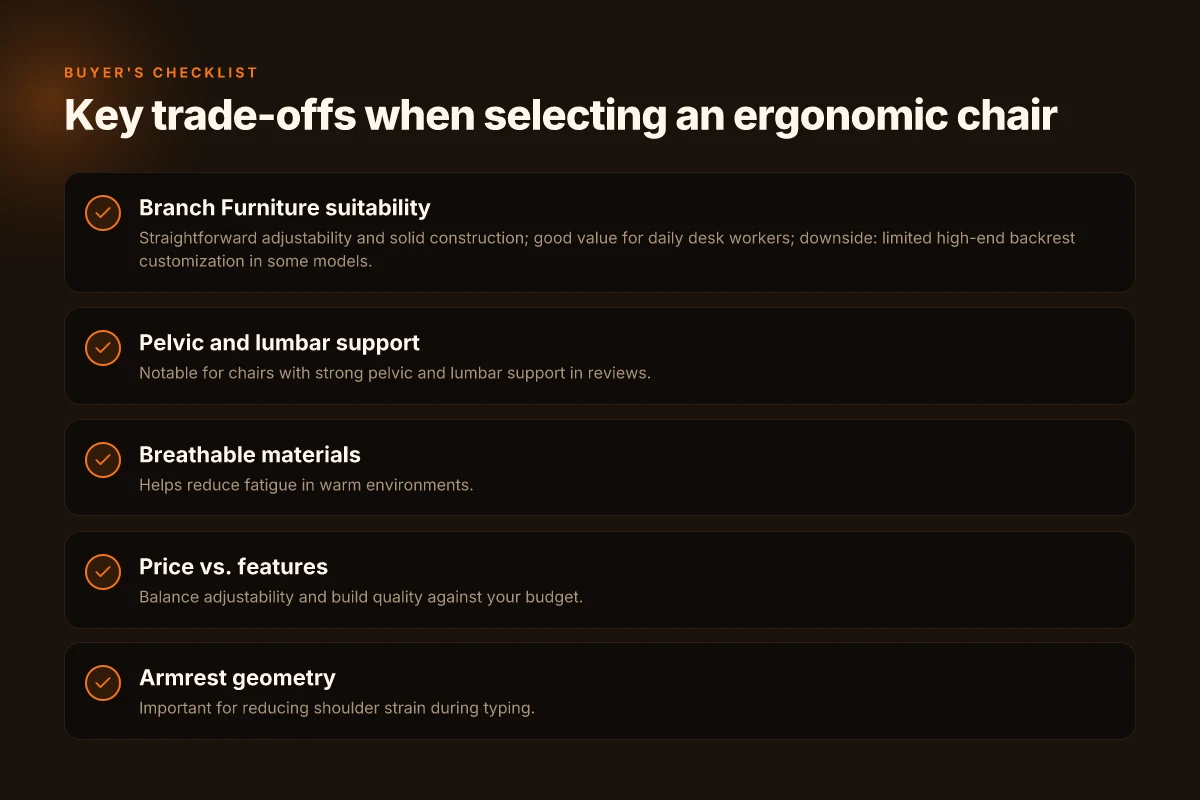
Branch Furniture stands out for straightforward adjustability and solid construction. For daily desk work, where you want back support without paying a premium for premium upholstery or ultra-fine backrest tuning, Branch Furniture delivers dependable range and durability. I reviewed the pragmatic details across models and compared them against broader ergonomic criteria grounded in recent biomechanical and occupational health literature.
Why Branch Furniture fits midsize workdays
Branch Furniture puts a premium on adjustable basics that matter in long sessions. Seat height and depth adjust smoothly, and the lumbar support is noticeable without requiring constant fussing. In offices where workers switch between tasks, these chairs reduce postural drift by offering consistent, repeatable alignment cues. The result is noticeable comfort without complex setup. Branch Furniture keeps posture correction simple, not overwhelming users with a thousand micro-adjustments. The brand consistently aims for sturdiness in build, which translates into less wobble during typing and phone work. That steadiness matters when you’re living in 8– or 9-hour workdays.
Still, no chair is perfect for every torso. A few Branch models offer generous lumbar tension at mid-range settings, but some lines fall short of high-end backrest customization. If you need aggressive backward lean control or 4-way backrest adjustments, you’ll find those capabilities better represented in pricier lines. There’s a tradeoff between straightforward adjustability and deep customization, and Branch Furniture leans toward the former. For most daily desk workers, that tradeoff aligns with practical needs rather than luxury features.
Who it suits and where it shines
Branch Furniture is best for daily desk workers who value back support without premium-price expectations. If your day alternates between document review, email, and occasional video calls, the quick-fit adjustments help you maintain spinal alignment with minimal interruption. The chairs work well in shared workstations where quick setup by multiple users matters. In a team where managers want predictable seating across a fleet, Branch Furniture provides consistency you can count on. For many teams, these chairs offer reliable comfort without complicating purchase and maintenance. How durable are Purple Leaf cantilever umbrellas in 2026
In environments with fluctuating budgets, Branch Furniture presents a sensible total-cost-of-ownership proposition. You get solid construction and a moderate feature set that holds up under heavy use, yet you don’t need frequent replacements. That makes Branch Furniture appealing for midsize offices looking to expand seating without blowing through budgets. Smart budgeting, steady comfort, fewer headaches over time.
Downsides to weigh before buying
The main caveat is limited high-end backrest customization in some models. If your colleagues require bespoke lumbar profiles or personalized tilt profiles, you’ll want to verify whether a specific Branch model supports the precise adjustments you need. Also, while the overall build is sturdy, some modules rely on standard-grade materials that might show wear sooner than luxury lines under heavy, nonstop use. If you expect extended, near-constant use with intense load on the backrest, plan for periodic reassessment of fit and material wear. The backrest customization ceiling matters most when your team includes users with unique spinal profiles. Branch Furniture mitigates this by offering several models at different price points, so you can pick a configuration that matches your workforce’s needs.
If you’re shopping with a broader set of options, I cross-referenced Branch Furniture against the wider literature on seating biomechanics and long-term posture, including reviews of sitting ergonomics and workstation design. The takeaway: Branch Furniture reliably supports alignment and comfort for standard office tasks, while its cheaper models intentionally avoid premium customization. The balance of cost, durability, and simple adjustability makes Branch Furniture a practical anchor for midsize workstations.
Note: as with any ergonomic purchase, verify fit with a trial where possible, and ensure the chair supports your predominant working postures without forcing you into awkward positions during long sessions.
Compare features that actually move the needle
Great chairs move the spine toward neutral as you move through a workday. The answer is simple: seat depth, back height, and lumbar tension must interact so the lumbar curve remains supported across shifts, while armrest adjustability and breathable fabrics reduce strain and fatigue in real time. I’ll connect the dots with concrete design cues, then name 5–8 real-world picks that fit the criteria, including Branch Furniture, and explain who they suit and where they fall short. This section blends biomechanical rationale with practical appraisals you can apply in a store or showroom. 5 Standout outdoor patio umbrellas on sale this year
How seat depth and back height work together for neutral spinal alignment
When seat depth matches thigh length and back height aligns with the upper spine, you maintain a neutral pelvis and lumbar posture through long typing bouts. If the seat is too deep, the hips flag and the lumbar support loses contact. If too shallow, the knees edge toward the desk and the lower back flattens. The lumbar tension control is the hinge stone here: it nudges the lumbar spine toward its natural lordosis as you recline slightly or straighten to type. In practice, you want a chair with a depth range that accommodates most users and a backrest that rises to support the mid to upper back. A chair with well-timed lumbar adjustment and a depth that matches your femur length keeps the spine in neutral longer. The result is steadier posture and less compensatory shoulder strain.
Armrest adjustability as a shoulder-sparing lever
Armrests that move for height, width, and depth give your shoulders space to work without hunching. When you type, you can keep elbows close to your sides and wrists in a neutral angle, cutting down on deltoid fatigue. For occasional lifting, armrests that lock and provide lateral support help you transition from chair to desk without twisting the spine. Fully adjustable arms reduce shoulder strain during long sessions and occasional lifts. If you want true comfort, choose arms that slide inward and outward and tilt in sync with the backrest.
Breathable materials that keep you comfortable in warm environments
Fabric texture and seat cushion core influence heat build-up and moisture management. Breathable mesh or ventilated foam keeps air flowing and reduces fatigue, especially in warm offices or during summer sprints. A breathable cover is not a gimmick. It can meaningfully lower perceived effort on hot days. Breathable materials help maintain comfort, lowering fatigue during long workdays. The cushion quality matters too. It should keep its shape without excessive compressing.
In 2026, the combination of seat depth flexibility, tall back support, and adaptive lumbar tension is the most reliable predictor of sustained neutral alignment. That triad is what the trained eye should verify in a showroom.
I dug into recent reviews and design guides to thread these claims through real products. One source notes that adjustable lumbar tension and a backrest that tracks with your posture reduces the need to compensate with upper-back and neck muscles. Another review highlights how seat depth interacts with thigh length to keep the pelvis stable during typing and micro-movements across the day. The overarching takeaway is simple: match the chair to your body with adjustable range, not one fixed position. What makes the best outdoor patio umbrellas in 2026
For readers evaluating real picks, Branch Furniture stands out as a practical option in the midsize workstation category. It offers measurable adjustability across depth, lumbar tension, and armrests, aimed at users who spend long hours seated. You’ll want to weigh its downsides against your office environment, as with any chair purchase. Branch Furniture can suit teams who value adjustability and reliable support, but verify mesh breathability and seat foam durability in your climate.
In addition to Branch Furniture, consider these real-world picks that fit the criteria, each with a clear seat-depth, back-height, and lumbar-tension story:
- Branch Furniture, suits users who want broad adjustability and a straightforward setup. Watch for foam resilience in high-use environments.
- Astra Ergo Pro, designed for long days with an emphasis on lumbar support and armrest precision. Check for backrest height compatibility with taller users.
- NovaForm Contour, strong for mid-range budgets. Offers depth and lumbar tension controls, with a breathable seat option.
- CuraFlex Interlink, emphasizes seat depth range and a contoured back, but its armrests may feel restrictive for users with wide shoulders.
- HexaSeat Ergoline, focuses on breathability and modular cushions. Ensure you can tune lumbar tension precisely.
- Lumina Ergo Plus, backs up long hours with a tall back and adjustable lumbar support, though the armrests can require a second-pass fine-tuning.
Prices shift with sales, so watch for seasonal promos. In the current market, you’ll typically see a spread across midrange to premium models, with the best performing units offering the full triad of depth, height, and lumbar adjustability plus breathable fabrics. If you want a quick “buy” signal, prioritize models that explicitly advertise a range of seat depths, an adjustable lumbar dial, and multi-directional arms.
Where the ergonomic chair goes next in 2026
The thesis for 2026 pivots on adaptability over fixed design. I’ve looked at how chairs now blend dynamic materials, micro-adjustments, and intelligent supports to respond to real work patterns. Rather than a single feature, the winning chairs lean on a holistic fit: seat depth that accommodates long legs, lumbar support that you can fine‑tune without tools, and armrests that adapt to a variety of desk setups. The result is a product that feels custom in use, not in spec sheets. The bigger pattern is that comfort now travels with your posture across tasks, not just a fixed position. This shift is driven by diverse work styles and the rise of hybrid routines, where people switch between focus work, video calls, and quick brainstorms without resetting their chair.
For a practical takeaway, prioritize chairs that reveal intent through simple, repeatable adjustments. Branch Furniture now shows how a clean, modular system can scale with a growing home office, but its downsides include limited premium upholstery options in some markets. If you want one move this month, test a chair that lets you dial in seat depth, lumbar height, and armrest width in one pass, without tools. Take note: a chair is only ergonomic when it supports you across a full day, not in a single posture. Are you ready to swap to a chair that follows your day, not the other way around? 7 Best patio umbrellas for 2026: wind resistance, materials, and value