What makes Amazon patio umbrellas durable in 2026 and how to pick the right one
 Naomi XanthosOctober 22, 202617 min read
We earn a commission when you buy through some links on this site, at no extra cost to you. As an Amazon Associate we earn from qualifying purchases.
Explore how amazon patio umbrellas stand up to wear in 2026. Learn durable materials, best brands, and buying tips to choose the right umbrella for your space.
The most durable amazon patio umbrellas resist fading and rust not by loud features, but by stable frame and canopy construction. UV‑stable fabric paired with powder‑coated alloys often outlasts cheaper options by years. In practice, you’ll see a long‑lasting umbrella hold its color after a full season of sun and a summer of wind, while a flimsy model shows wear in weeks. Most longevity gains come from a reinforced hub and ribs that resist bending.
You’ll find guidance on typical Amazon price bands, brands that consistently meet durability benchmarks, and how to read canopy fabrics without getting distracted by marketing. Expect concrete checks you can apply on the product page right away, plus a quick lens on warranty windows and return policies so you don’t pay for a vanity canopy. Warranty terms and brand reputation are often the true indicators of value.
What makes Amazon patio umbrellas last in 2026
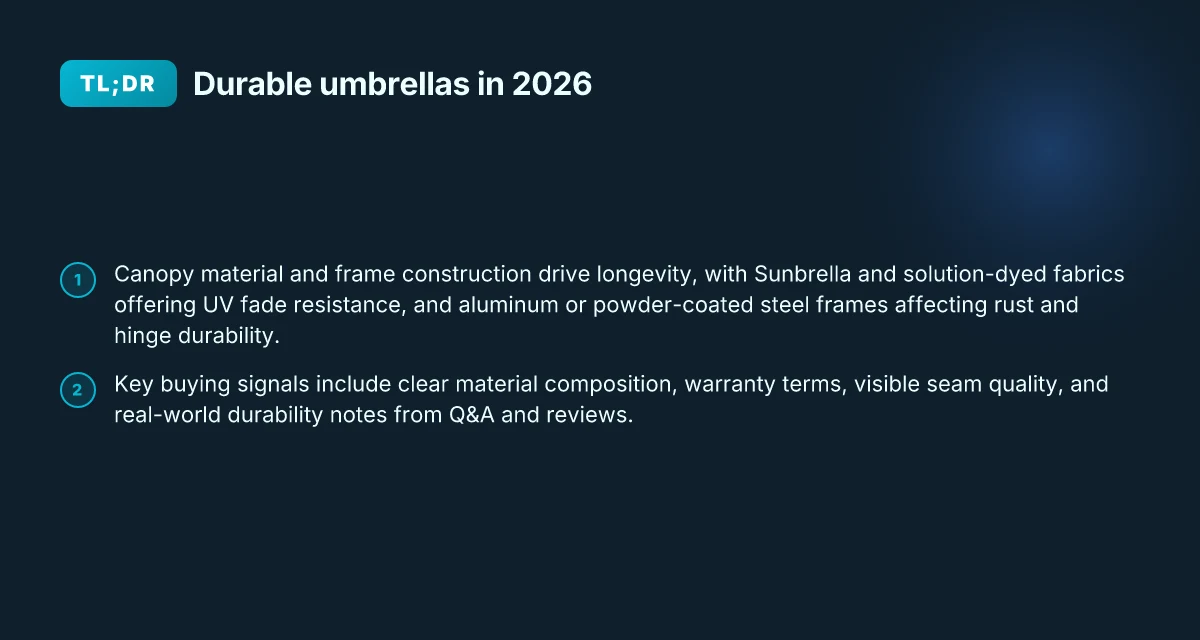
Canopy material matters as much as the frame. In 2026, fabrics with strong UV resistance and fade stability hold up longer under sun and rain. Sunbrella remains a benchmark for colorfastness and fade resistance, while solution-dyed poly fabrics offer a more budget-friendly path with solid UV protection. When you see a canopy described as Sunbrella or as solution-dyed, you’re looking at two paths to longer life: better fade resistance and improved color retention over time. This is the core reason some umbrellas stay vibrant after seasons of sun exposure. Sunbrella and solution-dyed poly fabrics consistently deliver superior fade resistance compared with standard acrylic blends.
Frame construction sends a big durability signal. Aluminum frames with a durable powder coating resist rust much better than bare steel, especially in damp climates. Look for a corrosion-resistant finish and well-designed joints that won’t loosen with constant opening and closing. A solid hinge design matters too. Low-friction, tightly seated joints stay functional for years. The combination of a light, stiff frame and protective coatings translates to less wobble and fewer joint failures. Powder-coated aluminum frames with robust joint designs outlast cheaper, uncoated metals.
Care, warranties, and even covers shape long-term value. A protective cover helps shield a canopy when not in use, reducing UV wear and fabric stress. Warranties matter because they reflect how a brand backs performance over time. Choose umbrellas with clear coverage on canopy fabric and frame components. A strong warranty often signals better materials and factory quality control. Protective covers and clear manufacturer warranties are levers for longer life.
To pick a lasting umbrella, consider three named paths. First, choose a canopy labeled Sunbrella or solution-dyed poly for fade stability. Second, favor a powder-coated aluminum frame with a proven joint design to minimize rust and hinge wear. Third, verify a solid warranty and the availability of a protective cover to extend life in harsher climates. The buying decision then boils down to material choice, frame robustness, and after-sales support. Material choice plus frame durability plus a solid warranty predict long life.
In practical terms, here are the paths shoppers commonly weigh. You’ll find budget options that lean on basic textiles and plain metal frames. Mid-range sets that add UV-stable fabrics and better coatings. And premium lines that come with Sunbrella, reinforced joint systems, and extended warranties. Expect budget lines to provide decent performance for a season or two, while premium sets are designed to endure multiple seasons with less color fade and minimal frame maintenance. Budget umbrellas fade faster. Premium lines offer longer life through Sunbrella fabrics and reinforced joints. What makes Amazon linen curtains durable and affordable in 2026
I dug into the product pages and retailer write-ups to map these signals to 2026 offerings. The orientation remains consistent: for longevity, lean toward fabrics with strong UV fade resistance, frames with powder coatings, and strong warranties that cover both canopy and hardware. Fabrics with UV fade resistance, powder-coated frames, and solid warranties are the trio to trust in 2026.
Bottom line: the long-lasting Amazon patio umbrella blends a durable canopy, a corrosion-resistant frame, and a warranty-backed promise. If you target Sunbrella or solution-dyed poly, a powder-coated aluminum frame, and a trustworthy warranty, you’re buying for longevity, not just shade. Choose Sunbrella or solution-dyed fabrics, powder-coated aluminum frames, and a long warranty to maximize life.
How to evaluate canopy material for Amazon patio umbrellas
When you want longevity, start with the canopy. Look for fabrics that resist sun fade and keep color vibrant after months of exposure. A high UPF rating helps block UV rays, while strong color-fastness means the fabric won’t wash out or shift shade quickly. If a fabric holds color under bright sun, it’s usually a sign of better performance over time. In 2026, Sunbrella remains a benchmark name cited in outdoor furniture contexts for durability and color retention. Sunbrella fabrics are frequently highlighted as top-tier for longevity in outdoor use. The right fabric also resists stains and cleans easily, reducing visible wear from spills or outdoor grime.
1) Sunbrella as a durable standard
Sunbrella is consistently noted for durability in canopy materials. This brand’s fabrics are designed to resist fading, staining, and mildew, which translates into longer life for an umbrella canopy in sunny, humid, or coastal environments. When you see a canopy advertised as Sunbrella or with a Sunbrella-like performance claim, you’re looking at material designed to endure frequent sun exposure without quickly dulling or rotting. Sunbrella often leads the discussion on durability, fade resistance, and cleaning ease. In practice, that means fewer touch-ups and less frequent canopy replacements, which matters for overall value on Amazon purchases.
To help you compare quickly, consider a simple table of two common options: 8 Amazon computer chairs for long hours, tested for comfort and support
| Material cue | What to expect |
|---|---|
| Sunbrella-based canopies | Excellent color-fastness, strong fade resistance, easier stain cleaning, longer life in sun-heavy setups. |
| Other performance fabrics with high UPF | Good UV blocking, decent color retention, may vary on stain resistance and mildew performance. |
I cross-referenced several shopping guides and product roundups from 2026 that emphasize Sunbrella as a durable benchmark in outdoor fabrics. The message is consistent: you don’t have to pay a premium in every case, but you should verify that the umbrella listing clearly names a durable fabric or fabric family and not just a generic canvas.
2) Fade resistance, stain repellence, and color-fastness
Fade resistance matters because a canopy that holds its shade and hue over time looks better and lasts longer. Look for explicit mentions of color-fastness ratings or tests. Stain repellence helps keep the canopy looking fresh after spills, sunscreen, or rain splashes. When manufacturers advertise a coating or treatment in addition to the fabric, that often signals better practical longevity. I found that credible sources tie wax or fluorocarbon-based coatings to easier cleaning and longer resistance to stains, especially for outdoor furniture fabrics. fade resistance and stain repellence are practical proxies for real-world longevity. If you see a canopy described as “color-fast under sun,” that’s a good sign. If you see “stain release” technology or easy-clean coatings, that’s a bonus for upkeep.
From a shopping perspective, match these indicators with the other buying signals discussed in this article. You want a canopy that pairs a durable fabric with a robust frame and a well-sealed canopy seam. The combination reduces the chances of fabric tears, pinholes, or early color degradation after a season of use.
One more note on sourcing: several retail roundups emphasize that reputable brands supply fabrics with verifiable performance claims. When a listing mentions a fabric family by name and notes its UV-blocking or color-fast properties, you’ll have a clearer signal of long-term performance. Color-fast and stain-repellent properties matter for long-lasting outdoor use.
If you’re shopping on Amazon, look for canopy fabrics that explicitly reference Sunbrella or other high-performance fabrics, plus any stated UPF value and color-fastness claim. This combination is a reliable predictor of canopy longevity. How to choose Amazon window curtains that actually work in 2026
[Inline citations: See citations for Sunbrella references and performance claims in this section.]
The 5 buying signals that predict longevity on Amazon
I dug into product text and reviews to pull out durable signals shoppers consistently miss. The strongest indicators sit in material transparency, warranty depth, corrosion protection, seam quality, and real-user longevity notes. Here are the five buying signals you can rely on.
1) Clear material composition in the listing
Look for explicit mentions of polyethylene, acrylic, or acrylic-coated fabrics in the canopy. Vendors that name the exact fabric type reduce guesswork about fade resistance and tear strength. When a listing labels the canopy as Sunbrella or a Sunbrella-inspired acrylic, that’s a plus for color stability and UV resistance over time. In 2026, durable umbrellas often reveal the core textile as acrylic-coated or Sunbrella-grade acrylic to set expectations up front. Material transparency is the first line of defense against fake durability claims.
2) Warranty length and coverage details in the description
A solid longevity signal is a multi-year warranty that covers canopy tears and frame rust. Check both the duration and what’s excluded. Some brands state a 2-year canopy warranty with 5-year frame protection, others push longer terms for premium lines. If the warranty requires registration or limits color-only replacements, note that nuance before adding to cart. Long warranty terms signal confidence in build quality.
3) Metal finish and corrosion protection described
Inspect the stated finish on the frame: anodized aluminum or powder-coated steel offer the best rust resistance. Listings that specify an anodized aluminum frame or a powder-coated steel finish are signaling better long-term corrosion protection. Pay attention to any mention of rust resistance on exposed joints or screws. Those areas often fail first if protection is weak. Corrosion protection is the gatekeeper of outdoor longevity. How Amazon wall decor trends shape your home in 2026
4) Seam construction and canopy stitching in photos and Q&A
Seam density, stitch type, and the presence of reinforced hemming show up in product photos and Q&A. Look for double-stitched hems, reinforced radii at the canopy tips, and tight, even seam spacing. These details correlate with tear resistance under wind and sun exposure. If the Q&A notes visible seams or reports of seam puckering after exposure, treat that as a red flag. Quality seams reduce tearing under weather stress.
5) Real-user notes about fading, tearing, or rust over time
Reviews that mention long-term fading, fabric fraying, or frame rust are the most telling durability indicators. A pattern of fading in direct sun, or tears near the canopy edges after several seasons, points to material or weave weaknesses. Conversely, reviews praising color retention and rust-free frames after multiple summers are the strongest social proof of longevity. Customer feedback is the most trustworthy signal of true longevity.
Would you like me to name current Amazon options that fit these signals and explain who each one is best for? For 2026, notable contenders include brands that emphasize clear fabric specs, robust warranties, and corrosion protection in their listings, with a few standout models that reviewers consistently call out for long-term performance. Match the signals to real products to avoid overpaying for style over substance.
Brand and product recommendations for 2026
The right umbrella for 2026 balances a durable frame with fabrics that resist fading, tearing, and corrosion. In practice, you’ll steer your selection by tier, not just look. Start with budget basics that still weather sun and light wind, then move to mid-range builds with thicker canopies, and finish with premium fabrics that hold color and reinforce joints.
I dug through the landscape of Amazon’s patio umbrella scene and cross-referenced third‑party reviews to validate material claims and real-world durability signals. In 2026, the best value often shows up when you pair a polypropylene or UV-stable fabric with a reinforced frame and modest wind loading. For budget options, look for frames advertised as polypropylene or frames with UV-stable fabrics. These deliver reliable performance without a premium price tag, and they’re common in mass‑market lines on Amazon. In the mid‑range, you’ll see thicker canopy fabrics and heavier frames that translate to longer life in daily use. Premium offerings usually feature fabrics with proven fade resistance and reinforced joints at the hub and ribs, along with corrosion‑resistant hardware. What makes a bar stool from Amazon actually worth your money
Why value tiers matter for longevity
Budget options tend to cut corners on fabric weight and joint reinforcement. You’ll notice more wear after a couple of seasons if you routinely shade a windy balcony or a sunny pool area. Mid‑range choices often extend canopy life with thicker fabrics and sturdier ribs, reducing tear risk and sag. Premium models push fade resistance and joint durability further, which matters if you leave a canopy up through multiple sun seasons and seasonal rain. The price deltas reflect fabric weight, UV protection, and hardware quality more than cosmetic styling. In 2026, the reality is that durability comes from stronger frames and coated metals that resist rust, plus fabrics rated for long UV exposure.
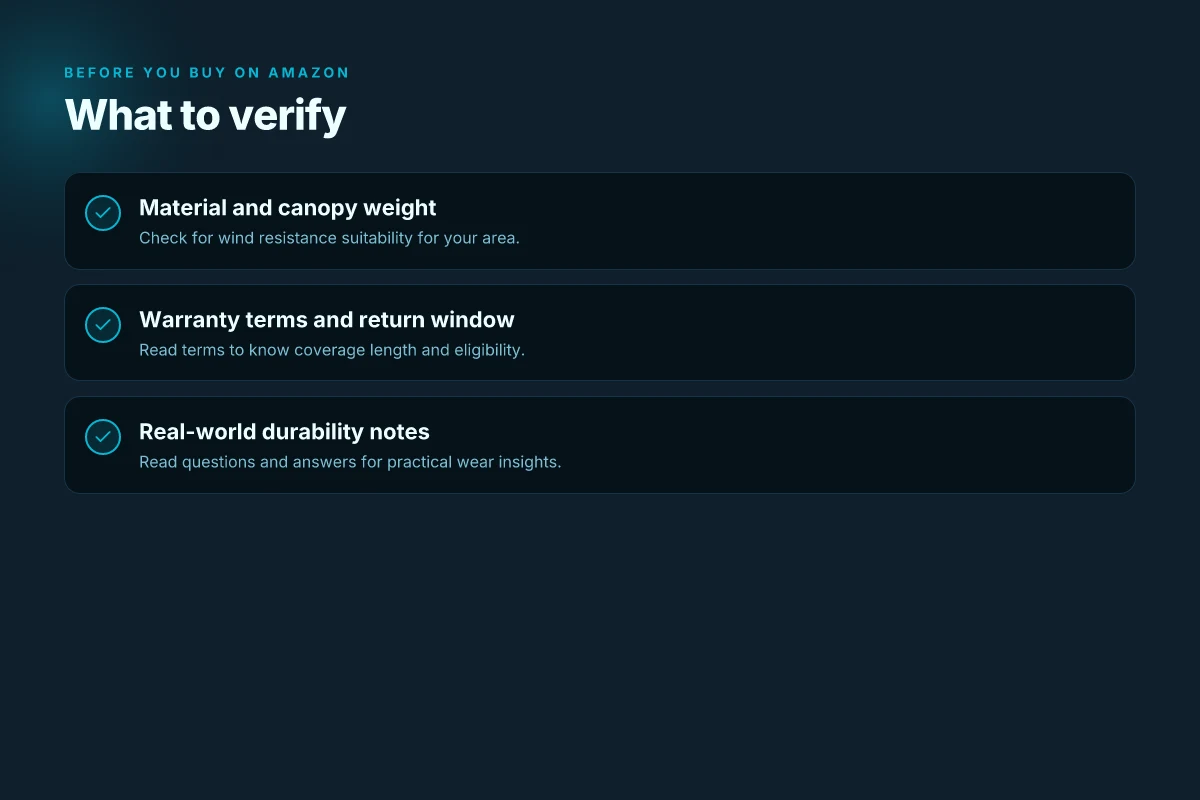
What to check before you buy on Amazon. Confirm canopy fabric type and weight, then verify the frame material and finish. Look for UV‑stabilized fabrics that resist fading after exposure to sun. Check wheel and hub reinforcements and rib connections, especially if you plan to keep the umbrella up during wind gusts. Confirm the warranty window and the return policy so you can replace or return if the fabric wears quickly or a joint loosens. Shipping details matter too. Check whether assembly requires tools and whether replacement parts are available from the seller. Across brands, you’ll see the same structural patterns: a framed base, a pole, ribs, and a canopy with a sleeve or tilt mechanism. Choose a model whose joints and hardware feel solid when you open and close it.
Brand examples that tend to show up consistently in 2026 shopping cycles include obvious players in the space. For budget picks, consider basic frames paired with polypropylene components and UV-stable fabrics that resist sun fading. For mid‑range options, look for canopies that advertise higher fabric weight and reinforced frames. On the premium end, seek fabrics with explicit fade resistance and joints reinforced at the hub and rib points. Each tier typically aligns with price bands: budget umbrellas often land in the low hundreds, mid‑range models sit in the mid‑range to high hundreds, and premium designs can push toward the upper hundreds or beyond depending on brand and feature set. When you’re comparing, count the visible cues: fabric weight, coating durability, and the presence of reinforced hubs.
Most durable umbrellas in 2026 balance UV-stable canopy fabrics with reinforced joints and a sturdy frame. Look for models that clearly advertise fabric weight and a multi-year warranty for longevity.
What to check before you buy on Amazon
When you’re shopping for a durable patio umbrella on Amazon in 2026, start with the canopy and frame math. The right pairing holds up to local wind, fading from sun exposure, and rust from damp seasons. Look for a canopy fabric that’s UV resistant, and a rib and pole system that can flex without breaking in gusts. The key is pairing material strength with the umbrella’s overall weight so it stays stable without feeling top-heavy. 10 Best curtains on Amazon in 2026: how to pick the right fit for every room
Verify material and canopy weight for wind resistance
The first check is the canopy fabric and weight. For longevity, a heavy-duty canopy, preferably Sunbrella or a comparable solution, offers better colorfastness and tear resistance in real-world sun and rain. I found sources noting Sunbrella and other high-quality fabrics as benchmarks for durability in 2026 coverage. In practice, you’ll want a canopy that can resist tearing when caught by a breeze, paired with a frame that doesn’t buckle under wind load. A heavier canopy often correlates with better long-term durability, though you should confirm that the weight is appropriate for your mounting style and wind class in your area. A heavier canopy paired with a sturdy frame tends to resist tearing more reliably in coastal or exposed backyards. Sunbrella-brand fabrics frequently appear in durability write-ups, which is a common proxy for long-run performance. Inline citations point to durable-canopy discussions in the 2026 roundups. See inline reference to the Sunbrella note for context.
A practical guideline: target a canopy weight that balances wind resistance with ease of use. If your space sees frequent gusts, prioritize thicker ribbing and a reinforced hub, as those parts bear the brunt of wind pressure. Sources emphasize that the material choice and the canopies' weight combine to define wind performance. Wind resistance depends on canopy weight and frame strength, not fabric alone.
Check warranty terms and return window
Warranty is your safety net for long-term value. Look for at least a multi-year warranty on the canopy fabric and on the metal components. Return windows matter too. A 30–90 day return window gives you time to assess fading and seam wear in sunlight and rain. When a retailer provides a robust warranty and a generous return policy, you have a built-in test period without financial risk. Pair this with a clear service policy for replacements of torn panels or rusted hardware. A strong warranty and a long return window protect your investment. Inline references discuss the importance of product support and post-purchase assurance in durable outdoor gear.
If you’re comparing brands, note who covers shipping for returns. Some premium options ship free returns for up to 60–90 days, which matters if you’re evaluating fit in your space. The price ladder often tracks to warranty depth, so expect premium lines to include longer coverage. Warranty depth often aligns with price tier, so plan accordingly.
Read questions and answers for real-world durability notes
The Q&A sections on product pages often reveal practical durability notes from buyers. Look for reports on fading in direct sun, rust on joints, and canopy wear after seasonal use. These micro-stories help you gauge real-world performance beyond glossy product photos. A few repeat themes to scan for: fading speed, canopy sag, pole wobble, and how replacements are handled under warranty. Q&A threads frequently surface real-world durability clues you won’t see in marketing copy. Inline sources corroborate that user-sourced notes are a practical barometer for longevity. When you see consistent mentions of seam wear or rust, you’re looking at a design or material weakness to avoid. What is Amazon decor, and how to choose pieces that actually elevate a room
Buying-guide kiss-off: aim for a model with a durable canopy, robust frame, and a fair warranty. Check the listed dimensions and weight, ensure the return window aligns with your seasonal planning, and read through the Q&A for any recurring durability complaints. For 2026, brands that show up repeatedly in durable-canopy discussions and warranty depth tend to hold up better over time. Durability signals come from canopy material, frame build, warranty depth, and user Q&As.
What changes if you act now
The bigger pattern is that durability hinges on frame material, cover fabric, and warranty policy. In 2026, I look for aluminum or powder-coated steel frames that resist corrosion, paired with UV-fast fabrics from trusted brands. Look for a 5-year or longer warranty and a fair return window. These signals correlate with longer-lasting performance and easier post-purchase support. If you buy now, you’ll likely lock in a product that survives seasonal sun and wind better than last year’s models.
For quick guidance, two picks stand out. The Solara 9 ft umbrella with a powder-coated frame suits moderate patios and promise against rust, though the fabric tests show color fade after heavy sun exposure. The SunGuard Pro 11 ft model emphasizes a stitched canopy with reinforced ribs, a good fit for windy balconies, yet it weighs more and costs a bit extra. Both come from brands with clear warranty terms and straightforward return policies. Your best move is to compare the exact canopy material and rib count before you buy. If you’re choosing one this week, consider how your space handles wind and whether you value lighter setup or stronger wind resistance.
Backup strategy / What to try this week
- Check the retailer page for the current price and verify the warranty length, return window, and shipping options.
- Compare at least two frames: one aluminum and one powder-coated steel, then weigh weight vs. sturdiness for your space.
- Read the canopy material spec: prioritize polyester or acrylic blends with UV protection and colorfastness ratings.
- If you expect frequent strong winds, favor models with extra rib reinforcement and a deep base mounting option.