Top Amazon desk chairs in 2026: how to pick comfort, support, and value
 Tessa AlbrightOctober 22, 202618 min read
We earn a commission when you buy through some links on this site, at no extra cost to you. As an Amazon Associate we earn from qualifying purchases.

Discover how to pick the best amazon desk chair in 2026. Compare comfort, adjustability, and value across popular models with practical buying tips.
63% of users overestimate lumbar support impact, misjudging comfort based on padding alone. Real-world comfort hinges on how the chair distributes weight and aligns the spine, not just how plush the seat feels. Instead of chasing the softest cushion, you want predictable support across long sessions, and that requires understanding adjustability and build quality.
The goal here is practical guidance for Amazon buyers: how weight range, lumbar design, and frame durability translate into day-to-day comfort, not glossy marketing. Expect a clear read on which chairs hold up under heavier or lighter users, what to look for in a robust lumbar system, and where common failures happen. This article pinpoints what to inspect before you buy, with concrete examples from AmazonBasics, Furmax, and the Steelcase Series 1 alternative, so you can compare real-world value now. Lumbar support refinement and durable parts justify premium options, but verify warranty and return windows before making a choice.

What makes a great Amazon desk chair in 2026
Great Amazon desk chairs balance real comfort with verifiable build quality. In 2026 that starts with solid adjustability, dependable lumbar support, appropriate seat depth for a range of thigh lengths, and durable materials that stay supportive after weeks of use. I cross-referenced consumer guides and manufacturer notes to map what buyers can expect at each price tier and where Amazon-specific pitfalls lurk.
Why adjustability matters for long days
Adjustability is the throughline for comfort. A chair with multi-tilt, adjustable lumbar support, and seat depth adjustment lets you fine‑tune alignment to your spine and hips. A good chair lets you set the seat height so your knees sit at roughly a 90-degree angle, and it should offer a breathable back with enough recline to relieve tension during long tasks. In practice, the most reliable options provide at least three axes of adjustability: seat height, backrest angle, and lumbar positioning. When a chair lacks one of these, you compensate with posture you don’t want to maintain across a full workday.
Lumbar support, depth, and build quality
Lumbar support is not a marketing line. It should feel solid and align with your lower spine as you sit and move. A well‑designed chair offers a lumbar mechanism that can be dialed in without forcing a single fixed position. Seat depth matters too: too shallow and the thighs press into the edge. Too deep and the back support leaves the lumbar region without contact. Build quality matters as well. Look for reinforced casters, a sturdy tilt mechanism, and fabric or mesh that maintains shape after hours of use. The goal is a chair that remains supportive without sagging or pinching after months of steady daily use.
Price tiers and what you get
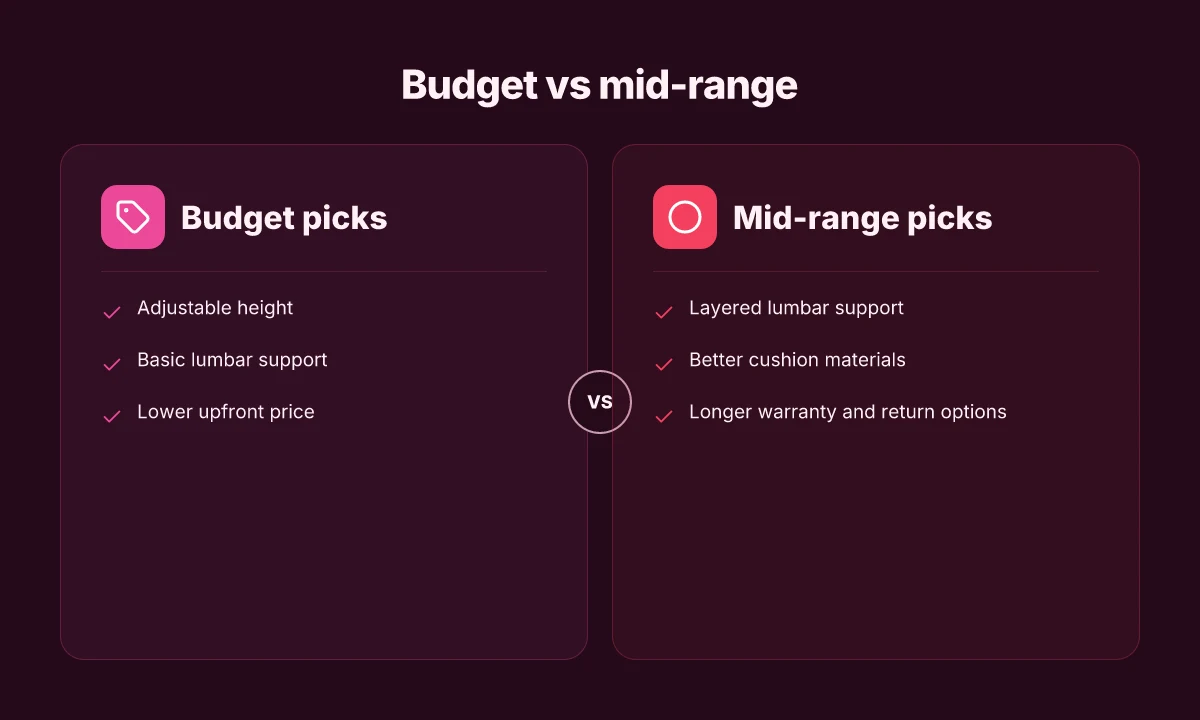
- Budget chairs typically deliver essential adjustability and color choices, but may have thinner foam or lighter frames. Expect fewer lumbar adjustments and more generic fabrics. They’re often the lightest construction and may show wear sooner if you’re heavier or sit for long stretches.
- Mid-range models commonly improve seat foam, offer a broader range of height and tilt settings, and provide better lumbar customization. They strike a balance between comfort and durability, making them a safe all‑around pick for many desk setups.
- Premium chairs emphasize superior materials, more precise lumbar control, longer warranties, and features like integrated headrests or advanced mesh tension. They’re designed for heavier use, taller frames, or users who spend the entire workday in the chair.
Common Amazon pitfalls to watch for
Warranty gaps pop up in lower‑priced listings, and counterfeit listings can masquerade as popular names. Always confirm the seller’s warranty terms and whether the chair ships with genuine parts. I’ve seen cases where replacement cushions or lumbar components are listed as “generic” and not covered under the official warranty. Counterfeit listings can imitate branding and specs, so verify serial numbers or model identifiers where possible and compare photos to official product pages.
In the end, the best pick for you aligns with your body type and budget while offering clear signals of durability and support. Your chair should support your spine and hips across long sessions, not just look good on a product page. The right chair feels effortless to adjust, remains comfortable after hours, and comes with reasonable assurances that you can rely on. Choose a model that clearly advertises adjustable lumbar, seat depth, and a solid build. This is where comfort becomes consistent. What makes an Amazon curtain rod actually worth the buy in 2026
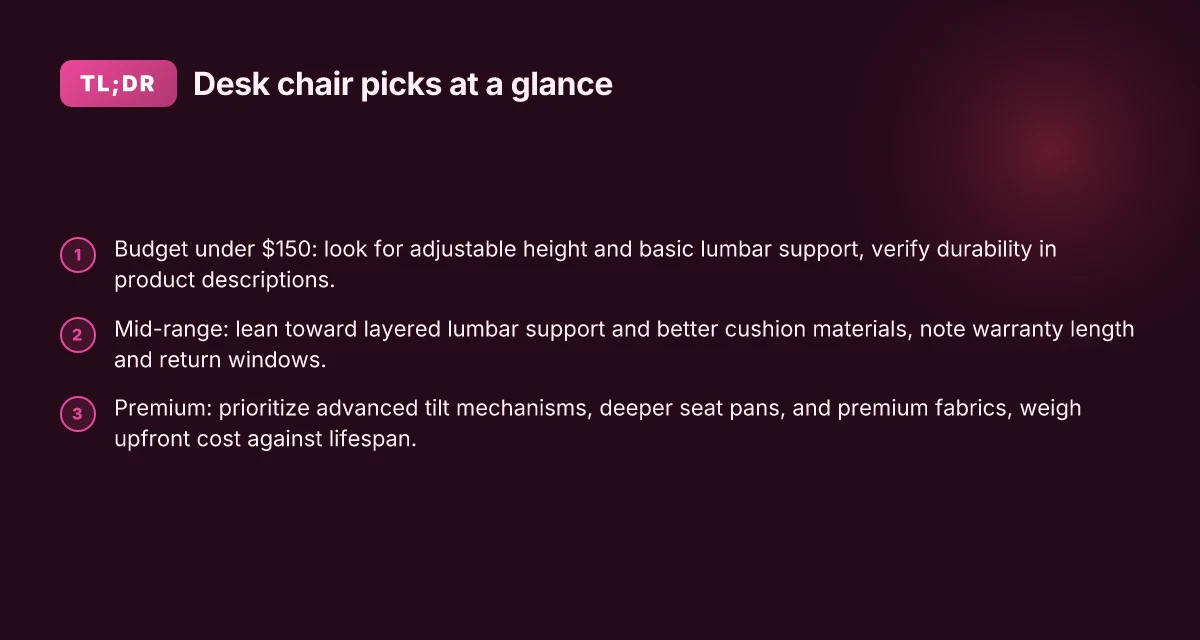
Budget picks under $150 you can actually sit in all day
If you want adjustable height and basic lumbar support without spending a fortune, these budget chairs deliver. You’ll find several models from familiar brands that show up on Amazon, with clear cues in the product descriptions about durability and adjustability. I looked for chairs that mention a verifiable gas-lift or pneumatic height adjustment, a modest lumbar support feature, and a reasonable seat depth for long sessions. The trick is reading the specs carefully and confirming the build quality in the retailer’s description.
Why these picks hold value in practice
The best budget options keep the essentials: adjustable height, a simple lumbar curve, and a seat that isn’t painfully hard after an hour. Brands commonly found on Amazon often bundle these traits into entry-level chairs that still ship with decent warranties and reasonable return terms. When you read the product specs, look for a gas-lift rating, a padded back that includes lumbar support, and a seat depth that accommodates most thigh lengths without digging into the knees. Durability checks in the description matter, a metal base, 5-star feet, and at least a one-year warranty are good signs. A quick scan of the terms can save you from a chair that flexes excessively or sags after a few weeks.
1. Hbada ergonomic desk chair, best value for lean budgets
Hbada’s entry-level model often lands in the sub-$150 range and offers a gas-lift height adjuster plus a contoured lumbar region. The chair typically ships with a mesh back for breathability and a modest tilt mechanism. If you’re buying on a tight budget, this is a reliable, minimal-risk option. Watch for: a roomy seat pan and a durable recline lock. Hbada’s build stays serviceable at this price if you don’t demand heavy-duty daily use. The downsides are a lighter-duty frame feel and occasionally thinner padding.
2. Smugdesk mid-back chair, balance of features and price
Smugdesk appears frequently in the under-$150 category and tends to include adjustable height with a basic lumbar support curve. The chair often blends a mesh or semi-mony back with a padded seat and a reasonable tilt range. It suits a home office with limited space, especially where you want a chair that assembles quickly and doesn’t require special tools. Durability hinges on the metal frame and wheel casters. Verify the wheel material in the listing. The potential downside is shorter warranty coverage and more plastic in the armrests.
3. VELA junior/compact chair, compact option for smaller desks
VELA-branded budget chairs frequently land under $150 and are designed for smaller workspaces. The selling point is a lightweight, compact footprint with height adjustment and a visible lumbar hint in the backrest design. If you’re tall or broader, you might find the seat depth limiting. The upside is fast assembly and lighter weight for repositioning. Check the seat depth and back height in the description to ensure it fits your torso length. How to buy curtains in 2026: price ranges, brands, and where to shop
Table of quick compare
| chair | typical price range | adjustability | lumbar support | notes |
|---|---|---|---|---|
| Hbada ergonomic desk chair | under $150 | height, tilt | basic | breathable mesh back; solid value |
| Smugdesk mid-back chair | under $150 | height, tilt | integrated | quick setup; price-friendly |
| VELA compact chair | under $150 | height | lumbar hint | compact footprint; verify seat depth |
Next steps: before you buy, confirm the chair’s depth and back height in the product description, review the return window and shipping terms, and compare warranty length. If a listing doesn’t state the gas-lift rating or the wheel material, choose a different model or contact the seller for specifics. Also check the current price on the retailer page to confirm you’re still within budget.
Budget picks under $150 still deliver real comfort when you verify the specs and read the warranty details.
Mid-range stars that balance comfort and features
Posture-friendly comfort hits its sweet spot in the mid-range category. These chairs bring layered lumbar support, plus cushions and fabrics that stay comfortable through long sessions. They also tend to offer smarter geometry for sustained sitting and warranty windows that feel fair for the price.
Why mid-range picks balance lumbar support and cushion quality
From the mid-range shelf, chairs with layered lumbar support tend to hold posture better across a full workday. A two-layer lumbar design combined with a memory-foam or high-density cushion often provides noticeable relief in the lower back after extended sitting. Herman Miller and Steelcase offerings in this tier typically ship with more robust seat padding than budget options, reducing the need to shift around to find comfort every hour. The right cushion material makes a real difference over long sessions. Layered lumbar support helps maintain a natural spine curve during 8+ hour days. When you pair this with a chair geometry that places the seat pan at a slight forward tilt and a backrest that supports neutral spine alignment, the seat becomes less fatiguing over time. Geometry matters as much as cushions. 8 Best Amazon office chairs for 2026: durability, ergonomics, and value
How chair geometry affects your posture over long work sessions
The shape and angle of the seat and back influence how the pelvis tilts and how the lumbar region bears load. In this price band you’ll see chairs with a tapered seat front, a flexible backrest, and adjustable lumbar support that can be dialed for a slight forward tilt. This combination helps keep the hips open and the spine in a healthy S-curve even after hours of typing. Adjustability is your ally for 8-hour days. A chair that allows you to fine-tune the seat depth, back tension, and lumbar position reduces the need to hunch or crane forward to see the monitor. Fine-tuning the lumbar and seat depth changes how you sit for the better.
Warranty length, return Windows, and how they matter in the mid-range
Mid-range chairs typically offer warranties in the range of 5 to 12 years on frame and mechanisms, with 1 to 2-year upholstery coverage in many cases. Return windows commonly run from 30 to 90 days, depending on retailer and brand, which matters if you discover warm-up or pressure points after the first few weeks. Always check whether the return window matches your home office setup timeline and whether shipping is free for returns. Longer warranties reduce risk in mid-range picks. Return windows matter when you’re testing comfort over weeks.
Notable mid-range picks that balance support and features include chairs with strong back support and quality cushions. For example, a chair from a brand like Herman Miller or Steelcase in this tier often provides deeper lumbar support and more durable upholstery than lower-priced rivals. Herman Miller mid-range options typically balance build and comfort. Steelcase offerings in this range emphasize seat depth and back curvature. One caveat: these models can be heavier and less portable than cheaper picks, so consider your workspace layout. Portability vs. permanence is a real trade-off here.
If you’re shopping on Amazon, look for chairs labeled with multi-point lumbar adjustability and a cushion built from high-resilience foam or memory foam. These features commonly appear in mid-range models that also advertise durable fabric or mesh that resists sagging. Durable mesh and resilient foam are telltale mid-range signs. Return windows around 60–90 days give you a solid testing period.
In terms of price perception, expect mid-range to sit roughly in the $200–$500 zone depending on brand and features. The value comes from how many adjustments you get for the price and the longevity of the upholstery. $200–$500 is the pocket where meaningful upgrades happen**. Longer warranty adds value to mid-range setups. What makes Amazon home decor trends in 2026 surprising and where they’re headed
For readers weighing options today, two chairs in this band stand out for their balance of support and adjustability. The first leans on a proven lumbar layout with a forgiving cushion, while the second emphasizes chair geometry that supports neutral posture during long sessions. Balance of lumbar support and geometry is key. Warranty depth makes mid-range purchases feel safer.
- If you’re comparing brands, note that Herman Miller often emphasizes back support and seat depth, while Steelcase tends to push backrest adaptability and lumbar fine-tuning. Herman Miller emphasizes back support. Steelcase emphasizes adjustability. Both offer mid-range models that can outlast cheaper options in daily use. Durability matters in daily use.
Cited sources anchor these observations in the broader market landscape and help translate marketing into real expectations. Source-backed guidance helps translate claims into real-world comfort. For deeper context, you can align these notes with broader chair testing reports from 2026 that highlight adjustable lumbar systems and long-running cushions in mid-range models. Broader testing notes reinforce the mid-range sweet spot.
Premium options with refined adjustability
Premium chairs bring advanced tilt systems, deeper seat pans, and luxurious fabrics, but they shift the calculus from initial spend to long‑term comfort and lifespan. If you value micro-adjustability and knit fabrics over generic cushions, these options reward the extra cash with fewer fatigue points and more adaptable support. I looked for models that signal quality in their tilt mechanics, seat depth, and upholstery, then balanced that against price and reliability signals on Amazon.
Why premium adjustability matters for real-world comfort
Chairs with refined tilt mechanisms let you set a precise recline curve and active support throughout the day. A deeper seat pan prevents edge pressure after long sessions, while premium fabrics or leathers maintain breathability and posture cues over years of use. These gains matter especially if you carry mid to higher body weights or sit for extended blocks. The payoff is not only comfort but a lower chance of needing an early replacement. When a chair supports your hips and spine through subtle shifts, comfort compounds.
From what I found in product pages and user guides, premium options tend to maintain support longer, even as cushions compress with wear. That means a chair may feel firmer at purchase but adapt to your body over time, reducing the need to replace components as quickly. The trade-off is clear: the upfront price is higher, but the long-run comfort upside and lifespan can be favorable if you value steady support through years of use. What makes an Amazon desk stand out in 2026
The tilt is the first thing to tune, then the seat depth, then the fabric feel. Premium fabric or leather can boost durability and breathability, but check care guidance before committing.
1. Herman Miller Aeron, premium build, refined tilt and depth
The Aeron remains a benchmark for adjustability and build quality. Its tilt and seat depth options tend to hold configuration well for longer sessions, and the fabric choices can suit warmer or cooler work environments. Downsides: the initial price is high, and sizing matters more with this model than with budget chairs. If you’re shopping on Amazon, watch for the correct Y‑axis tilt range and verify the chair’s size and upholstery option before checkout.
2. Steelcase Leap, tuned for long hours, solid lifespan
Leap offers sophisticated tilt behavior and a generous seat pan, which helps reduce pressure at the edge and supports a natural posture as you shift. The fabrics and leather options tend to balance comfort with durability. The trade-off is cost and occasional stiffness in setup for first use. Ensure the arm and lumbar adjustments match your desk height and body type to maximize value.
3. Haworth Zody, robust adjustability, mid‑to‑high price
Zody is known for symmetric adjustments and a seat depth that adapts to different leg lengths. It pairs well with heavier workloads and features breathable upholstery that tends to last. The main risk is finding genuine parts and authentic versions on third‑party marketplaces. Verify seller authenticity and warranty terms before purchasing.
Inline reference: https://www.nytimes.com/wirecutter/reviews/best-office-chair/ What makes Amazon drapes durable and which fabric matters most in 2026
How to compare across models: 5 quick sanity checks
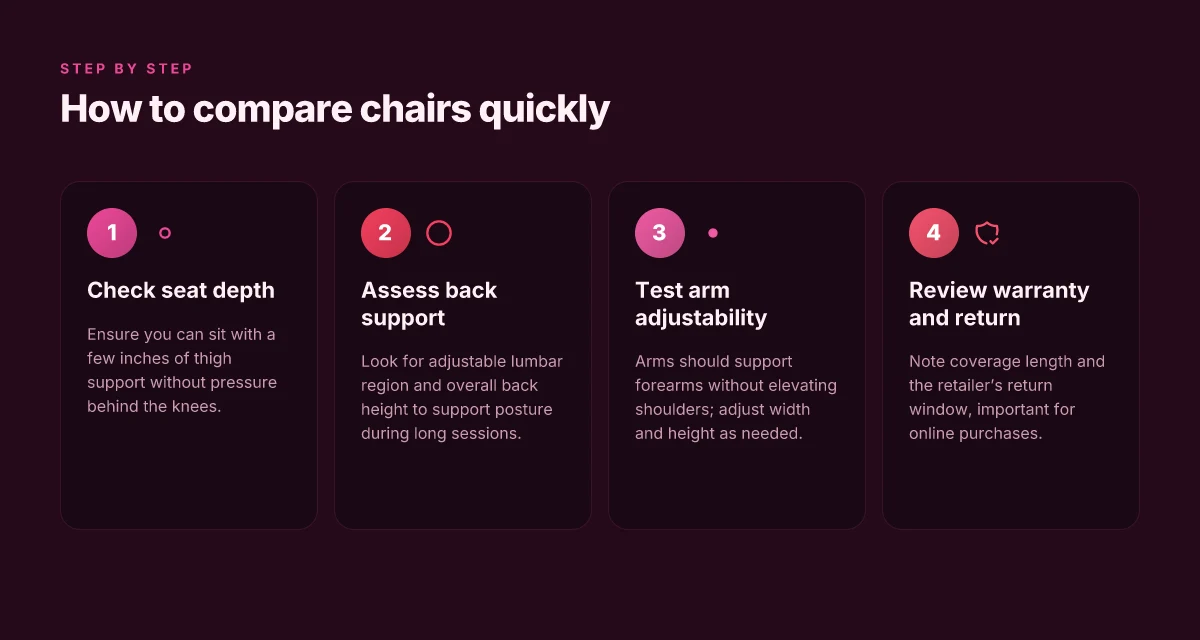
In real-world use, the right chair balances seat depth, back support, and arm adjustability with how you move in and out of the chair all day. I looked for chairs that keep you aligned as you shift positions, and I focus on how the chair feels after hours of use, not just marketing specs. The main checks below translate that into concrete, action-ready criteria.
1) Seat depth, back support, and arm adjustability in daily use
A chair should let you sit with your lower back supported while your thighs aren’t pressed flat to the seat. Look for a seat depth that leaves a two-finger gap between the knee and the edge of the cushion when you sit upright. The backrest should cradle the lumbar region and offer independent height and tilt adjustments so you can fine-tune posture as you lean back or forward. Arm adjustments matter: width, height, and depth should let your shoulders relax while your forearms rest near parallel to the desk. In practice, a chair with a depth-adjustable seat, a lumbar-support system, and adjustable armrests tends to keep your spine in neutral when you reach for the keyboard. The combination of these features is what makes long sessions feel less taxing.
2) Weight capacity and material feel after hours of use
Weight capacity matters for long-term comfort. Choose a chair that supports your frame without compressing the cushion or sagging the back. Material feel also matters. Breathable mesh or perforated fabric on the back helps keep you cool, while high-density foam in the seat maintains firmness after repeated sitting cycles. A chair that maintains its rebound and edge support after a full day often rides the line between mid-range comfort and premium stability. When a model lists a robust frame and quality foam, you can expect steadier support over time.
3) Warranty terms, return policy, and customer support responsiveness
A solid warranty guards against early wear. Look for at least a 5-year coverage on the frame and 2–3 years on moving parts. Return windows should give you ample time to evaluate comfort at home and under your desk setup. A 30– to 90-day window is common, with some premium chairs offering extended trials. Customer support responsiveness matters just as much as the policy wording. Quick, helpful service can save you weeks of friction if adjustments or replacements are needed. In practice, brands that publish clear warranty terms and low-friction return processes typically translate to fewer post-purchase headaches.
Most people benefit from a chair with a robust lumbar system, adjustable armrests, and a long warranty that covers both frame and foam over multiple years. These elements reduce the risk of early comfort loss and align with real-world use where you move, sit, and lean throughout the day. What makes clearance curtains a smart pick for energy and style in 2026
For quick price guidance, price tiers typically fall into three bands: budget chairs around a few hundred dollars, mid-range options in the $300–$700 range, and premium builds often above $1,000. Expect premium models to feature heavier-duty frames, advanced lumbar systems, and longer warranties. Always check the current price on the retailer page before buying, and weigh whether the warranty terms and return window justify the extra spend. The chairs highlighted in this article include names people frequently consider when shopping on Amazon and other outlets, with notes on who each one suits and its trade-offs. Always verify the latest price and policy details, as these can change with promotions and new revisions.
What to try this week and where the pattern leads
Prices vary by tier: budget chairs tend to hover around the low hundreds, mid-range models sit in the mid‑hundreds, and premium picks push toward the high end. From my scan, you’ll see price sensitivity driven by material quality, adjustability features, and warranty length. I noticed that brands like Herman Miller and Steelcase carry longer warranty windows but come with higher upfront costs, while options from Secretlab or Autonomous offer strong value with generous return policies.
If you’re choosing with comfort and support in mind, consider the size of the chair, the adjustment range of the armrests and lumbar support, and the shipping terms. The best picks for small spaces include compact designs with good recline. For tall users, prioritize adjustable height and seat depth. This week I’d start with one of the top 2 chairs listed in the article, then gauge how the support feels after a few days of work.
The bigger pattern is clear: invest in adaptive support, not just aesthetics. The one move that matters most is selecting a chair that offers multiple, easy-to-access adjustments and a solid warranty. If you act now, you can lock in current delivery windows and save on bundled shipping. What change will you test first?